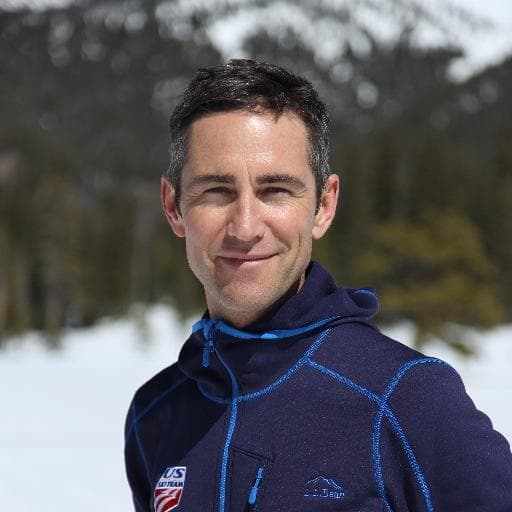

“After Torino, I wasn’t going to spend the next four years to hope American skiers could win Olympic medals in Vancouver. I am done with hoping,” said Pete Vordenberg on the first night of the September National Team Camp in Whistler, B.C. “I dedicated the last four years to knowing we can have that success this winter. That’s what the last four years have been about. This is the difference from Torino to now. This is the difference of four years. Now I know. Now I know we have the team, the service team, the talent and the requisite winning attitude. Now, when we come back here in February – after we’ve completed the remaining most professional, most inspired 162 days of preparation of our lives we have left until the Games start – you will have more than hope, you more than believe that we have what it takes to compete to the top of the Olympic podium.”
Pete didn’t have to ask twice.
“Talent, it’s as common and as cheap as table salt.”
From here, sport psychologist Dr. John Hammermeister took over the talk, asking each of the members of the ski team to build their own perfect model of a ski racing champion, then discern whether the attribute was influenced most my talent, skill or attitude. Attributes bandied about included a commitment to excellence, focus, self-confidence, and endurance, along with a whole host of others. By the end of the exercise, intriguing themes emerged. The attitude attributes – that is, when we make a conscious decision to act, think or feel about a situation – and skill, an attribute that improves through perfect repetition – far outweighed genetic parameters. As Morgan Arritola said, “You need the gift. Then, when you have this, it comes down to ‘What will you do with your talent?’ For this, you need the right attitude.”
According to experts interviewed for this article, including an exercise physiologist, a sport psychologist, national team coaches and a former Olympic champion there is a talent cut-line aspiring Olympic medalists need to have.
As Head US Ski Team Physiologist Randy Hill points out there is a definite genetic cut-line, particularly in engine-based sports. “In a skill-based sport like aerials, there’s a softer genetic cut-line. In engine-based sports there are no ifs, ands or buts. But if you’ve made the club, physiological factors like Vo2 max or cardiac efficiency give way to other factors, like teasing out who works hardest within the group, who learns the quickest, and who is the most resilient. These characteristics then become the most relevant factors.”