One of the movies in my video library is the 1993 ‘classic’ Dazed and Confused , a film about the night that follows the last day of school at a 1976 Texas high school. During the movie the main character, Randall ‘Pink’ Floyd, played by Jason London is continually pressured by his high school football coach to show a commitment to his team throughout the summer.
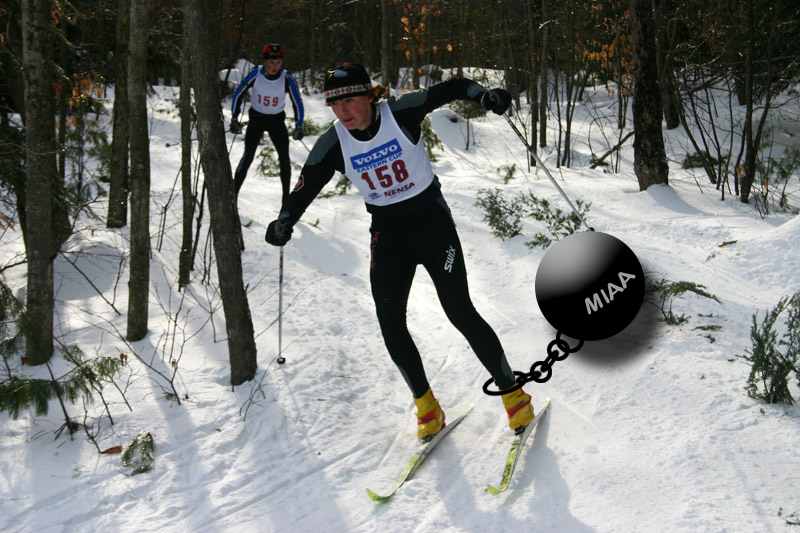
Whenever I watch this movie I am reminded of the rules that many Nordic ski coaches around the country have to deal with at public high school programs. These rules were created with the intention of protecting young student/athletes against the pressure to over commit themselves. Don’t get me wrong, if a skier would rather spend the summer playing soccer or skateboarding that is great. But what about those who would like to focus on skiing?
In Massachusetts our public high school programs fall under the governing body of the Massachusetts Interscholastic Athletic Association (MIAA). They have tons of rules that prohibit any sort of coaching out of season. To make matters worse, the “season” runs from the first Monday after Thanksgiving until the State Championship race in the middle of February. So if a skier qualifies for the New England J2 Championship, the Eastern High School Championship or even Junior Nationals they cannot receive any help from their high school coach.
Among the many rules that the MIAA enforces are two that are the trickiest to deal with. The first, “The Bona Fide Team Player Rule,” handles the time within the season and states that a student/athlete may only miss ONE practice per season to pursue other athletic interests. This would include going to a club practice or extra race instead of a scheduled high school practice or race. This rule makes it impossible for coaches to hold centrally located practices for higher level, serious skiers to attend in place of their high school practice and also makes going to JOQs difficult if the high school league has a race scheduled.