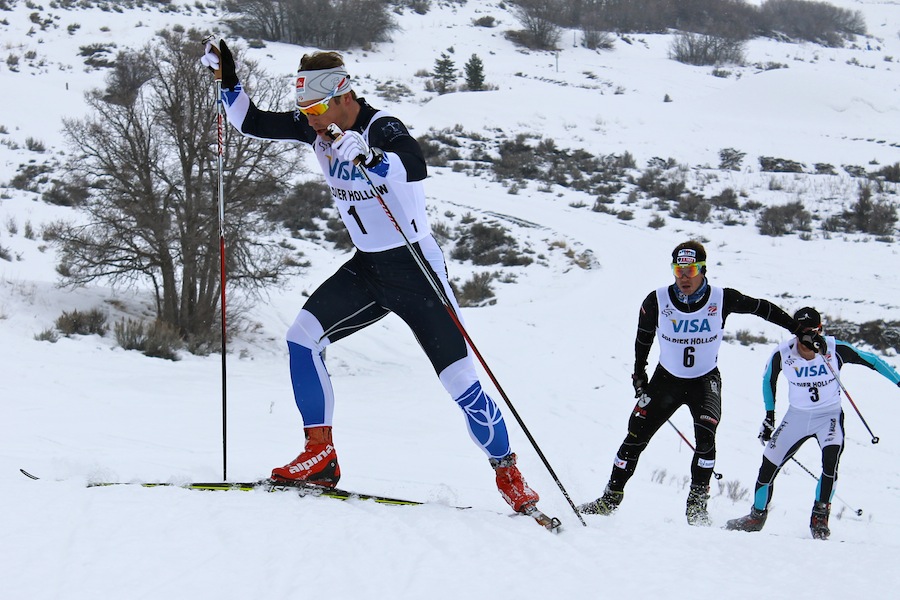
Kris Freeman (Maine Winter Sports Center) leads Matt Liebsch of XC United/Team StrongHeart (c) and Brian Gregg (Team Gregg/Madshus) toward the end of last week’s 30 k freestyle mass start at U.S. Cross Country Championships at Soldier Hollow in Midway, Utah. All three are gunning for a distance spot on the 2014 U.S. Olympic Nordic Team.
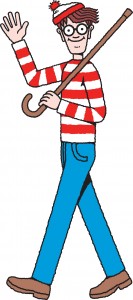
Three days ago, Matt Liebsch likened himself to the candy-striped ‘Where’s Waldo’ on Facebook. In the running for a distance spot on the U.S. Olympic nordic team, which is set to be named by Jan. 22, the 30-year-old Minnesota native wrote that he was “taking everything into consideration” and trying to figure out which races gave him the best chance to make the cut.
Earlier this week, Matt Liebsch posted a photo of Waldo from the children’s book series, ‘Where’s Waldo’ on Facebook. Like several U.S. Olympic hopefuls, Liebsch wrote that he was feeling a lot like Wally, unsure where he’d race next.
He had trekked up to the Rocky Mountain Intercollegiate Ski Association (RMISA) opener in Bozeman, Mont., last weekend, where he placed third in Sunday’s 10-kilometer freestyle.
An independent skier affiliated with XC United/Team StrongHeart, Liebsch is hardly alone in the hunt for one of few remaining openings for the Winter Games from Feb. 7-23 in Sochi, Russia. On Wednesday, he updated his page with the news that the U.S. picked up an additional Olympic quota spot for a grand total of 17.
“The strength of our nation is up there!” he wrote.
Ten of those slots are all but officially locked up by the U.S. Ski Team members who have been in Europe for the last two months. That leaves the possibility of seven openings up for grabs, but chances are, the USST isn’t going to take nearly that many additional athletes with utility skiers like Kikkan Randall, Sadie Bjornsen and Jessie Diggins that can compete in several events — both sprint and distance.
While the depth and strength of the U.S. women’s team is well documented, most of the stateside skiers trying to earn their tickets to Sochi, Russia, are men. And with one qualified distance guy on the USST, Noah Hoffman, it would be fair to say the U.S. will be looking for distance skiers.
Sylvan Ellefson, of Ski & Snowboard Club Vail/Team HomeGrown, won the premier distance race at U.S. nationals last week in Midway, Utah, with a gutsy performance in the 30-kilometer freestyle mass start. Four days later, he was spotted in Canmore, Alberta — another Waldo — racing the 30 k skiathlon at Canadian Olympic Team Trials on Sunday.
“I have pretty much just been listening to my coaches’ suggestions as to where to go and race,” Ellefson explained in an email, adding that he has “no idea how they are selecting the Olympic team.”
The points system, with everyone gunning for the best, or lowest, points on their International Ski Federation (FIS) profile, can be confusing at times like these. But Olympic hopefuls like Liebsch and Ellefson (and their coaches) have been crunching the numbers to determine where they stack up in comparison to other U.S. skiers, especially on the FIS distance lists.
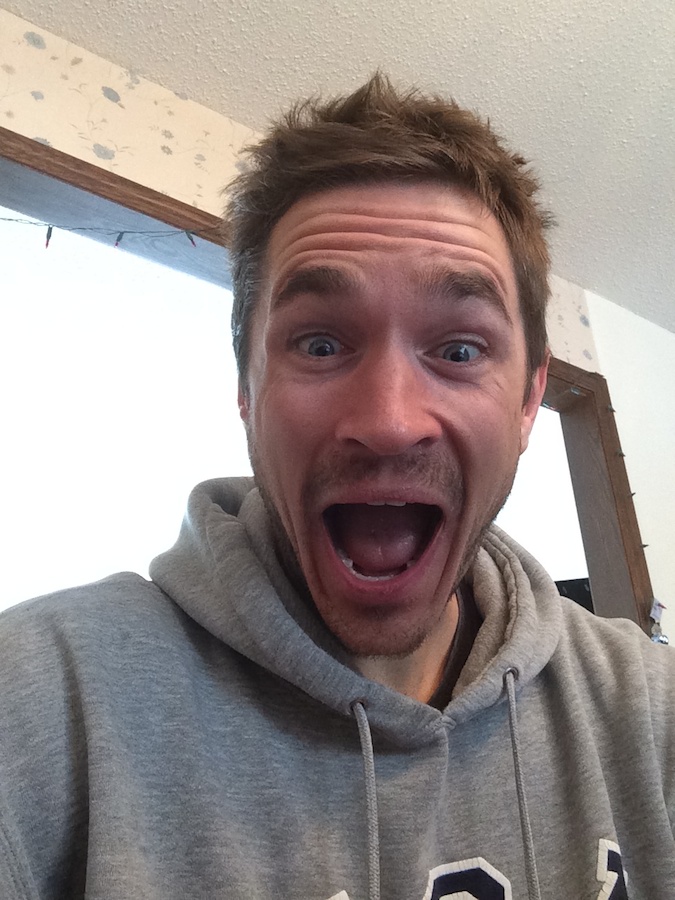
An excited Matt Liebsch before the Eastern Cup races in Rumford, Maine.
Former USST distance veteran Kris Freeman is currently leading the domestic scene, ranked 48th in the world for distance behind Hoffman in 40th. The U.S. Olympic criteria states that selections can be based off FIS points “if team positions remain open after the application of criteria 1 [top-50 distance or sprint World Cup ranking] and 2 [Head coach discretion] … then additional athletes may be nominated in order of ranking, based on the 4th publication of the FIS Sprint and Distance Points Lists valid in January 2014.”
It is important to note that FIS point world rankings are completely independent of “World Cup ranking,” which is determined by World Cup points. World Cup points are scored by finishing in the top-30 at a World Cup event. FIS points, where lower is better, are calculated from sanctioned races all over the world.
Currently, athletes are figuring out where they stand based on the third publication.
So instead of sitting on their laurels and scratching their heads throughout the waiting period, Liebsch, Ellefson and Freeman headed to Rumford, Maine, for this weekend’s Eastern Cup, with a 15 k freestyle mass start on Saturday and 10 k classic on Sunday.
“The Eastern Cup is a minimum 15 point race and the EISA [Eastern Intercollegiate Ski Association] College race is a 25 point race,” Ellefson explained of his decision between the two. “That means that if the right people show up and finish well, the Eastern Cup race points could be better.”
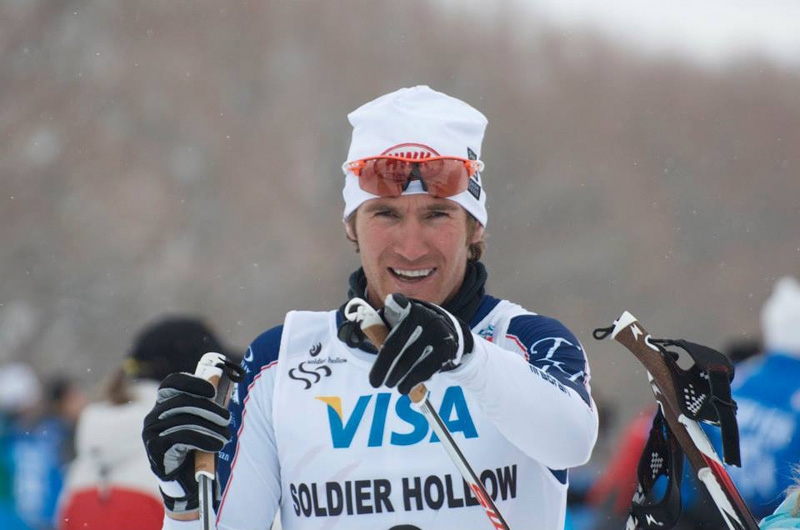
Sylvan Ellefson (SSCV/Team HomeGrown) at 2014 U.S. Cross Country Championships last week at Soldier Hollow in Midway, Utah. (Photo: Swix)
All FIS sanctioned races have a standard points penalty, representing the minimum the race winner can ski away with. The World Cup, as the elite standard has a penalty of zero, while, as Ellefson refers to, domestic events come in significantly higher.
A day after Ellefson won his first national title, he spoke with his coaches about where he should race for the next two weeks. They debated between the Western collegiate (Rocky Mountain Intercollegiate Ski Association) opening races in Bozeman, Mont., and the Canadian trials in Canmore, and chose Canmore “because the penalty would be much lower than in Bozeman.”
“Go big or go home I always say,” Ellefson wrote. The travel ultimately got the best of him and he pulled out of the skiathlon after falling too far back, he explained. He knew he had other races to save up for.
“Back to the drawing table on Monday, we looked at Norwegian Nationals, Swedish Nationals, Swiss Nationals, the Dolomitenlauf, EISA college races, or the Rumford Eastern Cup,” Ellefson continued. “To save money and many hours of travel we guessed the college races or the Rumford Eastern Cup would be the best option. The Eastern Cup would probably have the best point potential so now we’re here in good ol’ Rumford, Maine.”
A 2009 Bates College graduate, Ellefson is returning to his home course in Rumford, where he notched his first podium at 2012 U.S. nationals. He planned to do both races, but would reevaluate after the skate race.
“It’s been quite a busy 3 weeks for me,” he wrote. “Ideally, I’d like to be resting and begin training for Sochi. But right now I have to play by the rules and try and continue to lower my point profile. .. It should be some good racing with, hopefully, some good points.”
In an email, Liebsch wrote that he’s comfortable with his FIS points, “but I wanted to make sure I didn’t miss out on this last weekend of races that count. I was registered for all sorta of races all over the world but after looking at the point opportunity in Maine, it made the most sense to race here.”
Aside from Liebsch, Ellefson and Freeman, a number of other domestic skiers are also in the running for Olympic spots, including recent college grad Miles Havlick (Sun Valley Ski Education Foundation), Torin Koos (Bridger Ski Foundation/Rossignol), Erik Bjornsen (Alaska Pacific University/USST), Bryan Gregg (Team Gregg/Madshus), who are top-ranked on the distance list, plus several sprinters.
Alex Kochon (alexkochon@gmail.com) is a former FasterSkier editor and roving reporter who never really lost touch with the nordic scene. A freelance writer, editor, and outdoor-loving mom of two, she lives in northeastern New York and enjoys adventuring in the Adirondacks. She shares her passion for sports and recreation as the co-founder of "Ride On! Mountain Bike Trail Guide" and a sales and content contributor at Curated.com. When she's not skiing or chasing her kids around, Alex assists authors as a production and marketing coordinator for iPub Global Connection.