Editor’s Note: The following is the fourth post in a series proposed by Maks Zechel, a 20-year-old Canadian cross-country skier embarking on his first season training abroad. He recently made the big move to Norway, where he’ll be training and racing with Team Asker for the next nine months. Through these updates, Maks hopes to share his personal “observations, stories, and lessons learned” to help close the gap between North American and Scandinavian nordic skiing. Previous posts: #1, #2, #3, and #4.
***
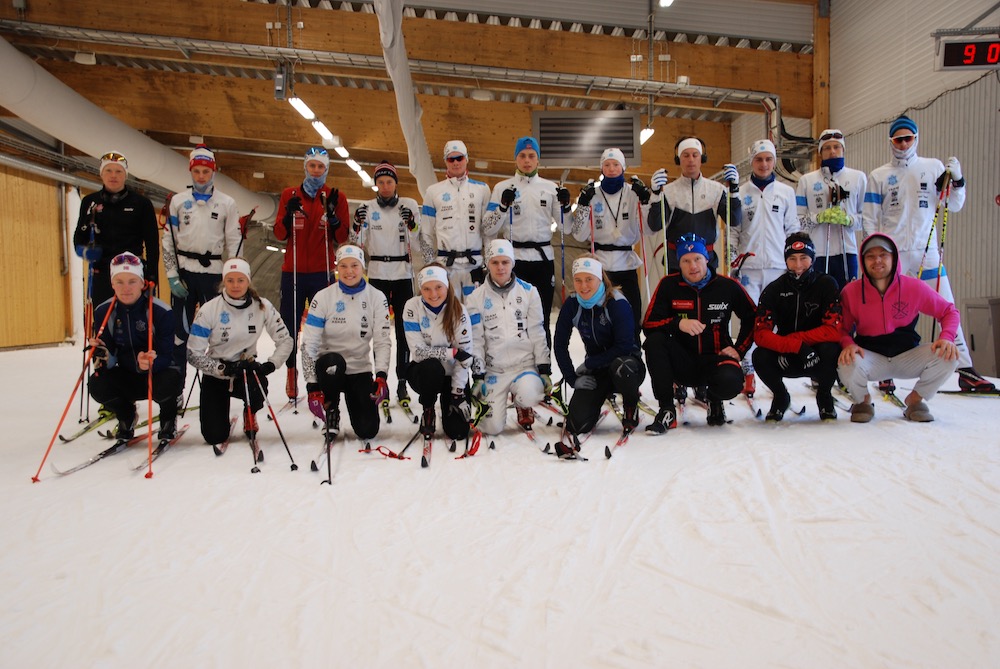
I never thought that on my 20th birthday I would be shivering at the top of a ski resort, a thick fog obscuring the spectacular view of Oslo, listening to 30+ Norwegians sing the Norwegian birthday song for me. But I guess turning 20 was bound to be different!
“No more excuses,” was my first thought. Gone is the security of being a teenager. Rather than impressing people with maturity, it now feels like it is expected. I think it’s a good thing, but it doesn’t make being an adult any easier. My trip to Norway has been full of moments when I suddenly realized, “Oh, I guess I’ll just have to figure this out on my own.” My parents are no longer always present to make introductions, so now it is up to me to advocate for myself. Risks taken as an adolescent do not come with the expectation to produce results. “I’m impressed,” people say, and they applaud you just for trying. But adults are expected to see things through to completion.
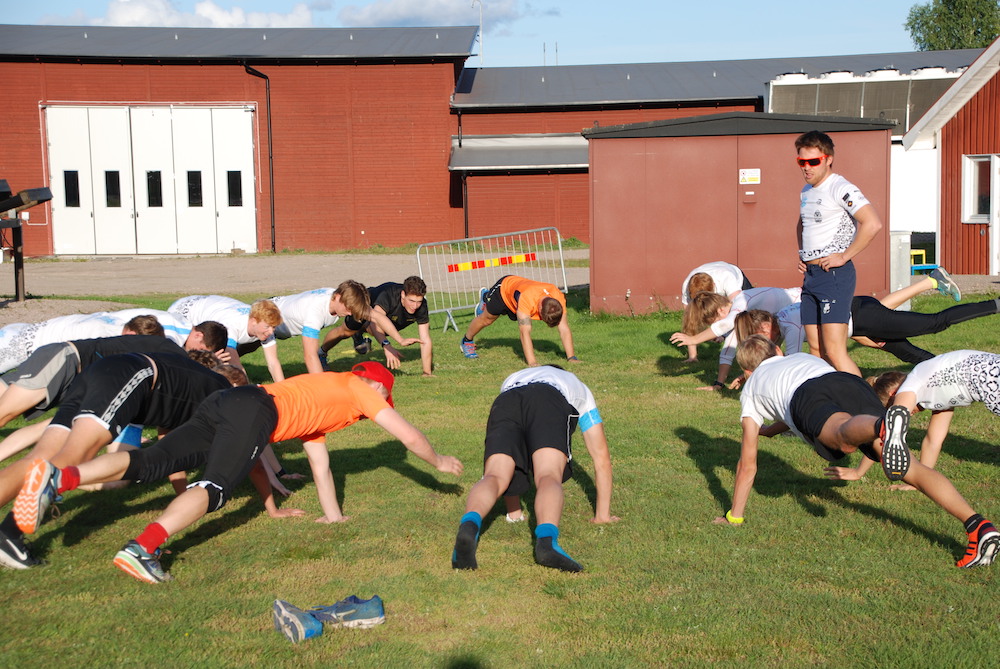
Back on a cold, foggy Norwegian ski slope at the end of August, my teammates and I were about to tackle 6 x 6 minute Zone 4 bounding intervals. In Norway, bounding with poles is called elghufs, or “moose-hooves”. I had never done a bounding workout of this duration and intensity. Despite this, I decided to take a risk and stick with the best runner on the team, who was two and a half minutes faster than me on our last uphill running test. I stuck with him from the first interval, and stayed with him as he threw in big surges on the plateaus between climbs. He added these surges because he is trying to get better at working the flat sections of ski races in the winter, which happens to be one of my goals as well. We did the whole workout together, and I stayed with him until he got away on a downhill and a steep climb at the end. I took a risk in a workout, not caring if I blew up halfway through, and it allowed me to train at a higher intensity than I would have thought possible.
Earlier this summer I listened to a “TED Talk” by Eduardo Briceño on “the learning zone and the performance zone”. At first it didn’t seem like a life-changing lesson, but since I arrived in Norway, his ideas have led me to think differently about my actions, and in particular, my training. Briceño discusses how people, from office workers to athletes, fail to improve at what they do, whether it is a hobby or a job, because they do not give themselves the opportunity to take risks, make mistakes and learn. In our society, the “performance zone” is the default; this is where we only do the things we are comfortable with, because we want things to be perfect, because that is how we envision our end goals to turn out. Briceño argues that we should encourage employees, athletes, and ourselves, to spend more time in the “learning zone,” where we break our ideal performance into the things we need to work on to get there. It is only here that we get better, because it is here that we allow ourselves to try things that we would otherwise never attempt for fear of failure. In the learning zone, risk and creativity produce the most astounding results. Having reached higher comfort levels, it is possible for someone to apply their repeated failures and lessons-learned to a better end result.
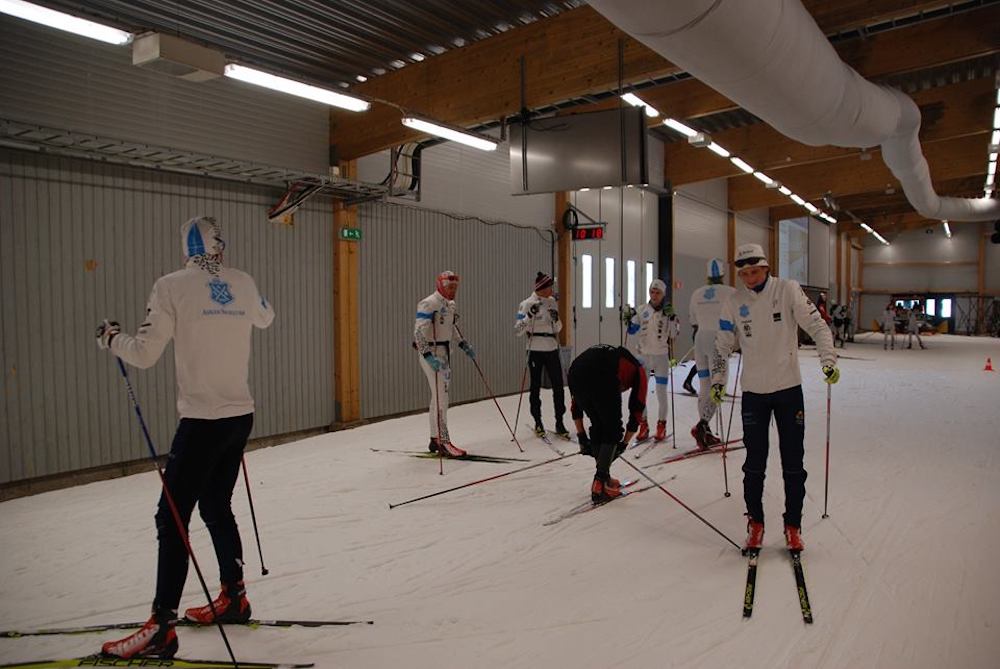
A few days after “birthday elghufs”, Briceño’s ideas come back to me as I am training in the ski tunnel in Torsby, Sweden. I am back here for a long-weekend training camp with Team Asker. In the tunnel I confront a skiing related fear of mine, developed over a few years of poor performances in classic races. I dread the feeling of my grip giving way while striding up a hill. I am determined to become a better classic skier, the technique I was strongest in when I was younger, so I work hard at anything that I believe will make me a better classic skier: bounding intervals, core, double poling, hours of video technique work, and skiing without poles. If I can ski up a hill legs-only, then surely I can do it with poles in a race, right? Whenever I am on skis, I challenge myself to stride up the steepest hills without poles, but it becomes a challenge that I must perform to perfection, otherwise in my mind I have failed as a classic skier. The pressure that I put on myself leads me to shuffle stiffly and tentatively up hills, not allowing myself any room for error. The result is a poor imitation of the principles of classic skiing, lacking any weight shift, pop in the ball of my foot, or ankle compression. Sure, I made it to the top of the hill, but I didn’t summit the mountain.
On our first morning in Torsby we have a distance classic ski in the tunnel. Rather than skiing slowly around the tunnel for a couple of hours, our coach has added some variety to our workout: one lap legs-only, one lap thinking about good striding on the hills (not thinking about heart rate), and one lap with a short “race pace” acceleration. The variety in this workout is important in early season skiing so that we can take advantage of our short time on snow to train our muscle memory to ski properly, getting rid of lazy habits developed while rollerskiing.
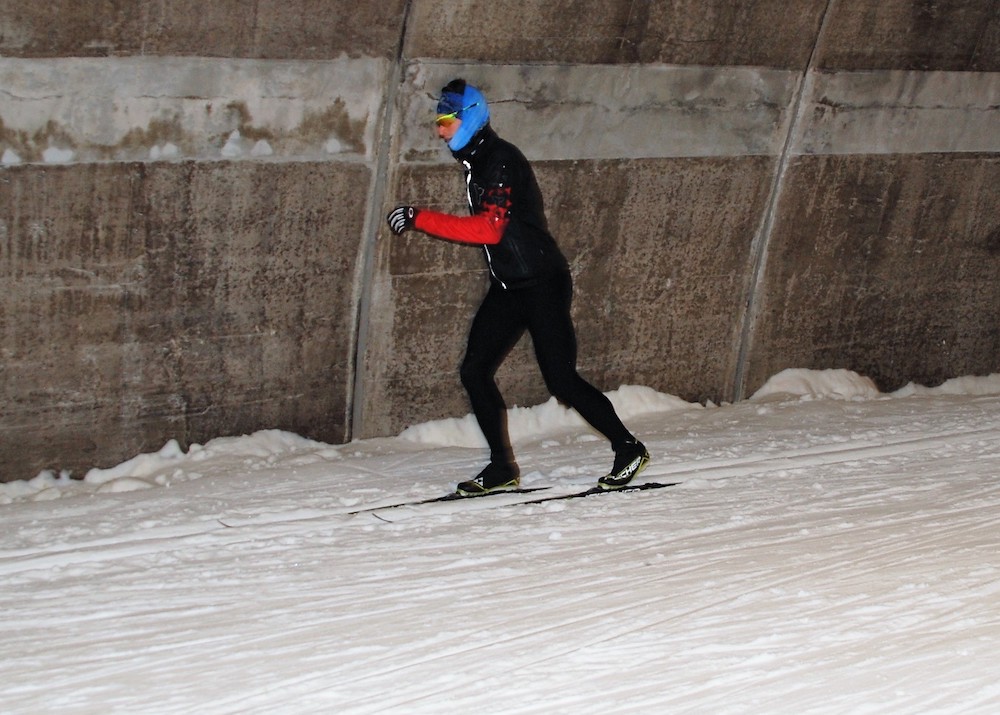
On my legs-only loops, I decide to take a risk. Instead of pressuring myself to make it up the entire hill, I ski as dynamically as I can, focusing on full commitment to each ski and compressing the wax pocket as if I had perfect grip. Although frustrating, I know that it is better for my development to ski properly up half the hill, than to shuffle up the entire thing. A few times I am rewarded with making it to the top, and other times I almost face plant spectacularly in front of the Norwegian junior national team coach.