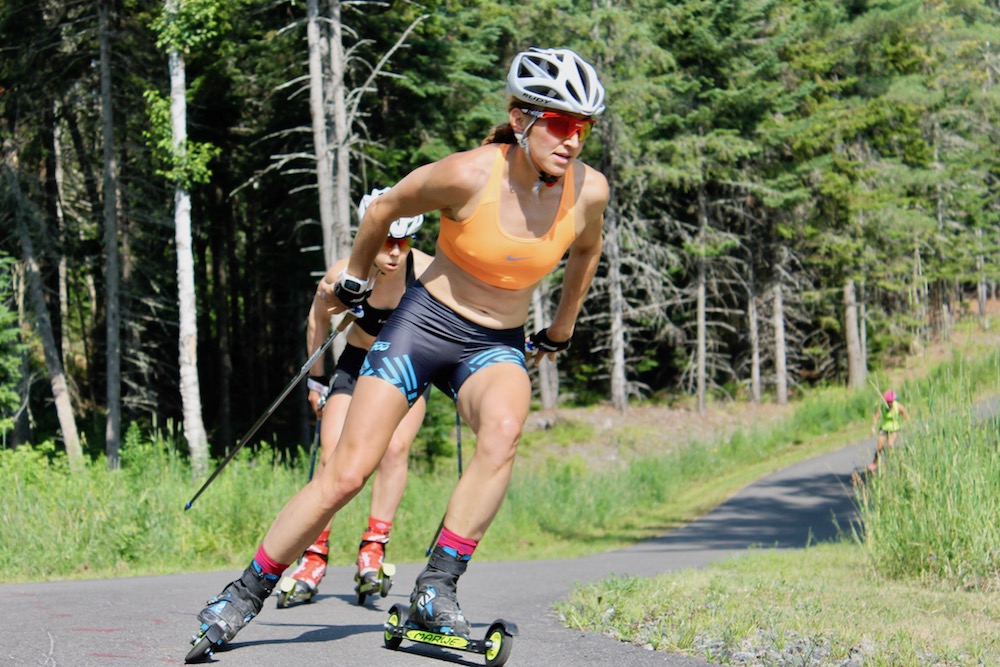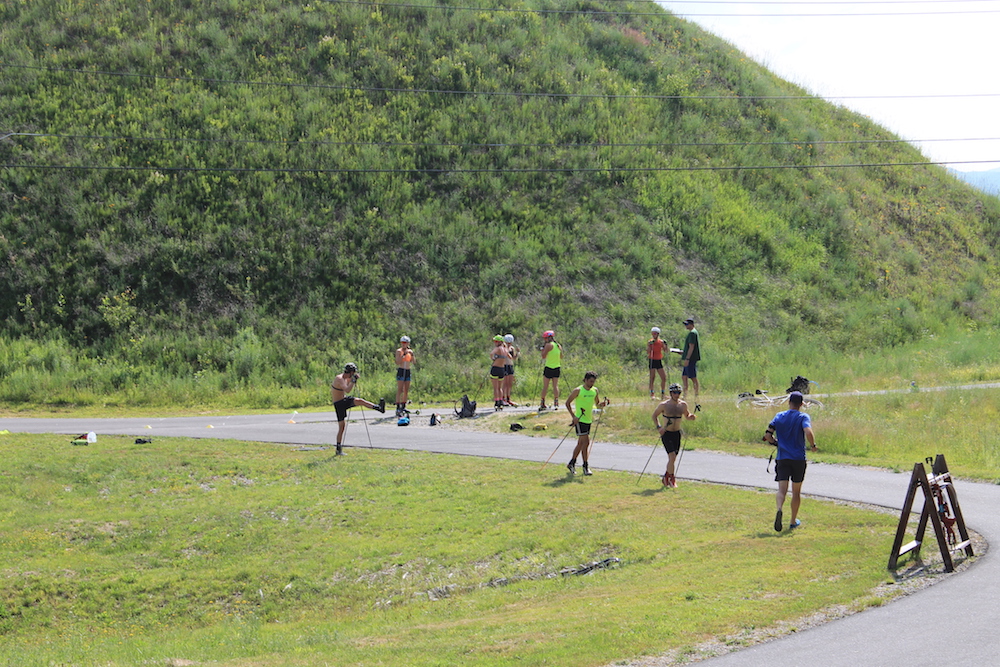
LAKE PLACID, N.Y. — This past Sunday, July 15, FasterSkier visited the U.S. women’s cross-country team in Lake Placid, where the team has been holding a dryland camp since July 11. Most all of the team’s top athletes are there — sans those that train with Alaska Pacific University (they’ll largely stick to Anchorage and nearby Eagle Glacier for summer training) — for a “semi-intensity focused” camp that will last through Friday, July 20. Their training has included everything from rollerski speed work to ski walking/bounding, over-distance trail running/hiking and point-to-point distance rollerskiing. And they’ve held several workouts with the US Biathlon team, which is based in Lake Placid.
Meanwhile, four members of the U.S. men’s team (Erik Bjornsen, Simi Hamilton, Ian Torchia, and Paddy Caldwell) have been in Villard-de-Lans, France, for a camp following the wedding of Bjornsen and Marine Dusser. Their overseas training, which has also included some “incredible trail/mountain running,” as head coach Chris Grover explained, wraps up today.
“The weather has been fantastic so far; warm and dry during the days and cool at night,” Grover wrote in an email on July 9, the first full day of camp.
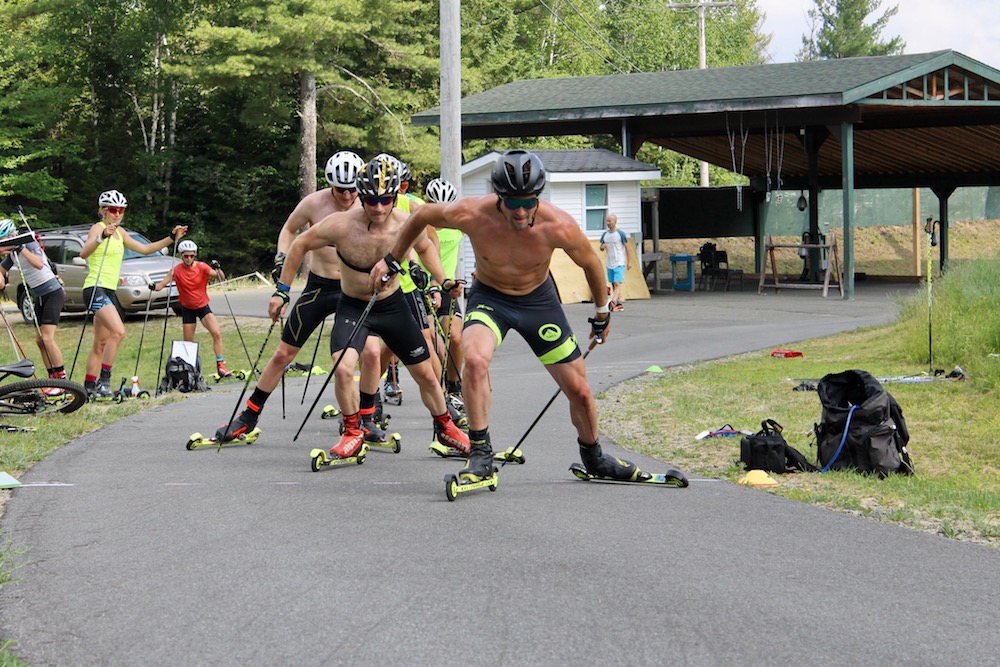
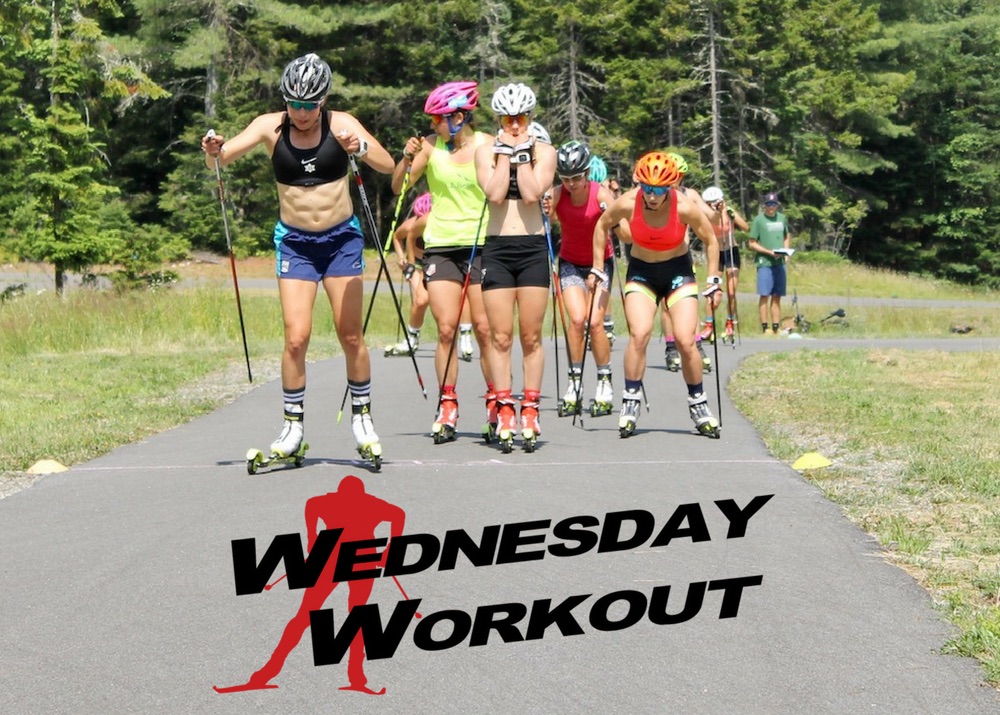
In Lake Placid on Sunday, it was a warm yet breezy day for a freestyle team sprint, with temperatures reaching the 80s by late morning. Asked how many times a year the U.S. team practices team sprints, complete with each member of a two-person team racing three laps apiece, U.S. coach Matt Whitcomb said they did so about twice a year: once in mid-summer and again in October.
(On the World Cup circuit, team sprints are only held a couple of times each winter. This coming winter, a freestyle team sprint — the event Kikkan Randall and Jessie Diggins won at the 2018 Olympics — is on the schedule at 2019 World Championships in Seefeld, Austria.)
“We’ll do a formal team sprint like this a couple times a year,” Whitcomb said. “It’s obviously a huge opportunity for us with the sprint depth that we have, for both men and women, and it’s just a fun way to have a super-hard workout in a camp environment.”
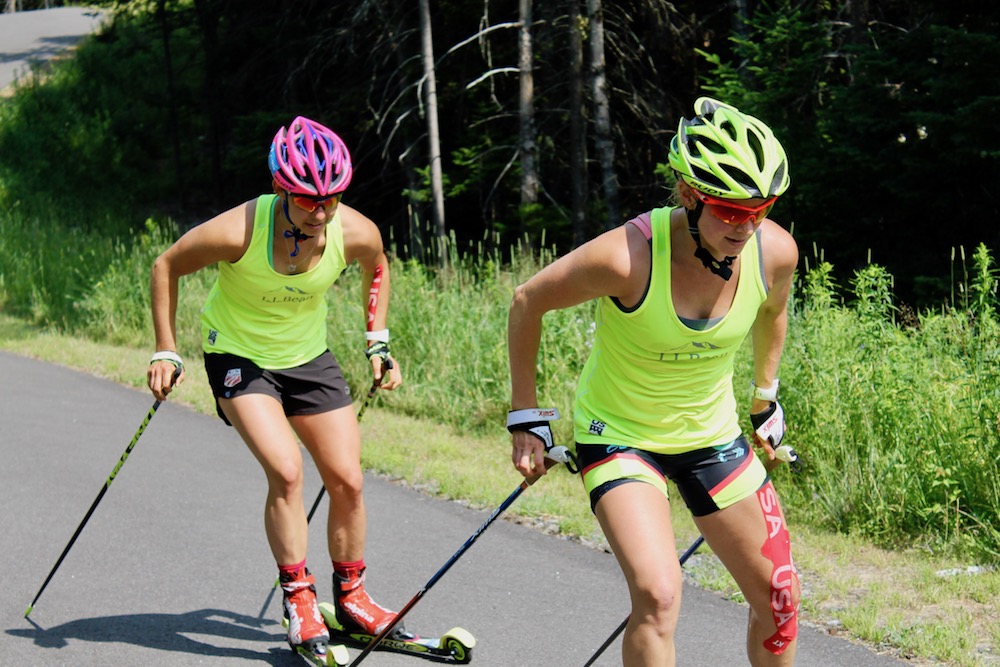
Sunday’s training group included 11 women, including Diggins, Sophie Caldwell, Ida Sargent, Julia Kern, and Katharine Ogden from the U.S. Ski Team, and several others from the Craftsbury and Stratton programs, and six men (Ben Saxton, Ben Lustgarten, Akeo Maifeld-Carucci, Kyle Bratrud, Adam Martin, and Karl Schulz). The course, which was held on the Olympic Jumping Complex rollerski loop, was about 1.3 kilometers for the women and 1.7 k for the men (taking about 3 minutes per lap for the women and 3:40 for the men).
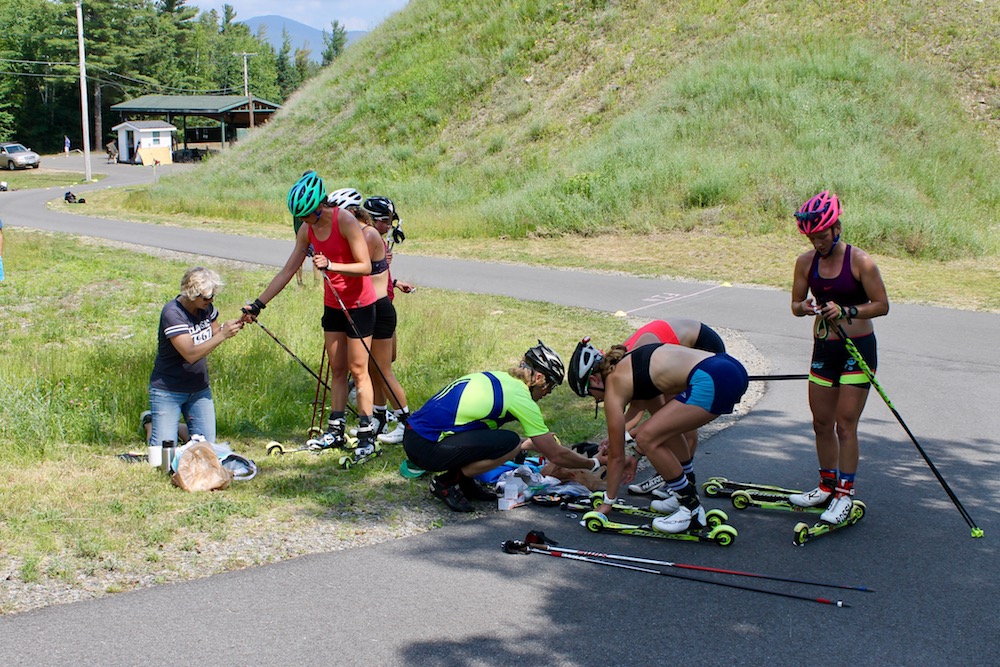
“Goal number 1 is to keep it safe and make sure we’re not having needless injuries, checking the equipment and making sure the athletes’ bindings are all working … ,” Whitcomb said. Sunglasses and helmets were mandatory. “And then secondly, just creating an environment that gives them a perception by the time they hit winter or the first team sprint on the World Cup that they’ve done this. When you feel that you’ve had experience, even if it’s because of a workout in July and one in October, you can draw a lot of confidence from that. While it is just a total 20 minutes of ‘on’ time today, it has much greater value than just that.”
“When you feel that you’ve had experience, even if it’s because of a workout in July and one in October, you can draw a lot of confidence from that.” — Matt Whitcomb, U.S. Ski Team coach
Athletes were selectively partnered in an effort to make for a “stimulating event”, Whitcomb explained. At times, they were instructed to leave the tag zone early before their teammate arrived to make for a more competitive event. The workout started with a semifinal round of head-to-head racing, followed by about a half-hour break, then finals. Due to lower numbers, the men did not compete as teams and instead raced each lap together, then took about an equal amount of rest before the second and third intervals.
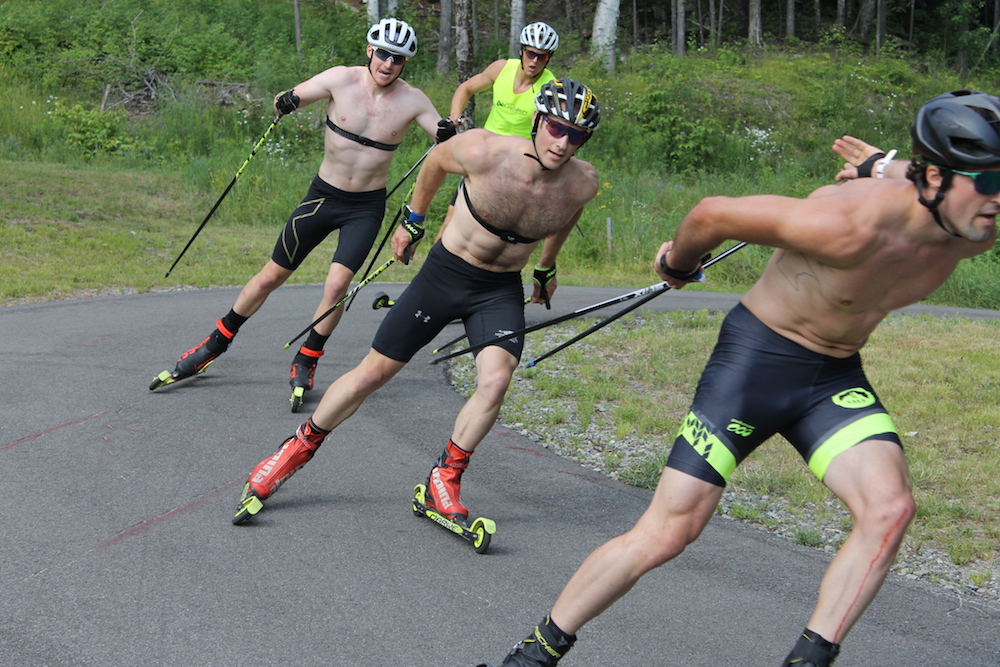
For coaches and athletes wanting to replicate this workout, Whitcomb said you don’t have to have a ton of athletes and a car-free, challenging rollerski loop like the one at the Olympic Jumping Complex.