The Covid-19 news in the United States is unequivocally grim: According to the U.S. Centers for Disease Control, July 3rd stands as the current peak of Covid-19 cases diagnosed in the U.S. The curve is spiking as opposed to flattening.
Last week, the European Union took the unprecedented step of banning U.S. citizens from traveling to the region. With few exceptions, unless one is a healthcare professional, seasonal agricultural worker, diplomat, or an essential international worker like military personnel, the travel ban is lock-tight if a U.S. citizen aims to gain access to Europe from the U.S. (A full list of exemptions can be found here.)
A few caveats: it’s early when considering the potential impact on next season’s World Cup due to Covid-19. But the news of the EU travel ban got us thinking about the respective Covid-19 caseloads for countries hosting Period 1 and Period 2 (Tour de Ski) World Cups. Period 1 consists of four stops — Ruka with three days of racing, Lillehammer with three days, Davos and Drammen with two each. Period 2 consists of the Tour de Ski.
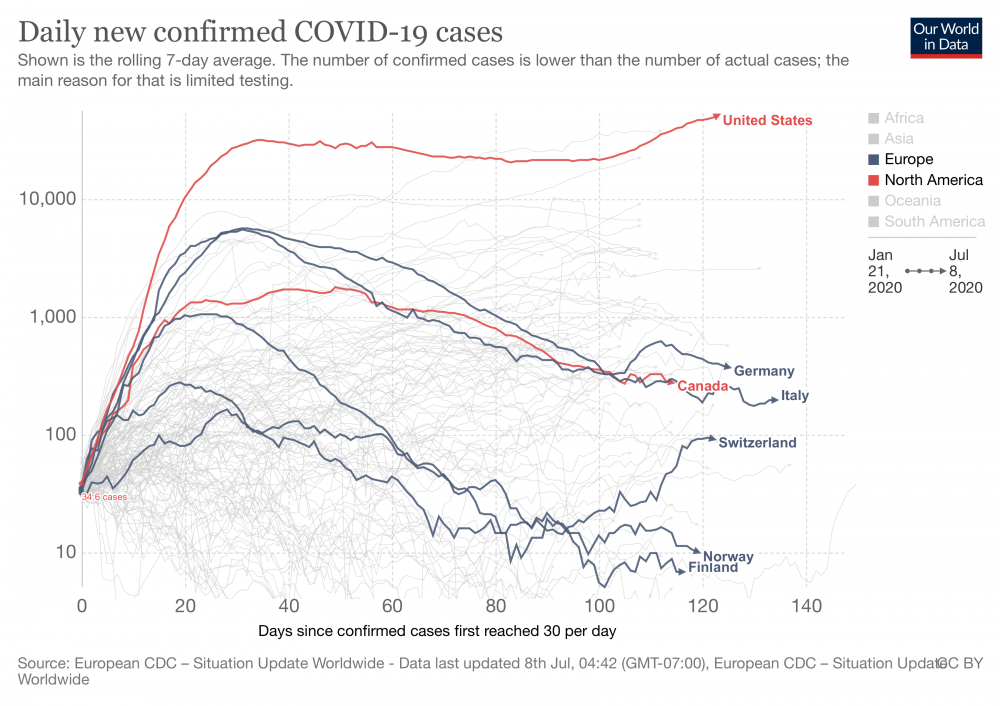
Finland and Norway, the first and second week’s hosts, appear to have flattened the curve. Both nations have modified their once draconian travel restrictions and loosened parameters for smaller-scale gatherings.
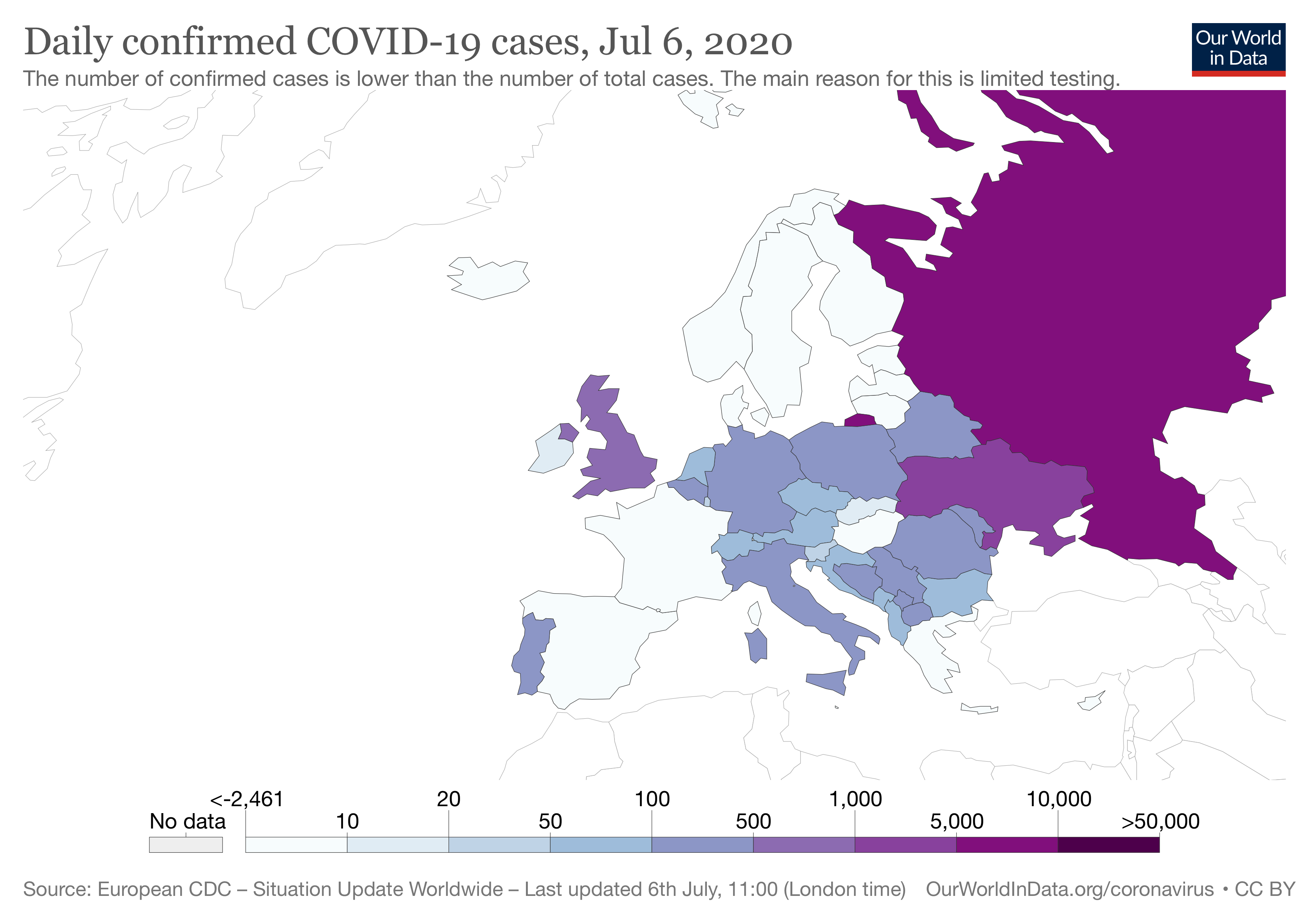
Curves for Italy and Germany are also trending in an optimistic direction. The exception for countries hosting Period 1 and 2 races is Switzerland, which has seen a recent uptick in daily reported cases. Switzerland is not part of the EU. As of July 6th, restrictions on travelers to Switzerland from 29 “high risk” countries were implemented. Travelers from any of the 29 countries, which include the U.S., must self-quarantine for 10 days.