
 A clean slate cancelation of U.S. Ski & Snowboard’s cross-country national racing calendar. That’s a piece of the collateral damage in the niche world of domestic ski racing. The cancellation includes SuperTour, U.S. National Championships, SuperTour Finals, and the Junior National Championships.
We’ll get to how these races may be replaced in a moment. First, U.S. Ski & Snowboard set forth a series of bullet points regarding the reasoning and considerations for the wholesale cancelation. They include difficult logistics in terms of race travel and the prospect of hundreds of people settling into small communities unable to properly handle a population spike during the pandemic.
One aspect all should be clear about, U.S. Ski & Snowboard is cancelling its suite of national cross-country races, not national level races in their other disciplines.
“We recognize that the nature of the sport of the Cross Country ski racing in our nation has special considerations that are often dissimilar to other U.S. Ski & Snowboard disciplines,” U.S. Ski & Snowboard wrote in a prepared statement to FasterSkier. “National-level cross country events boast big fields, with hundreds of athletes, coaches, and officials, and these events are often hosted in small communities.”
Another reason cited for the modified cross-country racing schedule was a U.S. Ski & Snowboard survey finding members preferred regional rather than national racing during the pandemic.
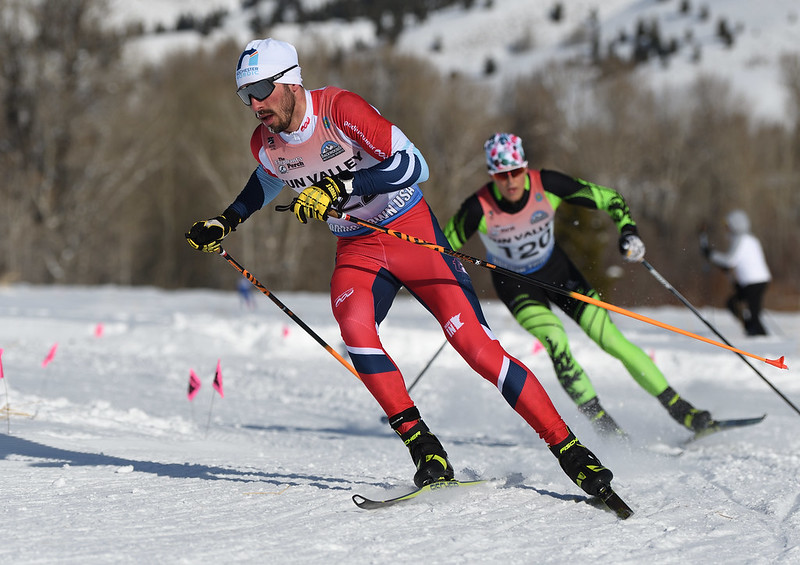
Behind the scenes, clubs and regions have been working towards developing high-quality regional racing. What this exactly looks like remains opaque for the time being. Yet announcing the cancellation in early September allows all stakeholders to plan accordingly for new regional races, or conversely, suspend allocating resources on intensive events like Senior Nationals and SuperTour.
“Local organizing committees, divisions, and regions are better positioned to start planning an effective and motivational race calendar for their area, potentially sanctioning races via U.S. Ski & Snowboard and/or the FIS to attract quality competition,” U.S. Ski & Snowboard stated. “Quality events can be built on a regional model.”
For local organizing committees (LOC), the costs for running events is considerable. According to U.S. Ski & Snowboard, most of the larger events require 300 or more participants to break even. Most states currently have strict limits on organized group events capping mass gatherings well below the 300 person threshold. With the cancelation and reformatting of the race season, the financial risks for LOCs are reduced.
An unknown remains: how will aspiring World Cup athletes qualify for starts via a regional race calendar. The usual pathway involves SuperTour and/or Senior National wins/podiums.
“We have the ability to consider races happening across the country, assess performances from those regional events, and name teams for international trips via discretion,” stated U.S. Ski & Snowboard. “We have already created Discretionary Selection Review Committees for all of these selections, as well as mechanisms to solicit community feedback from the divisions prior to many selections. Although this system may be imperfect, it will allow for stand-out regional and divisional competition results to be recognized and considered for international team selection. The move to utilize much more discretion in these selection criteria is intended as a fix during the pandemic only, and we will return to criteria that focus principally on objective selection when the pandemic is over.”
***
FasterSkier followed up with Chris Grover, Cross Country Program Director, U.S. Ski Team to discuss the regional racing format and changes to the selection criteria for international events.
FasterSkier: Assume no SuperTour, since it has been cancelled. Can you describe the general template for what regional racing might look like? (How many regions? How many races per region?)
Chris Grover: This is really up to the regions and divisions. From the U.S. Ski & Snowboard side, we are monitoring how many venues are currently sanctioning FIS and NRL races, and when they are scheduling them. We will work with each region to make sure that they have some quality races on the calendar spread throughout the season. In particular, we want to make sure there is something scheduled regionally in December and ideally something in the first week of January (in the U.S. Nationals timeframe) that we can potentially use for selections to various teams.
FasterSkier: How does a regional race not turn into a national race? (Any rules limiting field size or limiting athletes from chasing results at a different and presumably weaker region?
Chris Grover: We expect that some of these regional races will be very high quality given the number of talented athletes in the regions (senior, junior, collegiate, etc.). We will not attempt to limit participation at any event to athletes from outside of a region. Travel will be at the discretion of the athlete, coach, parent, etc. and will reflect their comfort levels. Field size may be limited by local and state rules governing gathering size, and of course, those are always changing. If an organizer does come up against a field size restriction, U.S. Ski & Snowboard will work with them to determine the best way to solve it.
FasterSkier: “Although this system may be imperfect, it will allow for stand-out regional and divisional competition results to be recognized and considered for international team selection.”
- Referring to the above quote, can you help describe a scenario where a “stand-out” performance in say Alaska is comparable to a performance in the East?
Chris Grover: We know the athletes so we can easily gauge the quality of the field. If the race is a FIS race or an NRL race, we also have points to use in determining field quality. Then we simply look for stand-out performances. For example, someone who easily wins a sprint qualifier, or several athletes with a big gap over the rest of the field, or a junior athlete that is challenging quality senior athletes, etc. We’ll also look for patterns of quality performance by athletes over multiple race days.
FasterSkier: What if an elite team member or team (say skiers from APU), decide to ski in Europe (assuming they are granted visas) to achieve stand-out results. How would those results be considered?
Chris Grover: As in the case of domestic racing, it’s easy to judge the quality of the race by seeing which athletes are in the race and what the FIS points look like. Ideally, we’ll have many athletes racing World Cup and some of these athletes will certainly be selected to more World Cup via discretion and possibly even to the World Championships. We’ll consider all results from both domestic and international competition.
FasterSkier: Who is on the discretionary selection review committee?
Chris Grover: This is a long answer! The committees are different for each event or race series. They are already included in every criterion and are posted on our website. But here is the long portion of our upcoming letter to the community with details the committees:
Selection to the 2021 Oberstdorf Nordic World Championships
The current draft of the 2021 WSC selection criterion can be found here: https://usskiandsnowboard.org/sport-programs/criteria/cross-country-world-championships-criteria
We are still waiting for the 2020-21 World Cup Calendar to be finalized in late September before this criterion can be completed. However, beyond the objective selections that will be made from World Cup competition, this criterion still includes the ability to select athletes via discretion from regional and divisional racing conducted across the country in the first half of this season. We will fill our starts at the World Championships selecting athletes via discretion from both World Cup and regional/divisional racing from across the United States during the selection period. This criterion also already includes the use of a Discretionary Selection Review Group to analyze and ratify all discretionary selections:
All discretionary selections will be documented and appropriate forms will be available for record keeping purposes. All discretionary selections will be reviewed by a discretionary selection review group comprised of the U.S. Ski & Snowboard President and CEO, the Chair of the U.S. Ski & Snowboard Cross Country Sport Committee, and the athlete representative from that sport who is a member of the U.S. Ski & Snowboard Board of Directors. If the Chair of the U.S. Ski & Snowboard Cross Country Sport Committee feels that he or she needs to be recused from the discretionary selection review group due to a conflict of interest surrounding the selection of an athlete or athletes, they may delegate their role to the Chair of the U.S. Ski & Snowboard Cross Country Coaches’ Subcommittee. If the U.S. Ski & Snowboard Board Athlete Representative is also a currently competing athlete then another athlete, who is not actively competing, will be selected by the Athletes’ Council to be the representative in this group.
Current members of the Discretionary Selection Review Group are: