Torsten and Lars Brinkema were two brothers from Minneapolis with a GoPro, a film school semester between them and no feature credits at all when they talked their way into a U.S. Cross-Country Ski Team camp in Bend, Oregon, in the summer of 2023. They spent the following World Cup season inside the team, paid their own way through it, and came home with roughly 500 hours of footage. What they cut it into is Threshold, the documentary about Jessie Diggins and her eating disorder that premiered on Peacock in February and is now available to rent in the United States and Canada.
Earlier this month we published head coach Matt Whitcomb’s account of that winter and what the team changed because of it. This is the other half: the brothers’ own version, recorded before the rental release. Torsten is 26 and lives in Brooklyn. Lars is 23 and splits his time between Minneapolis and Los Angeles. They are still working as a duo.
Below is a transcript of the Brinkemas’ conversation with FasterSkier. It has been lightly edited and condensed for clarity. LB is Lars Brinkema, TB is Torsten Brinkema, MV is Matthew Voisin.
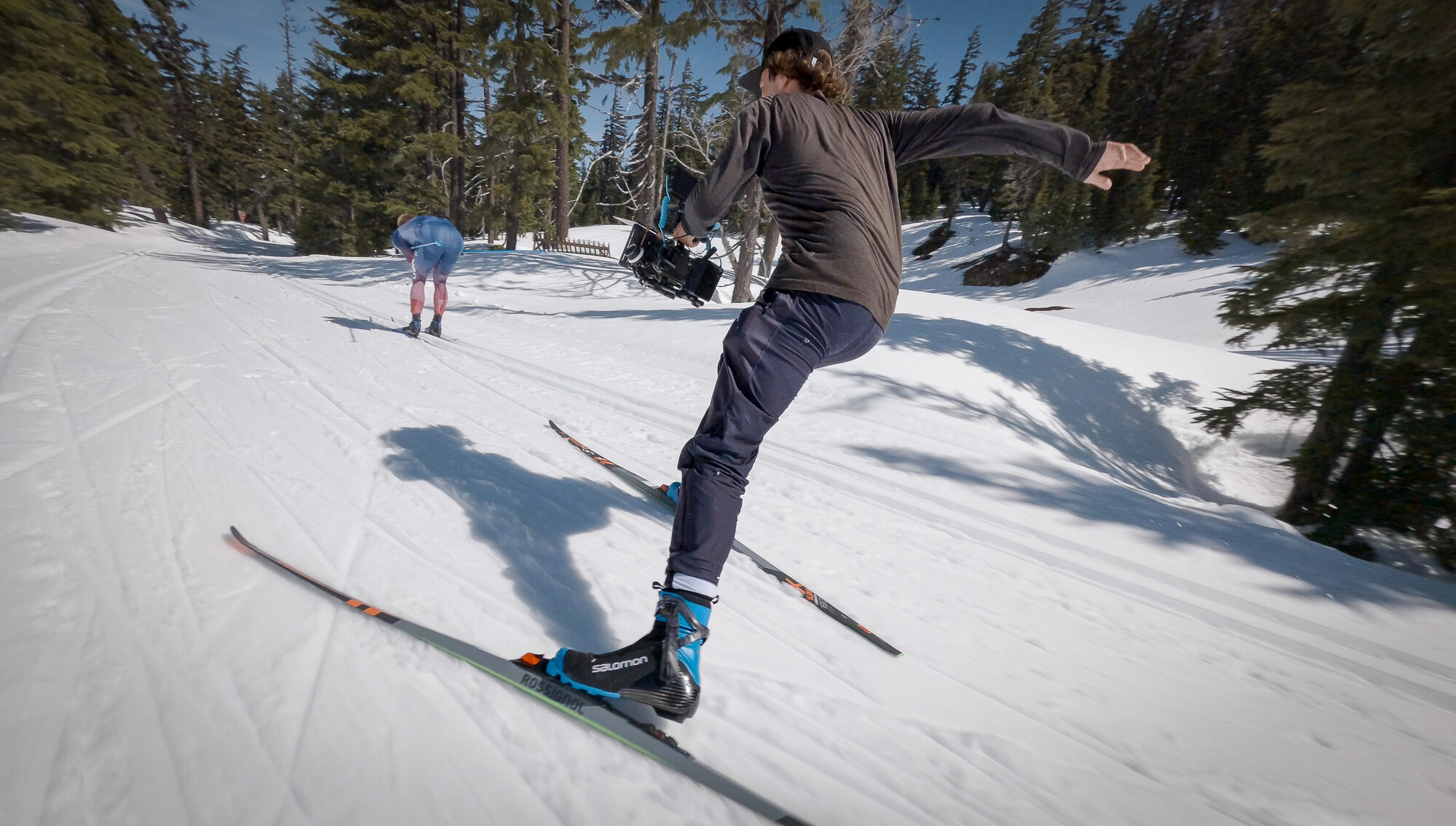
Lars Brinkema filming on snow at a U.S. Ski Team camp in Bend, Oregon, chasing Jack Young up the trail. The brothers had done the workouts themselves, which is the reason the team let them near one. (Photo: Patrick Conroy)
MV: I would love to back up a little and just hear about you two as young guys, how this all manifested.
LB: To start at the very beginning, Torsten and I were both born in Minneapolis and grew up in that whole Minneapolis ski world. We had skis on right when we started walking. So we really grew up in the same community that Jessie had grown up in, and she was kind of just this idol that we looked up to. We both remember where we were when we were watching that gold medal race in Pyeongchang. And then fast-forward to when we were getting older, just always carrying cameras around, usually a small GoPro on our ski trips. Torsten ended up skiing for Colby College, and that is where he met Ben Ogden, racing against him on the collegiate circuit.
TB: I got my ass kicked by Ben in most of the EISA college races. But I was always interested in shooting a lot of ski trips. I left school trying to figure out how to put those two pieces together, because I knew I was not good enough to be a professional skier, but I also wanted to capture the sport that I loved so much. It took a year of trial and error doing gigs for outdoor brands and whatnot.
Then, when we figured out the World Cup was coming to Minneapolis, I talked with the Loppet Foundation, which is the club Lars and I grew up skiing for. I was kind of like, listen, do you guys need any promotional materials? People should be getting excited for this event that is happening at Wirth Park. I convinced them on a shoestring budget to send me to Holmenkollen in the spring of 2023. I stayed with a family friend out there, reconnected with Ben, and met a lot of the other skiers on the team. I think they were kind of surprised to have an American photographer out there with them, just because they are not getting much coverage once they leave. Ben was sort of like, we have to figure out how you guys can stick around with the team a little bit longer. It was just me at this point, but Lars was in film school. So Ben pitched Matt Whitcomb that he should invite us to their Bend, Oregon camp.
MV: What did you think you were making at that point?
TB: Lars and I basically bought cinema cameras and showed up at camp. We were definitely inspired by a lot of other sports documentaries at the time, niche sports finding success in that genre, people going, oh my god, look at Formula One, I have never heard of this sport before but I am really loving the series. And we were like, we could probably do something like that with skiing. Make it look really cool.
I think the team was happy to see filmmakers who could not get in the way of their workouts. Jessie had experiences in the past with a brand interrupting an interval session, asking her to do another interval. This is just something that would never even cross Lars and my mind, to alter the workout, because we know how intense they are. We know the workouts. We have done them before. So we were kind of flies on the wall, and I think that proved our ability both as skiers and as filmmakers, to be in that documentary position and not get in the way.
MV: What were you envisioning before it started to become more about the eating disorder and the mental health challenges?
LB: Just bringing this sport that we grew up in and that we loved to the masses. We had seen smaller endurance sports, whether it was a YouTube channel or on Netflix, sports that we loved but not a lot of people in the U.S. tracked. And there was always this element to the successful films about sports that was more the human side of the story. We approached it very open-ended. We kept those options really open for a majority of our filming. We were still capturing when we went on the World Cup, talking to European athletes, we had some fun conversations with Klaebo on camera. We just spent every waking moment following different stories.
I would say we were definitely, kind of subconsciously, following Jessie’s story more than others, and that just developed over the time of filming. Not until the editing process is when it really shaped. We had 500 hours of footage, so many different interviews with so many different athletes, doctors, staff on the U.S. team. And as we started to screen rough cuts to film industry people around Los Angeles and New York, we were getting so much feedback that Jessie’s story was the most resonant of all of them.
MV: You have 500 hours, and then at some point you have to make the decision that almost all of it is hitting the cutting room floor. How do you feel your way through that?
TB: Having an editor who had never cross-country skied before was totally instrumental in figuring out what would resonate with the wider audience we knew we had to appeal to. And there are also those moments where Lars and I were deep in the Arctic Circle, freezing our butts off, trying to get a time-lapse of the northern lights, out there for two hours and so attached to this one shot that we worked so hard for. I remember being in the cutting room and him saying, it is not serving the story, you have to cut it. Those were the things that were so hard to let go of.
And of course all these other stories, U.S. Ski Team members, Klaebo, Emma Ribom, Pellegrino, people that we really looked up to, and all of their stories deserve to be told. But at the end of the day, when you have this Jessie story that is so compelling, you cannot really deviate from it if you want to give her story the time it deserves. At the industry screenings, Lars and I walked in with a lot of questions about what would resonate with a non-skier audience, and people just kept saying, Jessie, Jessie, we want more Jessie.
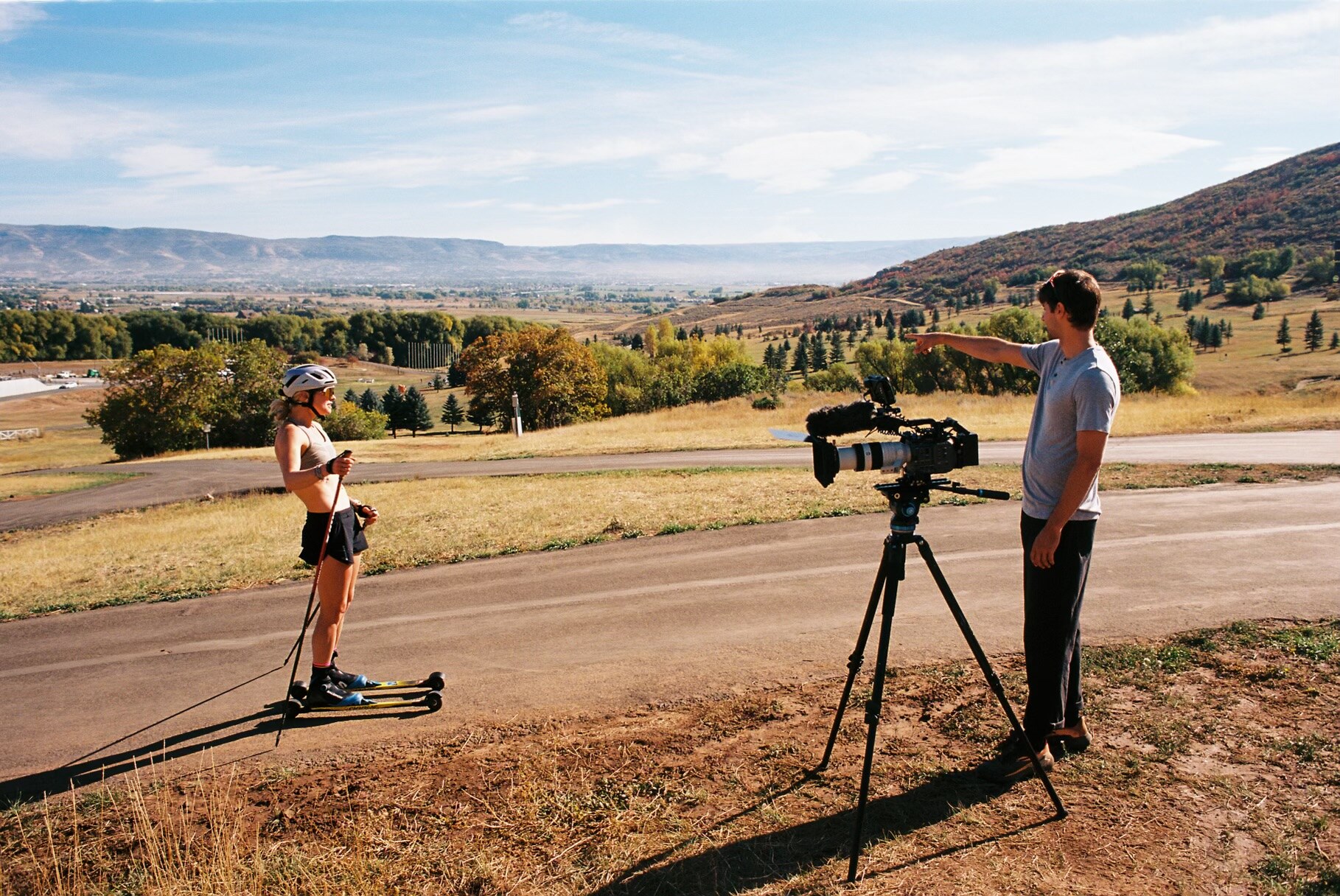
Jessie Diggins and Torsten Brinkema at the team’s Park City camp, in the open-ended stretch of filming before anyone knew what the story was. (Photo: Willie Maahs)
MV: How did you get hooked up with Patrick Dempsey?
LB: It was about six months into filming, right after the Tour de Ski, at a camp between that and the next World Cup stop. Growing up in the Midwest, we did not have any connections to the whole Hollywood world, but we definitely needed to find someone to help us get a foot in the door. So we asked Jessie if she had anyone in her directory who worked in that space. She remembered that Patrick had supported the ski team, and she was able to just send him an Instagram DM. He responded right away and said to send Torsten to his house in Maine. A couple of months later we showed up at his doorstep and pitched him on the idea. He had grown up cross-country skiing in his backyard in Maine, so he is very connected to the sport and a huge Jessie fan.
MV: Jessie is big, but Dempsey is on another level. What was that like?
TB: It was pretty wild. We knew this was a ticket for us into a new world that we had always hoped to get the keys to. And credit to him for inviting us over, because the roadblock we hit at every stage of this process is that we have no films to our name. We have a couple of short projects that nobody has seen. So we are asking someone with the credits that he has to trust us with nothing to see for it. Obviously Jessie’s word goes a long way with him. We had to swallow our awe of him and realize this was a huge opportunity, and tell him what we really believed: that there was a story in those 500 hours. At that point we had not really cut anything. He became a very important part of shaping it down to what it became in the end.
MV: What other filmmakers have inspired you? What did you grow up watching?
LB: One huge one was Jimmy Chin, especially with Free Solo. That may have been the first ever documentary I saw in a theater. This niche sport was brought to a thousand theaters across the country… such a huge story and such an interesting character. That was one of the times we were like, wow, we could bring a sport that we love to the big screen in an impactful way.
TB: To add to that, I remember, I think it was actually while we were filming on the season, I saw a really old Herzog documentary from the 1970s called The Great Ecstasy of Woodcarver Steiner. Herzog was in his late twenties, early thirties, and he dedicated basically a whole year to following the ski jumping circuit, when it was at that really gnarly phase of people pushing the boundaries on these jumps, ending up jumping all the way to the flats, a whole bunch of drama between the jumpers and the officials. The fact that he was caught up in this story when he was around our age, and it felt like we were doing a similar thing, dropping everything to follow this circuit in unfamiliar landscapes. That just felt like, wow, if one of these great documentarians dropped everything for a ski documentary, we must be doing something right.
MV: It is expensive to travel around Europe for a whole season, and the ski team is pretty transparent that their budget is tight. How did you make those numbers work?
LB: We definitely had to pay our whole way through that season. There was not support from the ski team, in that they did bring us on, we were marked as members of the team crew, so we got our bibs and access to the races. But we basically had the ski team and Jessie help us find people who in the past had supported the ski team. It is not funded by the government; the ski team lives off these people who donate. So we went through their list of people who were instrumental in making sure the ski team could have success, people who paid for the wax van they use to this day. Over the course of filming we were always having to fundraise more and more money.
Later on, when we were fine-tuning the edits, there were still a lot of payments to be made. We talked to Jessie’s sponsor, the Emily Program. That was a really cool opportunity, because now they are supporting the film, but they are also bringing it around the country to treatment centers and educational screenings.
MV: You set out to tell a fun story and ended up helping people with something that is a real medical issue. Do you take a beat to think about that?
TB: That is kind of the goal right now. We had a release with Peacock, which in a way felt like being viewed by this Olympic ski audience, but not everyone in the U.S. has Peacock, so right now we are figuring out how we can reach the people we did not reach in that initial release. For sure our target audience is this young group of impressionable people who are growing up either struggling with this disorder or who have people around them who have struggled with mental health. We have heard from people who have never skied before who say they were so moved by Jessie’s story. That is the biggest compliment we can get.
It is a really hard thing to do, for her to pass one of the hardest years of her life on to us, filmmakers who had never made a film before, to then put out to the world. I remember when we showed her one of the rough cuts. She told us that this is the story her 18-year-old self desperately needed to hear. When we got her blessing, and when she said that, we took it and we ran with it, because we knew we could have that impact on countless other people who were struggling. That was a huge motivator for us.
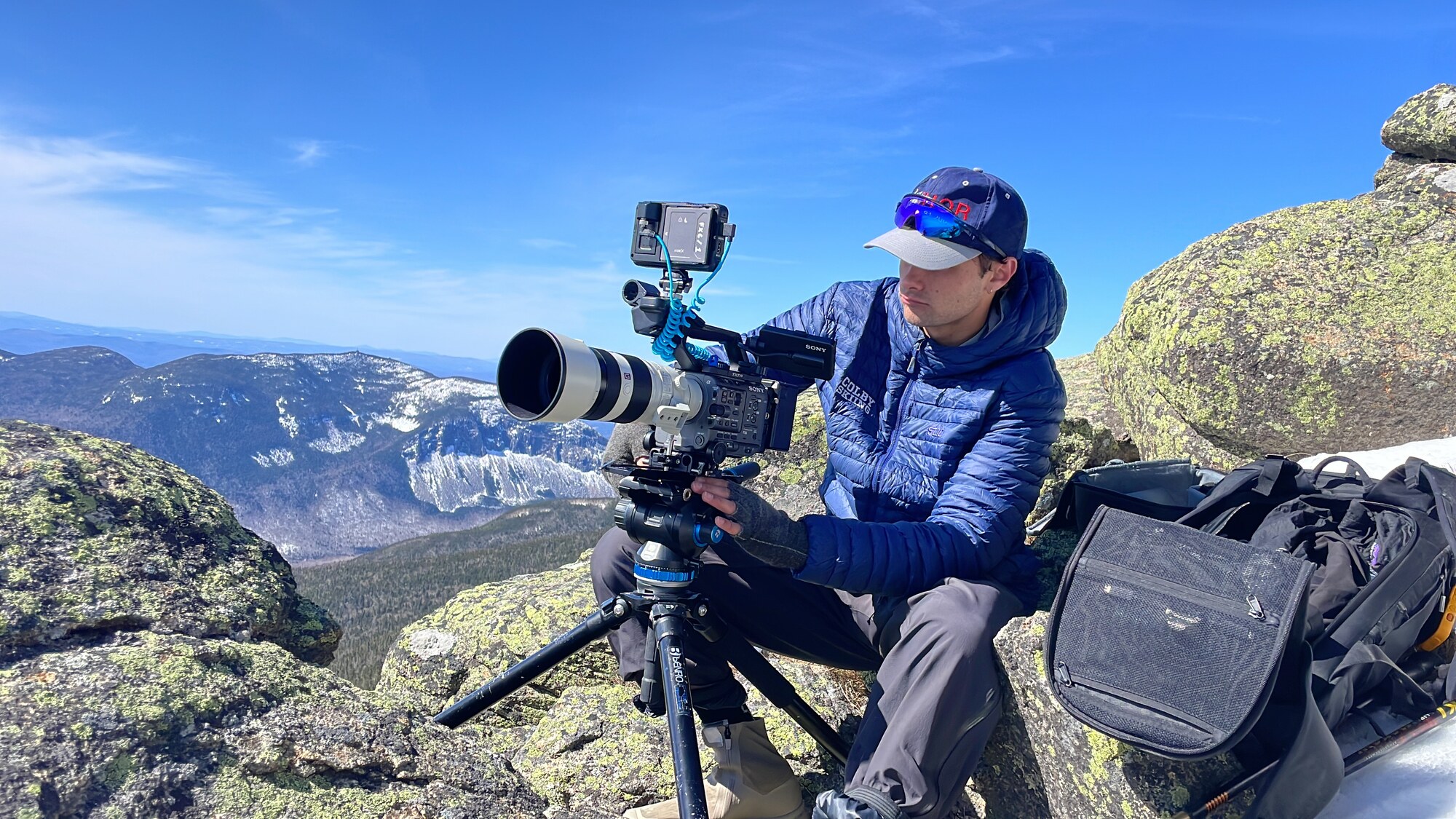
Torsten Brinkema on a summit in the White Mountains of New Hampshire in April 2024. This one never made the film either. (Photo: Brinkema Brothers)
MV: Can you give me a specific memory from being in Europe?
TB: Mine jumps to not a specific story, but this life on the road, which was so crazy for Lars and me. It was crazy to see the athletes, but also the staff who have done this year in, year out. It really is a wild lifestyle, packing up and going to a hotel room in the middle of nowhere in Finland, where there is light for five hours out of the day, then getting up and packing up and going to the next location in Sweden. The dedication these crews have is crazy, away from their families, away from the normal comforts of living in the States, and the fact that they repeat it every year.
We pretty much joined every training session and filmed as much as we could, then charged the cameras and packed all the footage onto a hard drive. I always loved those nights when we were really tired, it is super dark out, there is nothing to do, and we would walk over to the wax truck and see what those guys were up to. It was always something fun. They are always blasting music, maybe having a shot of Jägermeister. I think they liked having us around because we were these young people who were totally oblivious to the waxing scene, so we could pick on whoever was not busy at the time. They had been living this life for five, ten years, and Oleg has been around, I do not want to quote how many. These guys are putting everything on the line and being away from their families to make the fastest skis in the world.
MV: You mentioned the cameras. What was the gear you used to capture these moments?
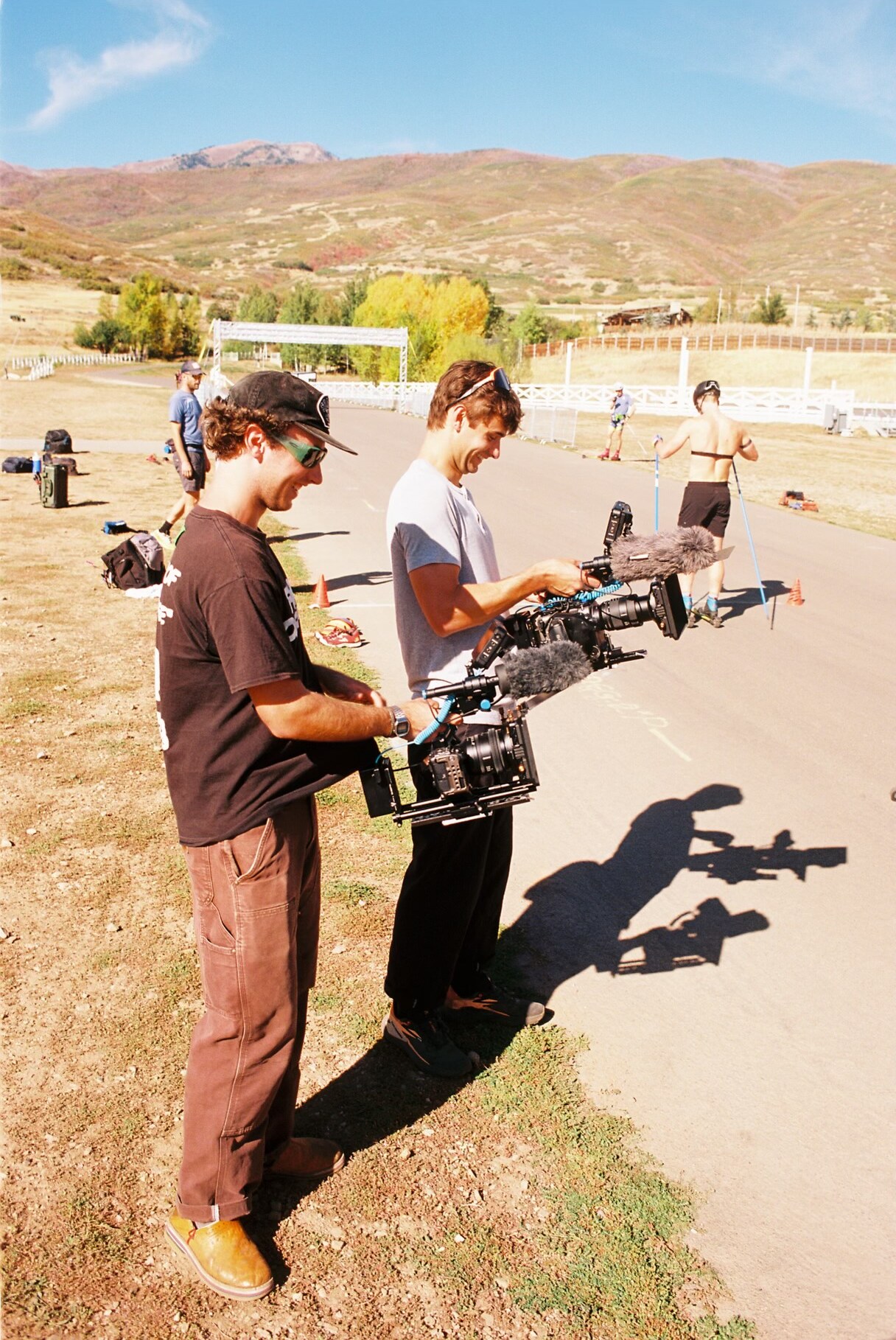
TB: We were rocking two Sony cameras, the FX6 and the FX3. That was a progression from, honestly, GoPros. Lars and I just loved being able to carry a camera that would not get in the way of anything, which was so important. We did a 20-mile run with Zanden, Gus, Luke and JC in Alaska, and we carried both our cameras and the drone in a backpack. We always wanted to be able to carry everything we had with only a backpack. That was the goal. In the winter we did a ton of skiing without poles, carrying those cameras, setting up a shot for a while and then skiing alongside people and trying to get it.
The drone was another really key part of the setup, because it let us get beautiful shots of people when we could not keep up with them, which was most of the time. We could only set up these flyby shots for a 20-second clip before they sped past us. We are super proud of those shots, because it took thousands of them to get the five or six that appear in the movie of Jessie flying by in a training session. We also had to figure out how to make the cameras work in the cold, which was something we had not really experienced before. It involved a lot of hand warmers and duct tape, but we eventually figured out a system that worked even at minus five in Finland.
MV: I have used hand warmers to keep my batteries warm too, but what is the duct tape for?
TB: Taping the hand warmers to the battery on the camera, right on the part of the camera where the battery is.
LB: We would have extra ones in our jacket pocket or in our pants, trying to keep them close to body heat so we could swap them out.
MV: Lars, what stands out for you?
LB: Just seeing the sport in Scandinavia was this insane experience. I remember the first Holmenkollen that we followed. I am sad it did not make the movie, but it was absolute mayhem. More people than are in the stadium for the Super Bowl. A hundred some thousand people in the woods watching these skiers who are going by maybe once every 20 minutes. It was not for a sprint, it was not for high impact crashes, it was just to watch these skiers go by, and they were so into it. I remember the big races in the U.S., high school meets, maybe the state meet, have a lot of people out there watching. But seeing all the young fans in Scandinavia watching this sport and being so jazzed up about it, maybe drinking a little too much during the race, it was such a cool experience that you do not get in the U.S.
TB: It was crazy to experience that and compare it to Minneapolis. We had plenty of those fan experiences, not to the scale of Holmenkollen, seeing the Swedes, seeing the Finnish people. But then coming back to Minneapolis, everyone who was there, most of them traveling long distances, doing crazy things to be there to watch the sport they had been waiting so long to see. That was insane in its own right, because here we are almost matching the energy of Holmenkollen on the trails Lars and I grew up skiing on. We learned how to ski on the 5k Wirth course.
Then I did a warm-up lap with Jessie before the 10k, and I started crying skiing down the sledding hill, because it was insane. The people, the roar of the crowd, traveling with her as she went around that loop. I feel like we were so blessed to be able to have that finish the movie, because it really felt like a homecoming for Jessie, and a realization of the legacy she has left, both in Minnesota and in the ski world.
Torsten Brinkema, left, on the warm-up lap with Jessie Diggins before the 10-kilometer freestyle at Theodore Wirth Park in Minneapolis, February 2024. (Photo: Dustin Satloff)
MV: What is something you are each really proud of?
LB: Just coming into the film with such an open idea about what it could be, and that every step of the way we had trust in each other that we were going to make this happen and get it to a large audience. As Tor mentioned, we stepped into a really hard time in documentaries to get one out into the world and make an impact through film. I think we just trusted at every step of the process that we were going to figure this out. Being able to do that and show it in person in Lake Placid and Minneapolis has been such an incredible experience.
TB: Going off of that, it felt like we were in such a unique position to tell this story. I am so proud of those POV shots we got on skis with the athletes. Again, that is the one percent of all the shots we did. But it is a crazy feeling, in a really crowded documentary landscape, to be one of a handful of people in the U.S., maybe even in the world, who can hold a cinema camera while going 30 miles an hour and pull focus and get that shot. It felt like a really proud moment just being like, wow, these turned out, and they are going to make it a better film, because you sort of feel like you are skiing with them.
Lars, left, and Torsten Brinkema working the roller ski loop at the Park City camp, with the two Sony bodies that shot the season. (Photo: Willie Maahs)
MV: What was it like working with FIS? Those rights can be really muddy.
TB: It was definitely a headache to navigate Infront, basically a huge Italian conglomerate that controls a lot of these rights. We had a lot of negotiation with them, because we did want the context of the broadcast footage to feed into the intensity of the race segments. We wanted the tracker of kilometers to go. We wanted Chad and Kikkan announcing, which is so special and I think really leads the film in a way, because Lars and I never really wanted our voices narrating any of this. So we relied on the broadcast to be that context and the hype. It was an absolute pain in the ass, and that is kind of all that I will say.
MV: What is next?
LB: In line with Threshold, it was really special to bring something that is a subject matter so personal to us, skiing and mental health. So I think we will continue to create stories that are close to home. We are working on a film that will be set in Minnesota. It was such an incredible experience to show our city and our race course on the big screen.
TB: We are excited to push our own limits again, and I think this round that will be writing a script, so not a documentary for the next one. But we still definitely want to work together, because having this balance of brother filmmakers, we rely on each other for the things we do not know or that we are not good at. Again, feeling that itch to both tell a story about home and push our comfort zones, which this project definitely did.
Where to watch:Threshold is available to rent on Apple TV, Amazon Prime Video and YouTube in the United States and Canada. It premiered on Peacock in February, and a European release is planned for later this year.
Help Support Our Coverage!
If you value the thoughtful work and access FasterSkier provides, please consider becoming a Voluntary Subscriber. Your support directly fuels our work to cover the people, places, and moments that make our sport special.
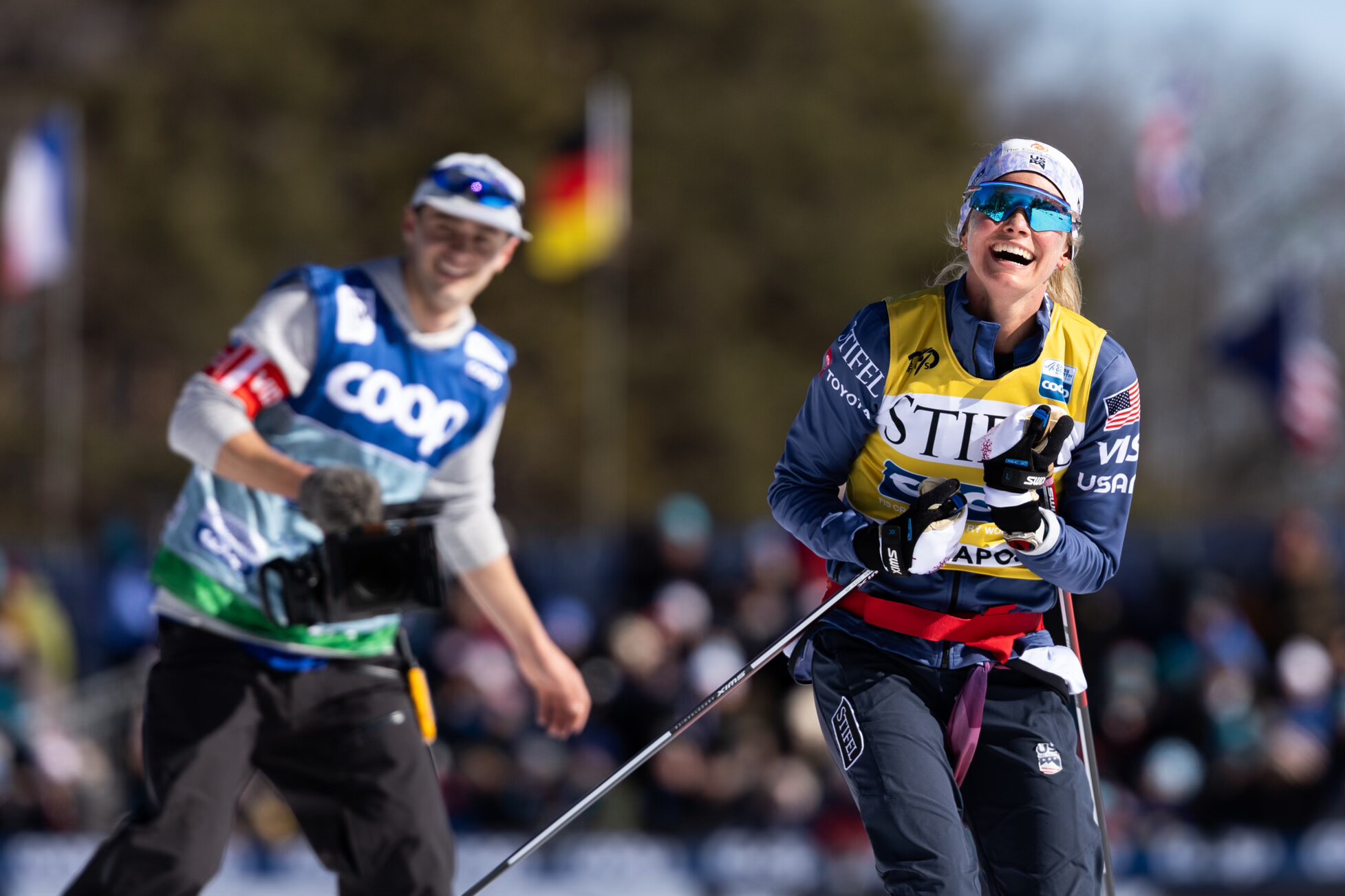
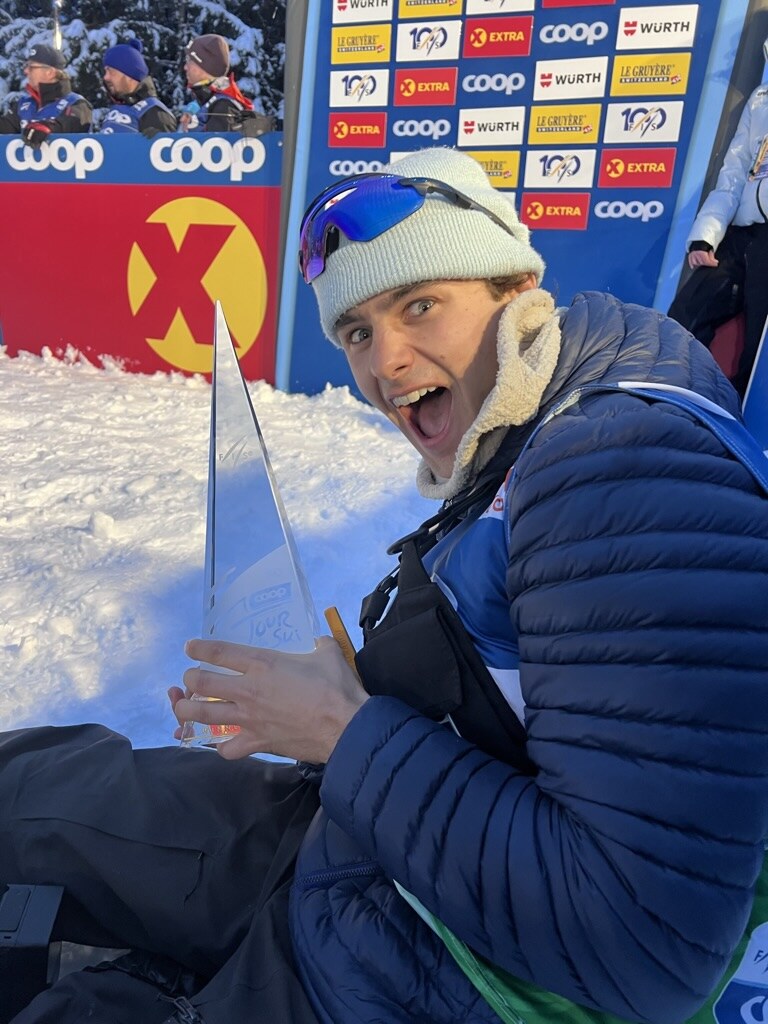
Torsten Brinkema at the foot of the Alpe Cermis final climb in Val di Fiemme, holding Jessie Diggins’ Tour de Ski trophy in January 2024. (Photo: Leann Bentley)

Comments
Commenting policyJoin the conversation. Comment and react with your Endurance ID — one account across the whole network.
Loading comments…