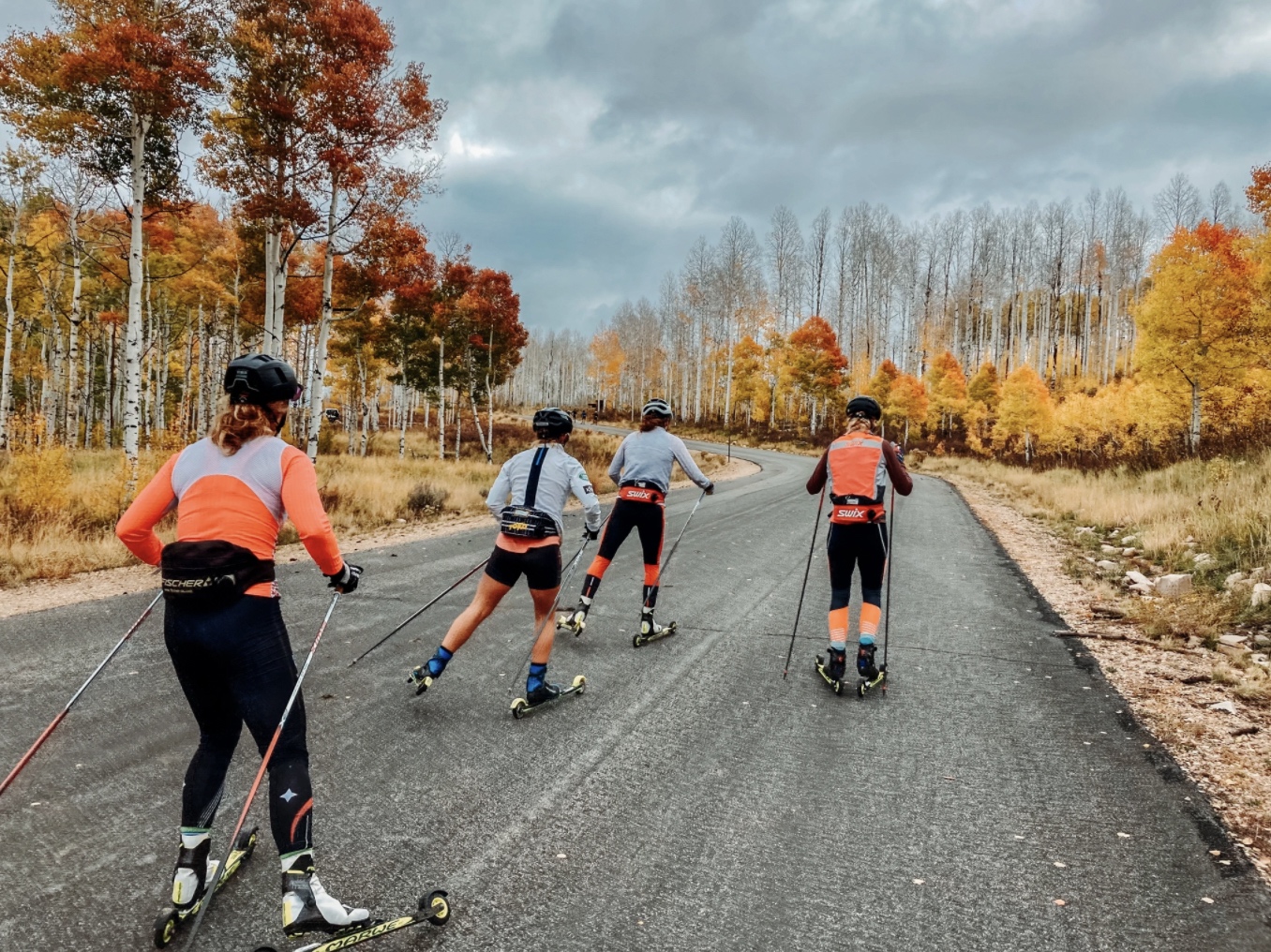
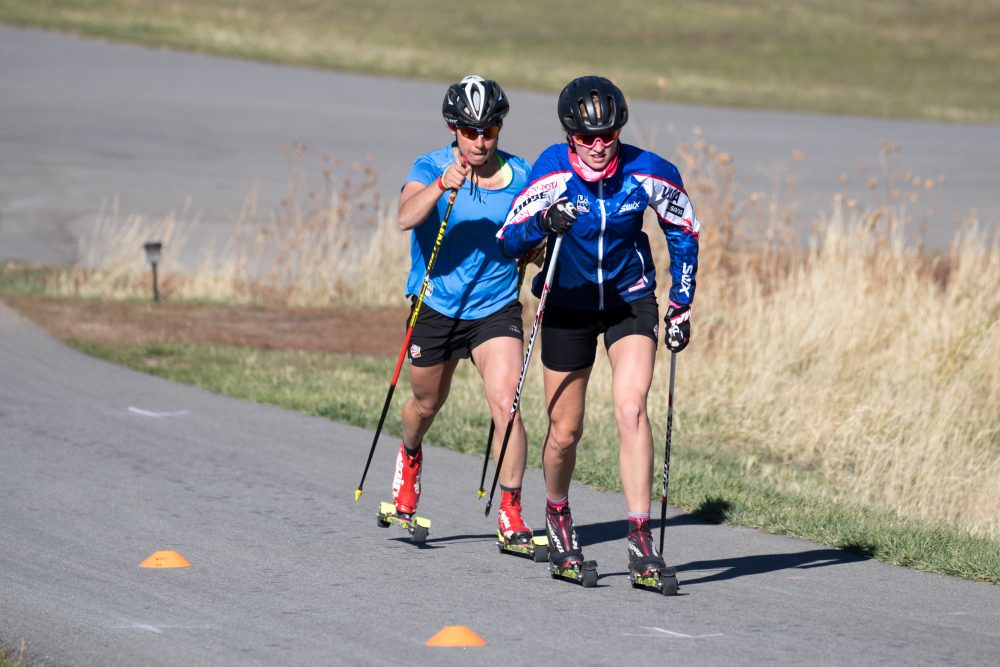
A rollerski session at the fall 2021 U.S. Ski Team and National Training Group camp in Park City, Utah. The two developing Norwegians Jim Galanes consults with most recently trained at altitude in Park City. (Photo: Alayna Sonnesyn)
Over the past four months I have been consulting with two developing Norwegians who have consistently trained 28-32 hours per week since May. The better of the two has improved his FIS points from about 75 to around 30 over the past two years. That is not yet fast enough to qualify for the Norwegian team, but it is a substantial improvement. Most recently, they completed two high-altitude camps of three weeks each in Park City.
What I have observed is interesting. They do most of their endurance work at low to mid Level 1, below a heart rate of 120 (max heart rate of 203), or around 60% of max heart rate or less. Yet their skiing velocities are reasonably fast. Most of their training is rollerskiing, split evenly between skating and classic. In total they are doing three to four strength sessions per week and 14 endurance sessions: on average two to three runs, with the remaining 11 to 12 sessions on rollerskis.
They also do two double-threshold days per week. On each of those days, the intensity for one session is 5-10 beats below threshold (a heart rate of 170), and the second session is above threshold, with significant time in Zone 4, VO2max training, or about 88-92% of max heart rate.
This consulting prompted my review of current trends in training and how we assess the need to increase volume.
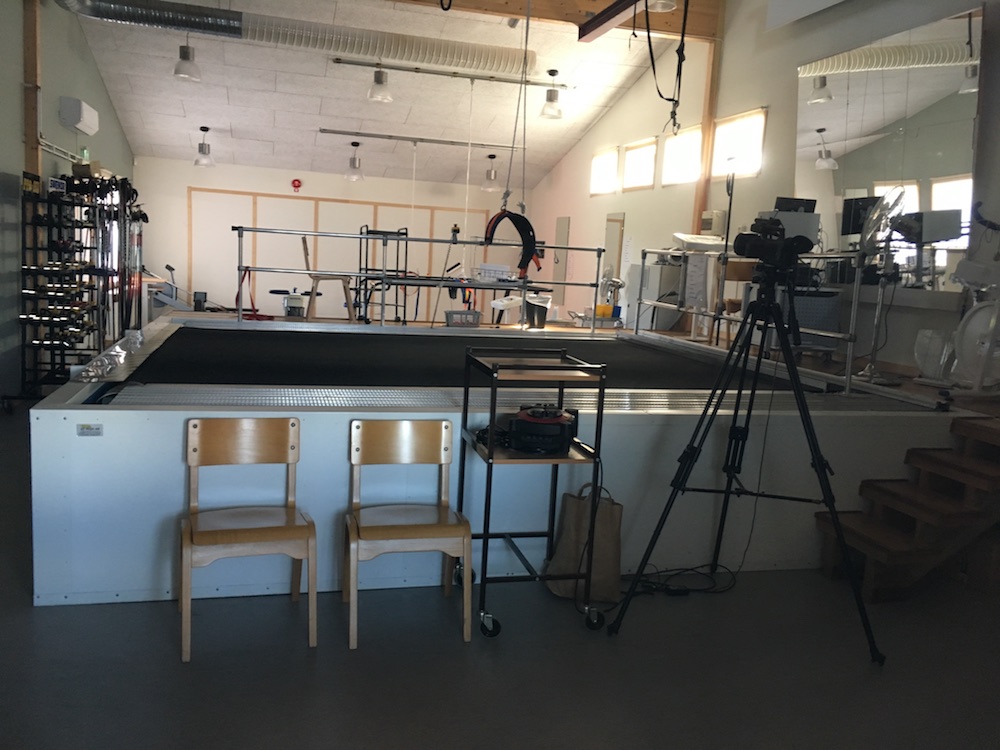
The rollerski treadmill and testing lab in Torsby, Sweden. (Photo: Maks Zechel)
What the Research Supports
We spend a lot of time studying, analyzing and monitoring the training of elite athletes in several endurance sports. I continue to say that training should first focus on four primary elements that are the foundation for improved performance. Those four elements are technique, aerobic endurance, aerobic capacity, and speed, strength and power.
My review of the literature reinforces the importance of aerobic capacity, exercise economy, and the ability to sustain and repeatedly produce race-specific power. Substantial volumes of low-intensity training are a consistent element of successful endurance programs. However, evidence that increasing an already high volume produces proportionally greater performance improvements is much less conclusive.
Low-intensity training signals adaptations in the muscles and cardiovascular system that support endurance training. These include changes in mitochondrial content and capillarization, although the magnitude of adaptation depends on the training stimulus and the athlete’s existing fitness.
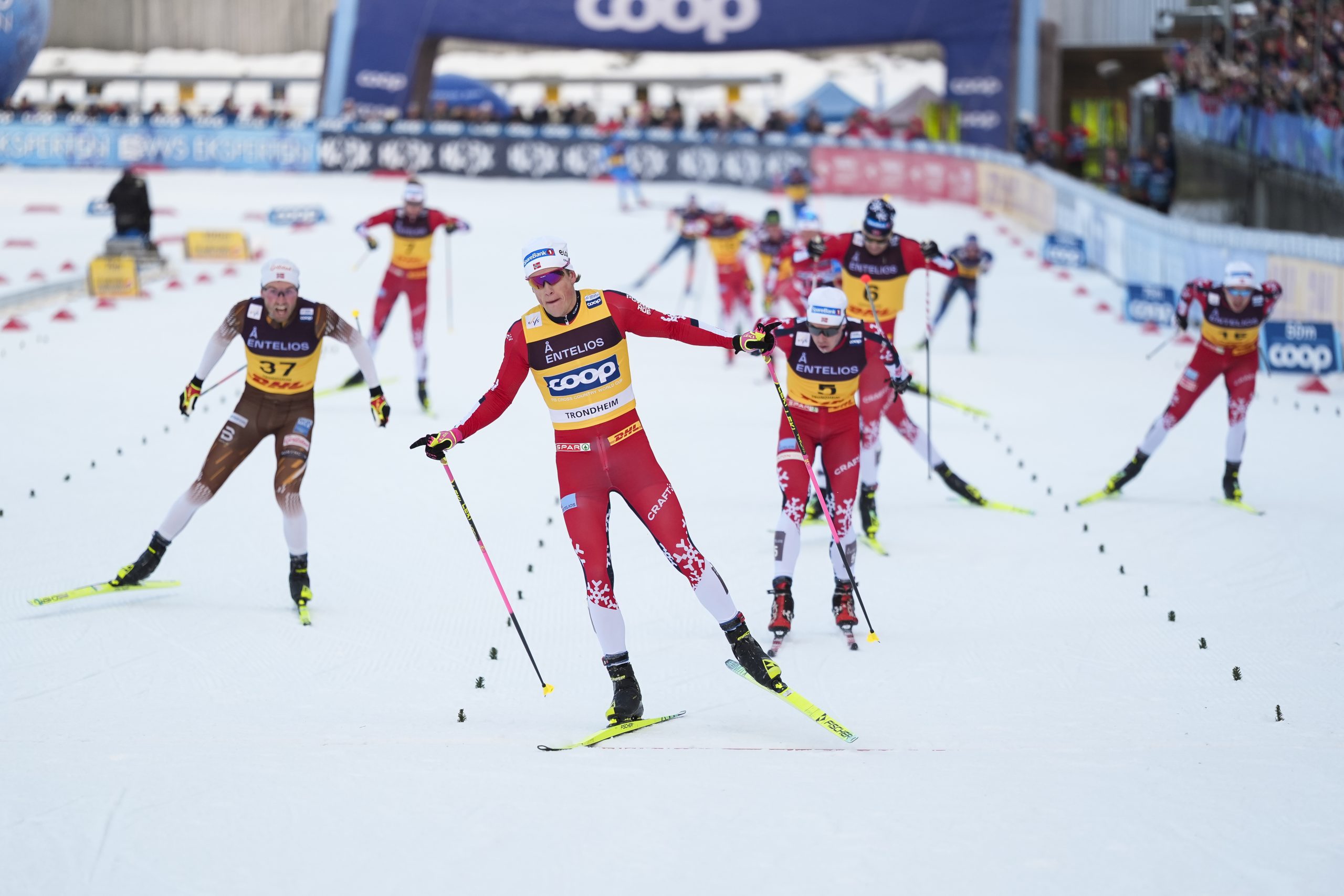
Johannes Høsflot Klæbo leads a line of Norwegians down the home stretch of the skiathlon at the Trondheim World Cup in December 2025. (Photo: Thibaut/NordicFocus)
The 1,000-Hour Trend
With the current trend of elite athletes training more than 1,000 hours per year, it is important to recognize that those who handle and adapt to that volume have come to it over many years. We are now often seeing athletes go from moderate volumes of training to very high volumes because that is what some of the top athletes are doing, and they may bypass other physiological development along the way.
There is a big difference between being able to do, and adapt to, a large volume of easy training and an actual improvement in performance.
There is little doubt that a high volume of aerobic endurance training is needed to develop the optimal metabolic pathways. But one way to look at it is that the top athletes are doing extensive volumes because they have approached the maximum adaptation from moderate volumes combined with high intensity, and they need a novel stimulus for further adaptation.
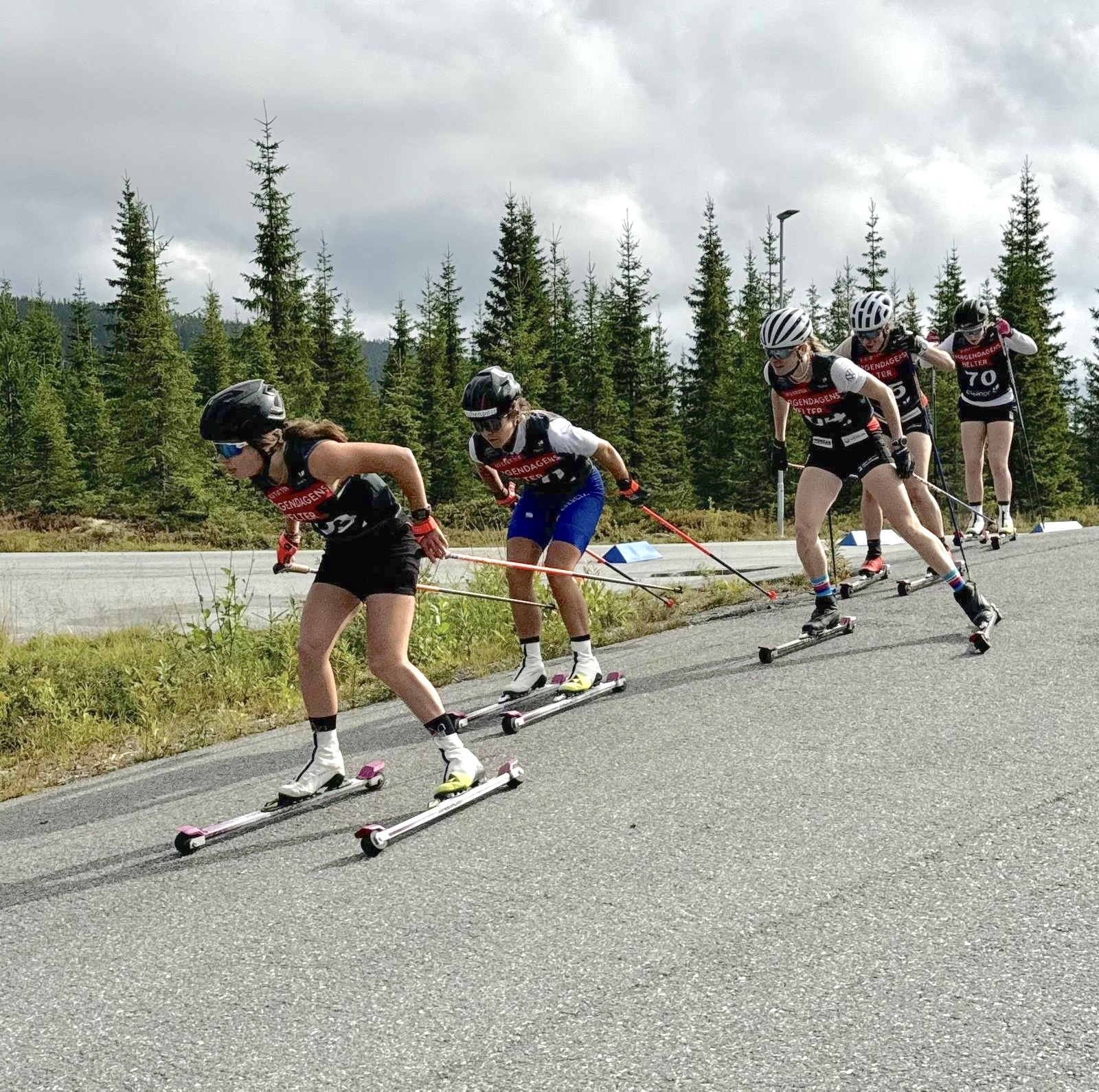
Athletes from several countries rollerskiing at an international training camp in Sjusjøen, Norway, in August 2024, with American Neve Gerard at the front. (Courtesy photo)
The Questions We Should Be Asking
I think it is important to ask these questions together, though they are now often considered separately.
Does low-intensity endurance training improve aerobic capacity and performance?
Does increasing low-intensity training volume improve performance beyond what an athlete is already doing?
Is extensive low-intensity training more effective than a smaller volume combined with appropriately prescribed higher-intensity training?
If an athlete is already performing a large volume of low-intensity training to maintain or improve aerobic function, is there additional benefit in adding another five to ten hours per week? For example, an athlete doing 20-25 hours per week increasing to 30 hours per week.
Does the additional training improve cardiac output, mitochondrial function, fatigue resistance, exercise economy, or actual race performance?
And perhaps more importantly, does the improvement exceed the additional recovery cost?
The evidence supporting the first question is sufficient. The evidence for the second is variable, and the third remains an area of considerable debate. The answers to questions four through six are not established for the specific athletes and training volumes being discussed. We often see the pendulum swing in training theory before it ultimately comes back to more reasonable ground.
There is also an important distinction between demonstrating that successful endurance athletes perform large volumes of low-intensity training and demonstrating experimentally that those large volumes are necessary for their success.
Team Asker skiers head back down an alpine slope between 4-minute Zone 4 bounding intervals at a 2017 camp in Norefjell, Norway. (Photo: Maks Zechel)
Start With the Athlete
The key to an effective training program is to first address the individual strengths and weaknesses of the athlete, and to develop the fitness objectives needed to ensure the best response. If aerobic capacity isn’t sufficient, the ability to change gears to climb hills, maintain pace on sustained uphills and recover between repeated climbs will be compromised. The simple fact is that if an athlete doesn’t already have a high VO2max, adding volume at the expense of higher-intensity training may not be beneficial. While virtually all training can improve VO2max, the science is clear that the signal to improve and the adaptation are greatly increased with high-intensity training.
We also need to consider the neuromuscular and technical benefits of high-intensity training over extensive aerobic training. The development of technique, motor unit recruitment, and the power to ski efficiently at race pace are important factors.
These are the questions I would ask before moving an athlete to a very high volume of endurance training, which for the most part is protected by a relatively high volume of threshold training rather than focused and controlled VO2max work. (See my previous article on the load of threshold training.)
Is the athlete’s VO2max high enough to ensure recovery from, and adaptation to, a very high volume of low-intensity endurance work, meaning they can move relatively quickly at low intensity?
Is their fractional utilization high enough, meaning that when they do threshold work, they are moving at very high speeds?
Has their volume of training progressed enough over several years that the increase is not so large it creates a problem with stagnation and overtraining?
An intensity session at the U.S. Ski Team’s Park City camp in October 2018, with Julia Kern and Hailey Swirbul among the skiers. (Photo: Reese Brown)
The Trouble With “Threshold” Intervals
I continue to read, and listen to many podcasts, touting the benefits of “threshold” Level 3 intervals. These workouts are intended to protect the very high volume of low-intensity training. They became popular in the ’80s, based on an uncontrolled Swedish study that reportedly demonstrated that this type of training improved VO2max.
There is little if any research that indicates the efficacy of this type of training to improve threshold. Norwegian physiologists Marius Bakken and Øystein Sandbakk have stated recently that threshold is less effective than VO2max training to improve VO2max or the sustained velocity at VO2max. It is simply a less risky way to do high-intensity training for those doing a high volume of training.
While all training produces some fitness benefits at different stages of athlete development, I believe that because of the relatively long duration of this type of training, the additional training loads are very high and the time course of recovery very long. At best, these sessions might be high risk and low reward.
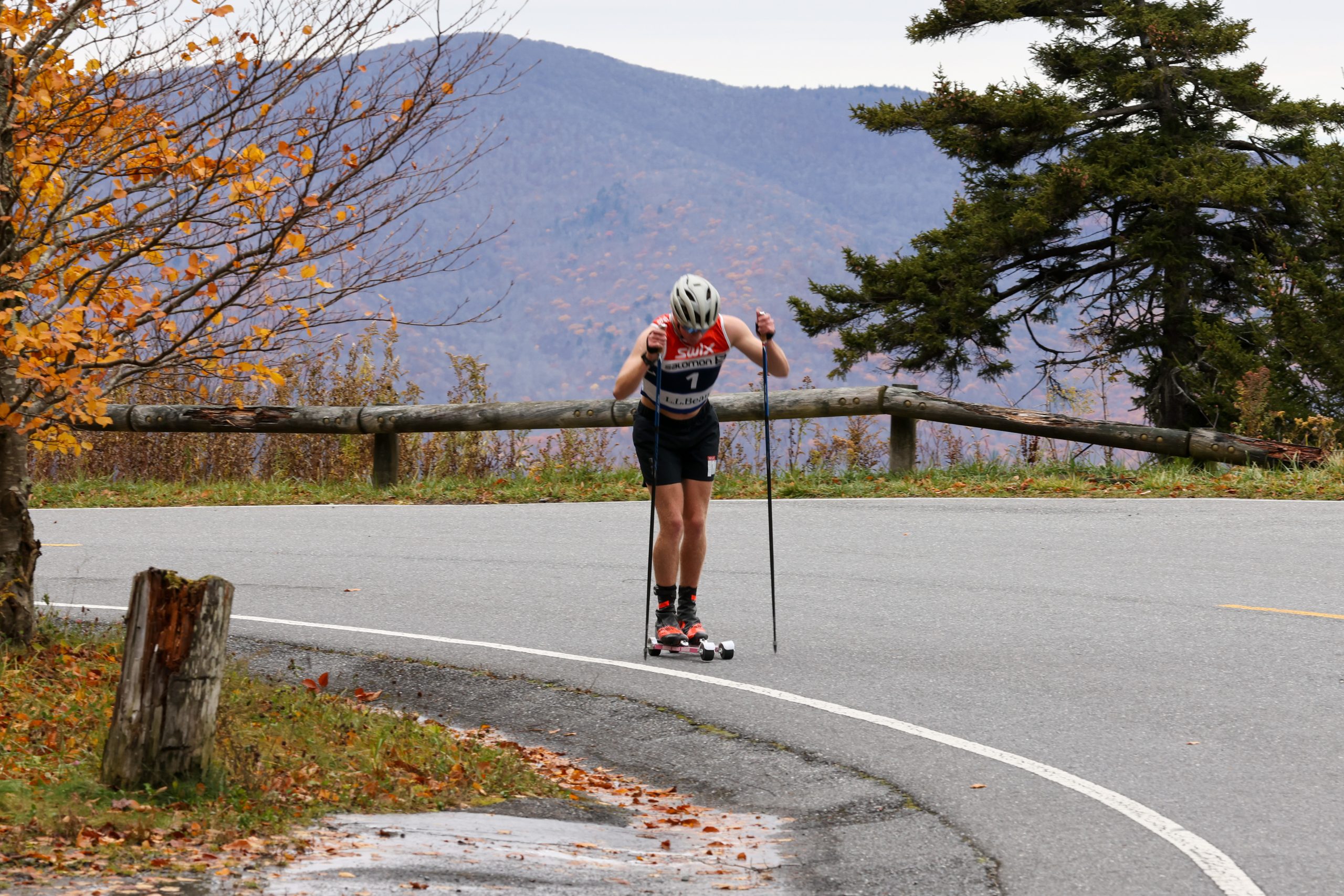
Cole Bothner (Williams College) on his way to winning the men’s race at the 2025 NENSA Roller-Ski Race up Mount Greylock. (Photo: Matthew Voisin/FasterSkier)
More Hours or a Better Athlete?
The question I would ask when considering a move to an extensive volume of training is whether the increase will produce better performance. The focus should be on whether more training produces a better athlete. Before adding volume, we should identify the limitation for a particular athlete and consider whether additional endurance work is the best way to address it.
Low-intensity training, threshold work, VO2max intervals, strength and speed all have a place, but their proportions should reflect the athlete’s needs and response. The value of a program should ultimately be judged by continual improvement in performance, supported by adequate recovery and consistent training, not simply by the number of hours completed.
Help Support Our Coverage!
If you value the thoughtful work and access FasterSkier provides, please consider becoming a Voluntary Subscriber. Your support directly fuels our work to cover the people, places, and moments that make our sport special.
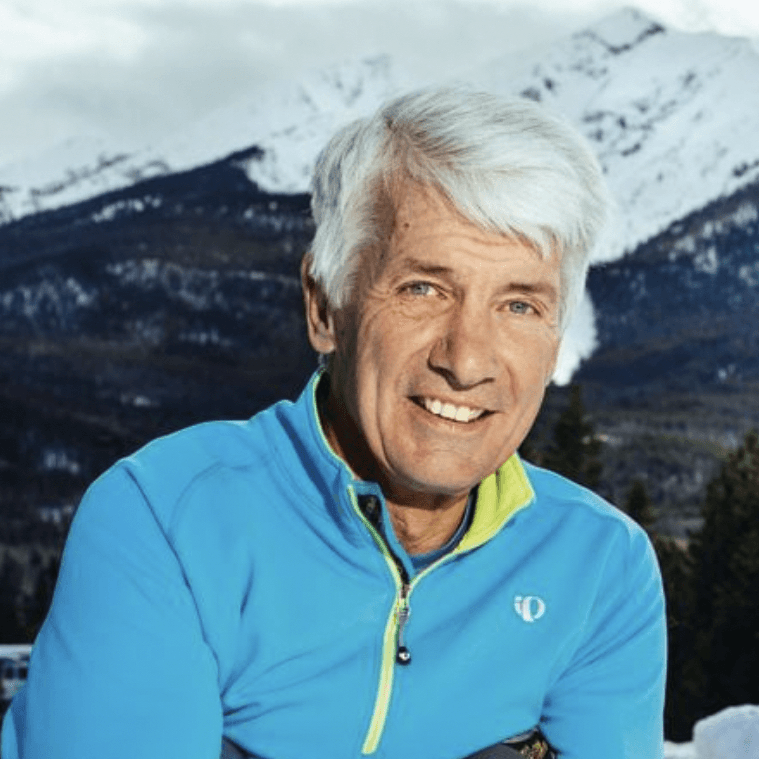
Coach, competitor, correspondent, commentator—Jim Galanes has spent a lifetime on cross country skis, always serving as a keen observer of our sport. A three-time Olympian in both Cross-Country and Nordic Combined, Jim has tested the theories, initiated the instruction, assessed the results. Now, FasterSkier is thrilled to announce that Jim joins our staff of writers and contributors, adding his unique and time-tested insights to the editorial offerings of this publication.



Comments
Commenting policyJoin the conversation. Comment and react with your Endurance ID — one account across the whole network.
Loading comments…