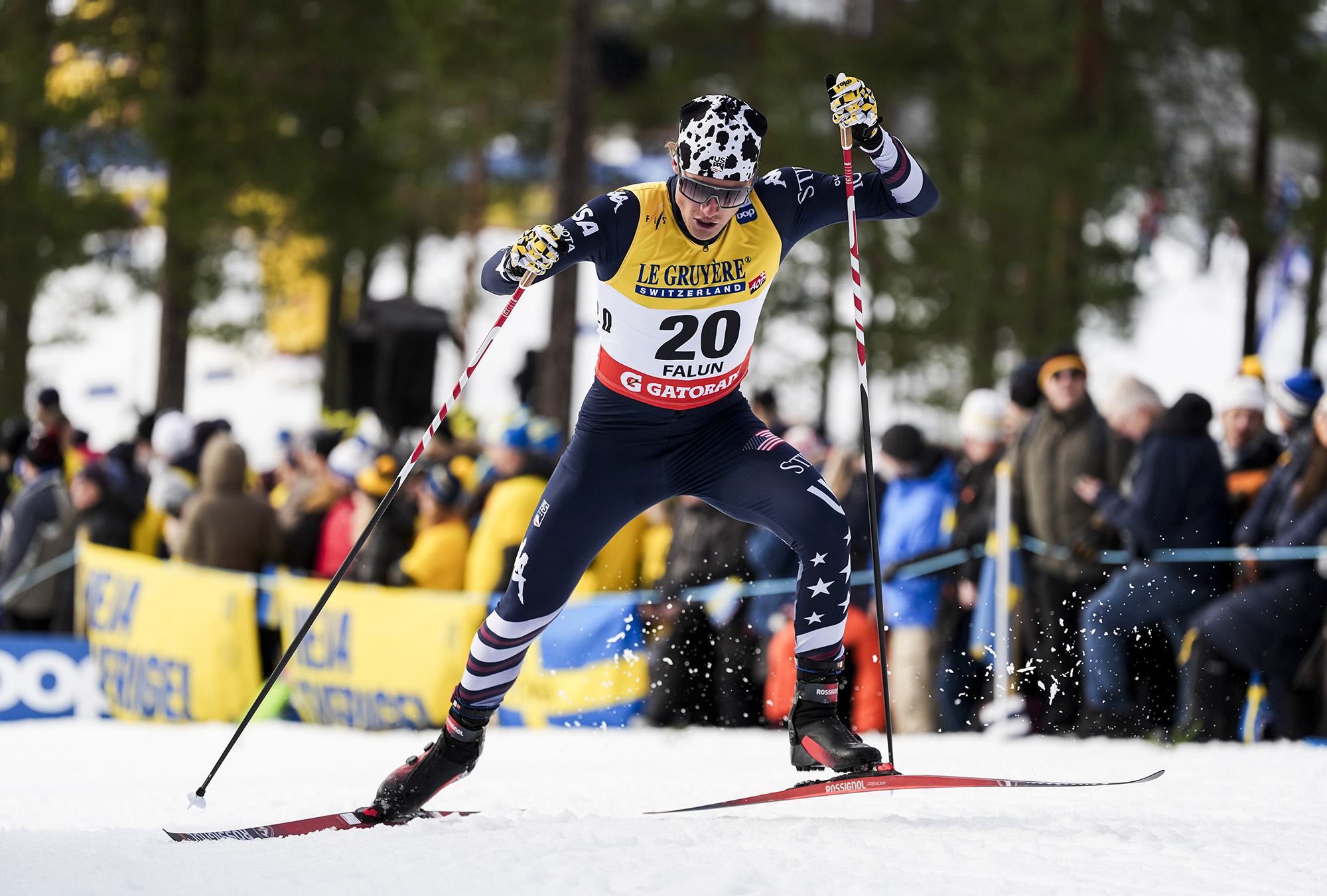
Gus Schumacher in qualification for the freestyle sprint at the Falun World Cup in Sweden in February 2026. Where 30/30 intervals shine, Jim Galanes writes, is in developing speed and technical efficiency at high speeds. (Photo: Thibaut/NordicFocus)
Back in the early ’80s my coach was Lennart Strand of Eskilstuna, Sweden. He worked for the U.S. Ski Team as a liaison and coach from the mid-’70s until the mid-’80s, and I started working with him just after the 1980 Olympics. His words to me: you can be a competitive World Cup skier with some adjustments to your training.
Lennart, on the advice of the Swedish physiologist Ulf Bergh, introduced me to 30/30 intervals: 30 seconds on, 30 seconds off. Typically we would do five or six 5-minute blocks of 30/30s, in total about 12-15 minutes of hard work. I believed then, and still believe today, that this type of interval training is very effective for developing speed, VO2max or vVO2max (velocity at VO2max), and technical efficiency at high speeds.
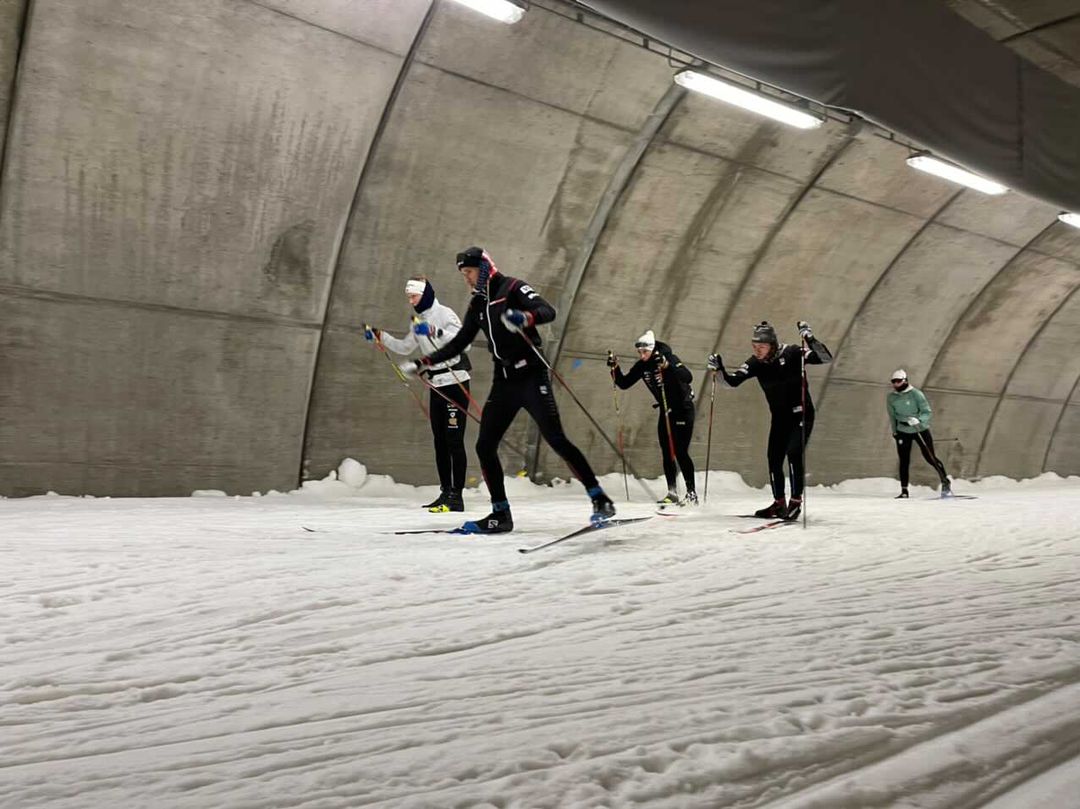
U.S. Ski Team athletes, Kevin Bolger and Ben Ogden among them, on snow in the ski tunnel in Torsby, Sweden, in August 2022. Galanes learned the 30/30 from a Swedish coach in the early 1980s. (Photo: Greta Anderson)
Old Things Become New Again
As with many things in training, the message is that old things become new again. Current research states that 30/30s should be done in a controlled fashion. The current guidance suggests they should start at an intensity just above LT1 and gradually build through each block. I am not certain that this is the optimal approach, but it is probably a safe protocol.
The 30/30 intervals provide a relatively strong stimulus for improving VO2max, though perhaps not as effective as, or no better than, 3- to 5-minute VO2max intervals. Where I believe these intervals shine is in developing speed, speed endurance and technical efficiency.
They develop speed and power endurance because they allow an athlete to train at much higher speeds than are typically sustainable in longer intervals. The equal recovery period allows enough recovery to repeat those higher speeds while reducing the fatigue that would accumulate if the pace were sustained for longer. This is especially important in cross-country skiing, which depends on the endurance of fast force production, technical efficiency and the coordination of movements.
The concept of speed reserve is also important for most endurance athletes. Those whose peak velocity is only marginally higher than their race speed may have reduced development of aerobic efficiency, and less potential to increase speed when race tactics require it. These shorter intervals can develop speed while maintaining the aerobic stimulus. I view speed reserve as opening the window on the ability to move faster across all training intensities, which is a positive adaptation.
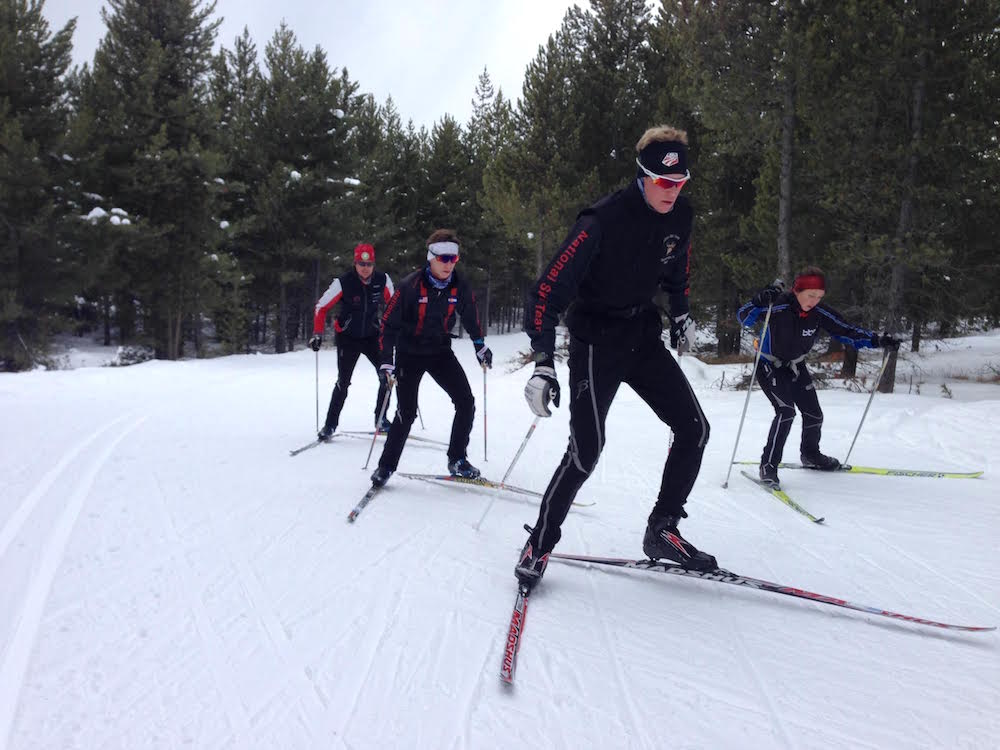
Skiers from the Aspen Valley Ski Club during a Level 3 and Level 4 skate intensity session on the Rendezvous Ski Trails in West Yellowstone, Montana, in November 2015. For 30/30s, Galanes favors moderate or rolling terrain over steep climbs. (Photo: Hailey Swirbul)
How I Would Structure the Session
I would structure the session as follows. Warm up for 20-30 minutes at a low intensity. Start the first 5-minute block at what the athlete feels is about 90% effort (not 90% of max heart rate). Over the course of that first block the heart rate will rise to low or mid Level 4, and in subsequent blocks heart rate can be an effective guide.
Next, I would progressively build the intensity to 95% effort and heart rates near the top of Level 4. This is where the real speed, speed endurance and VO2max benefits of 30/30s are realized. The 30-second recovery should be very easy. Over the course of each 5-minute block the heart rate will not drop much, and it will quickly return to a high level on the next repeat. From the perspective of the VO2max stimulus, this is what makes the workout effective.
When doing 30/30s, terrain selection is an important consideration. Climbing hills can create a big cardiovascular load at relatively low speed. Moderate or rolling terrain will allow for faster skiing and greater coordination and technical demands. High intensity and higher skiing speed are not the same thing. In these workouts, I believe we want to use the speed to create the metabolic load.
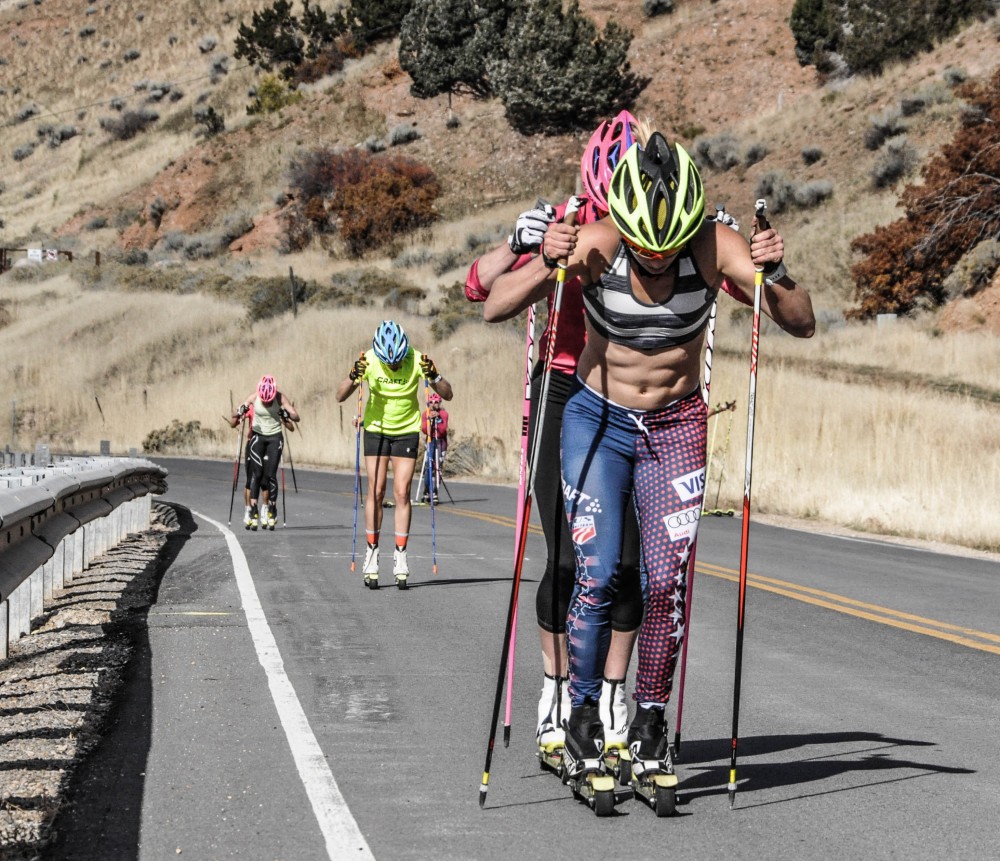
Jessie Diggins leads Kikkan Randall and Liz Stephen through 6 x 3-minute max-effort double-pole intervals at the U.S. Ski Team’s camp in Park City, Utah, in October 2016. (Photo: Matt Whitcomb)
Short Intervals or Long?
The table below lays out the variables and the effects of each workout. If you want the strongest VO2max adaptations, longer intervals are perhaps better. If you want to improve speed endurance and VO2max, then 30/30s may be better. Because the total duration of high-intensity work in 30/30s is relatively low, I believe recovery and adaptation come more quickly.
30/30 intervals
3- to 5-minute VO2max intervals
8- to 20-minute threshold intervals
Oxygen uptake
Varies, depending on the intensity of the work and recovery periods
Rises and stays elevated
Relatively stable, well below VO2max
Time near VO2max
Highly dependent on pacing and recovery intensity
Substantial
Not present
Peak power/speed
High
Moderately high
Lower
Glycolytic contribution
Potentially high
Substantial
Generally lower
Lactate accumulation
Depends strongly on recovery and pacing
Often elevated above max lactate steady state
Controlled and stable
Cardiovascular demand
High if oxygen uptake remains elevated
High and sustained
Moderate
Neuromuscular demand
Greater from repeated accelerations and faster speed
More continuous
Lower
Session recovery cost
Moderate
High
Depends on total duration and load
When Would I Choose Each Workout?
Training objective
Preferred approach
Rationale
Maximize sustained time near VO2max
3- to 5-minute intervals
Consistently high fraction of oxygen uptake
Develop high-speed or high-power sustainability
30/30 intervals
Access to higher movement speeds or power
Accumulate a higher volume of work at high intensity
3- to 5-minute intervals
Depends on intensity and recovery time
Improve threshold performance
Longer sustained intervals
Greater specificity to stable metabolic demand
Maintain high-quality movement at race speeds
Short intervals
Short recoveries help preserve technique and power
The important assessment for the individual athlete is whether they need a greater oxidative demand, or need to improve muscular power and speed while maintaining oxidative demand. I feel it is important to understand the multi-dimensional development of the neuromuscular system, the cardiovascular system and aerobic capacity, and also the benefits of developing speed endurance and technical efficiency.
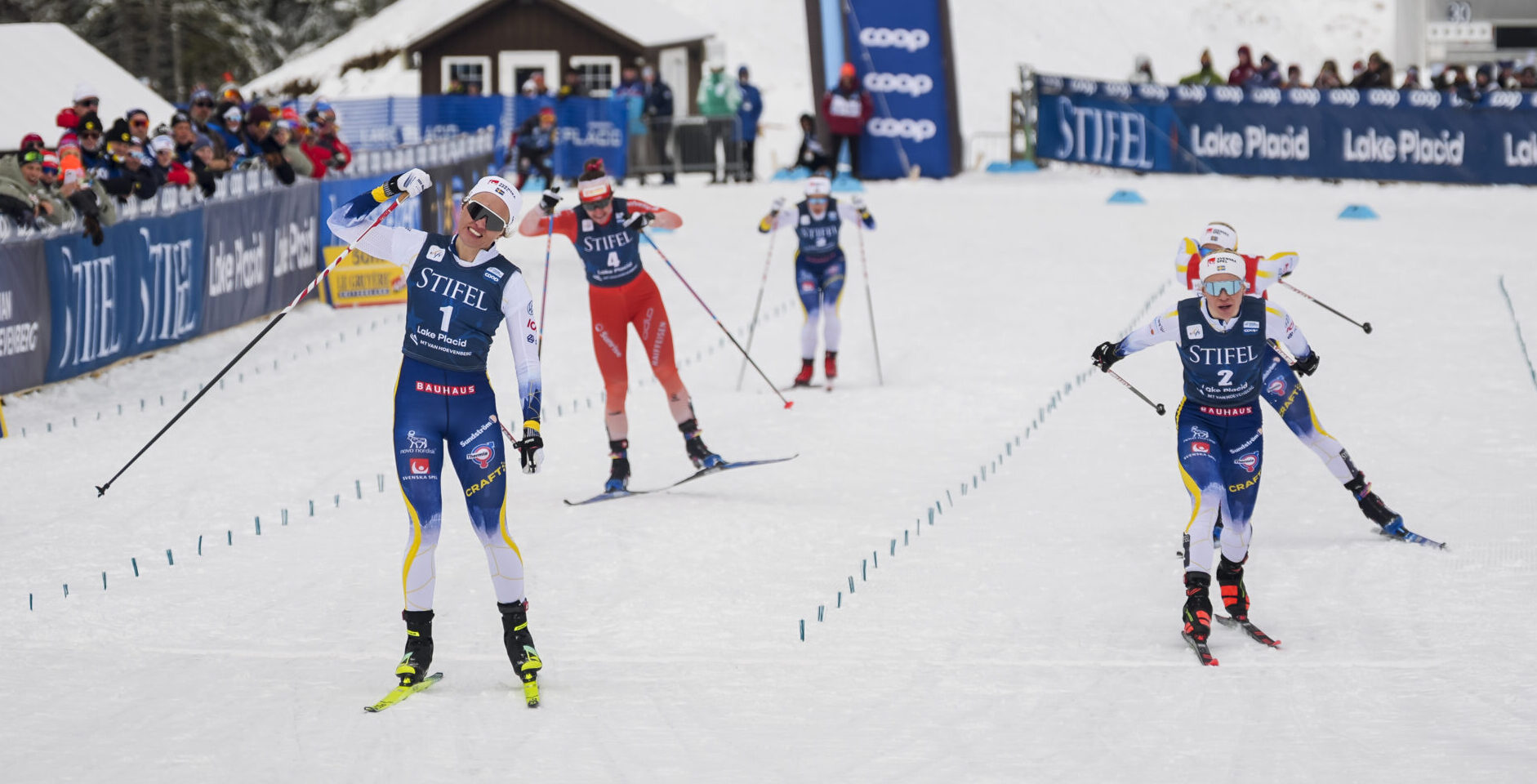
Sweden’s Linn Svahn (1) and Jonna Sundling (2) reach the line in the freestyle sprint at the World Cup Finals in March 2026 in Lake Placid, New York, host of the 1980 Olympics. (Photo: Thibaut/NordicFocus)
Nearly 45 Years Later
Research over the last 5-10 years has created renewed interest in 30/30 intervals. However, the research is not always consistent. Longer intervals will produce more work time at a high fractional utilization, while the short intervals in some studies produce significant gains in speed and performance, and show gains in VO2max as well.
Now, nearly 45 years after Lennart Strand first introduced me to 30/30 intervals, I believe they are an effective workout for most endurance athletes. Not because they produce a greater VO2max stimulus than longer intervals, but because they provide an opportunity to develop speed, speed endurance, and technical efficiency while maintaining a high aerobic demand.
As experience and research evolve, our understanding of how different workouts affect the neuromuscular, cardiovascular and metabolic systems will improve. As coaches, as always, we need to assess the limitations of each individual athlete’s performance. The best workouts are those that develop the systems the athlete needs to perform better.
Help Support Our Coverage!
If you value the thoughtful work and access FasterSkier provides, please consider becoming a Voluntary Subscriber. Your support directly fuels our work to cover the people, places, and moments that make our sport special.
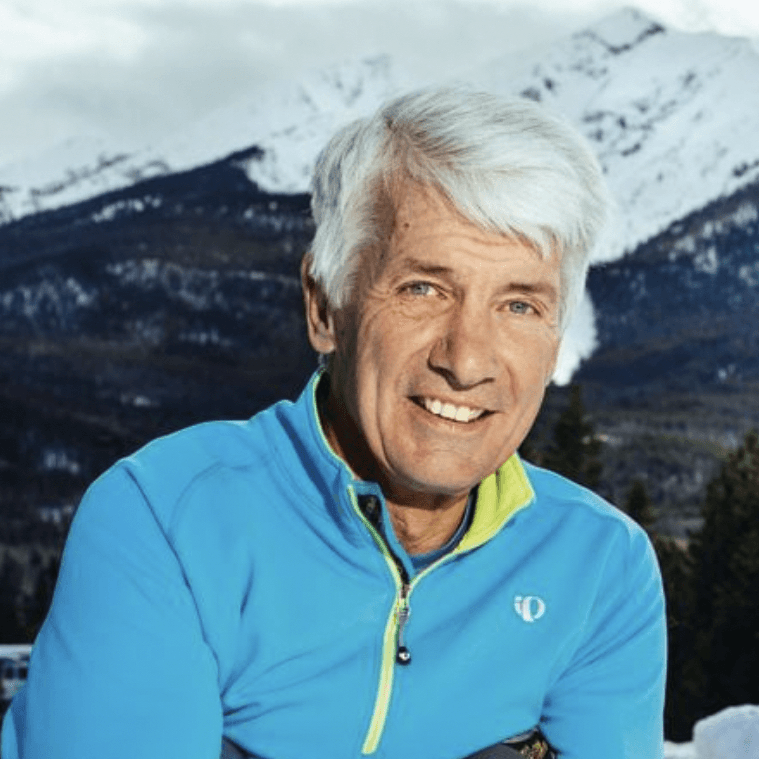
Coach, competitor, correspondent, commentator—Jim Galanes has spent a lifetime on cross country skis, always serving as a keen observer of our sport. A three-time Olympian in both Cross-Country and Nordic Combined, Jim has tested the theories, initiated the instruction, assessed the results. Now, FasterSkier is thrilled to announce that Jim joins our staff of writers and contributors, adding his unique and time-tested insights to the editorial offerings of this publication.


Comments
Commenting policyJoin the conversation. Comment and react with your Endurance ID — one account across the whole network.
Loading comments…