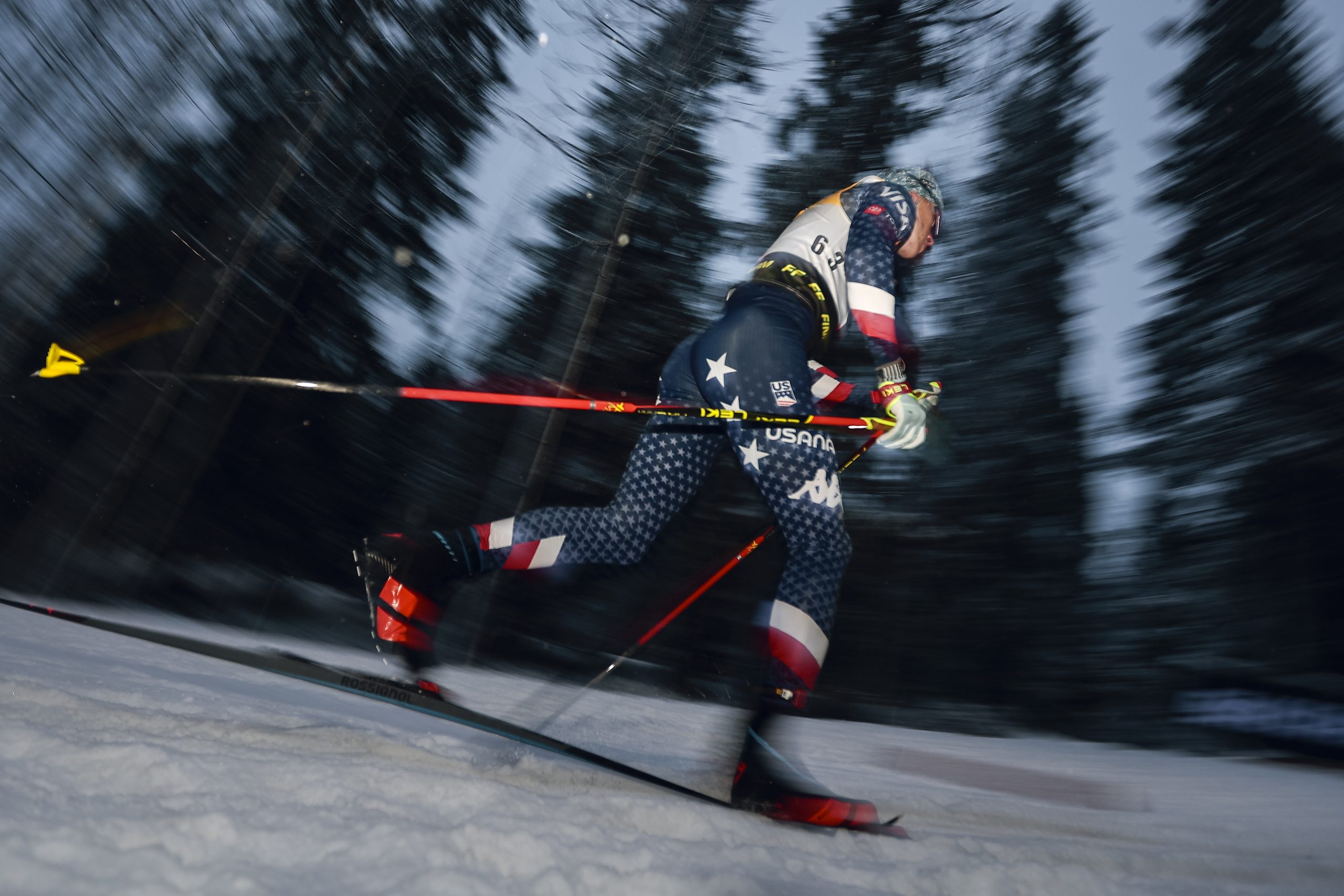
Zak Ketterson (USA) in the 10 k classic in Ruka, Finland, in 2024. The same race opens his season on Friday. (Photo: Modica/NordicFocus)
Zak Ketterson’s best weekend on the World Cup started in Ruka. Last November he was 14th in the 10 k classic that opened the season, a career best at the time. Two days later he finished ninth in the 20 k freestyle mass start, 13 seconds from the win, for the first top-10 of his World Cup career.
The rest of the winter was harder to sum up.
“It was kind of a weird season where I would say when I was healthy, I was racing at a level that was a lot better than any other year, but I had a few run-ins with sickness,” Ketterson said.
“I got sick after Period 1, missed Davos. I got sick right after the Olympics and ended up actually missing the 50 k that I was supposed to do. And then I got sick right after Holmenkollen and was sick during Lake Placid.”
Ketterson, 29, is back in Finland this week, named to all three U.S. starts on the opening weekend: Friday’s 10 k classic, Saturday’s classic sprint and Sunday’s 20 k freestyle mass start. He also comes in off an overall win at Toppidrettsveka, the August roller ski festival in Norway.
Ask him what has changed since last winter, and most of the answers are about sleep, fueling and washing his hands.
“So definitely the goal this year is to take another step on the level in general,” he said, “but also try to just get sick less.”
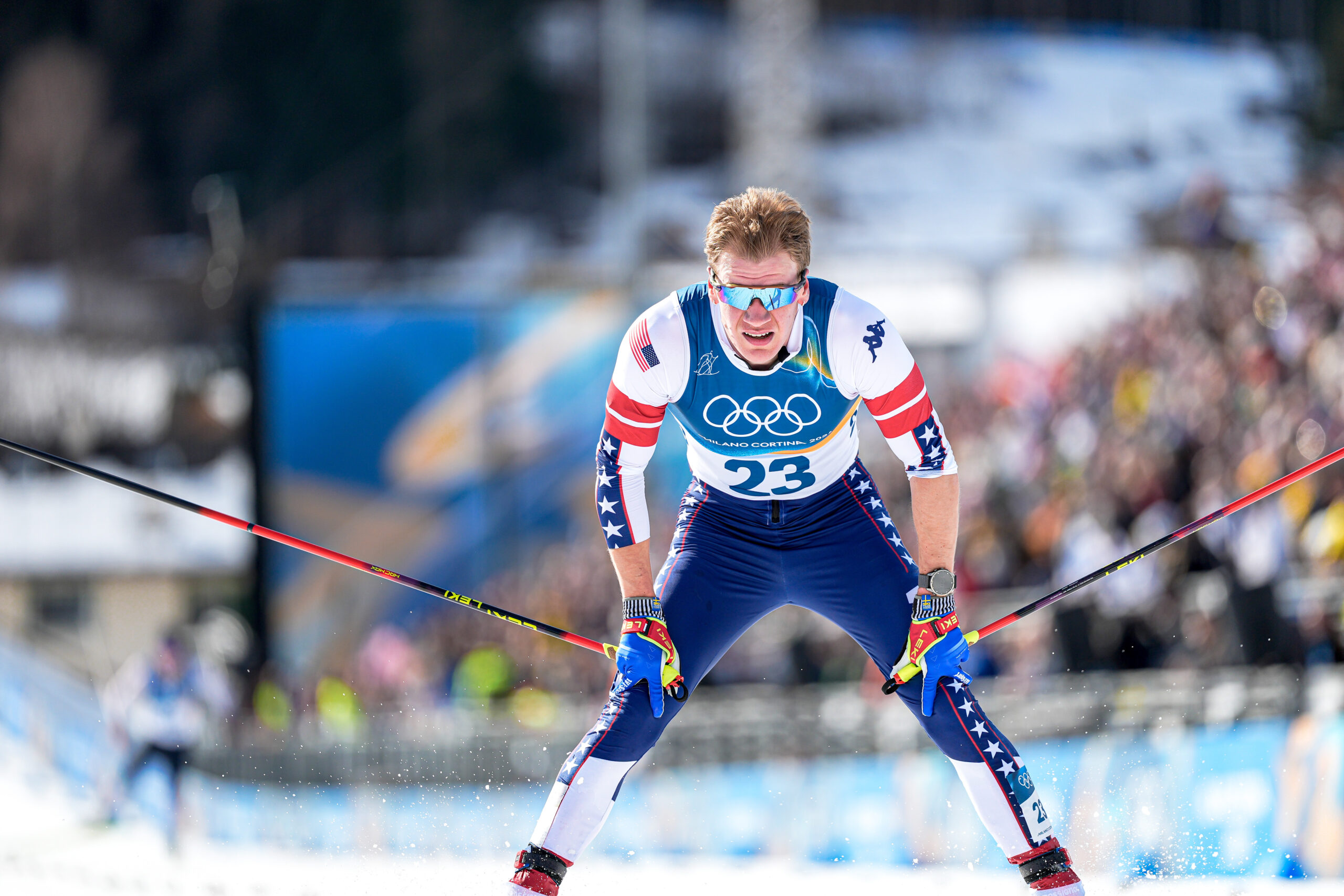
Ketterson in the skiathlon at the Milano Cortina Olympics in February. He said he had essentially qualified for the Games after the first race weekend of last season. (Photo: Barbieri/NordicFocus)
Weekend by weekend
Last season was built around one goal: making the Olympic team.
“Such a big goal for myself was to qualify,” he said. “And then I think after I came out so hot in Period 1, and essentially qualified after the first race weekend, it was really hard to reframe my mindset into actually preparing for the Olympics, and now let’s actually try to race fast there.”
This winter has a World Championships, in Falun, Sweden. He has tried not to build the season around it.
“I’ve tried to not put so much focus into World Champs or qualifying for World Champs or doing well at World Champs, and more tried to just take a more weekend-by-weekend approach and try to put together a more complete season,” he said.
What he has been looking at instead is the World Cup overall, or in his words, “those type of things that encapsulate more of the full season.”
“Because then I think I’ll be more motivated to just do the little things week in, week out,” he said, “instead of making the Olympics and then maybe letting off the gas a little bit.”
Ketterson, center, in the fog at the Holmenkollen 50 k in Oslo in March. He got sick right after the race and was still sick at the World Cup Finals in Lake Placid. (Photo: Authamayou/NordicFocus)
A kilo of sugar
Ketterson said he and his coach looked back at last winter and landed on a plain explanation for the illnesses.
“Maybe a big reason that I got sick all those times last year was just because of bad sleep and bad nutrition, which kind of play off of each other,” he said.
He said he does those things well in the summer and fall. The World Cup is where they slip.
“It’s easy when you’re around all your friends and you’re going from hotel to hotel and having all these different food setups, or maybe you’re not at home with all your sports nutrition stuff,” he said. “All of a sudden maybe on my training now in a World Cup week, I’m accidentally not having enough carbs per hour, or on a race weekend, because it’s just so much going on, you forget to pack the recovery shake for right after your race. And then you don’t sleep well because you’re underfueled.”
He aims for 90 to 120 grams of carbohydrate an hour in training, about 90 on a three-hour easy ski and above 100 on intensity days, and most of it is sugar from the grocery store.
“I actually just use sugar in my water belt, just straight sugar from the store,” he said. “I’ll usually just have a 30-gram scooper and do like 90 grams of sugar in my water belt with maybe some salt.”
Most of what he eats on the move is gummy candy, with a gel on an interval day once in a while. He traced some of his rough stretches on past World Cup trips to a specialty drink mix he would bring from home, run out of, and not be able to replace, so he would go without.
“Now I’m in Ruka, I just went up to the store, bought a kilo of sugar for a dollar, and I’m set for the week,” he said. “By kind of switching my products over to these super readily available things, it’s made it way more easy to do the same stuff regardless of where I am.”
He also means washing his hands before every meal, which on the road is not always convenient.
“When you are going through buffets, it can be annoying,” he said. “You maybe have to go into the basement and wash your hands and then come back to the table.”
“Just because we’re here and there’s all this new shiny stuff and we’re racing, the basic building blocks of being in good shape and progressing week to week don’t change at all,” he said.
Sleep is harder to control. In Ruka the men’s 10 k classic starts at 2 p.m. on Friday, and the classic sprint qualifier is at 9:45 the next morning. Ketterson said a bad night after a late race is something he has learned to live with.
“I’ve talked to Klæbo and Jessie and all these other good skiers, and they also say they struggle to sleep after those late afternoon races,” he said. “So I think you just kind of accept that maybe on the weekends you might not have perfect sleep, and you can race really well in spite of that. And then you just try to protect your sleep as much as you can on Monday through Thursday.”
“In the summer and fall, I sleep really well because I have this routine where, whatever, 9 o’clock rolls around and I put away my phone and I read a book, blah, blah, blah,” he said. “But on World Cup, when you’re rooming with a friend and you guys want to just shoot the shit, it’s easy to just kick those things to the side.”
With Jessie Diggins retired, Ketterson said her absence is felt less inside the men’s group, which has always had a bit of its own culture, though the team misses her voice at meetings and her stories from a decade of racing at the same venues. He said he is now the oldest guy on the men’s team, and he wants to pass the recovery habits along.
“I’m going to try to instill that in the boys’ team a little bit, to be still focused on recovery and stuff,” he said, “even though we’re now in this group where we’re all really good friends with each other and it’s easy to just have fun.”
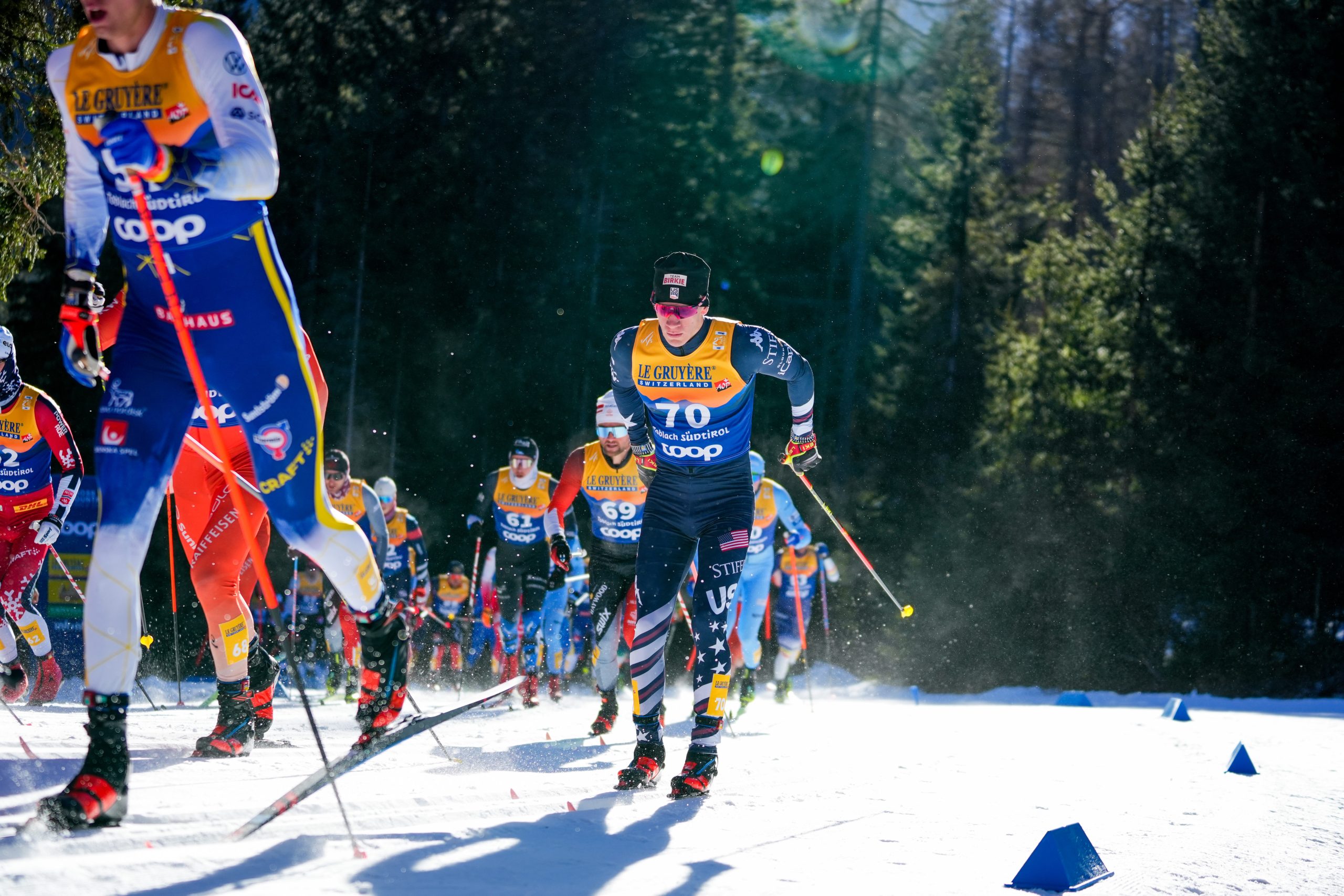
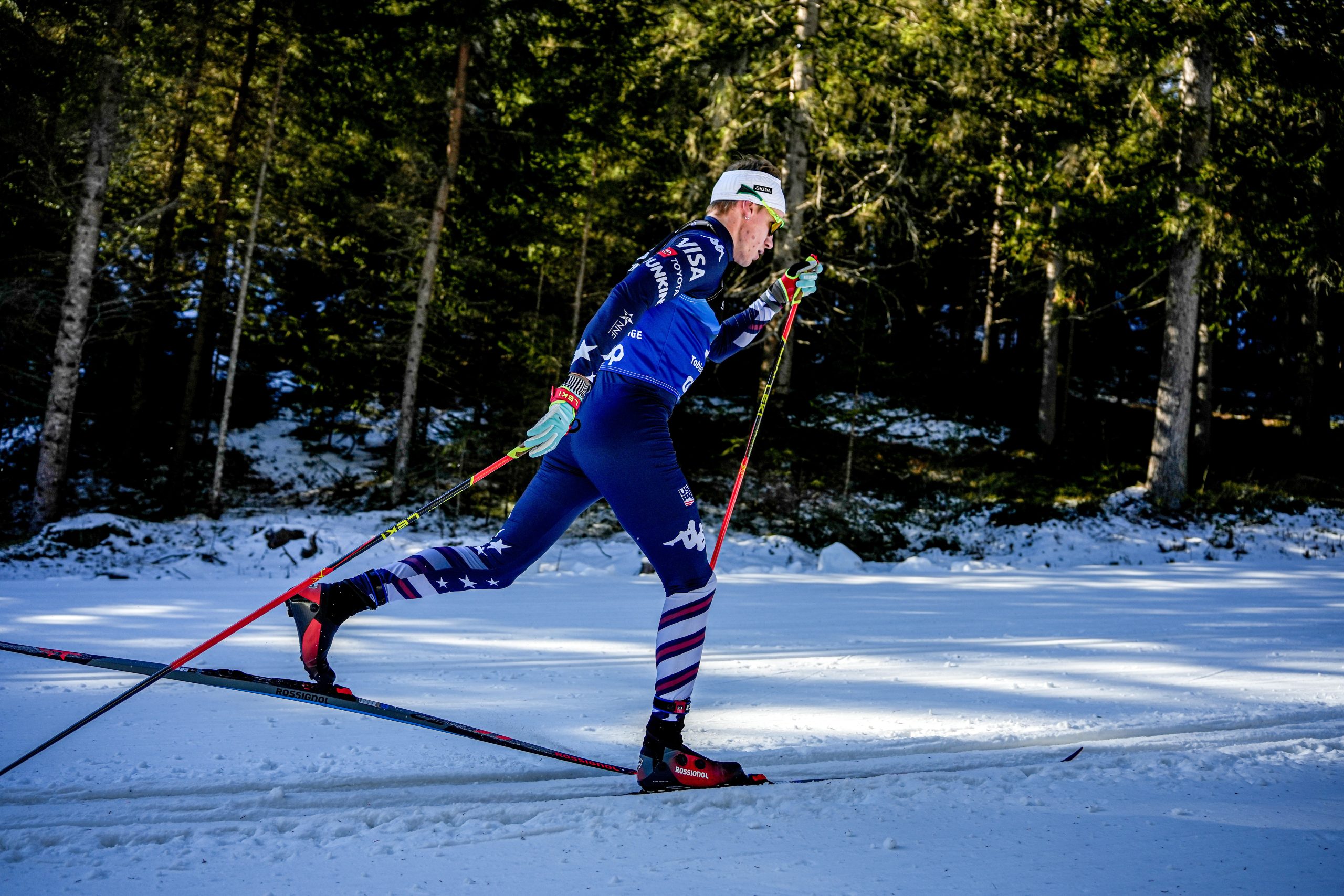
Ketterson, in bib 70, in the pack during the Tour de Ski pursuit in Toblach, Italy, on New Year’s Day. (Photo: Vanzetta/NordicFocus)
Getting dropped
Ketterson raised his training volume quite a bit this year. He said it came from training better, not from deciding to train more.
“I definitely upped my training volume quite a bit, and I think it wasn’t just like I decided to do more,” he said. “It was more that I organized my training in a way that allowed me to train more volume because I wasn’t as tired all the time.”
He had tried to add hours before.
“There’s been two or three years in the past where I’ve tried to up my training volume and I’ve either overtrained or just not really gotten that much out of it,” he said. “And it could have been easy for me to just determine that I’m not somebody who can handle volume.”
Instead, he and his coach went looking for mistakes.
“It really came down to just basic things like sleep, fueling and going the correct pace on workouts,” he said. “So I think often it is that simple. And also now that I’m 29 and have been training for so many years, I have the training base to be able to do a bit more.”
The key, he said, is “training at your level instead of the level you want to be at.”
“Whoever’s the best guy on the team, all the other people just want to hang on him for every interval session and think that if they do what that person does, they’re going to become as good,” he said. “But I think that if you rather just train at the level that you’re currently at, instead of this aspirational, try to just hang on to the best guy, so many people could improve.”
“It feels like an ego hit when you let yourself get dropped on an interval session or something. But I’ve seen it time and time again that these guys who are really disciplined in the summer and kind of take that ego hit, they get to the winter and they’re super well prepared.”
Everyone at his level knows that, he said. It is still hard to do on a Wednesday interval day.
“Klæbo and a lot of the best skiers in the world are routinely getting dropped in intervals,” Ketterson said. “So that, I think, tells you something.”
The training showed up in August. At Toppidrettsveka, Ketterson won the final day’s classic pursuit by 0.3 seconds over Norway’s Leopold Strand, with Mattis Stenshagen 0.7 back, and took the overall title ahead of both of them.
“It is obviously roller skiing, so it’s not technically the same as doing super well in the winter,” he said. “But at the same time, it’s a race with all the best skiers in the world and all the best Norwegians, people from all over Europe. And so I think anytime you can show up to a race that has all the best people and win it, when everybody is also trying to win, is just a really cool feeling, and something that I haven’t had at this level before.”
“I take it as nothing but confidence,” he said, “and was a really cool moment for me, having watched those races a lot growing up, and to beat all those guys who are probably going to be on the podium most races this winter.”
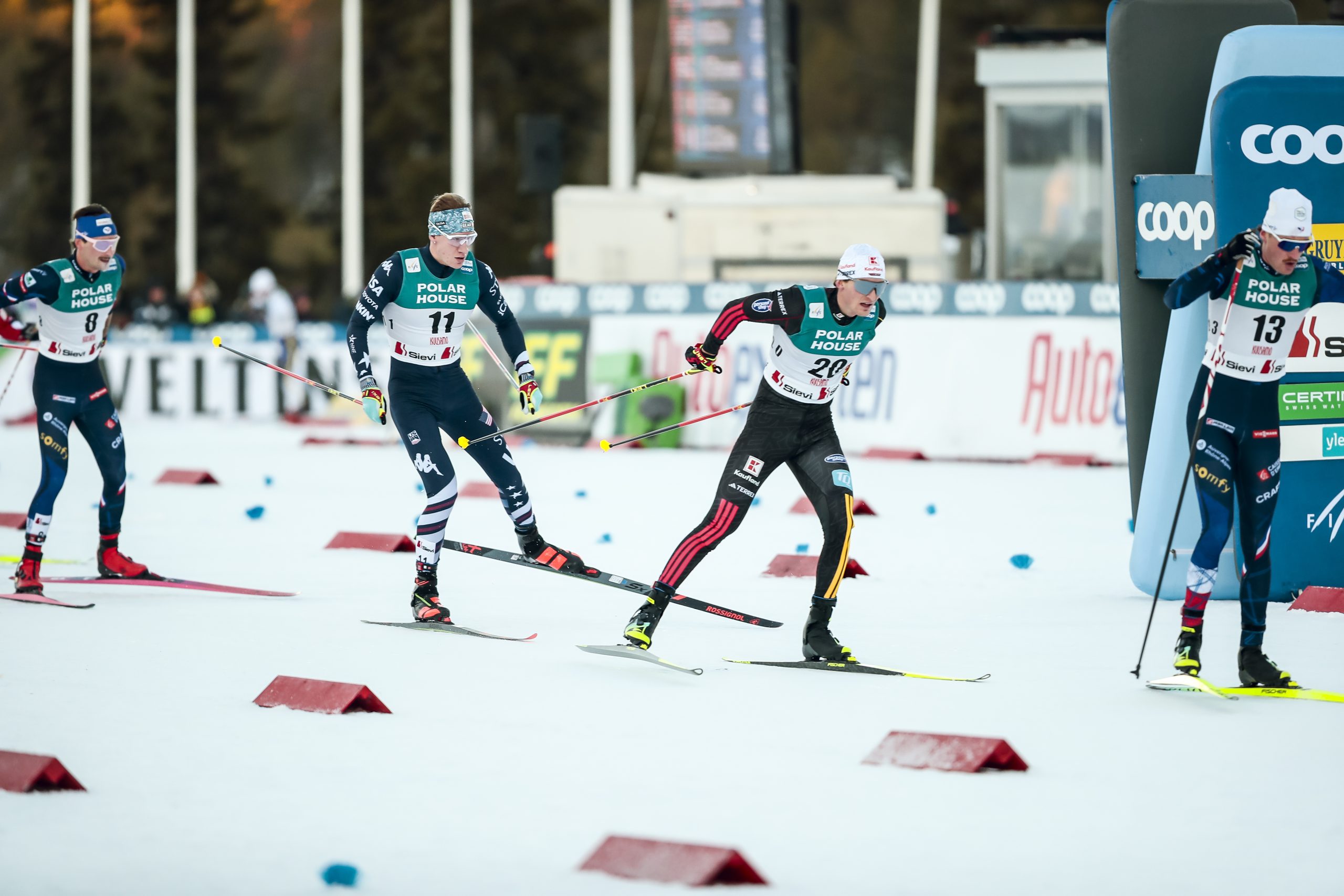
Ketterson (11) and Germany’s Friedrich Moch in the stadium during last year’s 20 k freestyle mass start in Ruka, where Ketterson finished ninth. (Photo: Modica/NordicFocus)
Hard wax in Ruka
Ketterson didn’t want to put a number on the weekend.
“I don’t necessarily want to put a number on it or results, you know, ‘I want to be top X,'” he said. “But I think for sure we have basically any of the guys on our team, whether it’s sprint or distance, we have guys who can get on the podium in every race.”
“Just knowing that when you line up, anything’s possible, and not sort of putting that limit on yourself of, you know, ‘if I’m 20th today, that’ll be awesome’ or whatever,” he said.
“I just really want to put together a season where I feel like I’m consistent week to week, getting sick less, and trying to maybe take that high from Ruka last year and just maintain it a bit better.”
The opener also brings back the question of who else is on the start line. Saveliy Korostelev and Dariya Nepryaeva of Russia have raced the World Cup as neutral athletes since Davos last December. Ketterson said he had heard so many different things that he wasn’t sure. He thought there were three Russians in Ruka, those two and possibly one more woman, and on Wednesday the athletes had their headshots taken.
“We saw just those three Russians come in and do their headshots,” he said. “So I don’t think there’s any more here than that.”
“Obviously it’s a super complicated situation and there’s no easy solution, but we’ll just race whoever shows up and hope,” he said. “Glad it’s not my job to figure that stuff out.”
The snow, he said, is the best news of the week.
“The trees all have lots of snow on them, so it’s not just the vibe of a 5 k man-made loop and barren around,” Ketterson said. “There’s snow everywhere right outside our apartment, even, and it’s looking like it’s going to be maybe hard wax conditions for classic, which is super nice.”
He said he may not have raced on hard wax once last winter.
“It’s looking like it might be just pretty prime, regular Nordic skiing conditions, and not icy or sugary or anything, just normal, nice snow and super good coverage,” he said. “Pretty freaking ideal for the opening weekend.”
Help Support Our Coverage!
If you value the thoughtful work and access FasterSkier provides, please consider becoming a Voluntary Subscriber. Your support directly fuels our work to cover the people, places, and moments that make our sport special.
As owner and publisher of FasterSkier, Matthew Voisin manages the day-to-day operations, content, and partnerships that keep the site gliding smoothly. Away from the desk, he’s doing his best to keep pace with his two energetic sons.

Comments
Commenting policyJoin the conversation. Comment and react with your Endurance ID — one account across the whole network.
Loading comments…