
This article was made possible through the generous support of our voluntary subscribers. If you value coverage like this, please support FasterSkier with a voluntary subscription.
I originally wrote the following article in 2004. Twenty-two years later, I believe it remains just as relevant. To me it illustrates that while we tend to assume training has changed a great deal, in many ways it has stayed much the same. I have rewritten it here to improve clarity without changing the content.
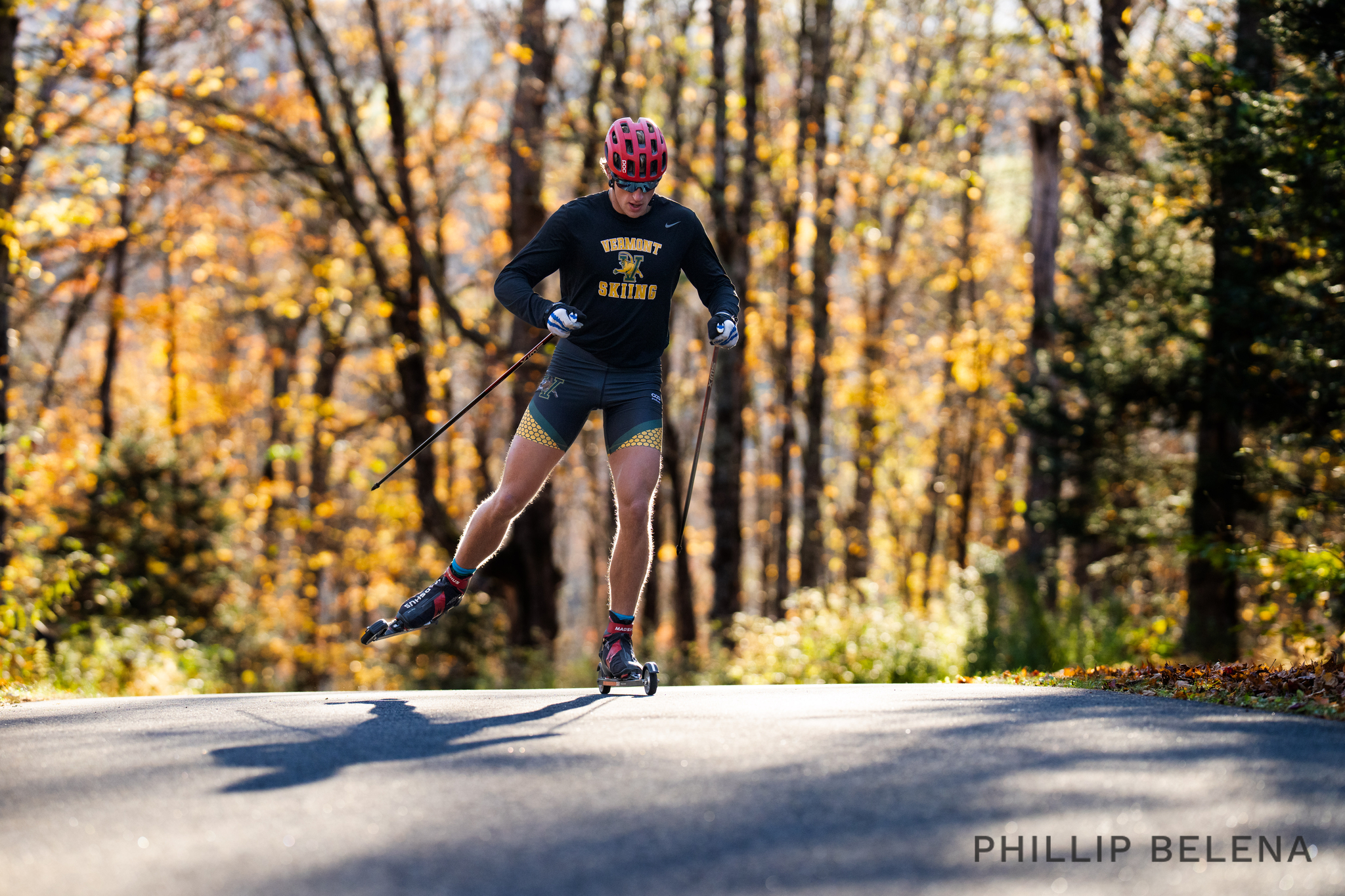
The development of basic speed, neuromuscular power, and speed endurance is critical for high-level cross-country skiing performance. I would also argue that, once an athlete reaches a certain level of aerobic development, future improvements in aerobic capacity may become limited if the athlete cannot produce enough power to generate a sufficient training stimulus.
This article presents a concept that has influenced my coaching for many years: before continually increasing the external loads, volume, and intensity of training, athletes must first develop the ability to produce greater speed and power.
Training loads can be increased in two ways. The first is externally, by making the terrain more difficult or increasing resistance. The second is internally, by improving neuromuscular function so the athlete is capable of producing more power and therefore greater speed.
My experience has been that increasing external loads without first improving power production often yields little improvement in performance and, in some cases, little measurable gain in aerobic development. Athletes simply work harder while producing little additional external work.
We have all seen unfit or less-developed athletes walk up a steep hill while reaching near maximal heart rates. We have observed this repeatedly in junior skiers. Simply walking, skiing, or running uphill slowly can produce extremely high heart rates. Does this indicate inadequate aerobic capacity or inadequate power production? The answer is usually a combination of both.
However, in athletes whose performances have plateaued despite years of increasing training volume and intensity, this question deserves closer examination. Many continue to produce high heart rates while moving slowly. In these athletes, the limiting factor may not be the cardiovascular system itself, but rather an inability to produce enough power to create a greater demand on the aerobic capacity.
For this reason, I believe that early in an athlete’s development, and often early in each training year, speed, movement quality, efficiency, and neuromuscular power should receive significant emphasis. These qualities should not replace aerobic training, but they should develop alongside it. Improving an athlete’s ability to produce power increases the speed at which aerobic training can be performed and therefore increases the potential aerobic training stimulus.
Our observations over many years have consistently shown that athletes lacking sufficient power gradually slow during uphill skiing, running, or bounding intervals while heart rate continues to rise. The internal effort increases even as external work declines.
We have also observed athletes become overtrained despite carefully planned training programs. In many cases the common factors were excessive metabolic cost of endurance training, elevated lactate concentrations at relatively modest speeds, deteriorating movement quality, and inefficient power production.
Again, I believe the underlying issue is often inadequate neuromuscular function.
When athletes cannot produce power efficiently, every uphill carries a large metabolic cost. Heart rate and blood lactate increase rapidly even though speed remains relatively low. The athlete experiences considerable physiological stress without generating the external workload necessary to increase adaptation.
For one summer training period we emphasized extensive speed and neuromuscular training. Several athletes improved their maximal treadmill workload by as much as seven percent during a graded treadmill protocol. At the same time, blood lactate concentrations were lower at each workload stage.
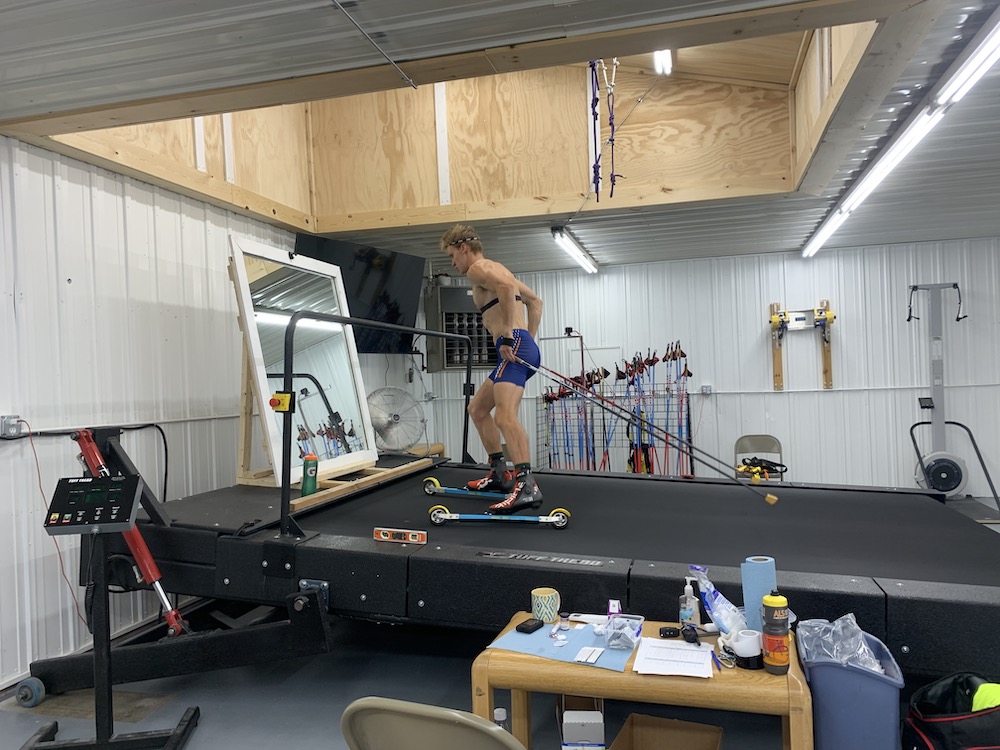
These findings do not prove that VO2max increased. However, they strongly suggest improvements in movement economy, neuromuscular power, and the athlete’s ability to express aerobic capacity. The athletes could sustain greater workloads at the same relative physiological cost.
Although the sample size was too small to draw firm scientific conclusions, the observations were both encouraging and consistent with our coaching experience.
One useful coaching tool has been estimating the oxygen demand of uphill terrain using the Balke or ACSM treadmill equations. While these equations were developed for walking and running, not roller skiing or ski-specific movements, they provide a reasonable estimate of the external workload required to climb terrain of a given grade and speed.
Using these estimates, I evaluated athletes on both a maximal 500-meter uphill test and a 3,000-meter uphill test conducted on the same hill. Our top male skiers consistently sustained estimated oxygen demands of approximately 70 to 72 ml·kg⁻¹·min⁻¹ during the 3,000-meter effort. During the 500-meter test, estimated oxygen demands ranged from approximately 83 to over 90 ml·kg⁻¹·min⁻¹. These values represent estimated metabolic demand rather than directly measured oxygen consumption.
The athletes who consistently produced the highest estimated workload during the 500-meter test were also our best performers. The shorter test reflected the athlete’s ability to produce high neuromuscular power. The longer test reflected how much of that capacity could be sustained aerobically.
During summer testing, the best athletes generally sustained only about 80 to 85 percent of their maximal estimated workload during the longer effort, leaving room for further improvement as fitness and skiing specificity increased during the competitive season.
Several practical conclusions emerged from these observations.
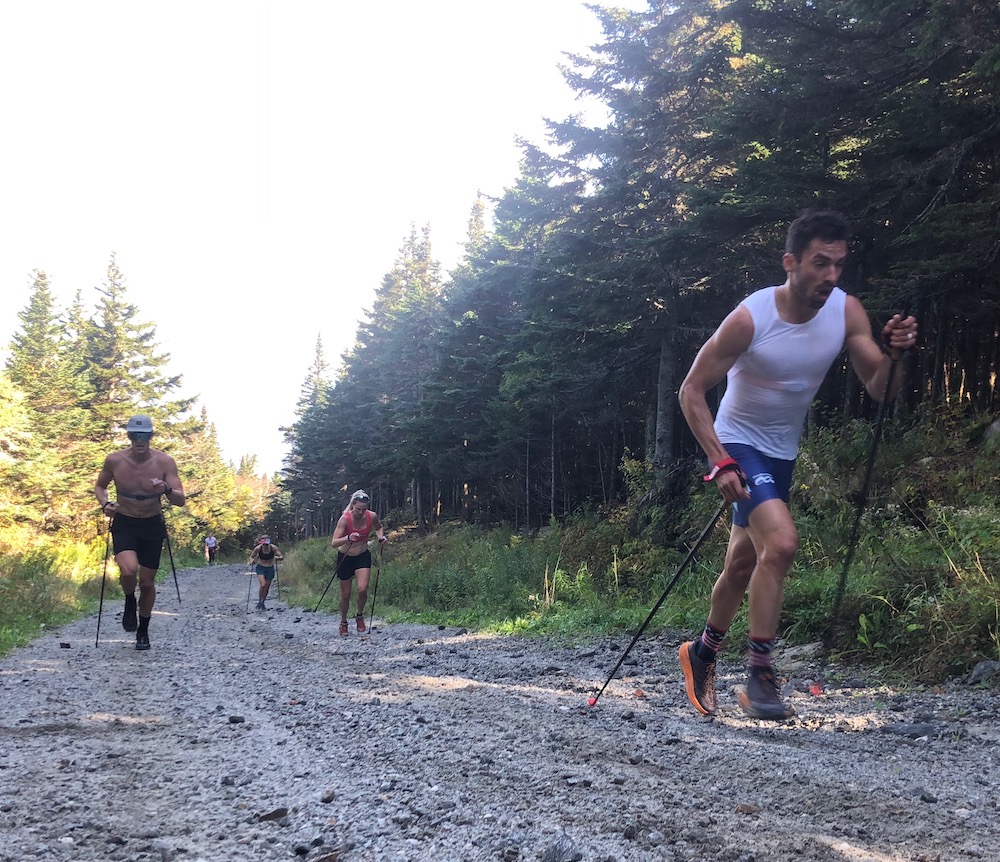
Maximal power production establishes the athlete’s aerobic potential.
The estimated workload achieved during the 500-meter test reflects the athlete’s ability to produce power. If this value is too low, it becomes increasingly difficult to create a training stimulus large enough to maximize aerobic development, because the athlete cannot sustain sufficient speed.
Small differences between maximal and sustainable power may indicate a different limitation.
If the athlete’s maximal 500-meter workload is only slightly greater than the workload sustained over longer efforts, further improvements in aerobic capacity may be limited until maximal power production improves.
Lower-level athletes often need speed before more intensity or volume.
Many developing athletes have maximal power values only five to ten percent higher than their longer uphill performances. These athletes often benefit more from improving neuromuscular function, movement quality, and speed than from simply adding more difficult interval training.
Hard uphill intervals are not always the answer.
If athletes lack sufficient power to increase speed, making the terrain steeper or simply asking them to work harder often produces more fatigue than adaptation. Increasing the load without increasing movement quality seldom solves the underlying problem.
Sustainable aerobic power is not enough.
Athletes capable of sustaining a very high percentage of their aerobic capacity but possessing relatively low maximal power often plateau. They may already be performing close to their physiological ceiling and will likely require improvements in neuromuscular power before further performance gains occur.
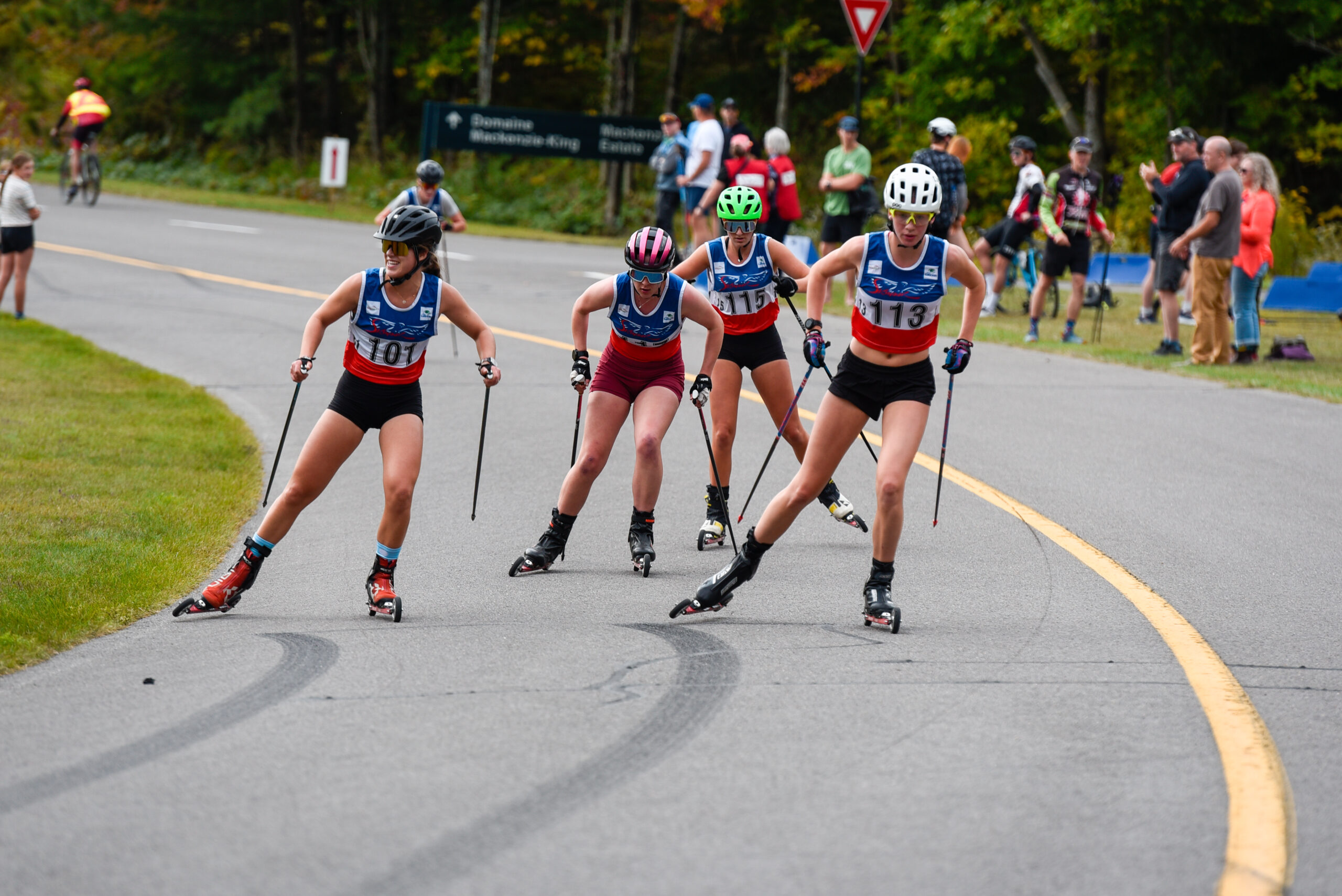
Speed should create the load.
Uphill training remains essential in cross-country skiing. However, I believe the primary driver of training should be generated through efficient movement rather than terrain alone.
Whether athletes are performing distance training or intervals, movement should remain clean, crisp, coordinated, and quick. If technique deteriorates and speed slows simply because the terrain is harder, the athlete is no longer training optimal movement. They are merely increasing physiological stress.
Ultimately, endurance performance depends upon the interaction between physiology and movement. The aerobic system can only respond to the workload the neuromuscular system is capable of producing.
For that reason, coaches should devote as much attention to developing speed, power, and movement quality as they do to increasing training volume and intensity. In the long term, improving an athlete’s ability to generate external workload may be one of the most effective ways to unlock further aerobic development and higher performance.
Help Support Our Coverage!
If you value the thoughtful work and access FasterSkier provides, please consider becoming a Voluntary Subscriber. Your support directly fuels our work to cover the people, places, and moments that make our sport special.
Join the FasterSkier community!

Jim Galanes
Coach, competitor, correspondent, commentator—Jim Galanes has spent a lifetime on cross country skis, always serving as a keen observer of our sport. A three-time Olympian in both Cross-Country and Nordic Combined, Jim has tested the theories, initiated the instruction, assessed the results. Now, FasterSkier is thrilled to announce that Jim joins our staff of writers and contributors, adding his unique and time-tested insights to the editorial offerings of this publication.