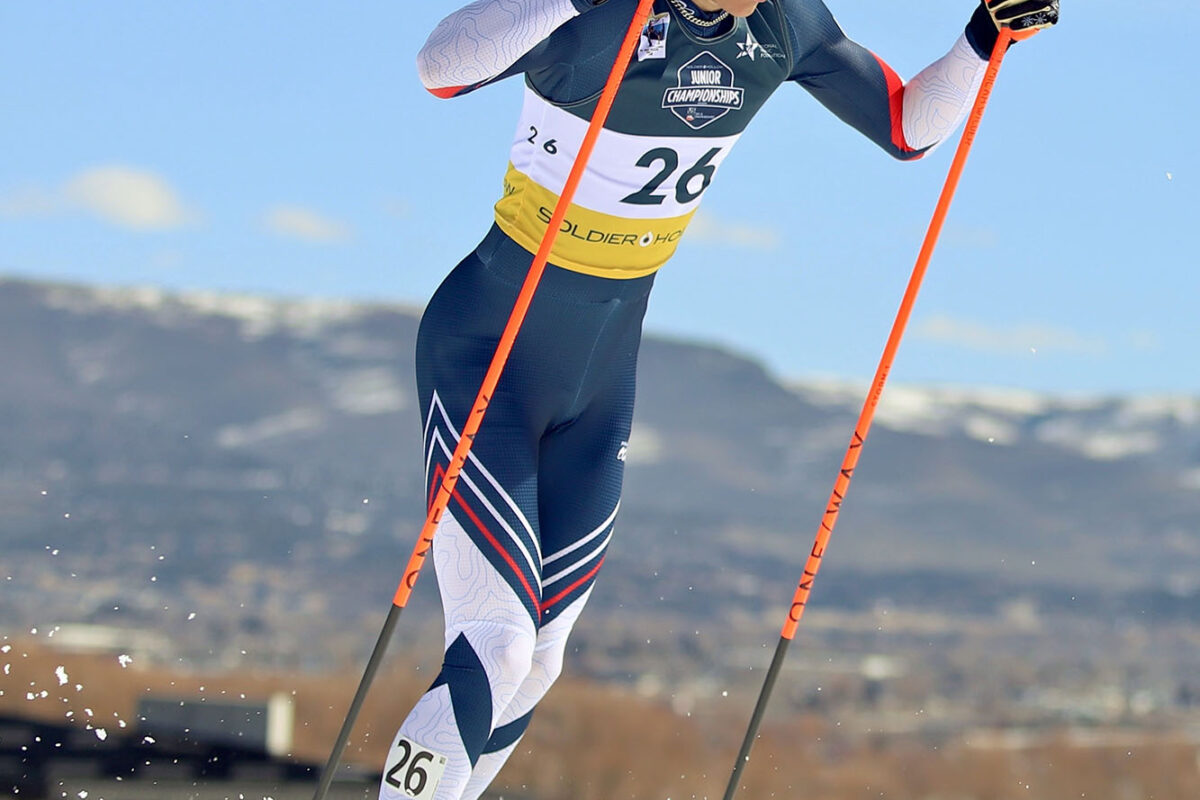

When Canadian cross-country skier Beckie Scott called her coach at Jeremy Ranch on Thursday morning to tell him she had great news, Olympic gold wasn't the first thing that leaped to Torbjorn Karlsen's mind.
“Are you pregnant?” he asked Scott, who married three-time U.S. Olympian Justin Wadsworth this summer. “Did you get great new skis?”
Finally, Scott, who is in Austria preparing for a World Cup competition this weekend, blurted it out. Almost two years after crossing the finish line of the women's 5-kilometer pursuit race at the 2002 Winter Olympics, Scott had been declared an Olympic champion.
A ruling Thursday by the Court of Arbitration for Sport upgraded Scott to gold, ahead of Russian drug cheat Olga Danilova, who finished in front of Scott but was caught later in the Games using a banned substance. The ruling annuls all of Danilova's Salt Lake City results.
 </font><BR></p>
<p>Scott is the first North American cross-country skier to win Olympic gold.<br />
“Finally there is a happy ending to one of our doping stories,” Scott said in a telephone interview from the town of Ramsau in the Austrian Alps. “Finally there are consequences if you try to go outside the rules to win. I think this is one case where the little guy won.” </p>
<p>Thursday's ruling also annulled the results of Johann Muehlegg, a German-born Spaniard. Muehlegg lost his gold medal in the 50K after flunking a late drug test, but previously had been allowed to keep two other golds, which will now be awarded to Norwegian skiers.</p>
<p>“It's a day in history, not only for Beckie Scott, not only for Canada, but for the Olympic movement and for all athletes in the world and all athletes in the future,” said Cross Country Canada President Leopold Nadeau. “This is a very significant step in the fight against doping because the rules have been changed.” </p>
<p>The ruling should be closely examined to determine if it might allow retroactive appeals of previous Olympic results in similar circumstances, Nadeau said. </p>
<p>Scott had already been bumped from bronze to silver after another Russian skier was disqualified for doping. But her original bronze had travelled with her to so many post-Games functions — and been seen and touched by so many people — that the 29-year-old from Vermilion, Alberta, confessed to feeling sentimental about swapping it for silver. </p>
<p>With the Canadian Olympic Association continuing its fight to get her the gold, Scott made a conscious decision to keep her distance from the silver medal. After a medal ceremony in Calgary, Alberta, in October, she handed the silver to her parents for safekeeping. Her mother stashed it away in a box in her home office in Vermilion.</p>
<p>“I was a little bit superstitious,” said Scott. “I didn't want to get too attached to it — because I hoped I'd be giving it back soon. I certainly didn't want to travel with it.”</p>
<p>Thursday's ruling called for Scott to receive her gold medal by March 15. She is not sure where.<br />
“I can get it anywhere I want,” said Scott, who fielded more than two dozen news-media interviews Thursday while also finding time to train twice. “I'll talk about it with my husband. Probably somewhere close to home.” </p>
<p>After her case was presented to the Court of Arbitration in Lausanne, Switzerland, in September, Scott was told to expect a decision in 30 days. The Canadians contended that the Olympic Charter requires athletes found to be cheating to be disqualified and stripped of all medals won at the Games, even if they had passed drug tests after earlier races. </p>
<p>When more than three months went by without a ruling, Scott remained “optimistic, but realistic.”<br />
“I was starting to lose a little hope that the decision was going to come down in our favor,” she said. “I just resigned myself to whatever would be, would be.” </p>
<p>Canadian head coach Dave Wood said Scott was “ecstatic” when he revealed the news to her early Thursday afternoon Austrian time. Cross Country Canada phoned Wood at 6 a.m. MST with the decision.<br />
“It kind of restores your faith in the process,” said Wood. “The race has been over for 22 months, but today the process that Beckie has had to go through, and the things she's had to deal with, are all worthwhile.” </p>
<p>Karlsen, Scott's coach for more than five years, said the verdict was the right one. “The only one,” he added.</p>
<p>Rampant drug use in cross-country skiing has affected “generations” of U.S. skiers, the Norwegian-born Karlsen said. He estimates that half of all medal-winners and half of the top 20 in the sport cheat. </p>
<p>“I have coached athletes many times up to the top 20, and I've always known at least 50 percent of those finishing ahead were on some form of doping,” Karlsen said. “I question why I'm doing this many times and I'm sure Beckie questions why she is doing it, too,” he said. “But I also feel if you give up, you are giving up to dopers.”</p>
<p>Although justice was served in Scott's case, Karlsen warned that the doping problem in cross-country skiing, and in sport in general, has not been solved. </p>
<p>“I have kids,” said Karlsen, “and it makes me question whether I want them to do sport at a high level.” </p>
<p>Scott has also been forever denied the experience of crossing the finish line first at Soldier Hollow and hearing “O Canada” played at the medals ceremony. Karlsen called it “a moment that you lose.” </p>
<p>But Karlsen and Wood said that Scott had avoided becoming bitter.</p>
<p>“She's just got on with her job as an athlete,” said Wood. </p>
<p>Added Karlsen, “Beckie has a great way of taking the best out of the situation and turning it around and not thinking about what she lost financially. And she probably lost a lot financially.”<br />
Nadeau agreed. “With the Summer Olympics coming up soon,” he said, “this medal is not going to translate into the same type of revenue that she would have received if she had got it at the Olympics.” </p>
<p>A sports-marketing expert estimates Scott's loss at “tens of thousands of dollars. Maybe larger.”<br />
“What sponsors typically look for are compelling stories and the halo effect of attention placed on athletes in the aftermath of the Games,” said Paul Swangard, managing director of the Warsaw Sports Marketing Center at the University of Oregon in Eugene. “And that halo effect is what Beckie Scott lacks and can never get back.” </p>
<p>Scott, who called it “an incredible day,” says she isn't bothered by lost financial opportunities. “I feel like the reward came back to me in so many ways that I can't have any regrets,” she said. </p>
<p>In the spring, Scott traveled as a UNICEF representative to West Africa to promote education for girls. “That kind of thing means more to me than any endorsement opportunity I could have had,” said Scott. “That was a true reward.” </p>
</div><span id= "Edit/Preview")