Anne Hart had many thoughts running through her mind last Saturday. At one point all she could think about was barbecue chicken, asparagus and freshly baked bread with butter.
Contrary to what you might think, Hart wasn’t participating in one of her many culinary projects. Instead, she was rollerskiing 100 kilometers.
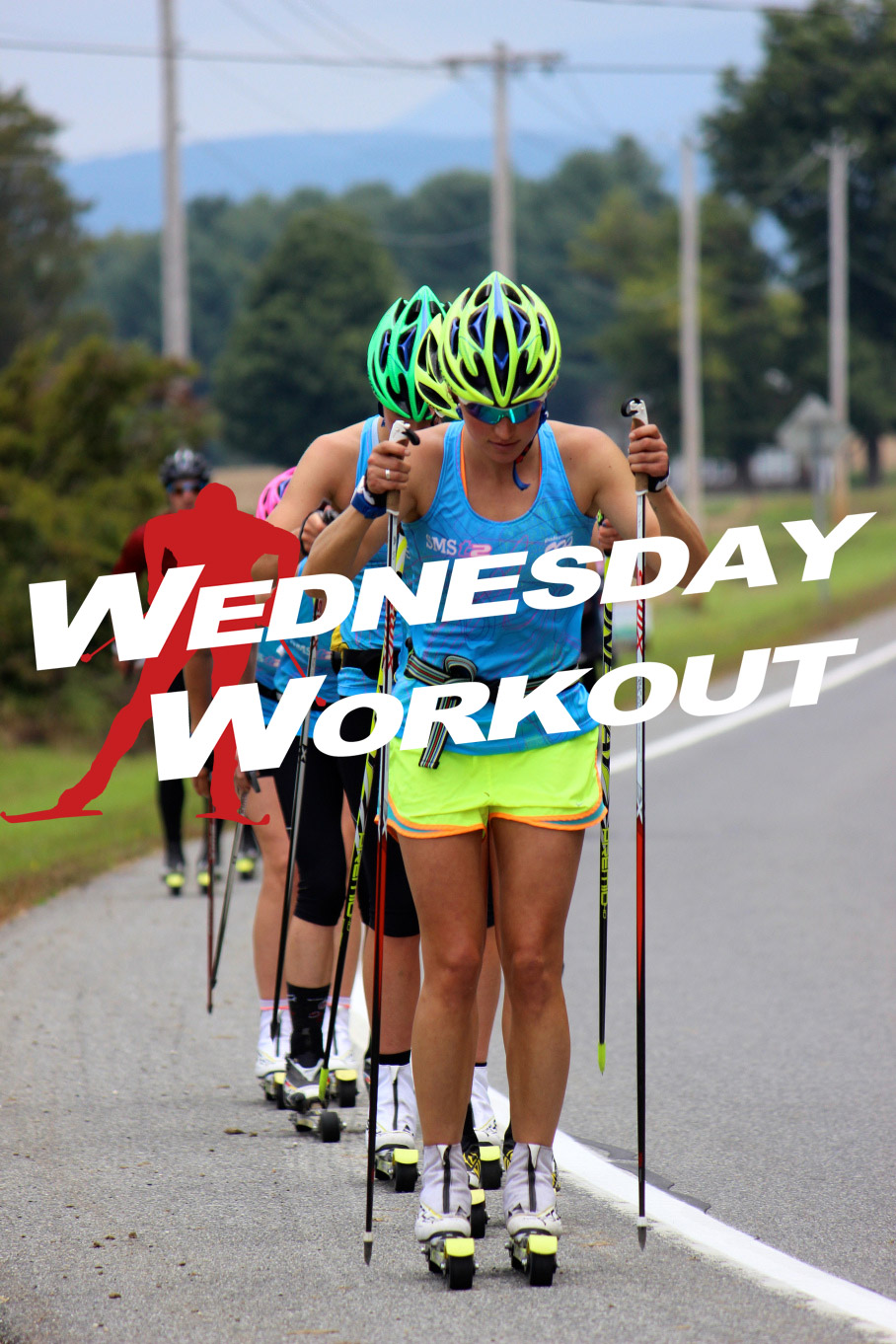
Hart was joined by her Stratton Mountain School (SMS) T2 teammates in the third-annual 100 k Ski-A-Thon on Sept. 20. A clever mix between a fundraiser and an over-distance workout, the event is a way for the team to reap both physical and financial benefits over the course of 62.1 miles.
“We always welcome donations, but it’s easier to ask people for money if it is paired with an event,” Hart explained in an email. “We wanted something that is out of our normal training regimen, and also demonstrates our commitment to skiing. The 100 K was the perfect event for both of those goals.”
The 100 k Ski-A-Thon has proven to be one of the team’s biggest individual fundraisers of the year and especially helps non-U.S. Ski Team athletes pay for unfunded racing and travel.
“Our 100 k ski is very important to us because it allows our athletes to get to the races that they need to go to. It doesn’t cover everything, but it does make a huge dent in things and it allows them to be in a good place where they don’t have to make tough decisions,” SMST2 Head Coach Patrick O’Brien said in a phone interview.
The Ski-A-Thon wasn’t always a fundraiser. Andy Newell, who has been with SMS since his high-school days, remembers skiing 100 k with the program’s then-head coach Sverre Caldwell (now program director) when he was younger.
“Sverre liked to do things like that just to ‘show us we could’ and it was always pretty inspiring to do that as a high school kid,” Newell wrote in an email. “Nowadays 100k is still long but easily doable without any real preparation, we all do normal training the day before I still had a double session 4 hour day leading into it.”
According to SMS T2 coach Patrick O’Brien, a 100 k rollerski is basically an extended workout that requires extra planning and support.“Everything you’re going to get from a three-hour ski, you’re going to see that over a six-hour workout as well. The recovery time is going to be longer,” he said.O’Brien explained that it’s important to make sure that a 100 k ski doesn’t come as a shock to an athletes training plan. He said that both sufficient rollerski fitness and planned rest before and after the workout ensured that his athletes gained the most from the workout and weren’t overly exhausted or “bonk-ing.”According to Hart, nutrition before and during such a long workout is key.
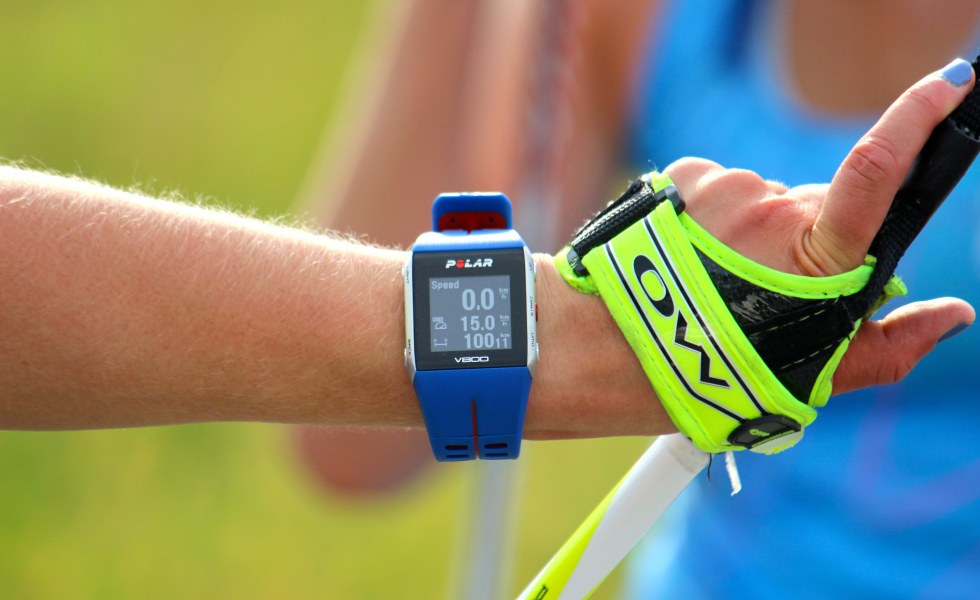
“Ideally I would have eaten quite a bit more the day before, and also brought some non-power bar food. Staying fueled is definitely the hardest part of the day. According to my watch we burned just over 3,700 calories.”
She said another important factor for a successful 100 k ski is the athlete’s mindset.
“For me, and I think for a lot of us, the battle isn’t so much physical as mental. 6 hours is a long time to be doing anything, and the hardest part is wrapping your head around that,” she explained.
Other than individual preparation, O’Brien said that it is also important to choose a route that will have minimal traffic and relatively smooth pavement. He also said that this year’s Ski-A-Thon was held in September because of the cooler weather and often busy schedule of the summer.
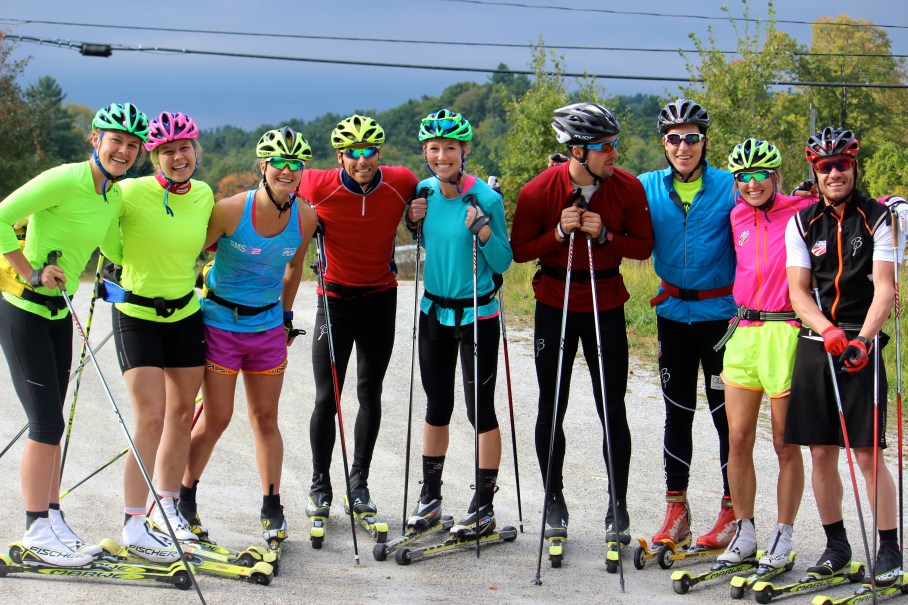
While the 100 k workouts of Newell’s high school days were without much fanfare, the 2014 Ski-A-Thon attracted the most attention to-date. A full team SMS T2 athletes participated in the event including Newell, Hart, Ben Saxton, Simi Hamilton, Paddy Caldwell, Sophie Caldwell, Erika Flowers, Annie Hart, Annie Pokorny, and Jessie Diggins.
Hamilton, who is still suffering from the lasting effects of an August ankle injury, was able to rollerski the entire 100 k. He said that while he is still unable to run, he was happy to participate in the “great adventure.”
The athletes were joined by U.S. Ski Team men’s coach, Jason Cork, Sverre Caldwell, and a mix of parents, relatives and friends who attended the event to help with logistics and encourage the athletes as they skied over the New England pavement.
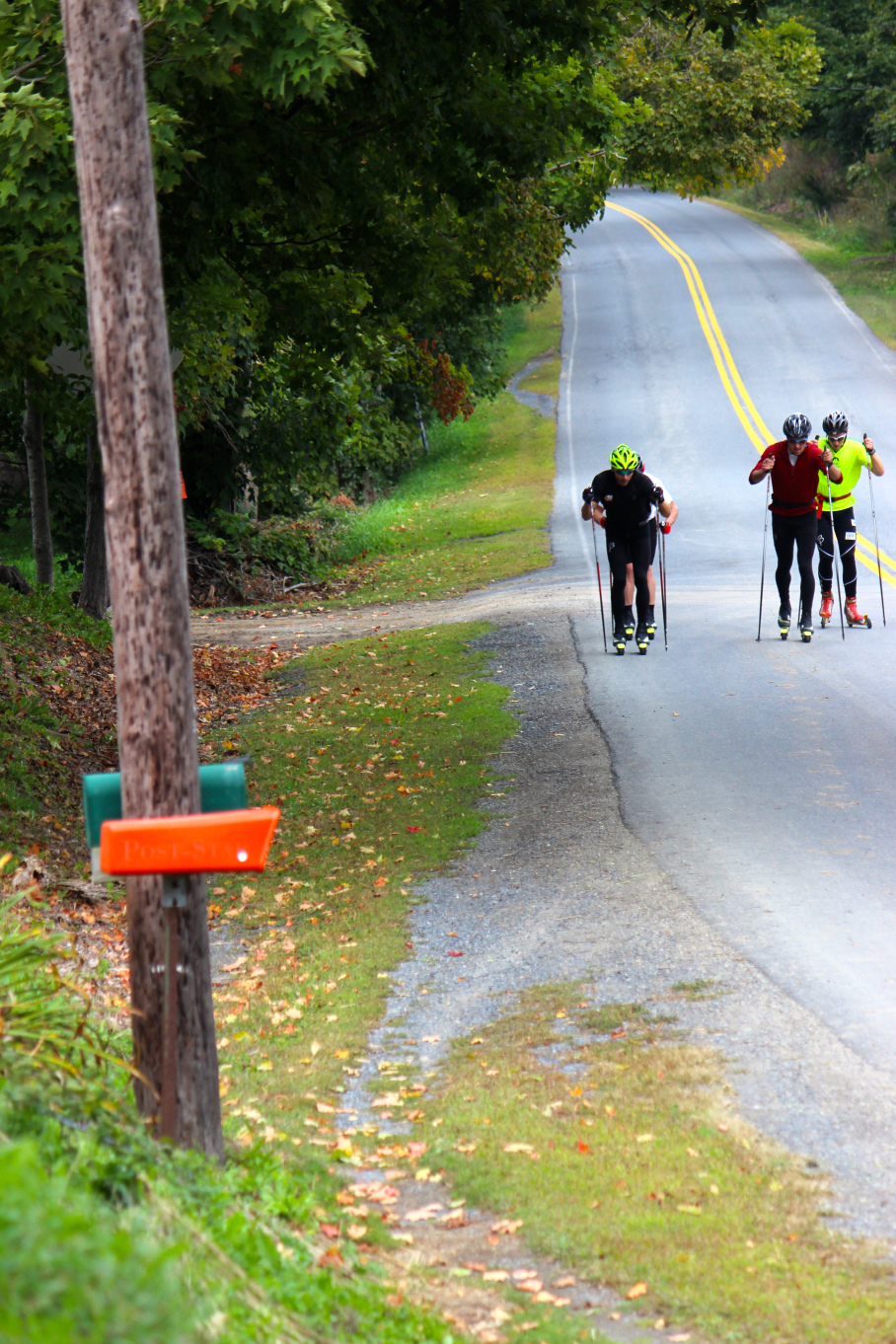
This year’s course started in Vermont but mostly traversed the back roads of New York. Unfortunately for the athletes, a strong headwind for most of the ski made progress slow. However, the men were able to finish around the five hour and 45 minute mark while the women were roughly half and hour behind.
For Hart, the most challenging part of the Ski-A-Thon was pushing through the “dark periods” where she felt the length of 100 k start to take it’s toll.