
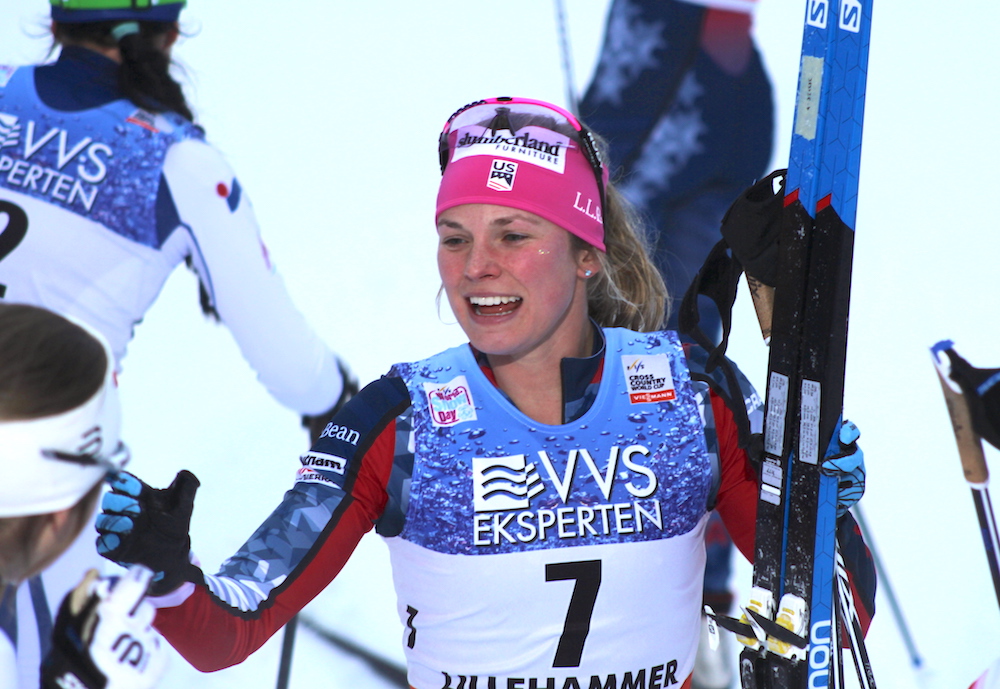
Jessie Diggins is having a big month. Nominated for an ESPY Award (along with Kikkan Randall for “Best Olympic Moment” and Paralympic nordic skiers Dan Cnossen, Oksana Masters and Kendall Gretsch for “Best Male and Female Athlete With A Disability”), Diggins recently posed ESPN The Magazine’s annual “The Body Issue”, which features various famous athletes sans clothes.
In a blog post published Monday, the same day “The Body Issue 2018” came out, Diggins, 26, explained her reasons for agreeing to the “tastefully nude shoot that shows off athlete’s muscles”. The post, titled “Body Issue(s)” (which she called “the most important blog I’ll ever write”), shares Diggins’s personal struggle with body issues and an eating disorder she sought treatment for about eight years ago.
“When I was 18-19 years old, I had everything in the world going for me, but I struggled with confidence and didn’t love myself,” she wrote. “I suffered from an eating disorder, and eventually sought help at a treatment center, checking in for a summer program that saved my life. So when I was approached about the ESPN issue, I thought ‘is this REALLY something I want to do? Will it bring back old memories? Will I be ok with everyone seeing my body exactly as it is?’ ”
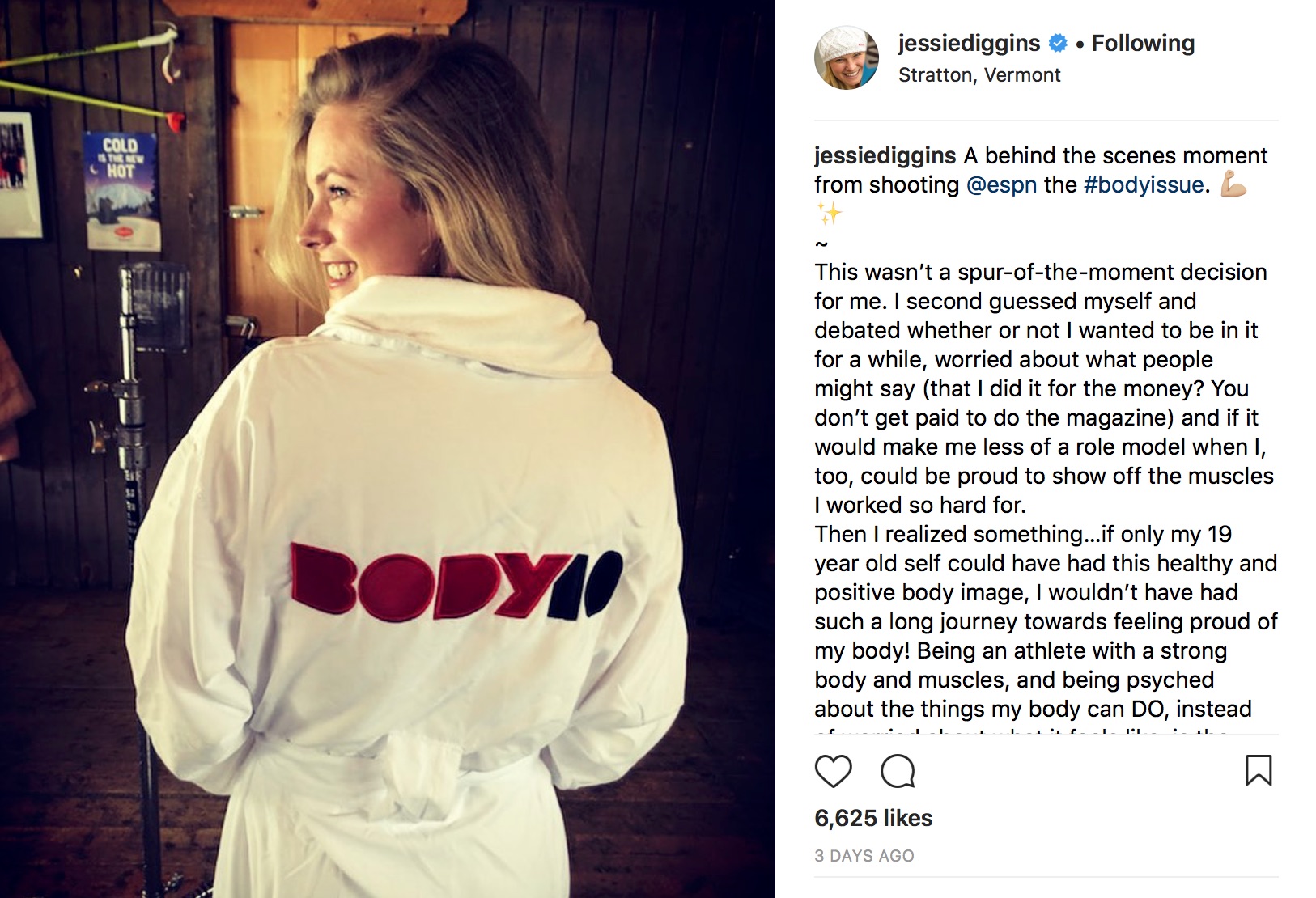
The answer, she explained, was yes.
“Realizing that I was confident enough in my own skin to say ‘yep, this is what training so many hours makes my body look like’ was an amazing moment for me,” she continued. “… Posing for ESPN was a real full-circle moment for me, and a chance for me to use a large stage to waltz right up to the microphone and share a message that I think is extremely important, and long overdue.”
Diggins explained that her photo shoot, which took place this spring, entailed an all-female closed set, “and it was incredibly empowering.”
“We need to open up the conversation about body image, self confidence, and disordered eating,” she wrote. “It should not be a shameful thing, or a taboo topic. It’s more prevalent than people think, and perhaps making help easier to find and less difficult to ask for could save some lives.”