 The Tour de Ski (TdS) is well into its teenage years. This year’s edition, the 14th, features three locales and the following races with a few minor new twists to excite this seasonal highlight of cross-country World Cup racing.
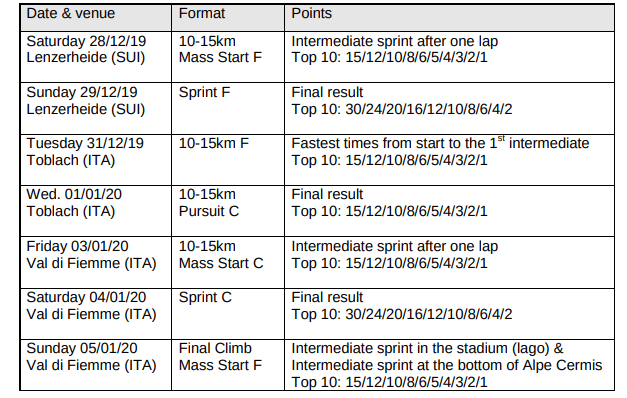
Lenzerheide, Switzerland (stages 1-2) Dec. 28, 29
- Stage 1: 10/15 k freestyle mass start. A mass start initiates the TdS this year, that’s new. It replaces the timeworn prologue.
- Stage 2: Skate sprint
Toblach, Italy (Stages 3-4) Dec. 31, Jan. 1
- Stage 3: 10/15 k individual start skate
- Stage 4: 10/15 k classic pursuit (the pursuit start position is based on the Dec. 31st skate race, not overall time).
Val di Fiemme, Italy (Stages 5-7) Jan. 3, 4, 5
- Stage 5: 10/15 k mass start classic
- Stage 6: Classic sprint
- Stage 7: Final climb – mass start skate. The mass start on the Alpe Cermis is a new format.
Overall (time based) Standings
The TdS is relatively basic when it comes to determining the winner: it’s the skier with the shortest elapsed time over seven stages. In TdS edition’s past, traditionally that was the first athlete across the finish line atop the Cermis, as that has traditionally been a pursuit start format. This year, with a mass start on the final climb, it’s possible for the stage winner and the overall TdS champion to be different skiers.
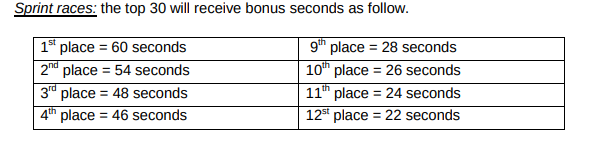
If you are drilling down on an athlete’s overall time and their corresponding overall TdS rank, here’s how time bonuses come into play. “Bonus” seconds are on offer during the sprint and mass start stages (excluding the final climb). Bonus seconds are subtracted from an athlete’s race day time, and then the overall time — a cumulative time for stages raced — is calculated.
Sprints offer time bonuses for 1-30th place.