 This World Cup coverage is made possible through the generous support of Marty and Kathy Hall and the A Hall Mark of Excellence Award. To learn more about A Hall Mark of Excellence Award or to learn how you can support FasterSkier’s coverage please contact info@fasterskier.com.
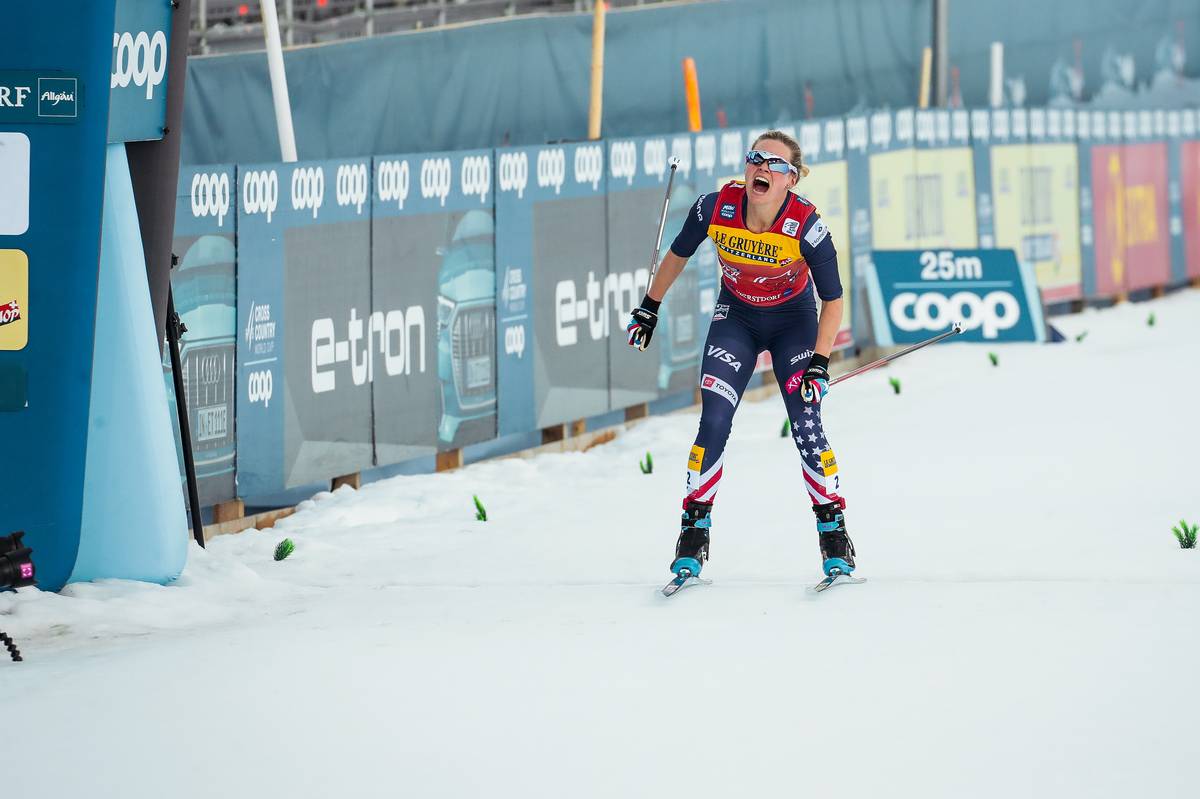
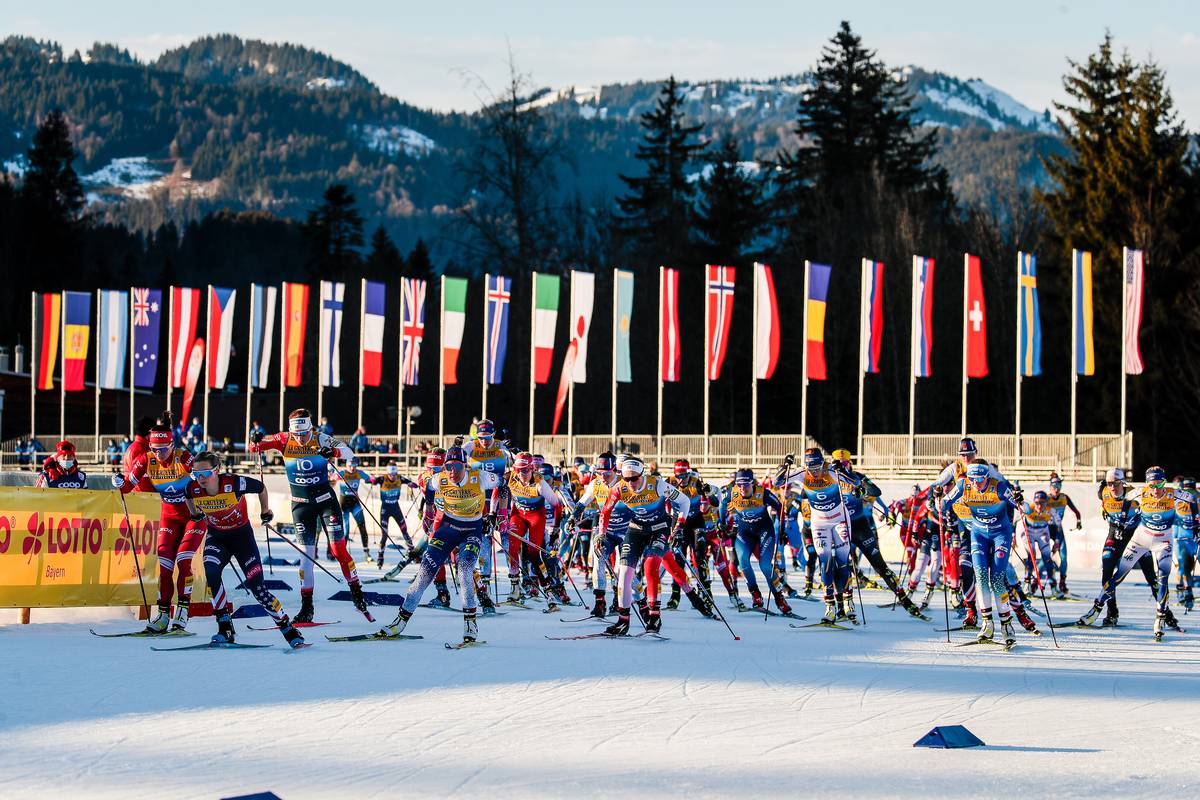
Stage 3 of the Tour de Ski, the halfway mark in this year’s edition, and the venue has shifted to Oberstdorf, Germany, site of the 2021 World Championships. The race on tap was a 10-kilometer skate and the first mass start event of the season. Temperatures were warm and sunny though the courses were located on the shady side of the valley, creating fast, firm conditions. After an exciting battle, it was the American Jessie Diggins who claimed the victory in Stage 3, using her speedy free skate technique to move from third to first down the finish lanes. Diggins finished in a time of 21:30.8, lightning-fast by the distance. Let’s examine what happened out on the course during those twenty-one minutes.
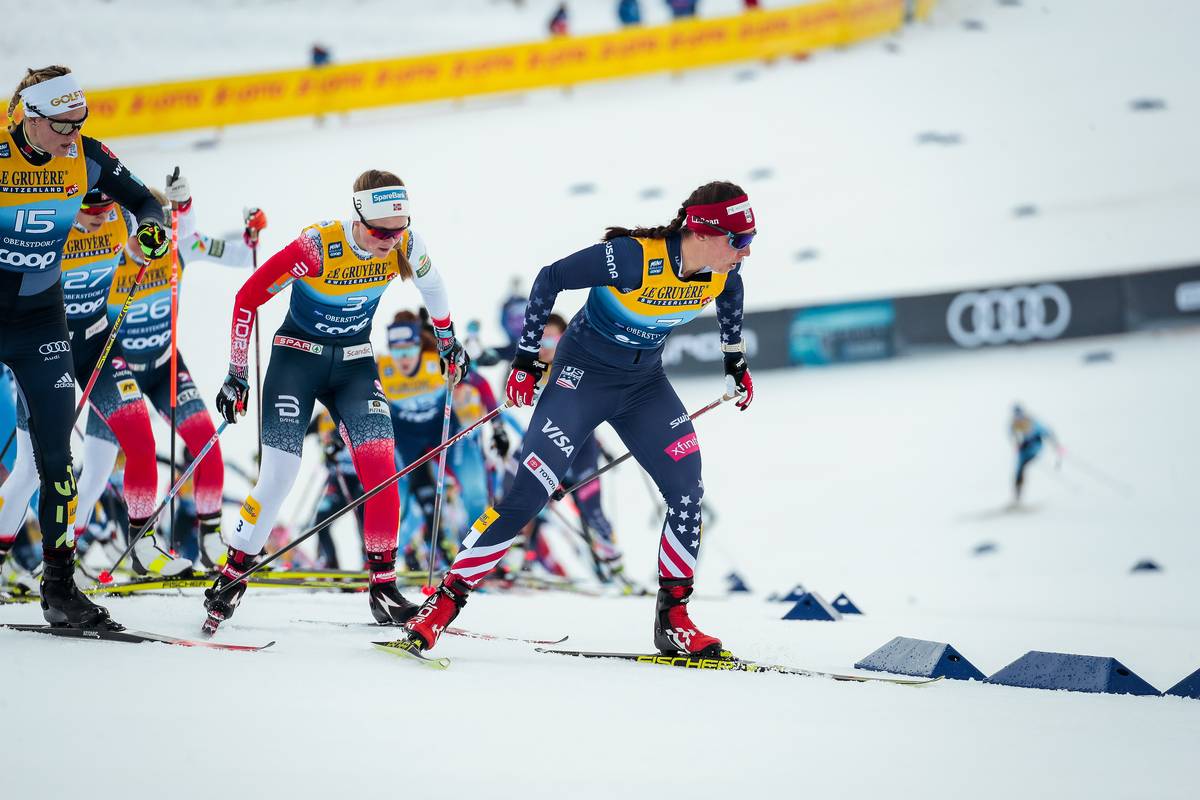
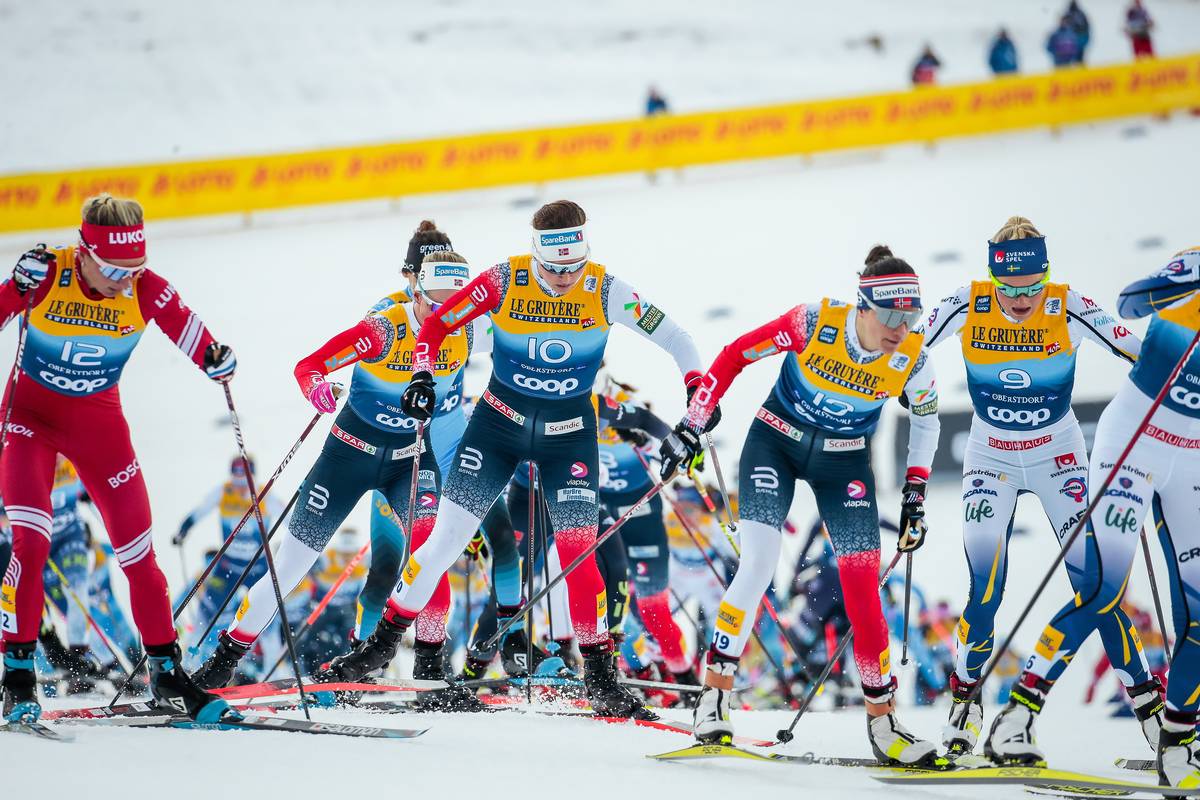
The course was made of three laps of a 3.3 k loop and the fast conditions made it challenging for any one athlete to break away from the rest of the pack. Immediately from the gun, Diggins was at the front, clearly looking to push the pace from the start. Through the first time-check at 2.1 k, the pack was largely still together. As the group navigated one of the many v-board rimmed corners, Frida Karlsson (SWE) got caught on the inside, taking a fall just before the end of first lap.
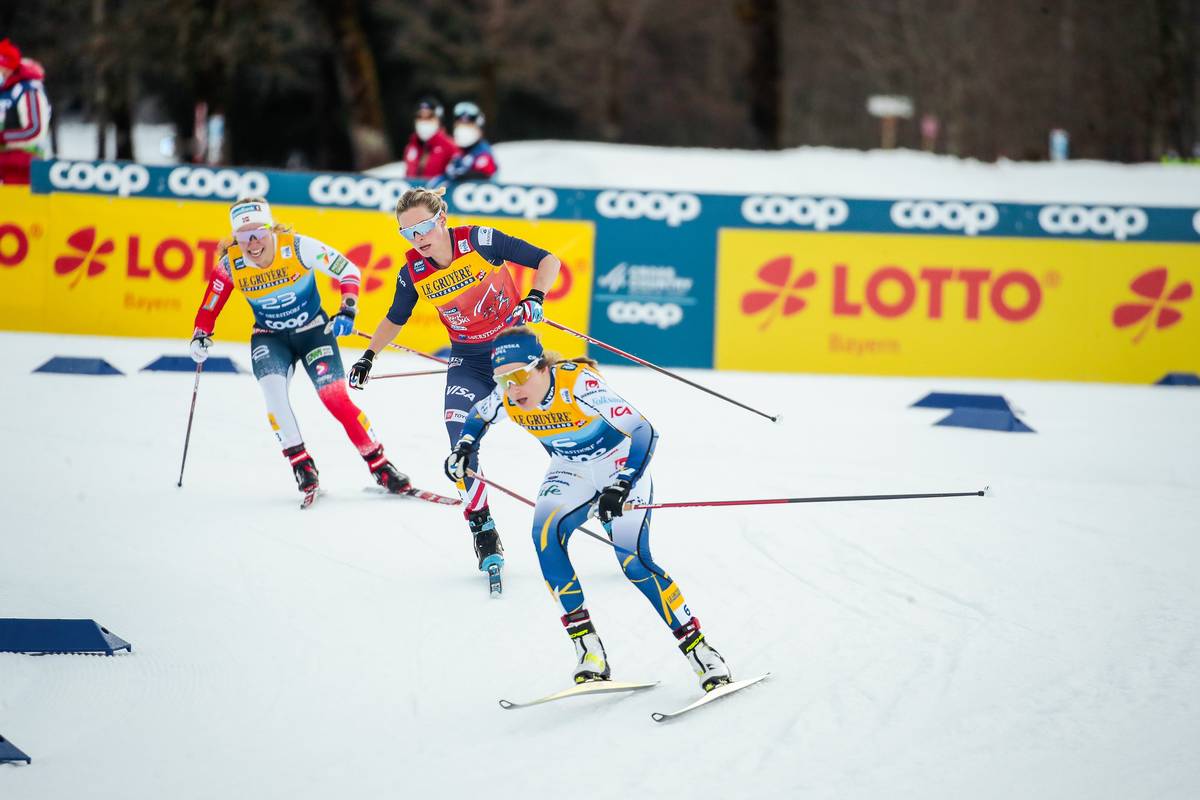
At 3.3k, Diggins was in the lead, shadowed by Ebba Andersson (SWE) and Heidi Weng (NOR), though the top twenty athletes were all within 10 seconds of each other. Stepping over broken pole remnants from the previous lap, the racers headed out on the second, towards the bonus points opportunity at 4k.
Weng (NOR) was first through the checkpoint to gather 15 points with Andersson (SWE) earning 12 and Karlsson, having recovered from her fall and making up significant ground, taking 10 in third place. Andersson, Weng, and Diggins continued to work hard up front and at 5.4k, a small break seemed to be forming.
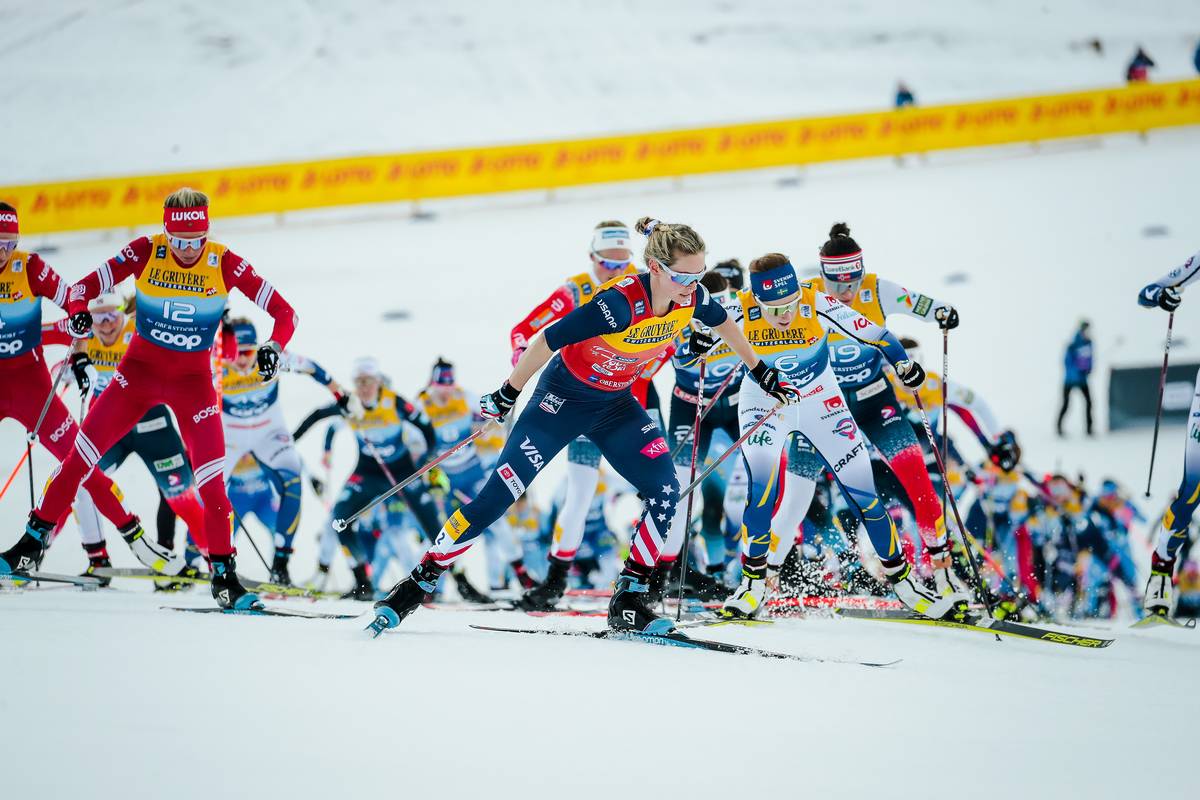
Unlike many women’s mass start races we have seen in the past few years (Johaug pulling away, the chasers strung out behind), this race was tight from start to finish. As the front pack took shape it initially held five athletes but was soon joined by another five. Andersson (SWE) was often at the front, followed by Helene Marie Fossesholm of Norway, Diggins, Teresa Stadlober of Austria, Karlsson (SWE), Weng (NOR), Tatiana Sorina (RUS), Katharina Henning (GER), Natalia Nepryaeva (RUS) and Delphine Claudel (FRA).
Despite the various efforts of Andersson and Diggins to break, the fast conditions and course profile seemed to make this difficult.
Rounding another v-board corner, Karlsson nearly fell again, catching herself with her hands. As the front pack sped towards the finish, Fossesholm (NOR) faded and dropped, leaving nine. Heading towards 8.7 km, Karlsson lengthened her stride and began to pull away, creating a gap of +1.7 to Diggins. Diggins and Sorina worked to close the gap on the next and final hill, though they didn’t overtake the Swede. Ending in a fast downhill finish where many of you may recall last year’s World Championship drama, Diggins was poised to use her strengths.
As the front three athletes came into sight of the finish lanes, Karlsson still held the lead, Sorina in second and Diggins closing fast in third. Choosing the outside lane Diggins free-skated hard, passing Sorina and then Karlsson to cross the line in first.
“It felt pretty extreme,” said Diggins to FIS when asked about her finish, “it probably didn’t look very graceful or pretty, but they did such a good job preparing the course in such warm conditions so it was awesome that it was hard. But in my head I was ready for the finish lanes to feel unstable, so I thought just stay as low to the ground as possible. That way if you fall you don’t have far to go.”
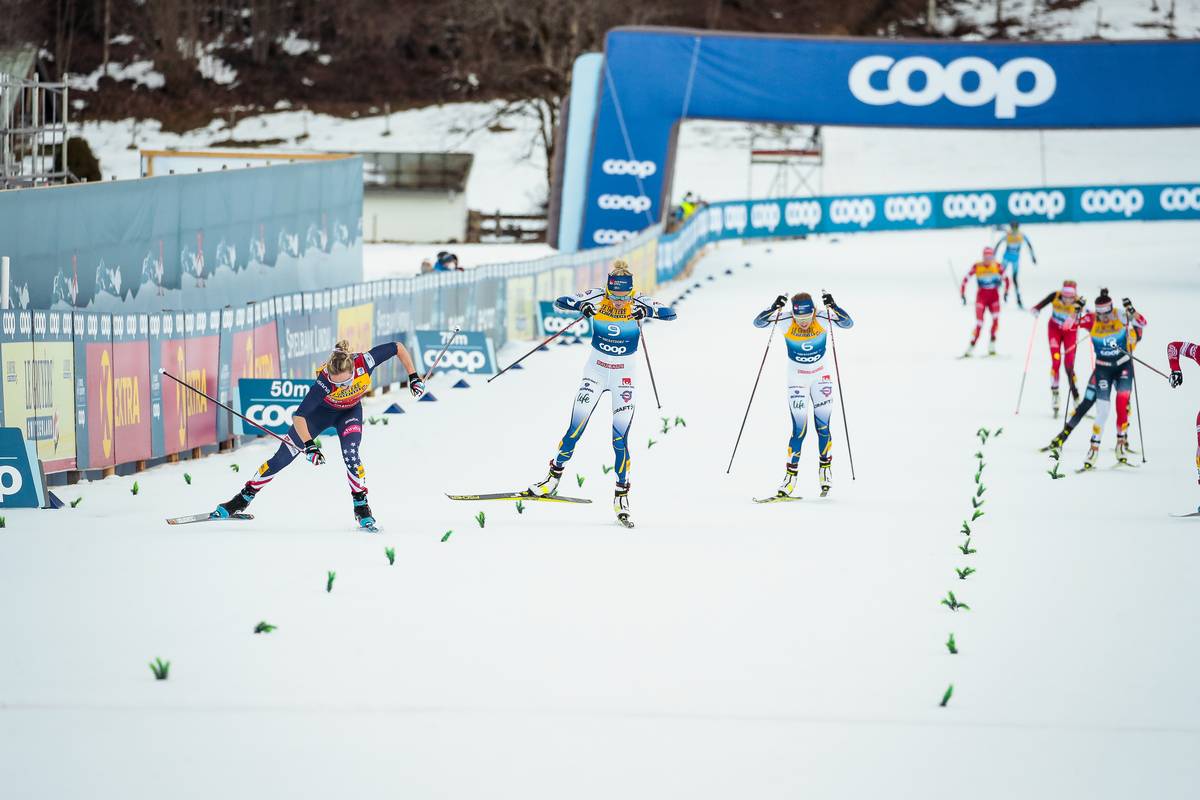
Karlsson (SWE) hung onto second place +0.5 behind Diggins and Sorina (RUS) grabbed third (+0.8).