
 This coverage is made possible through the generous support of Marty and Kathy Hall and A Hall Mark of Excellence Award. To learn more about A Hall Mark of Excellence Award, or to learn how you can support FasterSkier’s coverage, please contact info@fasterskier.com.

For the better part of a decade—when Norway’s Therese Johaug represented the power in women’s cross-country skiing—Ruka’s 20 k Mass Start Freestyle would’ve been an easy race to predict. Johaug would’ve gone to the front, all tenacity and tempo, and made the rest of the field suffer until it shattered. She had the ability—and the superiority—to bend the results of distance racing to her will. Johaug was one of the greatest distance skiers of all time, but she announced her retirement after the end of last season. In her absence, no one else has been able to demonstrate a similar sort of dominance. Today’s field was entirely capable of creating a blistering pace, but not so much so that any one skier could ski away alone.
There were a few ways this race could go:
- The whole field stays together, with the results decided in a bunch sprint to the line? That could happen, but it’s truly unlikely that the endurance skiers would agree to that lazy sort of an outcome.
- Go off the front and win solo? Frida Karlsson, Ebba Andersson, Heidi Weng could potentially do that.
- Work the field like a criterium bike racer, and sprint from the final bunch? Jessie Diggins won this race in precisely that fashion just one year ago. And Sweden’s Jonna Sundling (who was second behind Diggins last year) has always shown that sort of ability in the past.
That brings us to the sprinters . . .
It’s such a cool thing to be a sprinter in the field of a mass-start distance race. Sprinters in professional cycling (like Davis Phinney, like Mark Cavendish) have repeatedly snatched important race wins right out from under the noses of famous endurance cyclists. While it doesn’t happen as often in ski racing, the field in mass-start events sometimes sets itself up for similar outcomes—especially when some of the world’s most successful ski-sprinters also have the ability to hang in a pack with the world’s best endurance skiers.
That’s what’s happened for the past few seasons in Ruka—and it happened again today, as Jonna Sundling (SWE) sprinted away from a seven-woman breakaway group of the world’s best skiers. Jessie Diggins (USA)—herself one of the world’s premier sprinters—followed Sundling closely up the final hill to the finish, but could not get around the traffic in the group. She would settle for second, marking a tremendous start to her own World Cup campaign. Heidi Weng would cross the line third, ahead of a small group of frustrated distance skiers who had worked all day to drop these undroppable sprint finishers.
Diggins has excelled in Ruka mass-start races before, winning the 20 k last season, and finishing second the year prior. She’s likely to be satisfied with today’s podium performance, and happy to know that her off-season training appears on schedule to make her a contender in nearly every scheduled World Cup race.
“I’d taken notes from the year before of how that really long downhill off the north part of the course where the group will often come right back together,” said Diggins. “Even if I’m kind of struggling with the climb and off the back a little bit, I knew to keep fighting for every single second. Because it will probably come back together. Knowing that helps you stay mentally in it.”

Americans also appreciated the finishing results of Diggins’ teammates: Alayna Sonnesyn would finish in the main group for 27th, Sophia Laukli 39th, Kendall Kramer 44th, , Julia Kern 53rd, Kate Oldham 61st. Rosie Brennan chose not to start today. It makes sense: Brennan is incredibly strong, so she can stay with a fast pace. But when sprint moves happen, her diesel-powered racing style would be less likely to close gaps quickly enough to benefit from the slipstream. It’s a long season, and Brennan might benefit more from a rest day than from another long day of racing that was not likely to produce the results she hopes to see later in the season.
Canadian Katherine Stewart Jones would remain at the front of the chase group throughout the day, ultimately delivering a fine 18th place finish.
20 k Mass Start Freestyle
Ruka’s course offers breath-taking climbs and death-defying downhills, but the pace of mass-start racing in the post-Johaug era is simply not fast enough to drop everybody else. Bunches are likely to crest the hills together, and rocket-fast downhills allow sprinters (like Diggins and Sundling) to make up any time lost on the climbs. That’s also what may make this race such a bittersweet return to World Cup competition for climbers like Astrid Oeyre Slind (NOR) and Delphine Claudel (FRA). Strong distance racers are incredibly fast skiers . . . but unless they drop the sprinters, they really don’t stand a chance in a Mass Start race like the 20 k Freestyle in Ruka.
Overnight freezing produced a track that was icy and fast: five laps of a four kilometer course that winds up and down Ruka’s notorious climbs.
“It was so icy, and so scary, and there were these bare patches of ice where the snow would slip off,” said Diggins. “So you’re trying to climb up the hill and your skis are sliding out to the side. It was happening to everyone! Then, on the downhills, the winds in the morning had blown pieces of moss from the trees . . . so it was a little bit terrifying out there.”
Coming through at the end of Lap 1, Frida Karlsson (SWE) led the way, producing enough pace to string out the field. The top fifteen skiers continued to shadow her, including the likes of Weng, Diggins, Moa Ilar (SWE), Slind, and Stewart-Jones (CAN). Soon after the end of the first lap, Karlsson turned up the pace again in a breakaway that included Weng and Andersson The field separated behind a gap, and a chase group led by Diggins, Ilar, Sundling, Nora Saness (NOR), and Karoline Simpson-Larsen (NOR).
Sundling emerged from a scramble of chasers to bridge up to the breakaway, now composed of three Swedes and Heidi Weng. By the end of the second lap, Diggins began to claw her way back, leading Simpson-Larsen, Saness, and Ilar. The lead group had expanded to seven skiers.

Diggins never really appears altogether comfortable—her technique displaying a bit more flopping and head-bobbing than that of other premier skiers—but she is certainly able to grind out the kilometers, consistently working her way into and through a breakaway group. She moved forward briefly at the checkpoint where World Cup bonus points were awarded, but there was no frenzied sprint for points as the group skied through led by Andersson and Karlsson. Ilar had already been gapped, so it seemed that the contenders were satisfied with maintaining their fast but sustainable pace.
Kristen Austgulen Fosnaes (NOR) and a resurgent Delphine Claudel (FRA) continued to lead the chase group, but the race for medals and points had gone up the trail, and the seven leaders (continuing to be trailed by a game Ilar) would settle the question in the kilometers to come.
In later laps, Diggins continued to yo-yo off the back of the breakaway. Commentator, Chad Salmela, noted that this is the same way Diggins skied this event a year ago (a race she would go on to win). Diggins is a great endurance skier, but she’s also a sprinter. And the situation is always the same when there’s a sprinter in the breakaway—either drop them, or suffer the consequences. But Diggins was not the only sprinter left in the field of this 20 k Mass Start.
Jonna Sundling is perhaps the world’s best sprinter—and a skier possessed of remarkable endurance abilities, as well. Sundling had remained all but invisible within the breakaway, but her breakaway mates would have been keenly aware of her presence. That may be why Karlsson turned up the heat yet again, storming to the front, followed by Andersson and Weng. Together, the lead group came through the end of Lap 4, knowing full well that the final lap would be a scorcher. All-rounders would press the pace to an anticipated breaking point, sprinters would hang on for dear life, and the issue would be settled at the finish line.
The final time up Ruka’s steepest hill, Andersson drove to the front, determined to exhaust Karlsson and separate herself from the sprinters. But Diggins clung to the tail end of the group, and made it over the top still in contact. Sundling remained in contention as well, tucked in safely behind Andersson and Karlsson. Diggins descending ability allowed her to move forward in the group as it approached the finishing hill (the same hill that played such an oversize role in finishes of the Sprint heats).
Up to this point, everyone had been watching the courageous efforts and tactical brilliance of Diggins, but it was Sundling who skied into the final uphill in the position typically utilized by the world’s finest sprinters. Sundling was fully aware that the leader over the top of the final hill was likely to hold off their rivals to the finish line. Sundling committed to the move while Diggins was forced to maneuver through traffic, weaving around a fading Karlsson. Sundling pulled clear as she entered the finishing straightaway, and after 20 gruelling kilometers of racing, the field finished in the order of their sprint reputations: Sundling, Diggins, Weng, Karlsson, Andersson, Simpson-Larsen, Saness.
“I am a little tired right now,” admitted Diggins. “I’m holding as high a level of training as I can while still trying to race well. That’s a delicate balance, but racing is also part of my training plan at this point in the year. And I’d definitely like to use racing in order to get better at racing. The goal is to be in sharp form in the middle of the season as we get to the Olympics. I feel really happy about where I’m at right now.”
One way or another, the World Cup season has begun, introducing months of racing that also lead to the Olympic Winter Games of Milan-Cortina. While today’s 20 k event may not have been a dress-rehearsal for the Olympic 50 k, it certainly demonstrates the ways in which certain skiers may look to influence the outcome. We’ll start watching closely now, and will await more thrilling racing as the season continues.
Women’s 20 k Mass Start Freestyle RESULTS

Love Stories Like This? Help Keep Them Coming.
Feature interviews like this one take time, access, and care to produce. If you value thoughtful storytelling and independent ski journalism, please consider becoming a Voluntary Subscriber. Your support directly fuels the work we do to cover the people, places, and moments that make our sport special.
Join the FasterSkier community!
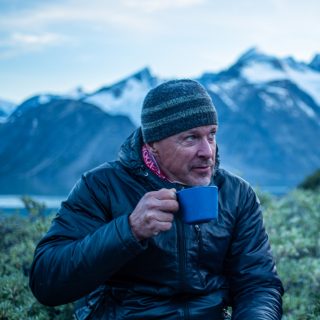
John Teaford
John Teaford has been the coach of Olympians, World Champions, and World Record Holders in six sports: Nordic skiing, speedskating, road cycling, track cycling, mountain biking, triathlon. In his long career as a writer/filmmaker, he spent many seasons as Director of Warren Miller’s annual feature film, and Producer of adventure documentary films for Discovery, ESPN, Disney, National Geographic, and NBC Sports.


