
RUMFORD, Maine – As the men’s and women’s adaptive skiers at the 2012 U.S. Cross Country Championships crossed the finish line in a spread-out finish, they did what many racers often don’t think to do – they waited.
After their longest races of the week — 6 k for most women and 12 k for most men in the sit-ski category –several were noticeably cold. But they were also a family, joint by backgrounds of personal challenges and united in their passion for hard work and skiing.
The second-place finisher in Saturday’s individual start after winner Dan Cnossen, Paralympian Sean Halsted sat quietly behind a barricade at the finish, looking for others to cheer on as they entered the stadium. Some had two laps to go.
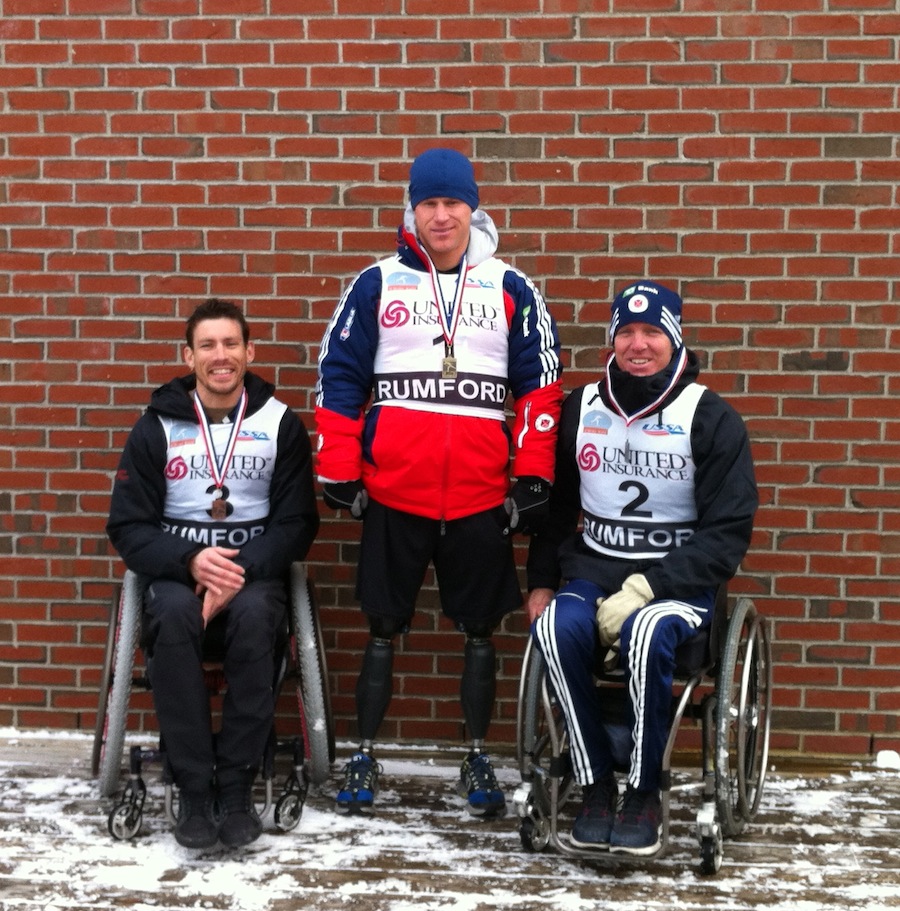
Saturday’s Podium:
Men’s sit-ski 12 k
1. Dan Cnossen
2. Sean Halsted
3. Jeremy Wagner
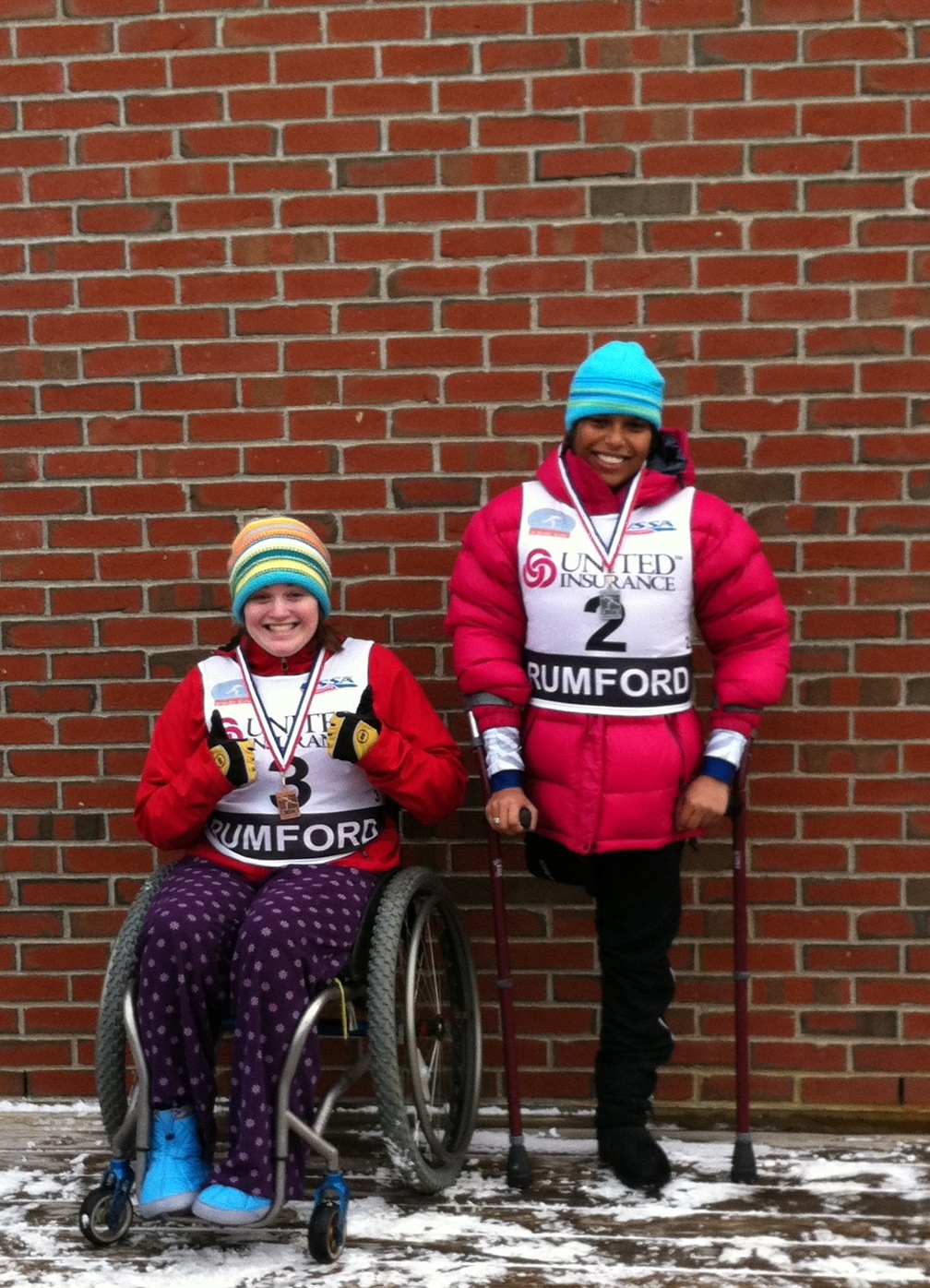
Women’s sit-ski 6 k
1. Alicia Dana
2. Christina Kouros
3. MiKayla Briere
But the number of competitors — 17 on Saturday — was a good sign for the sport. Back in 2006 when Halsted, a U.S. Air Force veteran injured when he fell 40 feet out of a helicopter, was trying to make the Paralympics, he was one of four men competing for a spot.
“For the next couple years after that, it would just be four of us, so you’d go, ‘OK, who wants to take U.S. Nationals today?’ You kind of hand it to each other,” Halsted said. “Just to have the numbers, it’s showing this improvement … We’ve got some new energy with us being under U.S. Paralympics. Hopefully that energy will just keep growing and building our numbers.”
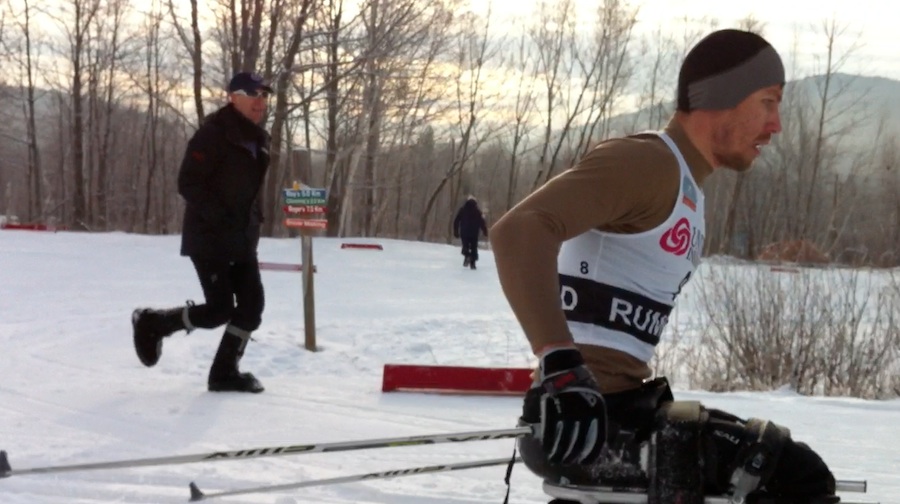
On Saturday, U.S. Paralympic Nordic teammates Halsted, Cnossen and Andy Soule, who was fourth, genuinely competed for the win. Halsted started just ahead of Cnossen and had to work hard to remain in first. He did so for the first two laps, but by the third of six, Cnossen tied his lead. A former Navy SEAL who lost both his legs in a land-mine explosion in Afghanistan in 2009, Cnossen continued to push the pace in Saturday’s 12 k and secured a 25-second victory.
In his second season of racing, the Topeka native has been skiing for just over a year. With a background in running and triathlons, he had the endurance to help him transition to nordic after his injury, and he moved to Winter Park, Colo., to train full time. This week at nationals, he won two of the three adaptive events, including Thursday’s 10 k, and was second in the 0.8 k sprint to Halsted.
“If it weren’t for Sean Halsted and Andy Soule, I wouldn’t have progressed nearly as far,” Cnossen said of the national team veterans. “I’ve learned a lot from them.”
While adaptive sports don’t often draw crowds with such a small number of participants involved, the athletes at U.S. Nationals were grateful to those that came out.
“It’s tough to be involved in this sport because there’s not a lot of support,” said Alicia Dana, the 6 k champion, who was third in Thursday’s 5 k. “The equipment is pretty expensive and hard to come by.”
A Bill Koch and junior nationals skier in her youth, Dana broke her back when she fell out of a tree at 17. A few years ago, the hand cyclist from Putney, Vt., started sit skiing a few years ago.
“It feels wonderful to be skiing again,” said Dana, 42. “It’s a huge part of my childhood and upbringing.”

She noted the struggles for an adaptive skier not supported by the military, especially as a single mother with an 8-year-old at home.