Chew on this for a minute: who stands as the greatest male U.S. distance skier in the “modern” era (defined by post-Bill Koch) of World Cup skiing?
Most likely at the top of that list would be 37-year-old Kris Freeman.
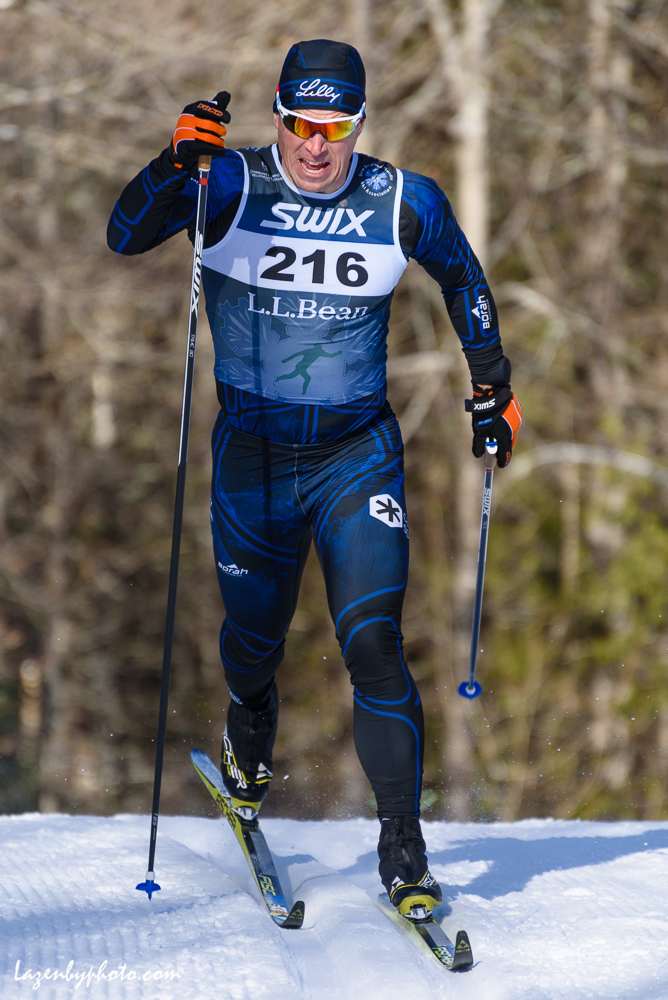
The New Hampshire native and longtime Granite State resident retired as a professional cross-country skier after this year’s U.S. Distance Nationals 50-kilometer classic race in late March in Craftsbury, Vermont. Freeman finished seventh in that race. A few days earlier, he placed fourth in the 1.3 k classic sprint, which was part of SuperTour Finals, also in Craftsbury.
“It was a very weird feeling to finish the 50 k in Craftsbury and pack up my skis and be like I am not going to race next year,” Freeman said during a phone call on April 3. “I got home and I have a three-bedroom home. One of the bedrooms is entirely dedicated to my ski stuff, and I am like, I should probably do something else with this room right now. It was a strange feeling.”
(Freeman and his wife, Amber, have about four months to re-purpose the ski gear room for a nursery. The couple is expecting their first baby in September.)
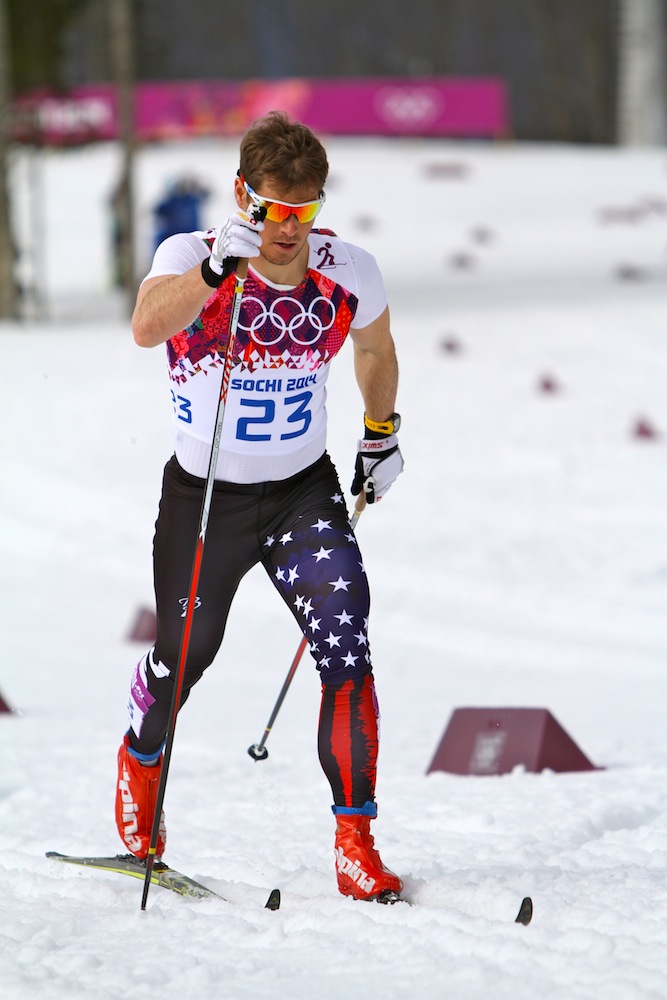
1980. That’s Freeman’s birth year. His nearly 40 trips around the sun don’t make him ancient in terms of athletic relevance on the national stage. It makes him a reminder of one athlete’s incredible longevity and focus. Freeman has never been in it to just finish.
He raced to win. That maxim held going into his final pro race, not as a sentimental notion, but as podium potential fact. No sane skier lining up with up Freeman could discount the force with “Team Freebird” sublimated on his lycrad backside.
First, the disappointment. Freeman did not qualify for his fifth Olympic team this year.
“I knew going in, two years ago or three years ago, that I was past the peak of my performance,” Freeman said. “I knew that I was losing a little bit each year. 2011 was my best season. I believe I was 31 that year, and I held that fitness together for another year and a half, and it has been slowly losing a little bit each year. After Sochi, I said I am going to take it a year at a time. What happened was I was enjoying what I was doing. I love ski racing.”
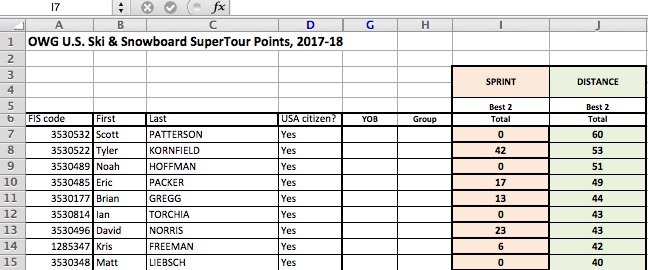
That year-by-year plan took Freeman to the cusp of qualifying for PyeongChang this past January. By his own estimation, had he skied 0.8 seconds faster in the U.S. nationals 30 k classic in Anchorage, Alaska, and edged out Eric Packer for second place, the 2018 Olympics would have been a possibility. Freeman was fourth overall and the third American in the 30 k. It is still conjecture, but second place in that race would have positioned Freeman for a potential fifth Olympic berth as a distance-skier selection*. (*For the logic behind that reasoning, see OWG section at end of this article.)
“I knew it wasn’t a guarantee that I would make the team, and I was damn close to making it,” Freeman reflected. “I was able to put together probably the best race of my year in Anchorage in that 30 k. I came up a half a second short. I don’t have any regrets extending my career another four years. I enjoyed it.”
Long before coming up a half-second short, Freeman’s quest for podiums and championship-team selection, more often than not, bore fruit. At U.S. nationals alone, he won 17 championship titles (see sidebar), placed second four times and third five times. Between 2006 and 2016, he won 15 SuperTour races and reached the podium eight other times in second or third place. That stat is more impressive considering Freeman didn’t race a single SuperTour between Jan. 4, 2007 and March 29, 2011.
Freeman’s National Titles:
1. Soldier Hollow 2000: 30 k classic
2-3. Rumford 2003: 15 k classic, 30 k classic
4-5 Soldier Hollow 2006: 15 k classic, 30 k skiathlon
6. Fort Kent 2006: 50 k classic*
7-8. Houghton 2007: 10 k skate, 15 k classic
9-10. Presque Isle 2007: 30 k skiathlon, 50 k skate*
11-12. Anchorage 2009: 10 k skate, classic sprint
13. Anchorage 2010: 15 k skate
14. Sun Valley 2011: 50 k classic*
15. Craftsbury 2012: 50 k skate*
16. Tahoe 2013: 50 k classic*
17. Houghton 2015: 30 k classic
* = Spring Series/U.S. Distance Nationals
His first national championship was in 2000 in the 30 k classic. (Freeman placed third overall but was the best placed American). At the 2001 national champs, Freeman proved he’d remain on the podium scene. He was third in a freestyle sprint. Two days later he was second in the 10 k classic. Freeman lost to first-place skier Justin Wadsworth. Otherwise, the 21-year-old Freeman defeated a legacy-rich field, which included his older brother, Justin Freeman. Ultimately, Freeman’s span of distance dominance lasted 16 years at the senior level.
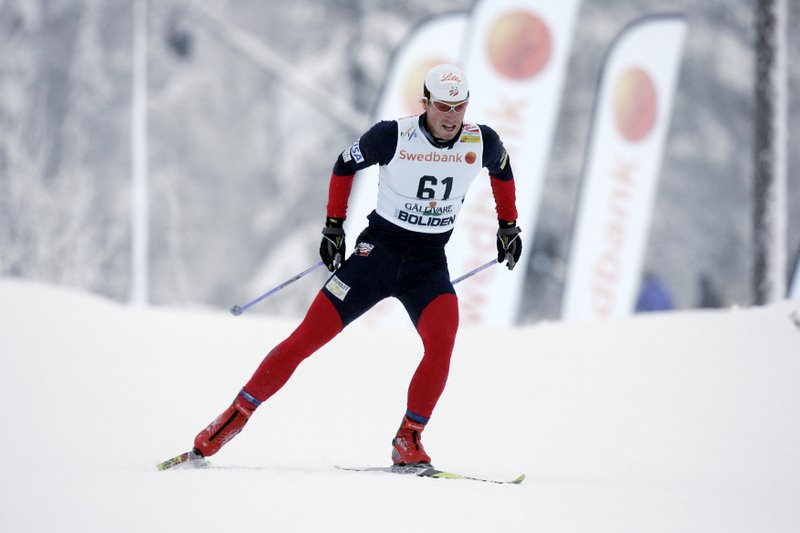
Internationally, Freeman still sets the high-water mark standard for male distance skiers. He won the 30 k classic at the inaugural U23 World Championships in 2003. He raced at four consecutive Olympics stretching from Salt Lake City in 2002 to Sochi in 2014. His best results were a 22nd place in Salt Lake’s 15 k classic, and 14th in the 20 k skiathlon and 2oth in the 15 k classic, both at the 2006 Torino Games.
Freeman raced on the U.S. Ski Team (USST) from 2002 to 2013. On the World Cup, Freeman notched 10 individual top-10 results. His best finish was a fourth place in the 15 k classic in Kuusamo, Finland, in 2009.
He skied in eight consecutive World Championships. At 2003 World Championships in Val di Fiemme, Italy, he placed fourth in the 15 k classic, 10.6 seconds out of first and 2.1 seconds from bronze. It was a repeat at the 2009 World Championships in Liberec, Czech Republic, where Freeman also placed fourth in the 15 k classic, 17.7 seconds out of first and 1.3 seconds from bronze. Such was Freeman’s form that fifth-place skier Jaak Mae of Estonia was another 13 seconds behind Freeman in that 2009 race.
“Internationally, I think obviously winning Under-23 World Championships was just a great day,” Freeman said of his highlight international moment. “Listening to a scratchy national anthem was really cool. But at the same time, I think that the World Championships in Liberec, just the vibe that we had going on there. We had the nordic combiners sweep the wins that year, all three events. We had Lindsey Van win the ski jumping. Kikkan [Randall] was second. I was fourth. It just seemed we had a run to the podium ceremony every night. So I think Liberec was probably the highlight of my career. That place and that race.”
As far as the belief-in-medals movement is concerned, Freeman’s performances helped seed that optimism.
His Greatest Challenge
And his accomplishments are even more noteworthy considering he achieved them while managing Type 1 diabetes. During his four Olympics and tenure on the World Cup, Freeman’s diabetes was the news peg that exposed him to a broader audience. Since his diagnosis at age 20, he faced the challenges of regulating his blood sugar while competing amongst the world’s most fit athletes.
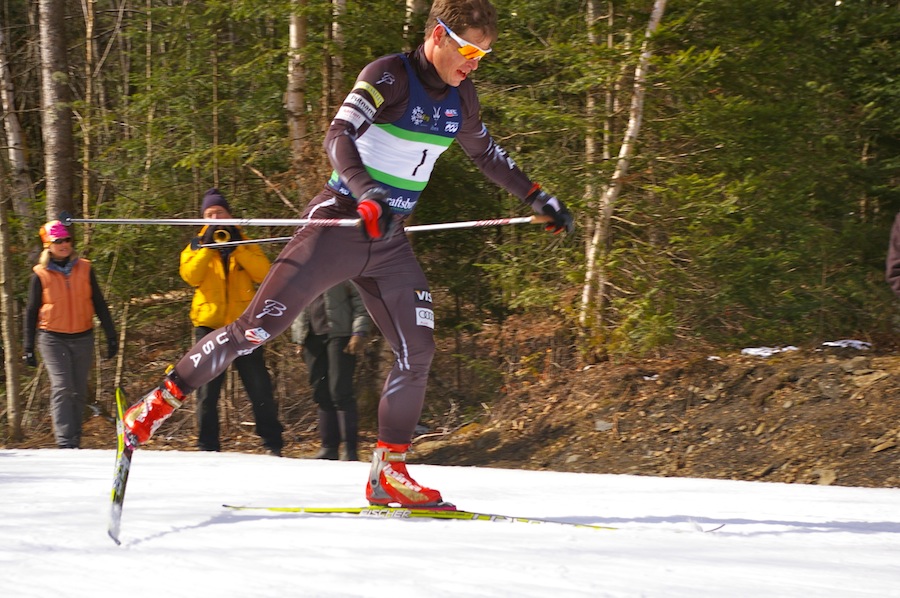
“I had to be pretty resilient to disappointment because there are a lot of factors that go into ski racing,” Freeman explained about his race-day realities. “You’ve got to be fit. You’ve got to have good skis. You’ve got to get the wax right. And on top of that, I had blood-sugar management, and blood sugar is impacted by just about every hormone in your body, especially stress hormones. So when you are under stress they get even more complicated as you try to pinpoint how much insulin to give yourself.”
In the 30 k pursuit (now called the skiathlon) at the 2010 Olympics, Freeman miscalculated his blood-sugar requirements. The result was a literal hypoglycemic collapse that saw Freeman seeking a quick infusion of sugar before he continued racing. This stark anecdote reflects something that never makes the International Ski Federation’s (FIS) official results: the everyday emotional and physical stress diabetes had on Freeman. His result in that race, 45th place, tells the bare bones story: that 44 other skiers beat him. That would be judging a book by its cover.
Forty-fifth place isn’t the story.
In 2010, FasterSkier penned a comprehensive article on the lengths Freeman went to bring some normalcy to his training and racing. Zeroing in on the moving bullseye of his race-day blood sugar levels would have sunk most athletes and their support staff. As his primary coach for the bulk of his career, Zach Caldwell, who owns a business dedicated to ski flexes and wax combos, was also fixated on helping Freeman find the perfect recipe of low pre-race stress and dialed blood sugar.
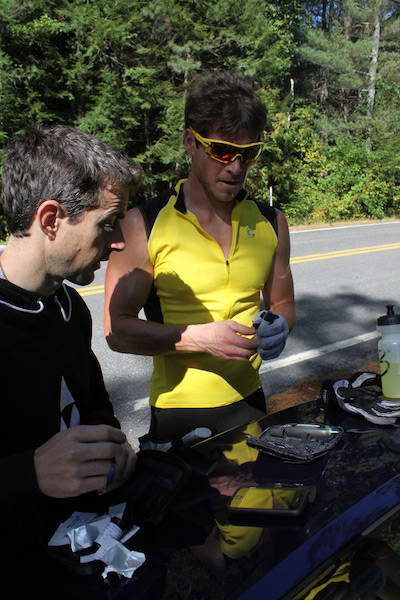
With the benefit of Caldwell’s and Freeman’s fastidiousness, Freeman’s career will be a case study for other diabetic endurance athletes. The simple documentation of his attempts at athletic normalcy is a significant legacy for diabetics in any endurance sport’s pipeline.
Asked if he could have replicated his storied career without diabetes, Freeman was quick to state that would be a “wasteful exercise”.
“I have had diabetes for so long now I cannot separate what would I be without it,” Freeman said. “I honestly don’t know and it’s a question I don’t try to answer. Would it have been an easier road for me? Absolutely. Would I have stayed with skiing as long as I did? I don’t know. Over time, I became more comfortable talking about some of the real difficulty of it or how it really has impacted certain races or certain seasons or certain aspects of my life. I think for a long time I was just scared of having diabetes and doing what I was doing, and that can close you off.”
From the K-90 to the Olympics
Freeman can be terse in his comments. He’s also forthright in his racing style — he’s more inclined to do the intimidating than being intimidated.
“I am not going to blame all of my cocky behavior on having diabetes,” Freeman clarified. “But, for sure, being cocky is a defense mechanism. It can also be deliberate intimidation, which I am just as guilty of. But, I think, over time, having diabetes has just taught me that being open with people around you and honest with yourself is the key to success in anything.”