
Where I’m going the day after the Birke
I know what you do the day after the Birke. Linger in bed. Go online to look at your time. Compare it with that other guy in your ski club’s time. And that other guy. Figure out if you were fast enough to move up a wave next year.
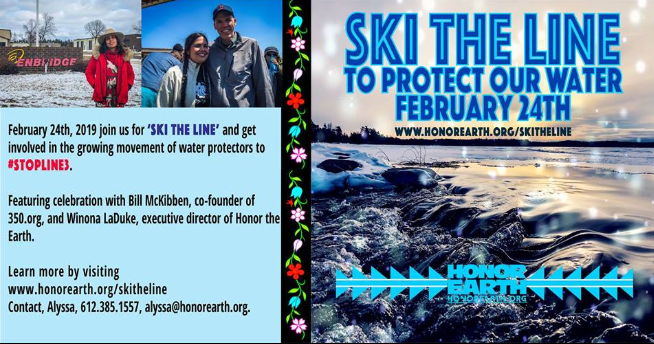
But this year there’s another option. You could drive a few hours west to Lake Itasca State Park in Minnesota and climb back into your boots and join in something novel: a nordic ski protest against the proposed Line 3 tarsands pipeline. Ski the Line they’re calling it, and if you ask me it’s a way to pay back winter for all it’s given us.
The 15 k ski along part of the proposed route of the pipeline is a stand against inevitable leaks and oil spills, and against the continued subjugation of native Americans. And, crucially, against the ongoing disruption of the planet’s climate. Line 3 is, like the Keystone or Dakota Access pipelines, the classic example of something that should never be built again. Theoretically a “replacement” for an existing pipe built in 1961, it’s much larger in volume and cuts across a new corridor—in fact, at 915,000 barrels of oil a day it would be one of the biggest pipelines on earth.
And it would carry the dirtiest oil on earth—the tarsands sludge from the wastelands of Alberta’s once-grand boreal forest. A large-scale study made clear in 2015 “that any increase in unconventional oil production” (which is to say tarsands oil) is “incommensurate with efforts to limit average global warming to 2 °C” (which is to say, keep building these things and it’s game over for the climate.)
Ski the Line is being organized by Honor the Earth, a remarkable nonprofit headed by the equally remarkable Winona Laduke, from the Ojibwe White Earth reservation in Minnesota. She’s made the case that the pipeline violates not only tribal sovereignty, but also the “usufruct” rights granted the tribes when they were forced off their land. “Pipelines threaten the culture, way of life, and physical survival of the Ojibwe people. Where there is wild rice, there are Anishinaabeg, and where there are Anishinaabeg, there is wild rice. It is our sacred food. Without it we will die. It’s that simple.” And when pipelines leak, as they inevitably do, there goes the water—just ask the people of Kalamazoo, where the river still hasn’t fully recovered from a 2010 tarsands pipeline spill.