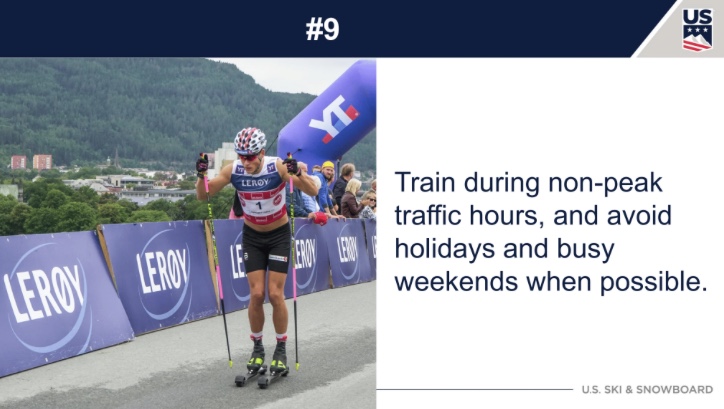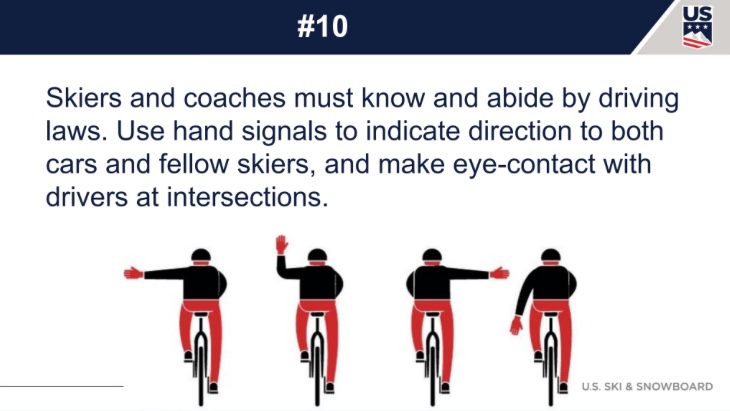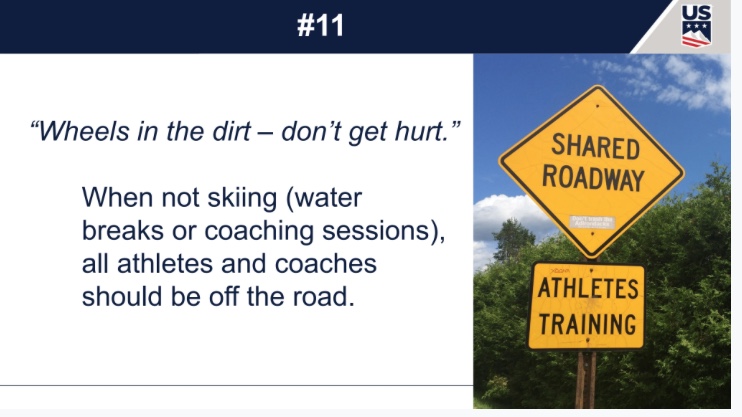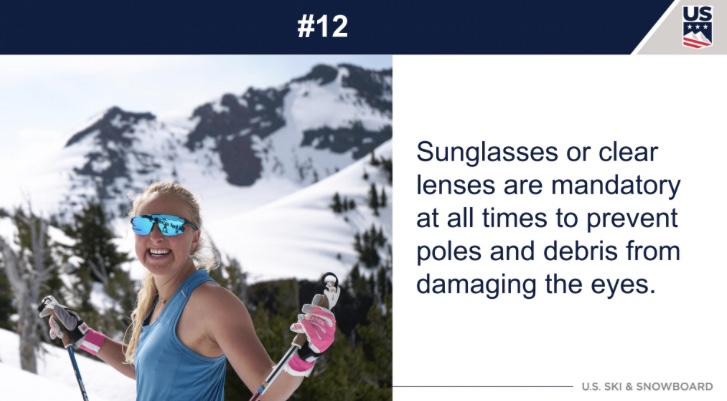
Due to the start of the rollerski season, we are republishing this story to help promote best practices when rollerskiing on the open road.
Making yourself visible while rollerskiing is a must. And with a recent reminder from U.S. Ski Team (USST) World Cup coach Matt Whitcomb, the time of year has come when many skiers are training on roads in lower angle sunlight as we tip away from the Sun in the Northern Hemisphere. Below we are including the rollerskiing safety bullet-points and slides from Whitcomb’s presentation on the topic at the recent National Coaches’ Symposium.
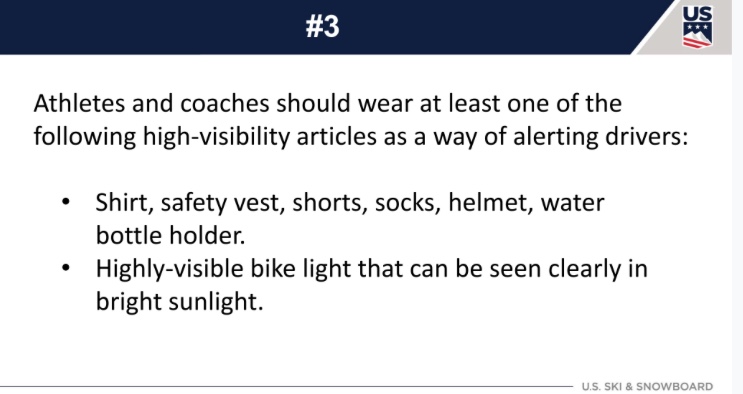
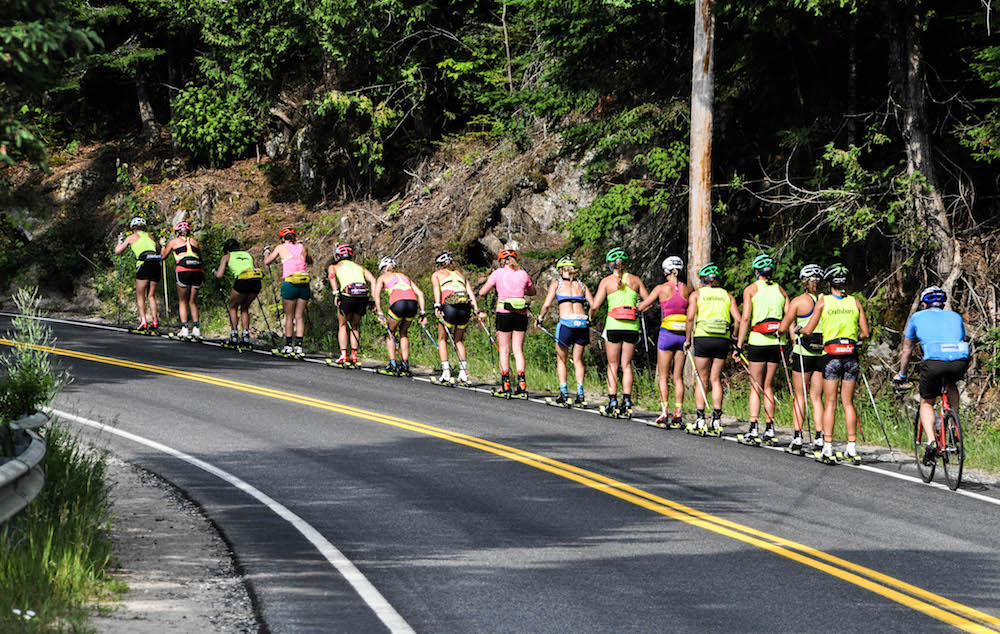
Before that, we recognize that rollerskiing on roads open to car traffic poses risks. For several years now, rollerskiers have been encouraged to wear high-visibility shirts. The next progression in rollerskiing safety will likely come from the cycling community where researchers have studied how cyclists can become even more visible on the road. The safety debate has evolved beyond simply wearing a high-visibility shirt to further exploring “static-vs.-active dynamic” means to make drivers aware of athletes on the road. In other words, it appears high-visibility clothing worn on active dynamic parts of the body while cycling, like the legs and feet, more effectively alerts drivers. The same goes for rear-facing bike lights: blinking lights are safer than static lights. (Any light is safer than no light.)
For now, we don’t know of any ski-specific water bottle carrier manufactured with simple attachments for a lightweight blinking light. We imagine that with some simple modifications, affixing a blinking light would be no big deal.
Here’s a Wall Street Journal Video summarizing some of the 2017 findings to improve cyclist visibility.
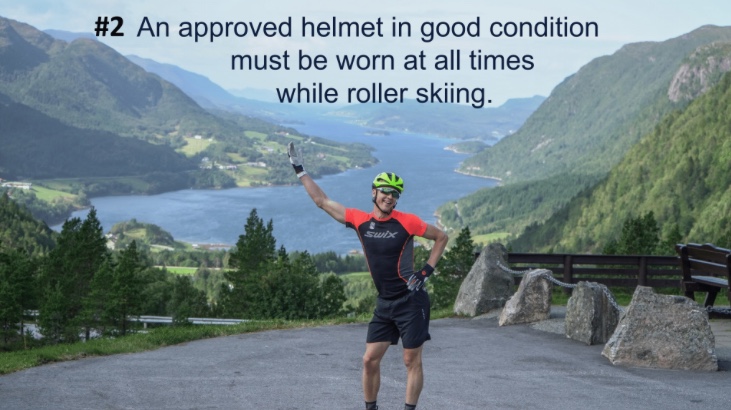
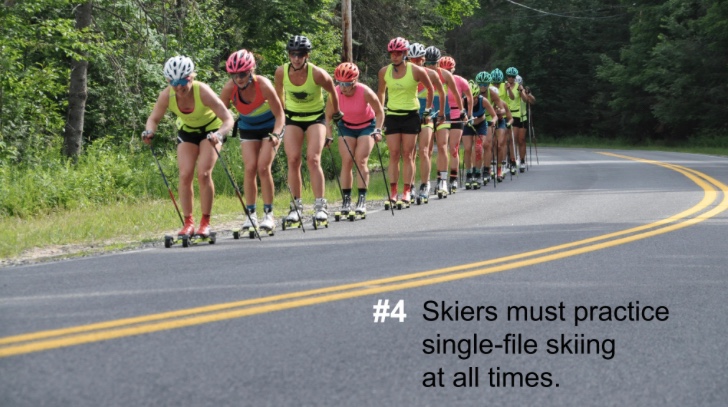
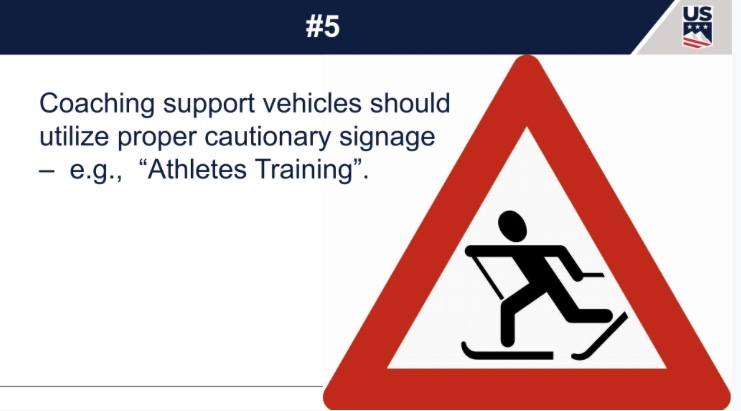
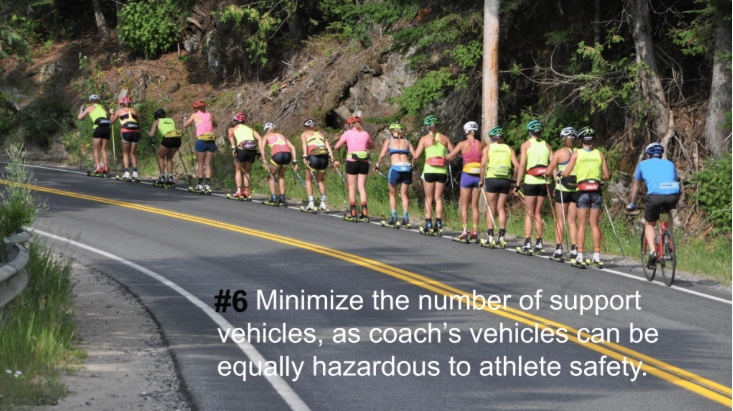
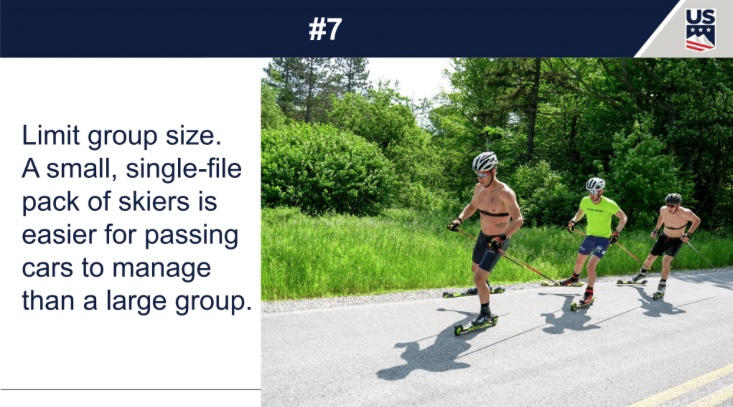
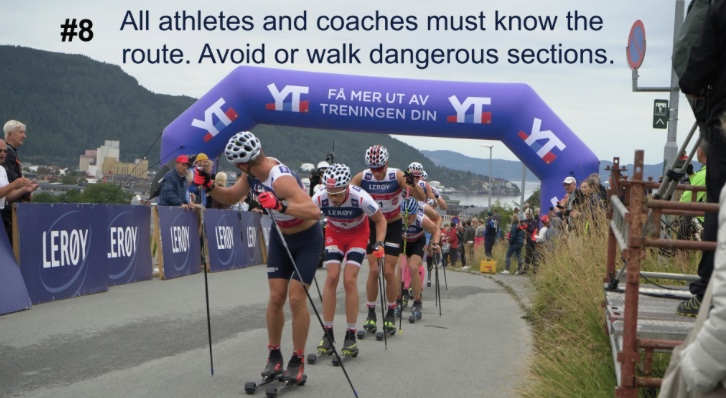
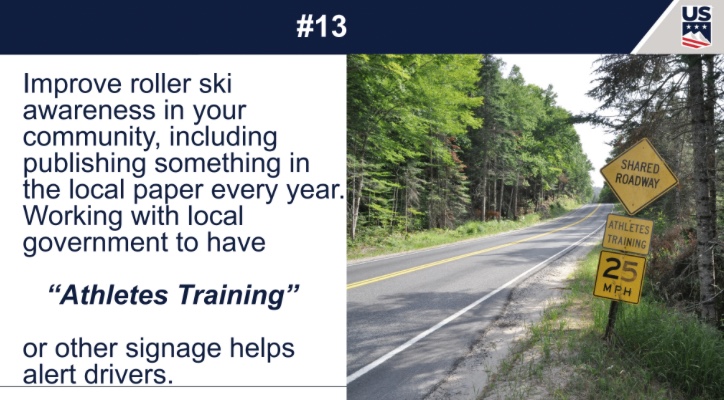
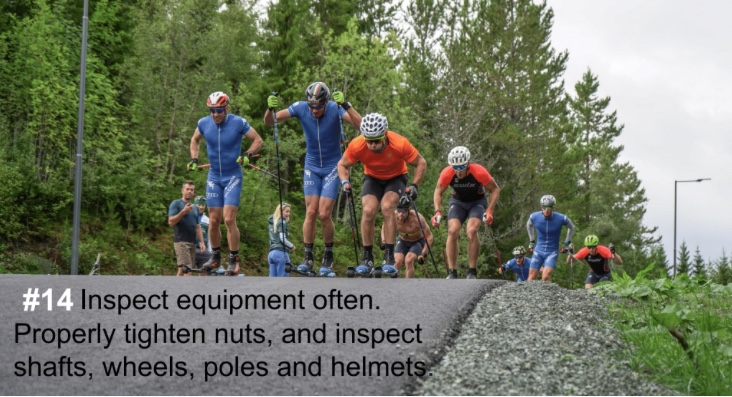
Current recommendations from the USST on rollerski safety.
The U.S. Cross Country Ski Team is determined to win more Olympic medals. To do this, we all must train hard and smart. For us to move forward as a nation, we seek to keep every member of our skiing community as safe as possible while roller skiing. Safety must be the primary consideration of every roller ski session. No exceptions. No mistakes.