This World Cup coverage is m ade possible through the generous support of Marty and Kathy Hall and the A Hall Mark of Excellence Award. To learn more about A Hall Mark of Excellence Award or to learn how you can support FasterSkier’s coverage please contact info@fasterskier.com.
Again the capstone of the Tour de Ski, athletes faced the infamous and grueling hill climb up the Alpe Cermis in Val di Fiemme, Italy to close out six stages of racing over eight days. After winding roughly 6.5-kilometers along the valley floor, a gradual climb leads to the alpine ski area, where 418 vertical meters (~1,370’) of incline spread over the final 3k awaits, snaking up an alpine ski area with maximum grades over 40%.

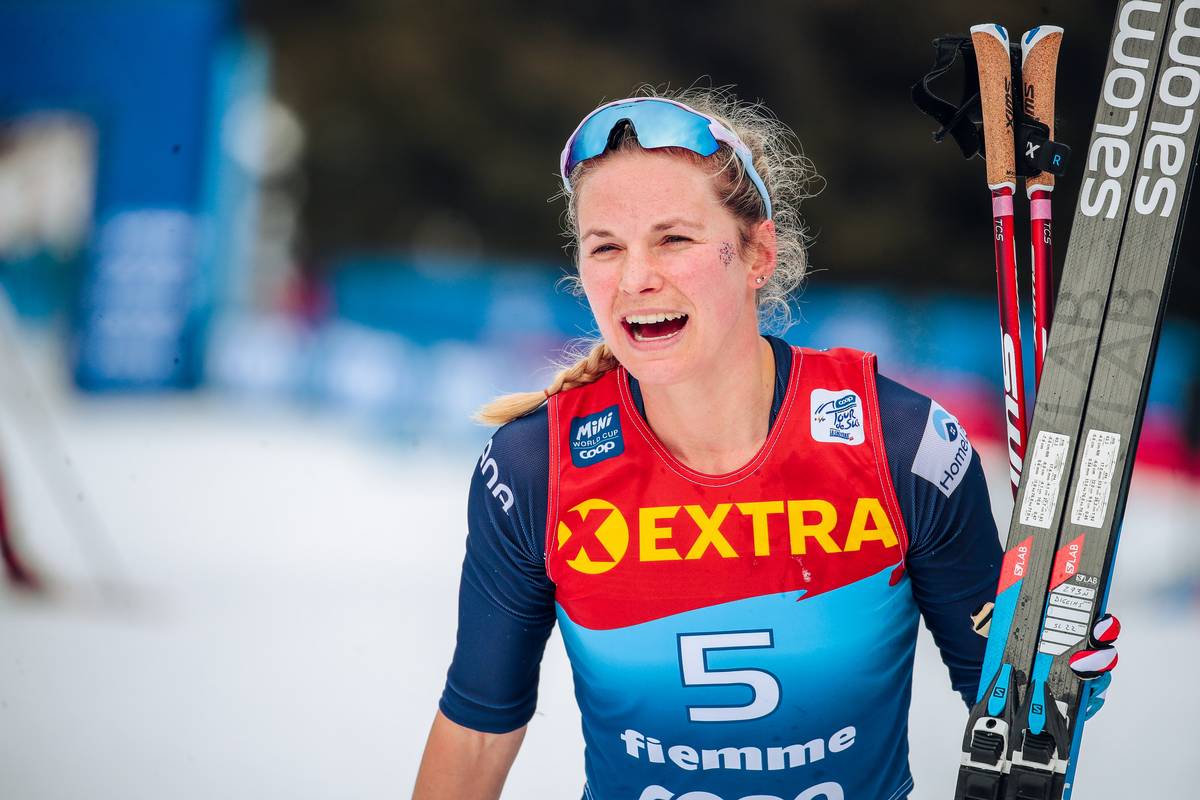
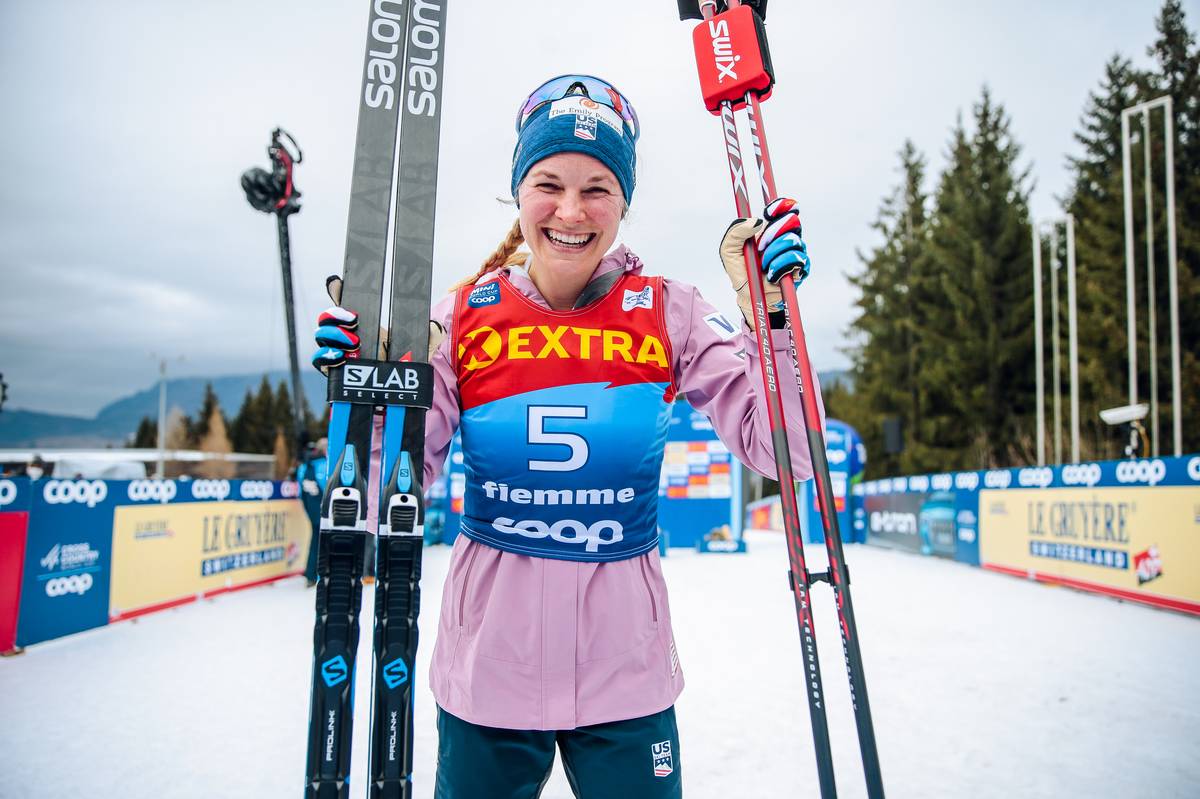
Heading into the final stage, Jessie Diggins sat in sixth place in the overall Tour standings, facing a deficit of 1:42 to leader Natalia Nepryaeva (RUS). Quickly reviewing the blur of racing over the last week, Diggins had two stage victories, first in the opening skate sprint in Lenzerheide and again in the 10k mass start free in Oberstdorf, her career best start to the Tour. However, a crash in the quarterfinal in Stage 4, followed by a challenging 10k mass start classic in Stage 5, turned the tide on Diggins’ status as a favorite to win the overall Tour.
Over the last 15 years of the Tour de Ski, nine of the winners entered the final stage in the lead, including the winners of the last three iterations, namely Diggins in 2021, Therese Johaug (NOR) in 2020, and Ingvild Flugstad Østberg (NOR) in 2019. The last upset occurred in 2018, where Heidi Weng (NOR) overcame a minimal two second deficit to overtake Østberg in the hill climb and snag the overall Tour victory.
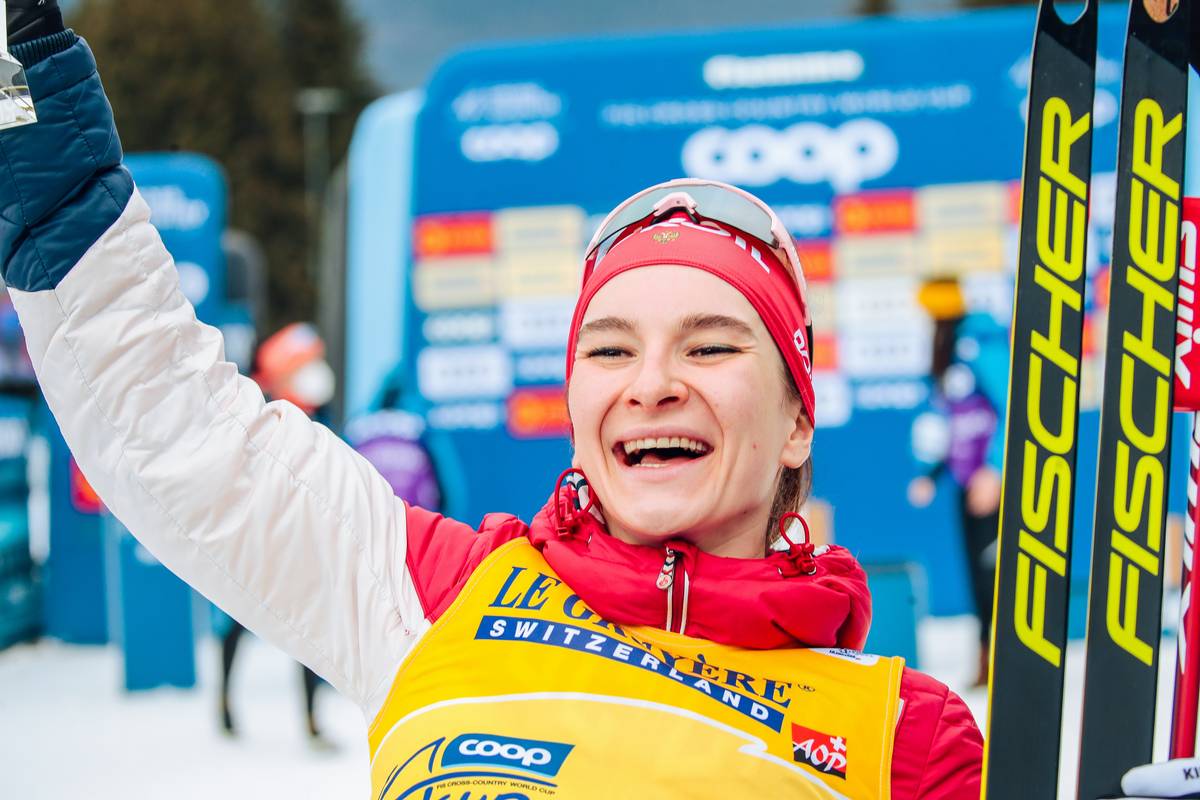
With this in mind, perhaps today’s storyline was already written: Nepryaeva’s lead of 1:12 over second place Ebba Andersson (SWE) looked, from a historical perspective, like more than enough to seal the fate of the Tour. With two second-place finishes on her resume, a win would make Nepryaeva the first Russian woman to win the Tour de Ski.
But it would still need to be decided who would be the first woman to the top of the hill, and by how much. Perhaps the end result would not change, but in an event more about grit than technique or tactics, anything could happen.
At the base of the hill, it was Heidi Weng (NOR) leading the way with Ebba Andersson matching her V1 stride for stride. Diggins sat near the front of the lead group, which also contained Nepryaeva, Krista Pärmäkoski (FIN), and Kerttu Niskanen (FIN).
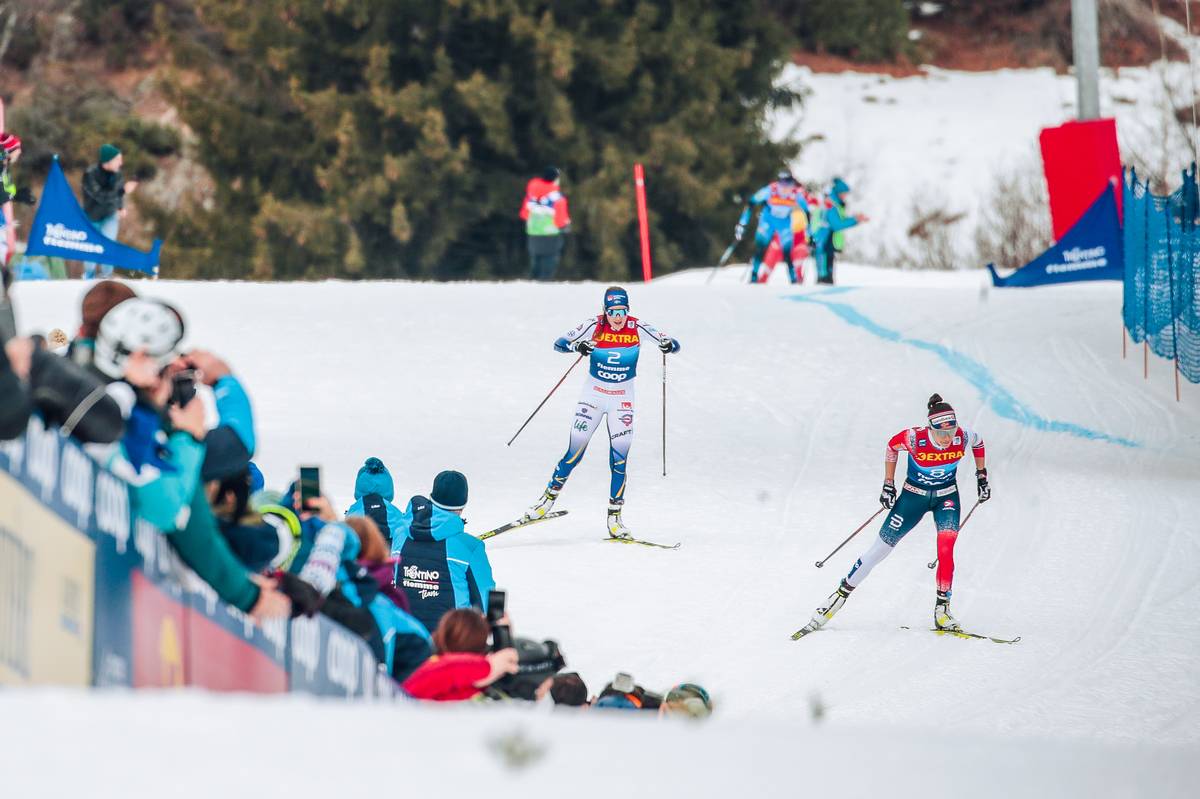
As the grade increased, Andersson and Weng began to trade off in the lead, climbing perfectly in sync as the field behind them began to thin. Pärmäkoski was 3.3 seconds back at 7.5, with Nepryaeva now 9.8 seconds back. Again, with 1:12 to play with between herself and Andersson, and 1:40 to Weng who entered the final stage in fifth, Nepryaeva did not need to worry about her placement in the final stage; her overall win was safe so long as she kept herself within that margin of the other women.
Between 7.5 and the subsequent 9.2k, Weng and Andersson put another 15 seconds on Nepryaeva, who trailed 18.1 seconds behind in third, now ahead of Pärmäkoski.
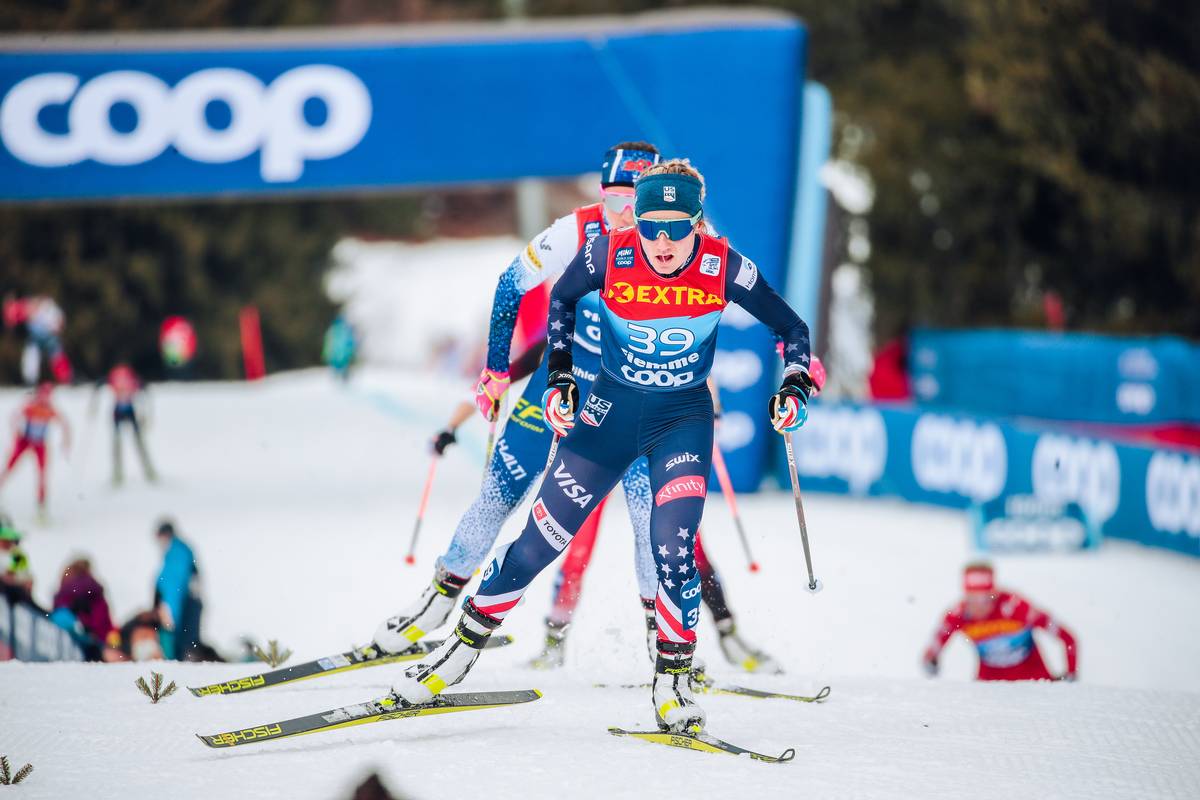
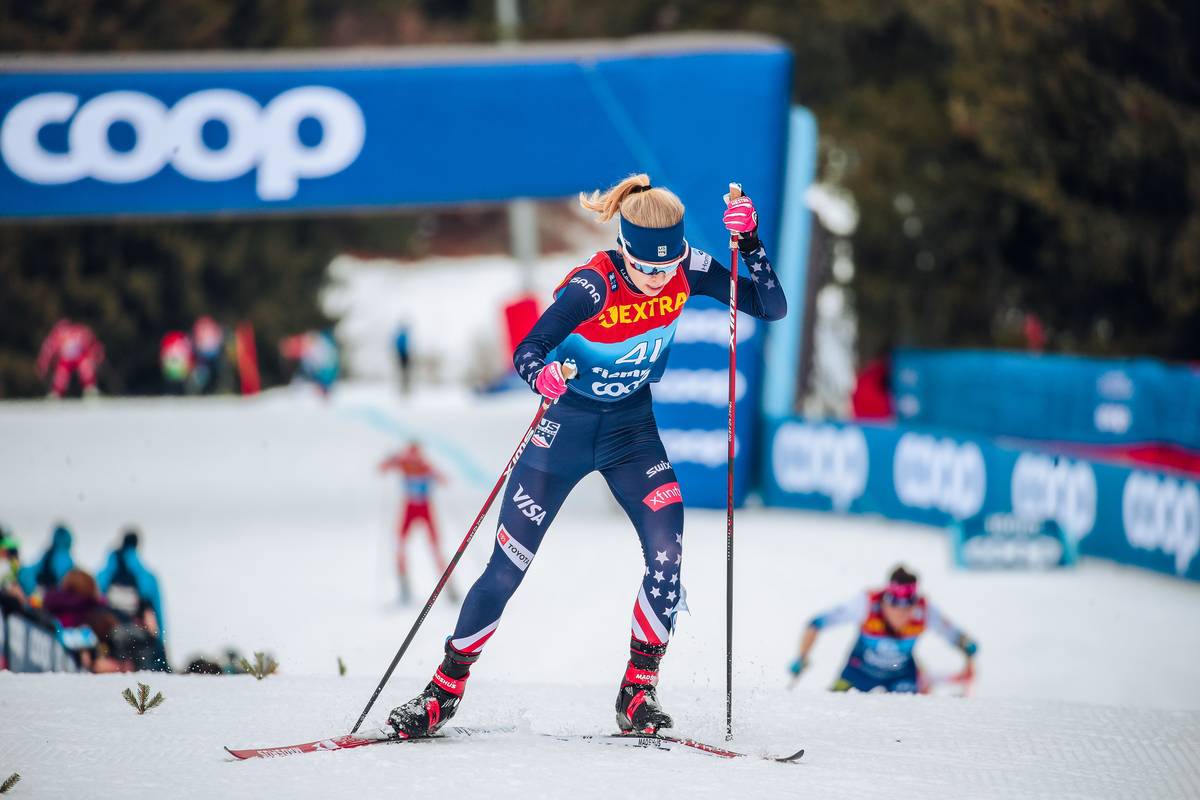
Skiing her way from 11th into 5th, within striking distance of Pärmäkoski, was 21-year-old Sophia Laukli (USA). Laukli skied with high tempo, somehow accelerating relative to those around her despite the fatigue and lactate that must have been flooding each of their bodies after climbing for so long at that effort. Also moving up on the steepest grades, Novie McCabe (USA) had picked off four places between 7.5 and 9.2k, skiing from 13th into 9th. Still fighting, but perhaps not with the same fury we saw last year when she raced for the win, Diggins had faded from 8th place into 14th.
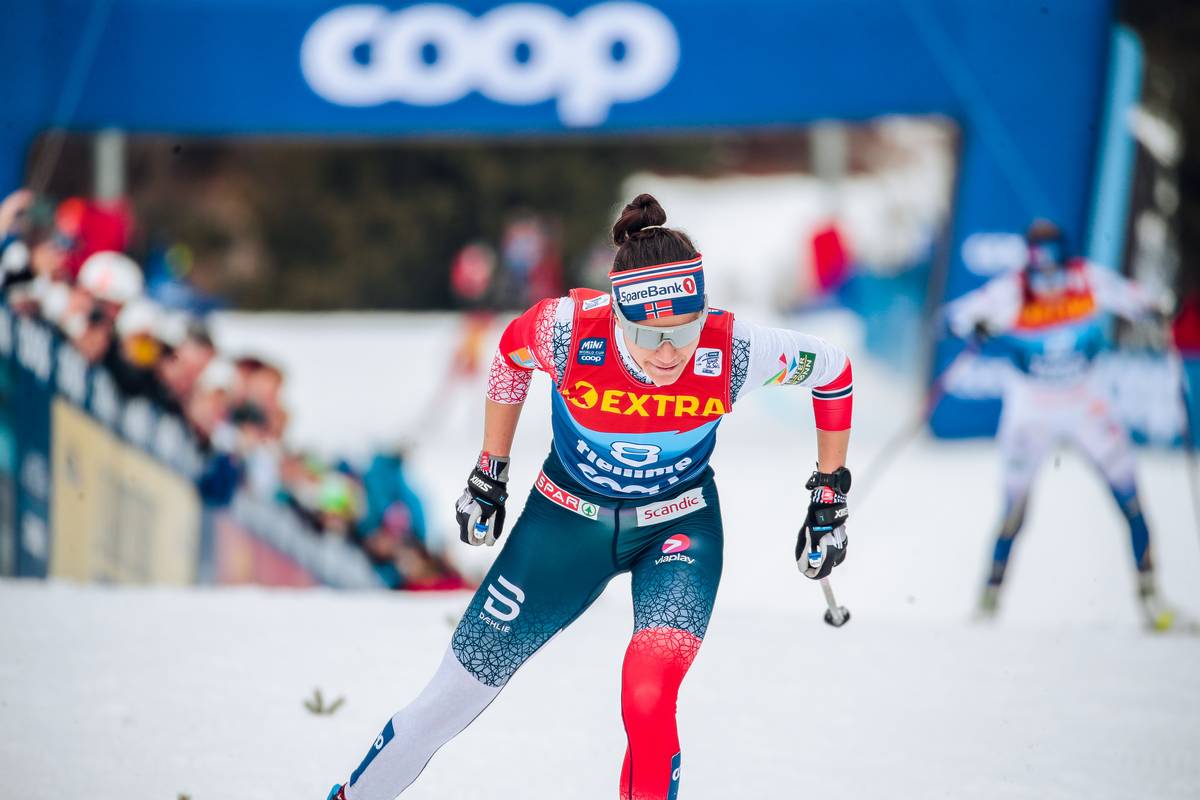
Over the final 0.8k, it became clear that Weng, who has a history of strong finishes in the hill climb, had been biding her time. With Andersson no longer able to match, she accelerated off the front with confidence. Andersson did not respond to the move, and Weng skied away to win by 7 seconds in a time of 35:41.2.
Weng was the overall Tour winner in 2017 and 2018, each time skiing the fastest time of day in the hill climb. After a 2019/20 season where her results could most-kindly be described as “off”, Weng was fourth overall in the Tour but second up the hill in 2020. The Norwegians did not compete in the Tour de Ski last year in 2021.
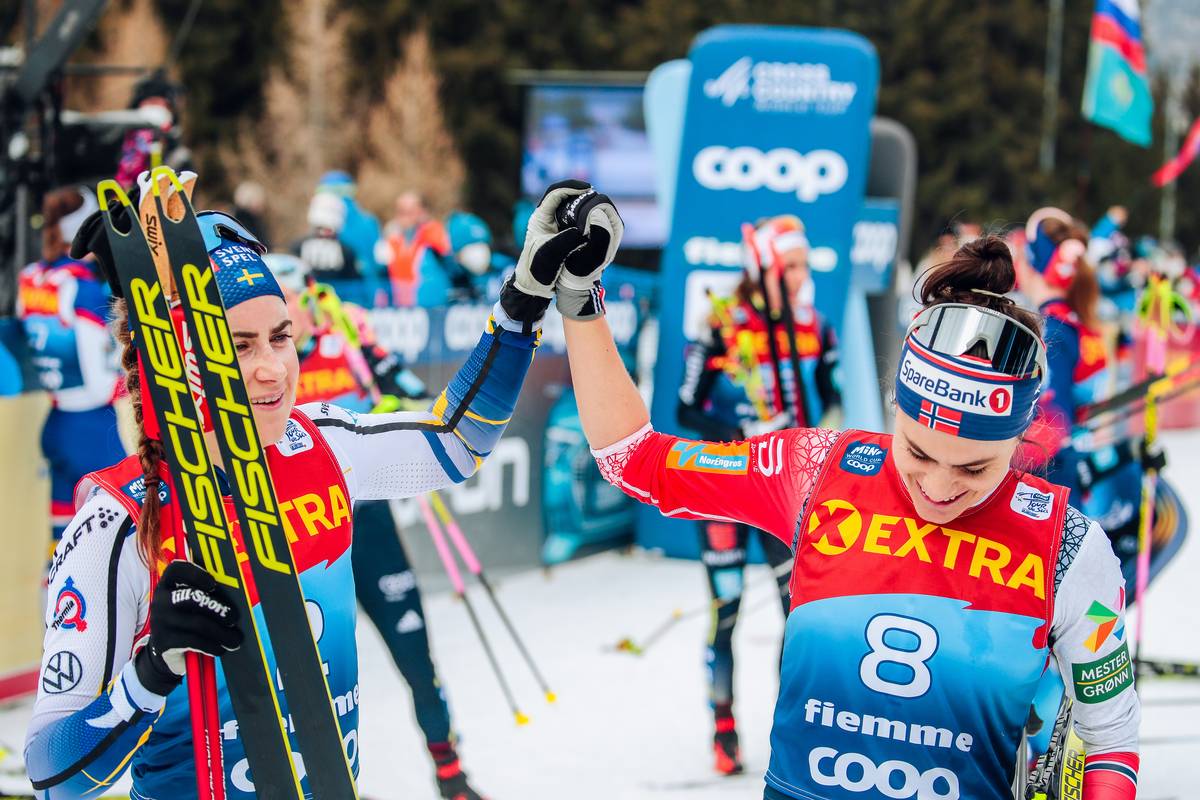
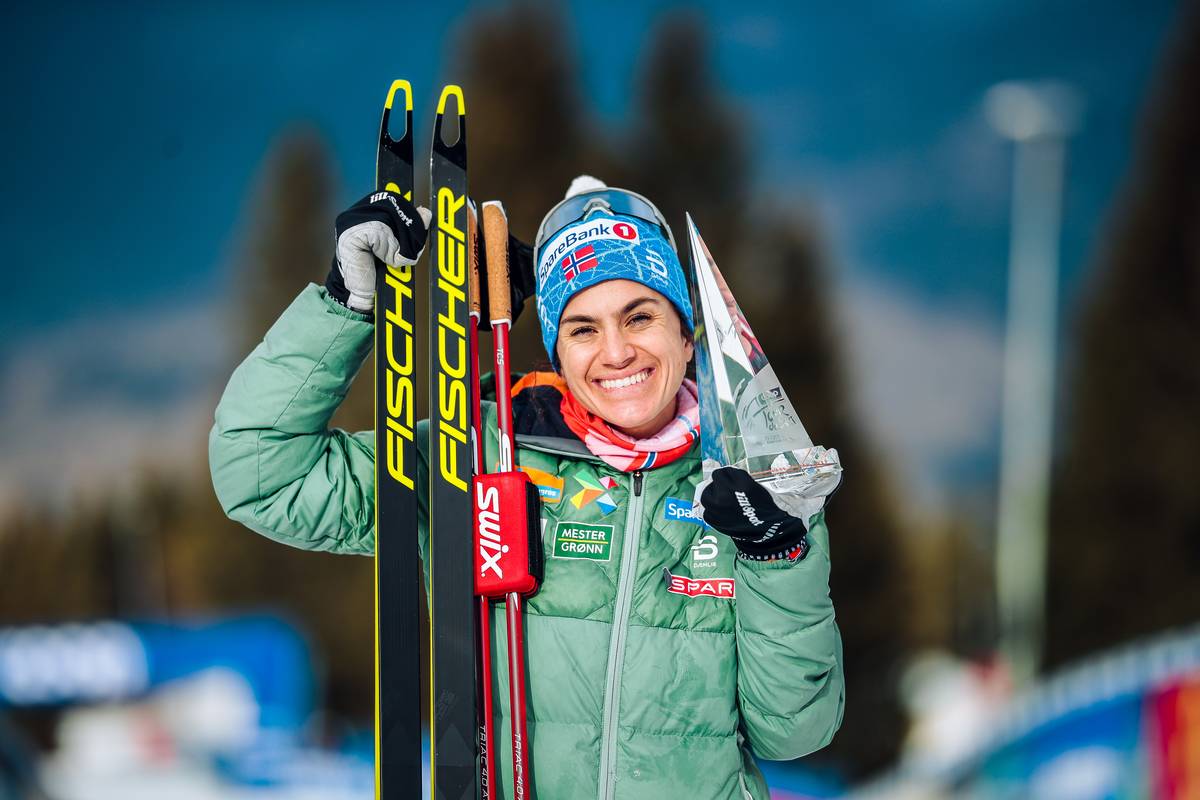
Weng’s win in the hill climb moved her from fifth into third in the overall standings behind Andersson in second, her first time back on the overall Tour podium since her win in 2018. It’s Weng’s fourth time being on the Tour podium, having also achieved a third place result three consecutive years in 2014-2016.
“It was very hard today, when it’s mass start it’s chaos,” Weng told FIS at the finish. “I wanted to be first at the bottom of the hill, so I tried to get out fast, so it was good that Ebba was with me. It was very steep today and the snow was not as easy as yesterday, so it was a very hard hill today and I was very happy that I [could go fast] and I just tried to stay focused on the finish line.”
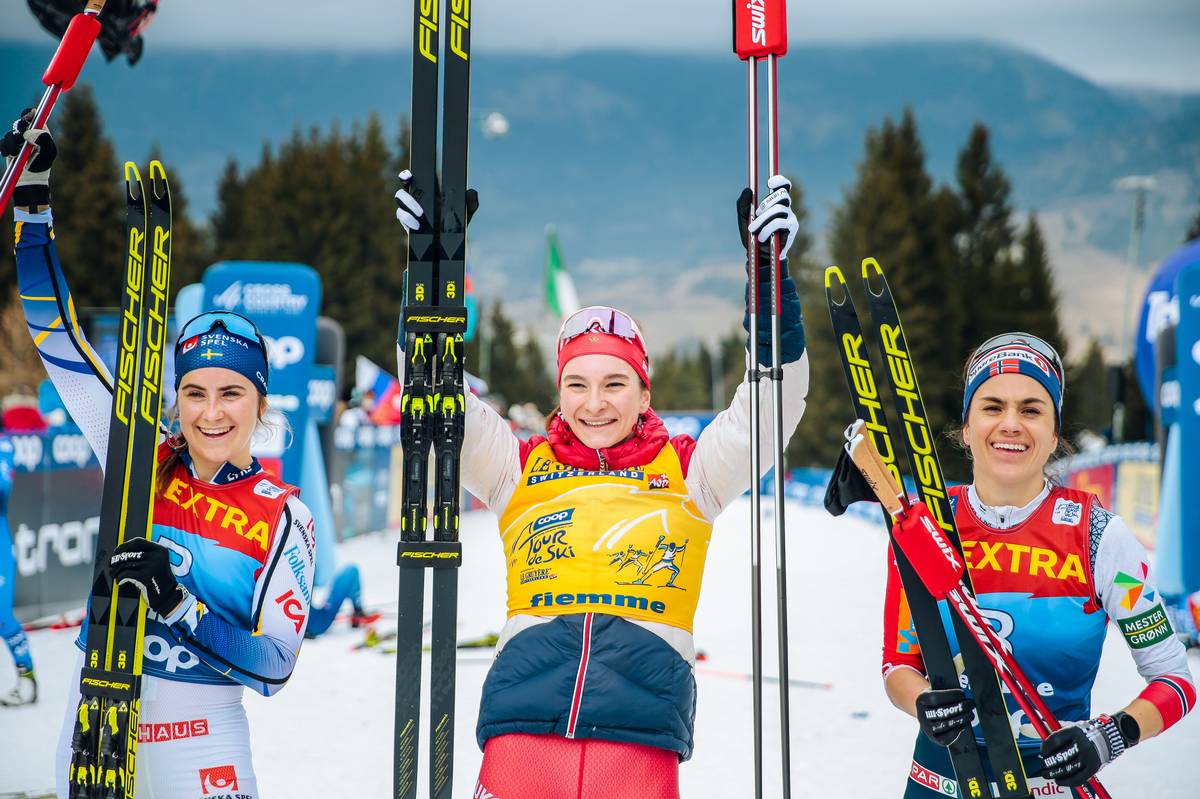
Powering through the final kilometer, Claudel Delphine of France made her way from 6th at 9.2k onto the stage podium, overtaking Nepryaeva to finish third (+28.5). Solidifying herself as the overall Tour champion, Nepryaeva was fourth to the top of the Alpe, 32.3 seconds behind Weng and well within the margin needed for the accomplishment.

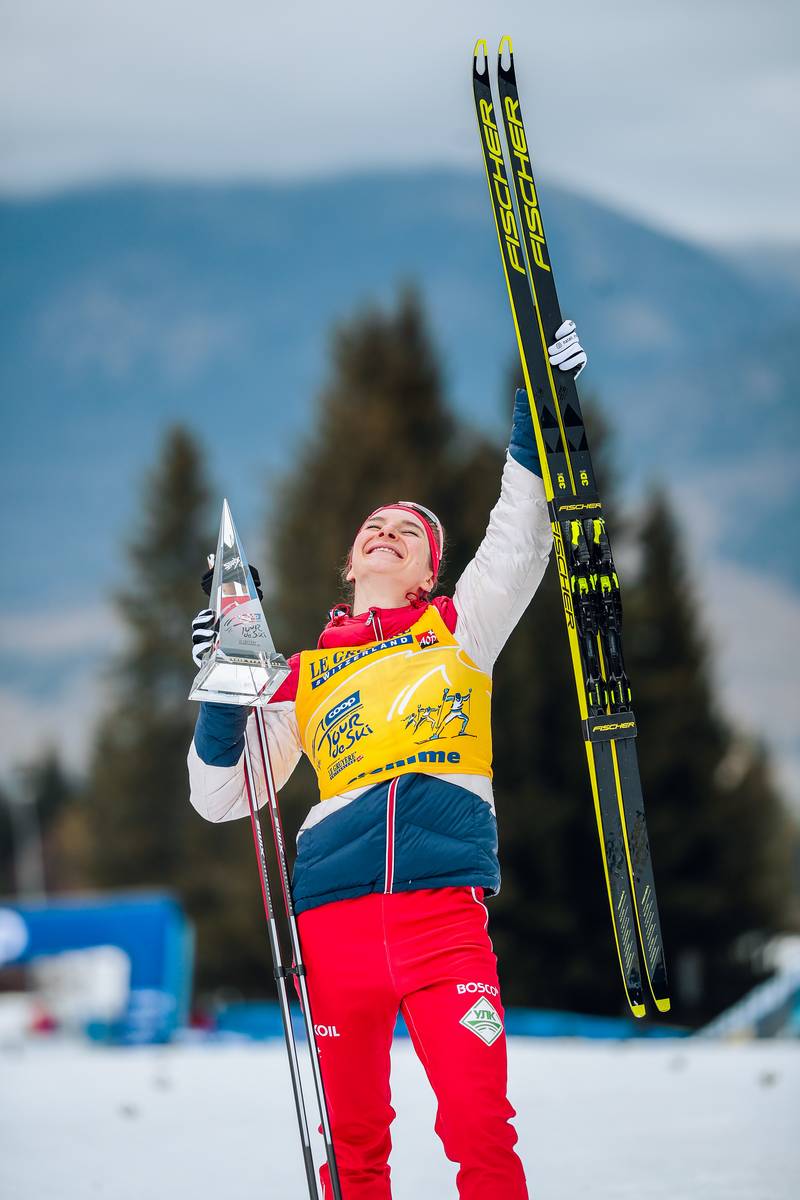
During her four previous years of racing the Tour, Nepryaeva has been on the podium twice, finishing second in 2019 and 2020. Finally on top, eyes smiling behind her N95, Nepryaeva shrieked with joy as she stepped onto the podium to accept her trophy, hopping up and down as she raised her skis and poles in celebration. The FIS broadcast did not include a post-race interview.
Next to the top of the mountain was Laukli in fifth (+49.9), followed by Pärmäkoski in sixth (+59.9), and McCabe in seventh (+1:04.4). Americans have a strong history on the hill climb, with Liz Stephen skiing the fourth fastest time of day in 2015, the third fastest in both 2014 and 2016, then peaking at the second fastest time in 2017. Laukli and McCabe are in good company.