Jack Young: Against the Template

Matthew VoisinNovember 27, 2025

On the Wednesday before the World Cup season opens in Ruka, Jack Young sits in a small condo, looking out at over a foot of new snow that’s been drifting down all morning. The air is much warmer today than it was before he and the U.S. Ski Team loaded onto a six-plus hour bus ride yesterday — “Muonio was friggin’ cold,” he says — and the mood is calmer, quieter, the way he wants it. This is his final runway before an Olympic year truly begins, and he is spending it doing almost nothing.

Not nothing-nothing, of course. But nothing extra. No bonus minutes, no filler skis, no threshold for confidence, no volume for psychological reassurance. “The biggest thing right now is taking these two weeks absolutely as seriously as possible with rest and just not doing anything extra training-wise that I do not need to be doing,” he says. “I’m training so little right now because of how important Ruka and Trondheim are for me.”

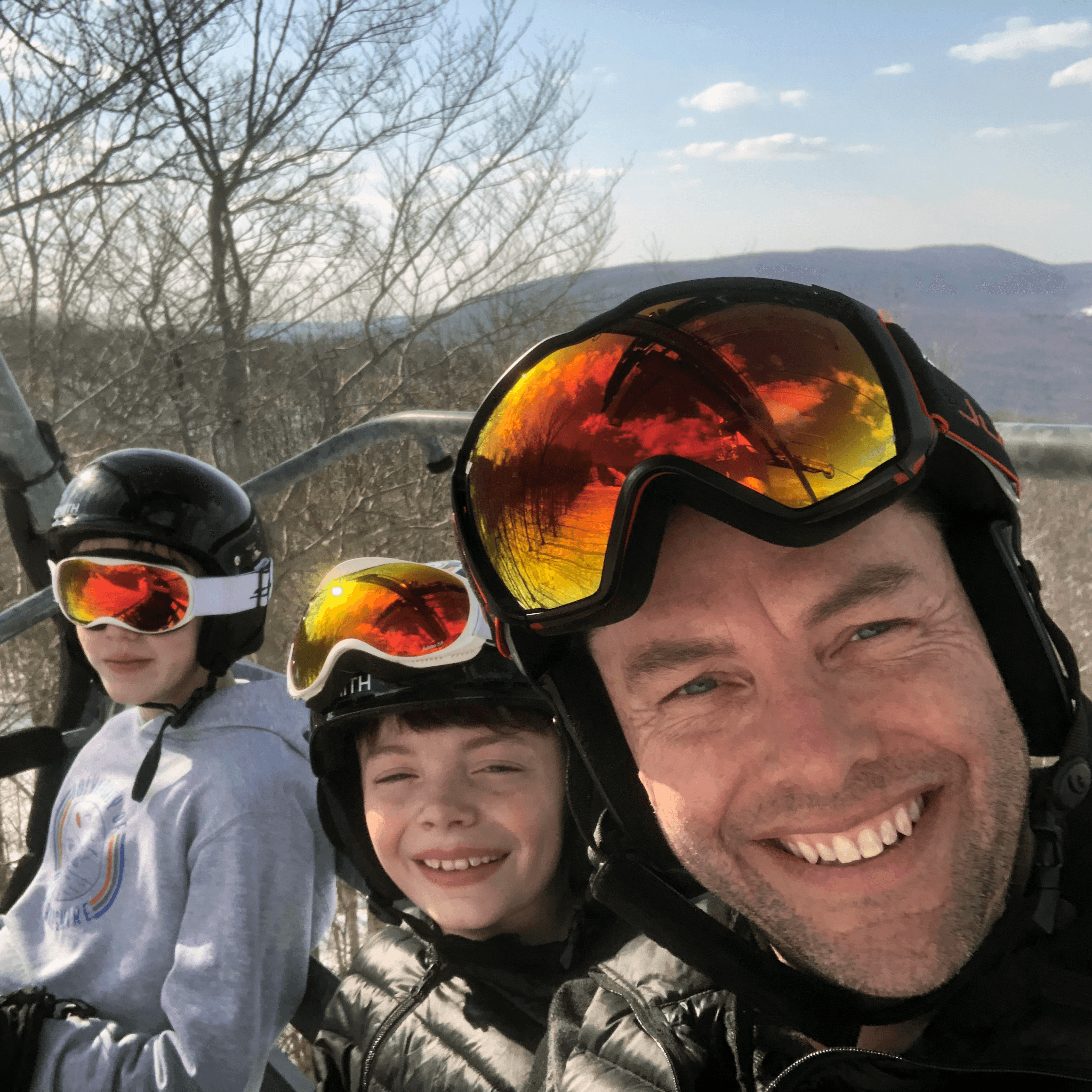
Growing up in Northern Vermont, Jack Young had an All-American childhood. (Photo: Courtesy Photo)

Outside, the classic sprint course cuts through the forest — the first of two classic sprints in Period 1. They matter—more than they ever have. To make the Olympics, he must qualify. To qualify, he must have transformed himself into something he has never consistently been: a classic sprinter capable of making heats on the hardest stage in the world.

That he is even here, on the cusp of an Olympic selection fight, is strange enough. Stranger still is the way he got here — not built from the standardized American skiing pipeline but stitched together from its edges. A football quarterback. A baseball outfielder. A skier whose parents “didn’t know what Nordic skiing was.” A D3 athlete who reverse-engineered sprint training out of 800-meter track plans and the writings of a Swedish speed skater. A young man who kept such detailed training logs that, by the time he made the World Cup, he could begin writing his own plan.

In a sport that often rewards conformity, Young’s ascent is something close to a jailbreak.

Jack Young as he started his racing for Craftsbury. (Photo: Courtesy Photo)

A Vermont Childhood Without the Usual Skiing Script

“Neither of my parents knew what Nordic skiing was,” he says with a laugh. They loved the outdoors, yes — mountain biking, alpine skiing, the typical northern Vermont mélange of mud, woods, and winter — but their son’s athletic identity formed somewhere else entirely. “I played every sport. I loved baseball. I played basketball through elementary school. I started football as soon as I was allowed to, which I think was in fourth grade.”

He became the kind of athlete rural towns understand intuitively: the quarterback on fall afternoons, the center fielder chasing down balls in the summer dusk, the kid who could pick up anything and find competition in it. Skiing entered sideways, almost accidentally, through his sister Callie. She joined the small Nordic program in Newport, and he was brought along because that’s what families do — pack the car, hand over snacks, make it work.

“I immediately fell in love with racing,” he says. “I just love the competition.” Running around on skis made sense to him. Movement, speed, chaos — he could do that. But even with training days at Craftsbury beginning around sixth grade, he didn’t think of skiing as his primary outlet. “I wasn’t as focused as my sister was, but I would still get dragged along,” he says. “I loved skiing, but I loved football and baseball just as much.”

The irony — one he now sees clearly — is that he was training for skiing without realizing it. “All summer was spent doing fun things in the woods. We’d go to Craftsbury a couple of times per week. But I never thought of skiing as my main sport. I weighted those sports equally, even though I was putting a lot more time into skiing.”

If northern Vermont had offered a travel football club or competitive baseball without days of driving south, the story may have gone a different way. But mountain running and biking were nearby, and elite baseball diamonds were not. “I’d so much rather go for a long run in the mountains or go mountain biking than I would hit on the tee for two hours,” he says.

Sometimes this is what talent looks like in real time: a kid choosing the fun version of hard work without realizing he’s choosing a future.

When we spoke, Jack Young sat in a small condo in Ruka wearing a Boston Red Sox baseball hat, just added evidence for how important the game has been for him since he was a boy. (Photo: Courtesy Photo)

The Late Bloom: A Breakthrough and a Decision

He kept skiing in the winter, of course. Not obsessively. Not in the way some junior skiers live their lives by FIS points before they have a driver’s license. But enough to stay close. Enough to remain good. Then came the summer after his sophomore year of high school — the first time he trained like someone who had decided to see what was possible.

“I put a good summer of training in,” he says. “Had a bad football season… but that was the first time I was really starting to push the limit on what I could do training-wise while in season for football.”

He mountain-biked in races on weekends, squeezed workouts around football practices, and tried to make the whole geometry hold together. Then came Junior Nationals, and with it, proof. “I had a pretty good result in the sprint. I think I was like 18th or something… and that was the moment where I was like, okay. I am decent at least at this sport. I’m doing a lot better than I’ll ever be at baseball.”

That spring, Young emailed coaches — the NESCAC schools, Dartmouth, and UNH. Bowdoin and Dartmouth joined Colby on his shortlist. Colby won on something less quantifiable: belief.

“Tracy [Cote] was very excited about me,” he says. “And I think that resonated with me. Maybe it’s my ego, but it was nice to hear.”

He would later call it “a perfect decision.”

Jack Young enjoying some backcountry skiing in Jay. (Photo: Courtesy Photo)

Colby: Building an Athlete in a Place That Shouldn’t Have Worked

Winters in college can blur into one another — classes, training, snow, the strange mix of exhaustion and euphoria that defines 19-year-old life. But Young remembers his freshman fall with clarity: meeting people, finding balance, doing “good, not great” training, and then, once the season started, traveling west for Senior Nationals.

There, in Soldier Hollow, everything sharpened. “I think I qualified in the top 20 in the skate sprint,” he says. “That was an absolutely massive result for me. I never had anywhere near that level of success on the national level.”

He didn’t transform overnight — not yet. His sophomore season brought a “fine college season,” a top-30 at NCAAs in the 10k skate, and the sense that distance skiing was finally, mercifully making progress. But the turning point came not in results but in imagination. He learned that the U.S. would receive twelve start spots for the Canmore World Cup the following year. Twelve starts. “I was like, 12 starts… that’s not that far off,” he says. “I kind of feel like I’m in contention for that.”

To chase it, he would need to master something specific: the sprint qualifier.

And this is where the story breaks from the template completely.

Jack Young hits some big lactate numbers during a hard training session. (Photo: Courtesy Photo)

Reinventing Sprinting from Scratch

“I’ve always thought that sprint qualifiers were really similar to an 800-meter race on the track,” he says. Physiologically, mechanically, conceptually — they looked more alike than different. So he dug into 800m training. He looked for the extreme version, the distilled essence of what sprinters do when they train specifically for the thing that matters. Qualifiers are discrete. Defined. Precise. Why train them like a generalist?

Then he read Nils van der Poel.

The legendary Swedish speed skater’s manifesto, How to Skate a 10k, isn’t a skiing manual, but to Young, it may as well have been scripture: the idea of building huge aerobic capacity, then sharpening with brutally specific intervals at exact race pace. “He wants to skate as many possible laps at world record pace as possible,” Young says. “And that really struck me. I’m like — I can apply this to skiing.”
He wasn’t going to become a single-event specialist, not in college. But he could take the principle and adapt it. So he built a sprint-qualifier program composed of things like:

  • 6 × 1 minute
  • 4 × 90 seconds
  • 10 × 30 seconds
  • 8 × 45 seconds

All at precisely what he believed to be his sprint qualifier pace.

“That was the bread and butter,” he says. “I’d do those workouts once or twice a week. I didn’t actually find them that strenuous, but I was accumulating a good amount of time at exactly what I thought sprint qualifier pace was.”

He went completely dry that fall — no beer, no casual nights out, nothing that compromised sleep. “I was just recovering a lot better all the time,” he says. “I didn’t get sick at all.”

Meanwhile, Colby head coach Tracy Cote allowed him to blend his ideas into the fall plan. “We were working together. I think we ended up writing the training plan together that fall,” he says. “She was pretty stoked about the focus on recovery… and she’d let me get away with doing things a bit more geared towards sprinting.”

He trained more overall, too — a heavy summer that gave him the resilience to handle so much intensity once fall arrived. “My freshman year, I trained a little under 600. Sophomore year was around 650. My junior year I trained like 750 or something.”

This was not an American development pipeline approach.

It was an experiment.

A smart one.

A successful one.

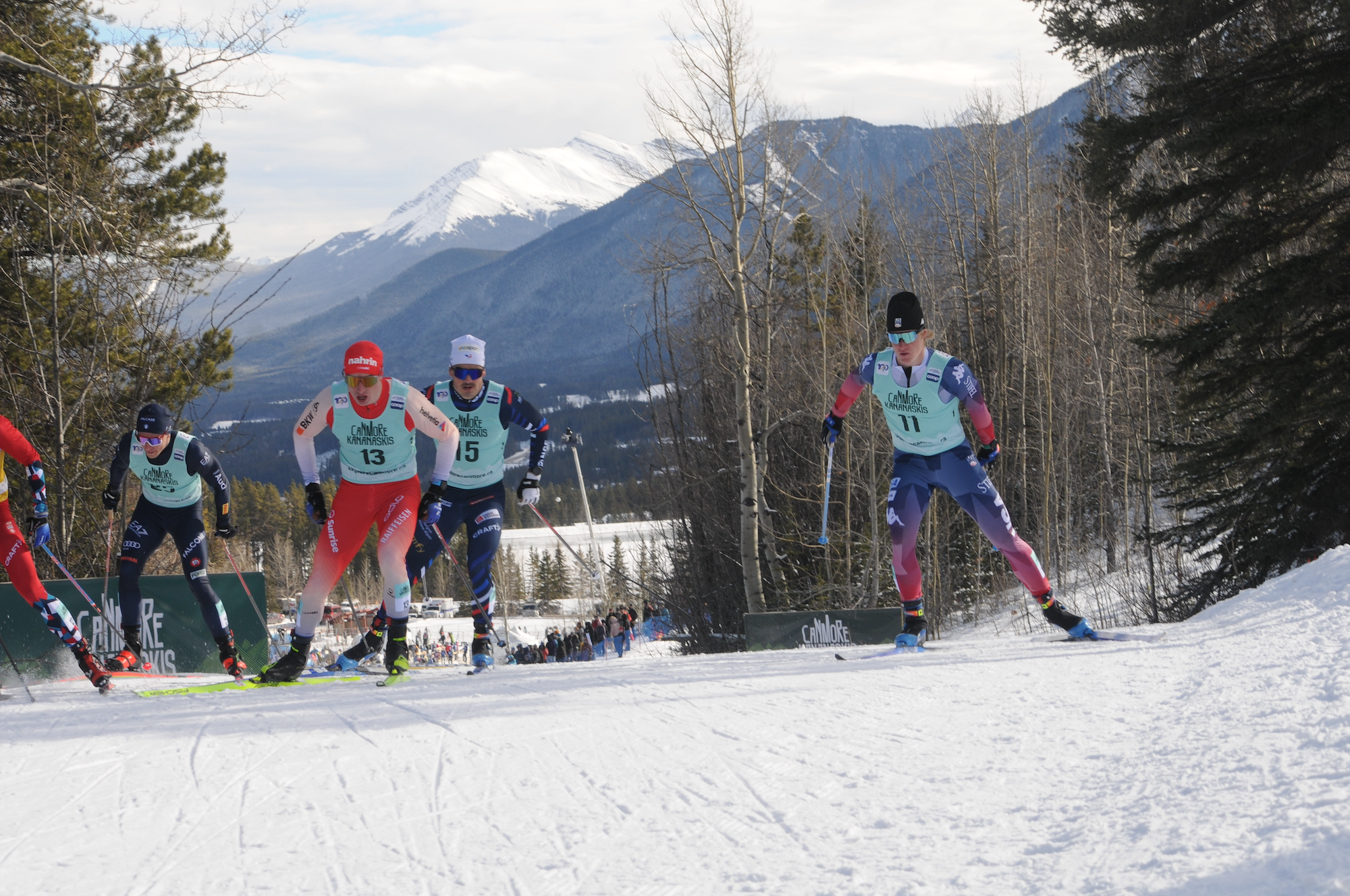
Jack Young, who a week earlier had a 3rd and 5th place in the EISA college races for Colby College delivered the 11th fastest qualifying time in the freestyle sprint at the Canmore World Cup in 2024. (Photo: Cockney/FasterSkier)

Anchorage, SoHo, Canmore — and the Race That Changed Everything

He targeted Anchorage for his first chance at the Canmore World Cup spot. He knew what he had to do: fly across the country in the early winter, race well, then perform at Senior Nationals in Soldier Hollow. Anchorage was the linchpin.

“I went into Anchorage with a lot of confidence,” he says. “I won that qualifier; it was such a surprise.”

He didn’t replicate the magic at Soldier Hollow — “I think I got like 11th” — but the Anchorage win held. He made the Canmore start list.

And then came the race of his life.

“That’s still my lowest FIS points ever,” he says. “I didn’t match that last year.”

When he crossed the line, something shifted internally. “Once I did that in Canmore… that was the first time I really thought I wanted to keep skiing after college,” he says. “That was the moment I realized how good I thought I could get.”

Call it the ignition point, the place where belief calcified into ambition.

Where a multi-sport kid from a non-skiing family, attending a D3 school, doing self-designed intervals, suddenly saw himself in a World Cup heat map and thought: Yes. Here.

Jack Young training on Eagle Glacier this past summer. (Photo: Courtesy Photo)

Writing His Own Plan on the World Cup

Two years later, he is living in Europe, often for months at a time. He is in his second year of racing full-time on the circuit. He is older, stronger, and more certain. And he is, in many ways, coaching himself.

“For this time of year, it’s entirely guided by what I’ve done the last two years,” he says. “Which workouts worked in which places, which workouts didn’t… the comments are much more important than the hours.”

He still works closely with Pepa Miloucheva at Craftsbury — “She’s the number one on that” — but when he’s on the World Cup, he is the primary author of his training. He reads his patterns. He analyzes sensations. He looks for the combinations of stress and stimulation that make him feel dangerous on race day.

He isn’t reinventing his body now — he’s listening to it.

The independence he cultivated at Colby has become his competitive advantage.

With the Olympic sprint being in the classical technique, Jack Young (USA) hopes to find the form he has historically shown in freestyle sprinting during the early season World Cup stops. (Photo: Modica/NordicFocus)

The Classic Sprint Problem — and the Olympic Dream

To make the Olympics, the math is simple, even if the execution is brutal.

“The simplest answer is: make a big jump in classic sprinting,” he says. “If I can start qualifying for classic sprints consistently, I have a very clear path to making the Olympics.”

Last year’s results would meet the published criteria — “hypothetically, if I had the exact same season… I would technically make the team,” — but this year is different. The Olympic sprint is classic. Period 1 has two classic sprints and only one skate sprint. Some of the contenders for Olympic spots are stronger in classic than he is.

So the path is narrow: qualify in Ruka. Qualify in Trondheim. Hold form in Davos. Don’t step back. Don’t stagnate.

At the philosophical level, the criteria are simpler still.

“It’s all about execution at this point,” he says. “A good season is continuing with progress I’ve made… scoring more World Cup points than I did last year. Anything else is a step back.”

He knows progress isn’t linear. He knows failure is part of sport. But he also knows what a step backward would feel like. “I’d be lying if I said I could look at this season as successful if I don’t maintain what I’ve been doing in skating and at least make a little bit of progress in classic skiing.”

It is clear-eyed. Unsentimental. The kind of assessment you get from someone who has built his career on self-honesty.

Jack and his sister Callie after winning a slow pitch softball tournament. (Photo: Courtesy Photo)

What It Means to Make It This Way

There’s a certain poetry in the fact that Young’s rise mirrors the very way he races: a precise, deliberate accumulation of moments. Nothing in his career came from the prescribed steps, the standard routes, the familiar trophies of a groomed junior-star life. Instead, his path looks more like a map drawn after the fact — connecting points that didn’t seem aligned until the picture emerged.

A sister’s Craftsbury workouts.

A baseball-heavy early adolescence.

Mountain biking and football collisions.

A D3 program that let him try things.

A manifesto by a Swedish speed skater.

A dry collegiate fall at age 20.

A logbook of sensations.

A day in Canmore.

A belief.

There is no template for this. There never was.

But here he is anyway — on the World Cup, in an Olympic year, taking the biggest swing of his life.

And as he sits in a Ruka apartment, resting more than he ever has before a race that matters more than most, he reflects not on what’s missing from his résumé but on what got him here in the first place: a way of building a skier that is his alone.


Love Stories Like This? Help Keep Them Coming.

Feature interviews like this one take time, access, and care to produce. If you value thoughtful storytelling and independent ski journalism, please consider becoming a Voluntary Subscriber. Your support directly fuels the work we do to cover the people, places, and moments that make our sport special.

Join the FasterSkier community!


Jack Young enjoying some orange juice on the Maine seacoast. (Photo: Courtesy Photo)

Matthew Voisin

As owner and publisher of FasterSkier, Matthew Voisin manages the day-to-day operations, content, and partnerships that keep the site gliding smoothly. Away from the desk, he’s doing his best to keep pace with his two energetic sons.

Loading Facebook Comments ...

Leave a Reply

Voluntary Subscription

Related Posts