
This article was made possible through the generous support of our voluntary subscribers. If you value coverage like this, please support FasterSkier with a voluntary subscription.

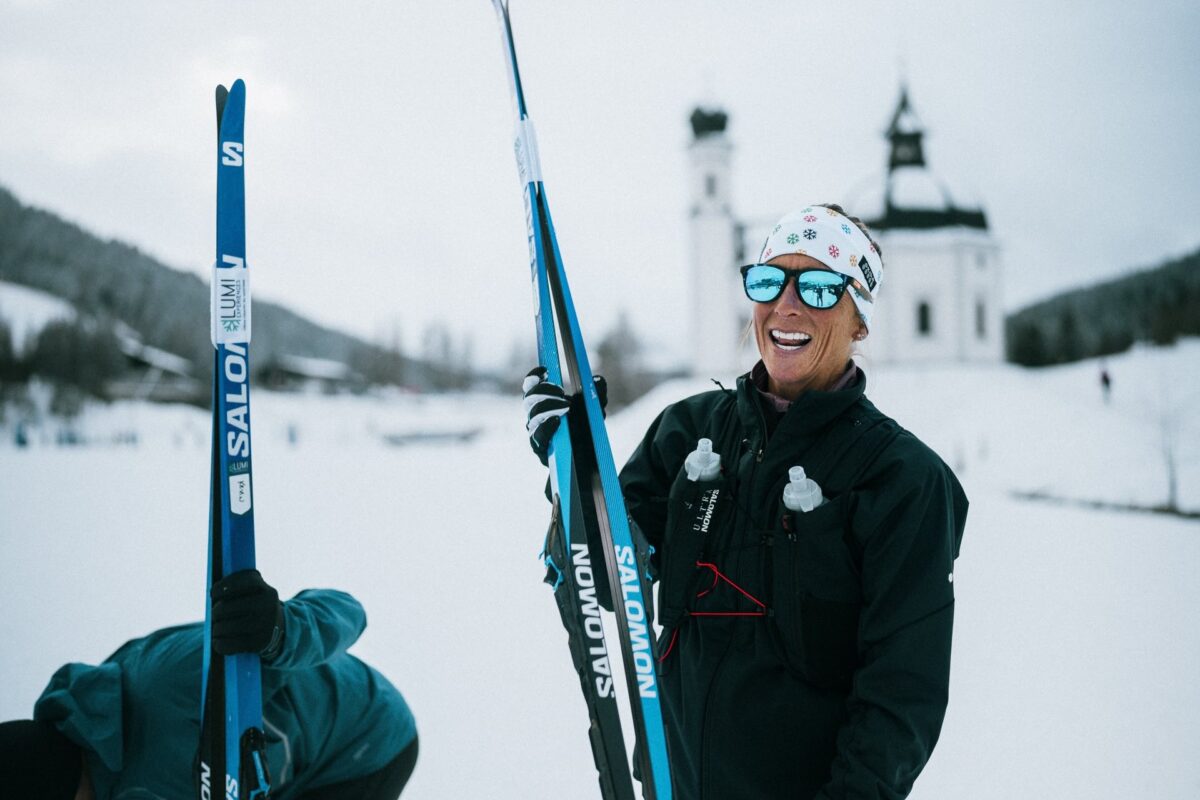
Rosie Brennan has stepped away from the World Cup, though she’s still figuring out exactly how to define the next chapter in her life.
Retirement is the easy word, and in some ways, the accurate one. She is done with the World Cup. She is done with the version of cross-country skiing that demands five months in Europe, constant travel, start lists, team schedules, narrow margins and the unrelenting pressure of measuring a career in seconds.
After more than a decade with the U.S. Ski Team, three Olympic appearances, hundreds of World Cup starts, two World Cup wins and a place among the best all-around skiers the United States has produced, Brennan has stepped away from the highest level of the sport.
But if retirement is supposed to mean the end of something, Brennan is not quite sure the word fits.
“Retirement has been a tough word for me,” Brennan said. “It feels very black and white.”
“One of my friends and older teammates called it rewiring.”
To Brennan, that seems closer. She’s not walking away from skiing so much as trying to build a new relationship with it. The shape of her days may change, and her focus will no longer be “110 percent” on racing, but skiing itself remains too central, too familiar and too joyful to simply leave behind.
“I love skiing and ski racing,” Brennan said. “I want to continue to be able to use my body in ways that challenge and push me in the world of skiing and competition again at some point, maybe sooner than later.”
“Skiing is just not that for me,” Brennan said of the idea of retiring and never doing the thing again. “It’s something that I hope to do till the day I die, honestly.”
A Career Built on Perseverance
When Brennan looks back now, the first thing she points to is not a specific race, podium or result sheet, but rather the belief in herself that made all of those things possible.
“I’m really proud of, I guess, the perseverance of my career,” Brennan said. “It takes perseverance to have longevity in a career, to weather the inevitable obstacles that appear throughout a long career, and to find belief when things aren’t going your way.”
That perseverance became the throughline of a career that took time to reveal itself. Brennan was not a teenage prodigy who moved smoothly from junior success to World Cup podiums. She came to skiing later than many of her peers, waited longer for the biggest results and had to weather the doubts that creep in when progress slows, injuries interrupt momentum and other paths begin to look more practical. Then when the results did arrive, those earlier years felt even more meaningful.
In a career defined by patience and progress, one of the things Brennan says she is most proud of is not just that she reached the top level, but that she continued to expand what she could do once she got there. She never settled into one lane as only a distance skier or only a classic specialist. Instead, she kept working to become more complete, finding reward in the challenge of improving across formats, distances and techniques.
“I’m also proud of the range that I maintained throughout my career,” Brennan said. “Continuing to be an all-arounder throughout my career and finding some success in all the disciplines and both techniques throughout — that was something that was just, I don’t know, I guess a personal challenge that I found a lot of reward in.”
That sense of progress extended beyond Brennan’s own results. Her career also unfolded during the strongest era in the history of American women’s cross-country skiing, and as the U.S. team continued to raise its standard internationally, Brennan came to see herself as part of something larger than her own race days.
“I’m proud to have been part of a really amazing wave of American women skiing,” Brennan said, “and to have done my best to carry that wave forward and to help push things forward and pass things on to future generations as well.”
Starting Late, Staying Long Enough
Brennan started skiing at 14, late by the standards of an international sport where many athletes first step onto a set of fish scales as young children. But she never saw her development as a simple matter of being behind.
“I was older when I kind of found top-level success in podiums on the World Cup,” Brennan said. “But because I started skiing so late, I guess I never really saw it that way.”
In her mind, the clock did not start with age, but when she first found herself on a pair of skis.
“If you look at when I started at 14 to when I had success, those accumulated hours of skiing and training are probably actually fairly equivalent to somebody who started at eight,” Brennan said. “So I always just chose to look at it that way, as if it was just going to take time to learn those skills, and it was fine that I started late.”
“I’m not good at being patient,” Brennan said.
But skiing gave her little choice. It took time to develop the specific strengths required of the sport, to learn how to race and to absorb the small skills that many skiers pick up almost without realizing it when they start young. Brennan had to build the engine and the instincts at the same time.
There were moments when she wondered whether it was worth it. In college, after injuries and difficult stretches, she decided she was done with skiing when she graduated. She looked toward other paths. At times, she quit, or at least tried to. But the sport kept pulling her back.
“I think what I enjoyed the most that made me keep coming back was just the challenge of it,” Brennan said. “Waking up every day with some purpose to get a little bit better, and to have the challenge of seeing if it was possible.”
Eventually, that challenge became a way of life.
“I just learned to really enjoy and thrive and love the lifestyle of skiing,” Brennan said. “And so that made it a lot easier to just keep coming back.”
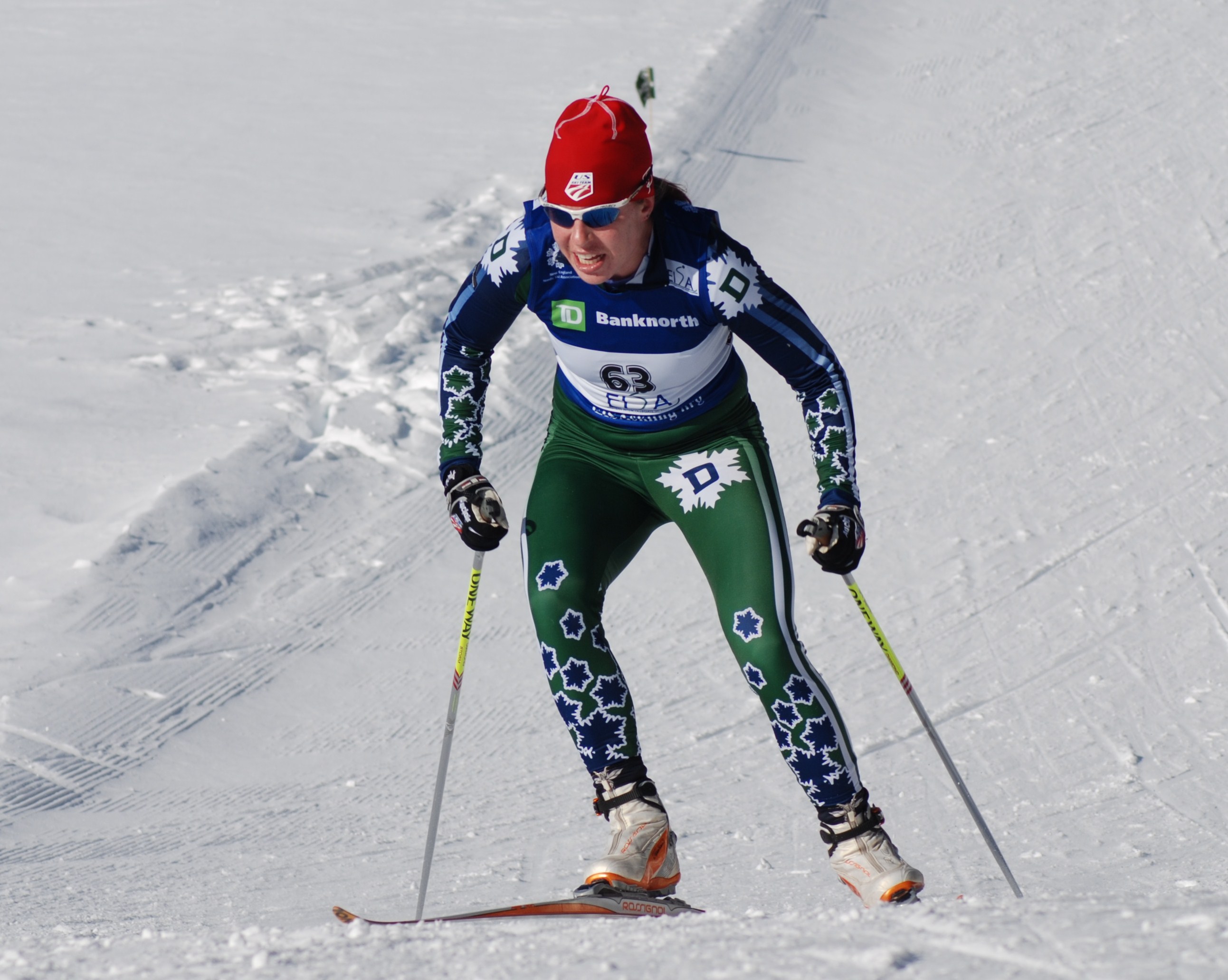
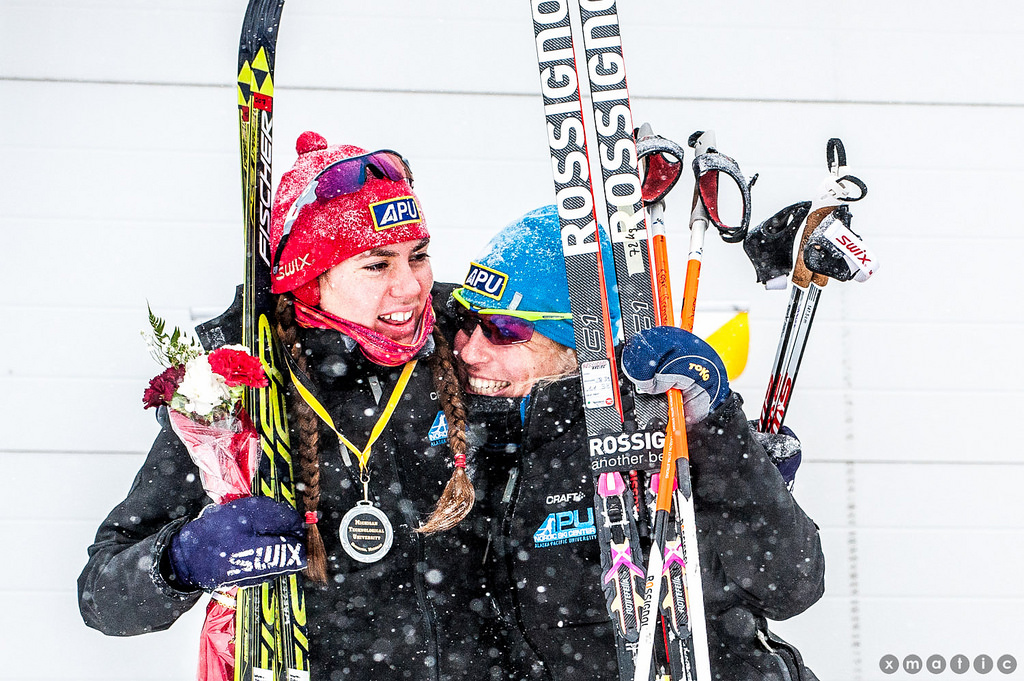
Brennan is quick to point out that she did not do that alone. The support systems around her mattered. At Dartmouth and later at Alaska Pacific University, she found teams and coaches that helped her keep believing when she could not quite do it herself.
“There were definitely moments that it’s easy to question, and it’s hard to keep going,” Brennan said. “I was really fortunate to be part of some really, really amazing groups, and have coaches that fostered that belief in me, and made me see things in myself that I couldn’t see on my own.”
When the World Was Put on Notice
For years, Brennan’s career was a slow and steady build, but then came that famous weekend in Davos.
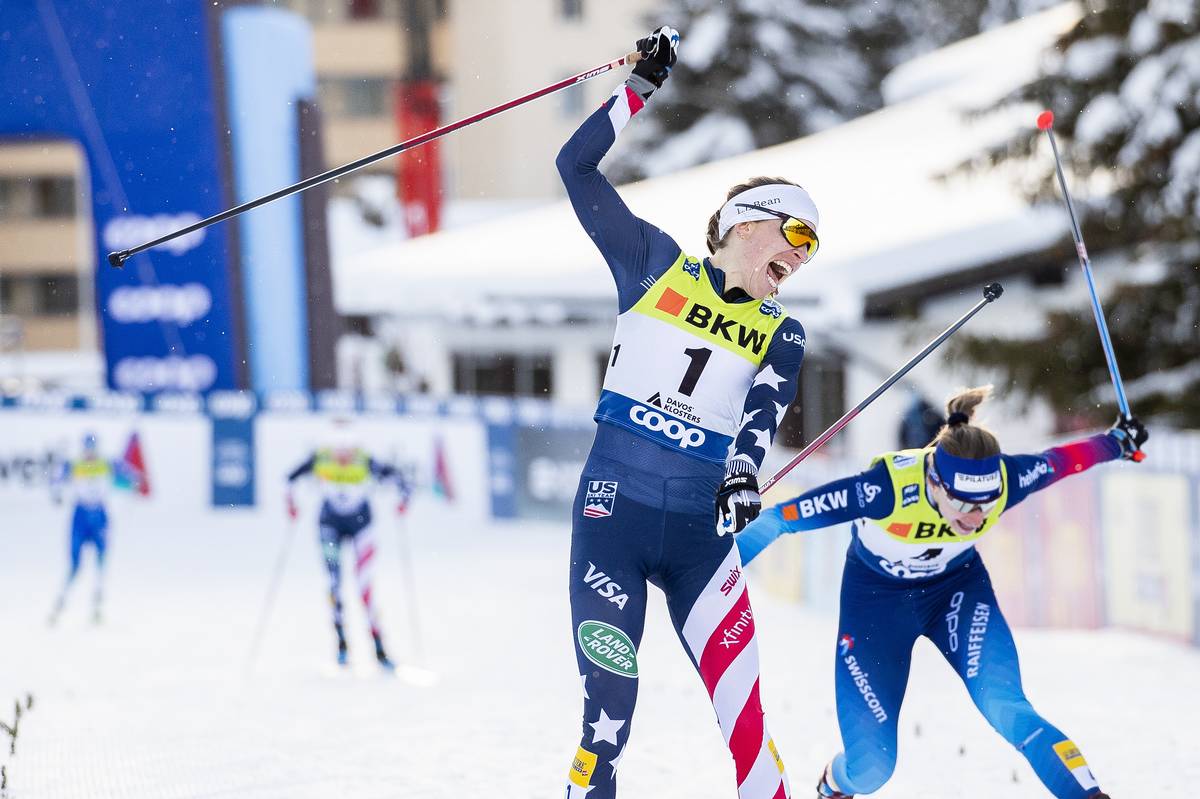
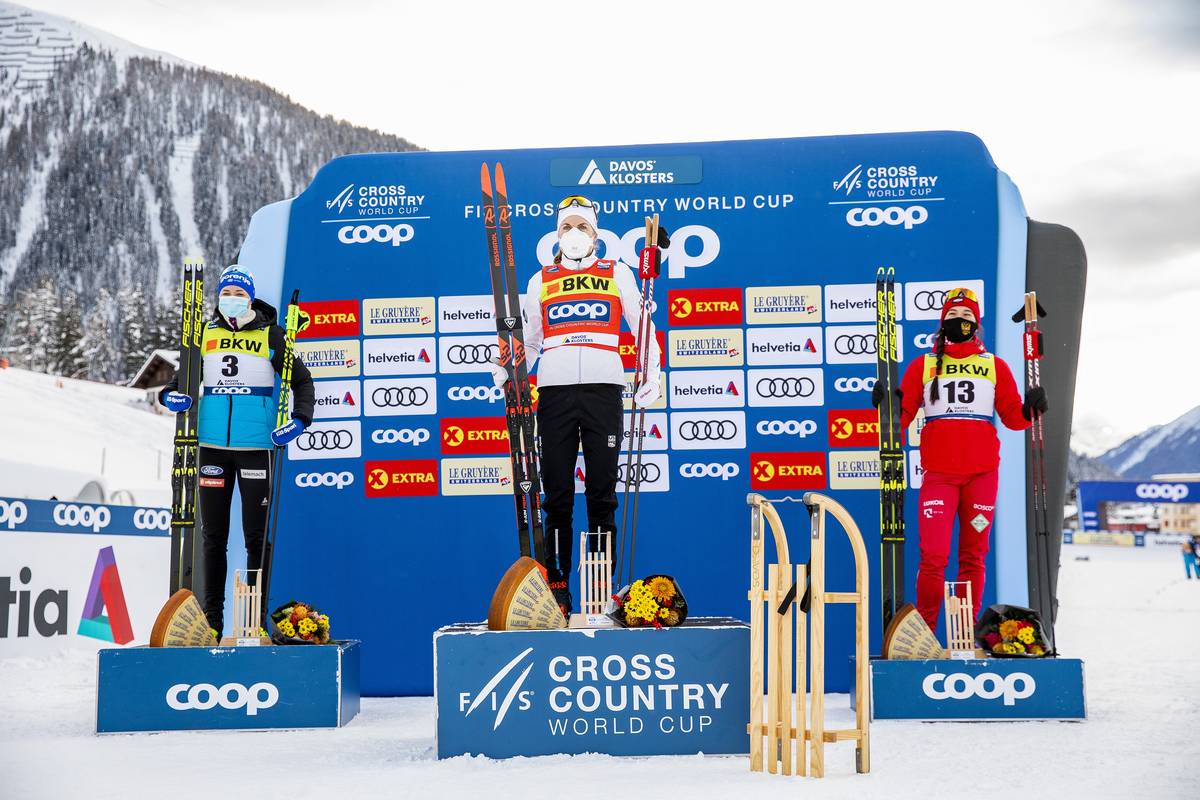
In December of 2020, during a World Cup season shaped by the uncertainty of the pandemic, Brennan won twice in two days in Switzerland. On Saturday, she claimed her first career World Cup victory, in a freestyle sprint, and then the very next day, she won again in the 10-kilometer freestyle.
From the outside, it looked like a breakthrough and a historic moment for U.S. skiing. Brennan does not dispute that. She says what stays with her the most now is not only the winning, but everything she had to manage in order to ski that way.
“Davos 2020 was definitely a breakthrough moment for me,” Brennan said. “That year was challenging for the whole world, and being a ski racer during that time certainly had its challenges too.”
The uncertainty of that season weighed heavily. Rules changed, travel was complicated and athletes did not always know whether races would happen. The risk of illness carried not just health concerns, but career implications for athletes whose bodies were their livelihoods.
“I really struggled with the anxiety of it all,” Brennan said. “Just never knowing — traveling in foreign countries, where the rules were changing all the time, and you didn’t know what would happen if you got sick.”
Hence why Davos still means something more than two entries on a results page. Brennan was proud of the wins, of course, but she was even more proud of how she managed everything around them.
“It definitely showed me what I was capable of,” Brennan said, “and that I could manage these really high-stress environments and all the uncertainty and thrive in that setting.”
That weekend did not just give Brennan her first World Cup wins. It helped confirm the range she had been building toward for years. Later that season, she became the first American to hold the overall World Cup leader’s bib, sprint leader’s bib and distance leader’s bib at the same time. Which was both a major accomplishment and also a fitting reward for all the work she had put in to become a more complete racer.
What the Career Adds Up To
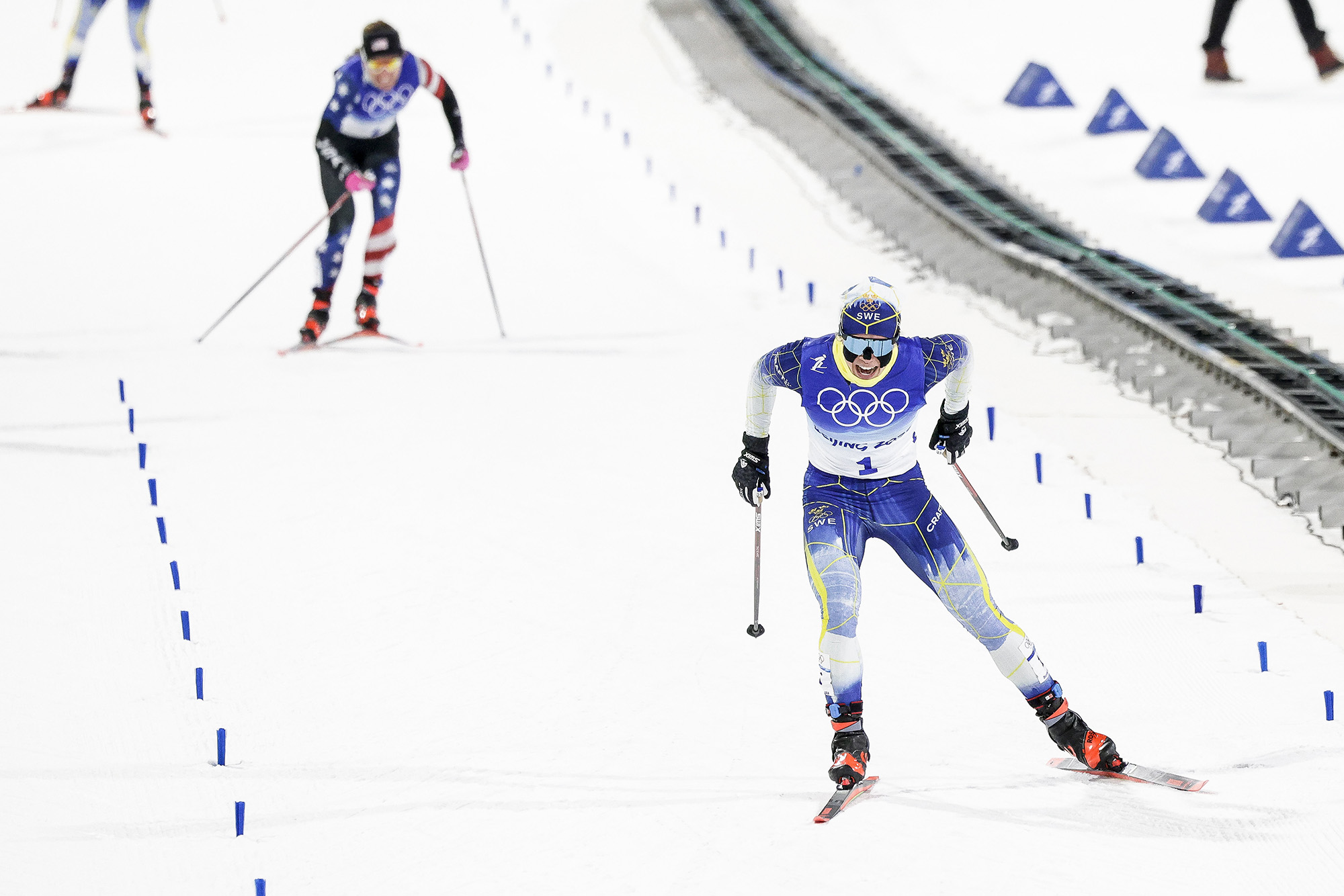
Brennan will take a step back from her professional career after amassing quite the résumé, representing the United States at the 2018, 2022 and 2026 Winter Olympics. She finished fourth in the freestyle sprint at the Beijing Olympics in 2022, the kind of result that can feel both extraordinary and excruciating, by missing out on an Olympic podium by a single place. She reached World Cup podiums across seasons and disciplines. She became a two-time World Cup winner, a fixture in the American women’s team and one of the athletes who helped move the U.S. from occasional contender to regular presence near the front of international races.
But Brennan’s own accounting of her career is not limited to the results she garnered over the years. She is proud of showing up. Proud of learning. Proud of becoming competitive in every event. Proud of the people who helped her and the younger athletes she helped in return. Proud that a career that could have ended several times kept expanding instead.
That may just be why the end of her World Cup career does not feel like a true breakup. For Brennan, skiing was never just a job. It provided her with structure, challenges, community, identity and gave her something to work toward every day and a way to test what was possible. Even now, when she is no longer organizing her life around World Cup racing, she says she’s not suddenly becoming someone else.
“When you train that many years, it’s hard,” Brennan said. “I’m still going out twice a day most days, because it just feels so normal to me.”
That may change when she starts school again and other commitments begin to fill the space skiing once occupied. Brennan says she plans to pursue new interests and give attention to parts of herself that the World Cup lifestyle did not always allow. But the habits of a skier are not easy to unwind, and she does not seem especially eager to unwind all of them.
“I definitely hope to bring forward a lifestyle that’s active, that treats your body well, that’s also willing to push yourself and see where the limits are,” Brennan said.

Rewiring, Not Retiring
That is why “rewiring” works. Brennan is not flipping a switch. She is just rearranging the circuitry.
There will be no more full World Cup campaign, no more life built entirely around the next race weekend. But there will still be skiing, there will still be movement and there will still be competition. The habits and lessons of her career that she built through years of resilience and patience are not things Brennan expects to leave behind.
“I’m sure there are countless skills, probably most of the skills I’ve learned in my adult life, that I will have to lean on in any of the various careers that I may pursue, and in my studying as well,” Brennan said. “The lessons that I’ve learned will undoubtedly come with me, along with the character and strength that I’ve built throughout my career.”
Those lessons were built through the less tidy parts of Brennan’s career, from the late start and the years before the podiums to the injuries and doubts that forced her to keep adjusting. But the same career that asked so much of her also gave her something lasting. Skiing was more than a pursuit or a profession, it was the driving rhythm of her adult life, and one she still feels lucky to have followed for so long.
“It’s definitely an incredible lifestyle to be a ski racer,” Brennan said. “I feel insanely lucky to have called that my career, and to have done so for so long.”
That gratitude does not make the transition simple. After so many years of organizing life around training, racing and the rhythm of the World Cup, stepping back from that structure means more than changing a schedule. It means figuring out what skiing looks like when it is no longer the center around which everything else has to turn.

But there is also freedom in that. Brennan no longer has to prove she belongs. She already did. And now, instead of defining skiing only through the World Cup, she gets to decide what parts of it she wants to keep.
Maybe that means races. Maybe it means long days outside. Maybe it means testing herself in new settings, with new stakes, away from the circuit that shaped so much of her adult life. Maybe it means all of that.
What seems clear is that Brennan is not disappearing from the sport. She is stepping out of one version of it and into another.
She is retired, if that is the word people want to use. But it is not the sunset kind. Not the final-page kind.
For Rosie Brennan, skiing will always be there, just not in the all-consuming way it once was. Now, she gets the chance to redefine her relationship with the sport as something woven into the life she is building next.
“It’s truly been a dream,” Brennan said.
Help Support Our Coverage!
If you value the thoughtful work and access FasterSkier provides, please consider becoming a Voluntary Subscriber. Your support directly fuels our work to cover the people, places, and moments that make our sport special.
Join the FasterSkier community!


John Skavlem
John is a Berkshire County based sportswriter and graduate of Williams College, who is happiest outside chasing a story. He learned to ski shortly after he could walk at Prospect Mountain in Woodford, VT and his love of gliding over the snow never left him. John has covered everything from high school sports, to community stories, and the occasional frigid day on a Nordic ski course, where he learned skiing may lead to cold fingers, but can also make for great stories.