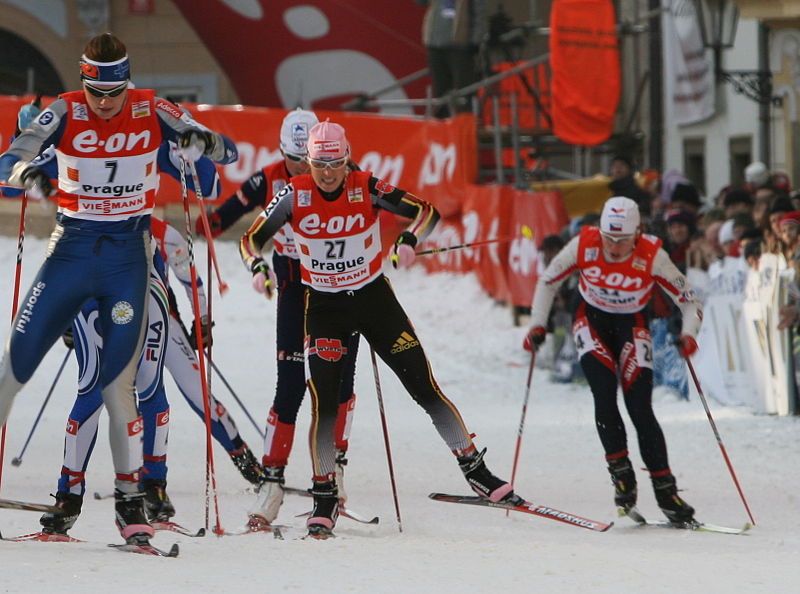
Despite being handed a two-year ban at age 33, Germany's Evi Sachenbacher-Stehle isn't throwing in the towel. Rather, she's seeking a three-month ban instead so she can repair her image and retire on a high note.

Despite being handed a two-year ban at age 33, Germany's Evi Sachenbacher-Stehle isn't throwing in the towel. Rather, she's seeking a three-month ban instead so she can repair her image and retire on a high note.

Although Andrus Veerpalu technically won his doping appeal against FIS, the issues at stake actually had nothing to do with the ski federation - they were rather under WADA's domain. In an interview with FasterSkier, FIS Secretary General Sarah Lewis talked about what this means for federations like hers which have to follow WADA's scientific lead.
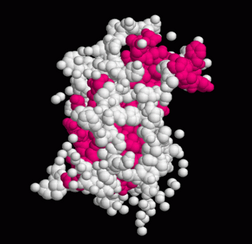
When Andrus Veerpalu tested positive for recombinant human grown hormone in both his A and B samples in the winter of 2011, FIS used a peer-reviewed, reliable test to detect the abnormalities and seemed to have a slam-dunk case. In a highly unusual appeals case that surprised scientists and anti-doping administrators alike, the Court of Arbitration for Sport found that WADA had made missteps in setting detection limits. Here's how Veerpalu won a case even though CAS was sure he was guilty.
After nine months of deliberation, the Court of Arbitration for Sport announced on Tuesday that it decided to uphold Estonian cross-country skier Andrus Veerpalu's appeal and overturned the three-year competition ban the International Ski Federation originally imposed on him in August of 2011 for testing positive for human growth hormone. The Panel cited lack of confidence in FIS's standard of proof.
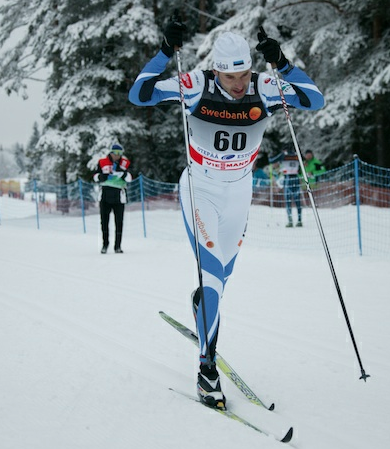
The saga of Estonian Andrus Veerpalu’s doping trial has dragged on for well over a year, but with a final ruling in his appeal expected soon after the conclusion of the trial this week at the Court of Arbitration for Sport in Lausane, Switzerland, Veerpalu may have finally run out options. According to Aivar Pilv, Veerpalu’s defense attorney, their appeal claims that FIS’s testing methods for doping are faulty. The appeal proceedings began on Monday...
As soon as the news broke that Estonian Olympic gold medalist and world champion Andrus Veerpalu had tested positive for human growth hormone (HGH), the ski world knew that a fight lay ahead. For Veerpalu and the Estonians, a doping ban would be disastrous; as FasterSkier reported a 1999 study by a group of European and Australian researchers showed that exercise did spike HGH levels in the bloodstream by more then tenfold, the decline was dramatic...