
This two-part article will in summary attempt to identify the different strength training methods and the difference between them, as well as clarifying the recent trends in strength training for XC skiers at elite level. We also cover how young skiers and masters can use the new ideas in their training program. The first part of this article was posted on September 5th.
Traditional General Circuit Training
Choose 6-10 exercises that put together cover all main parts of your body, for example roller board, push-ups, triceps-press, step-ups, lunges, balance squat, jump-rope, vertical jumps, variations of sit-ups, back-ups, etc… Use medicine balls and Swiss ball for sit-ups and throwing-exercises that also work on your lower abdominals and obligues. Do each exercise in 30 seconds to 2 minutes work periods, and complete the circuit 2-4 times. Rest 30 to 60 seconds between each exercise and move quickly from one station to the next. Total training time 10 to 60 minutes including rest periods. Perform 1-2 times per week or 4-10 times per month. Core strength as described below can be a part of a circuit workout.
 is used less by top skiers, but combinations of some cirsuit exercises using 10-50 reps, some max strength and even plyometrics and core strength is fairly common for World Cup skiers/nations and for well trained ambitious skiers.</p>
<p><B>Advise:</B> Circuit training should continue to be used – it’s in my opinion that kids and young juniors need to spend a couple years (at least) at the beginning of their careers doing circuit training. Develop good technique in simple exercises, use your body weight as resistance, work on good speed and explosiveness. Gradually learn to use free weights and other modern weight room exercises. Free weights and dumb bells are probably better than “lock yourself in” type machines – since they also develop balance. Young skiers should know one thing: recent and current Olympic and World Cup winners did regular circuit training as kids and juniors – they were in fact good at it! Master skiers with long absence from strength training or no real XC training background should also favor circuit training over heavy weights especially in the beginning of the training year.</p>
<p><B>Specific Strength on skis and rollerskis</B><br />
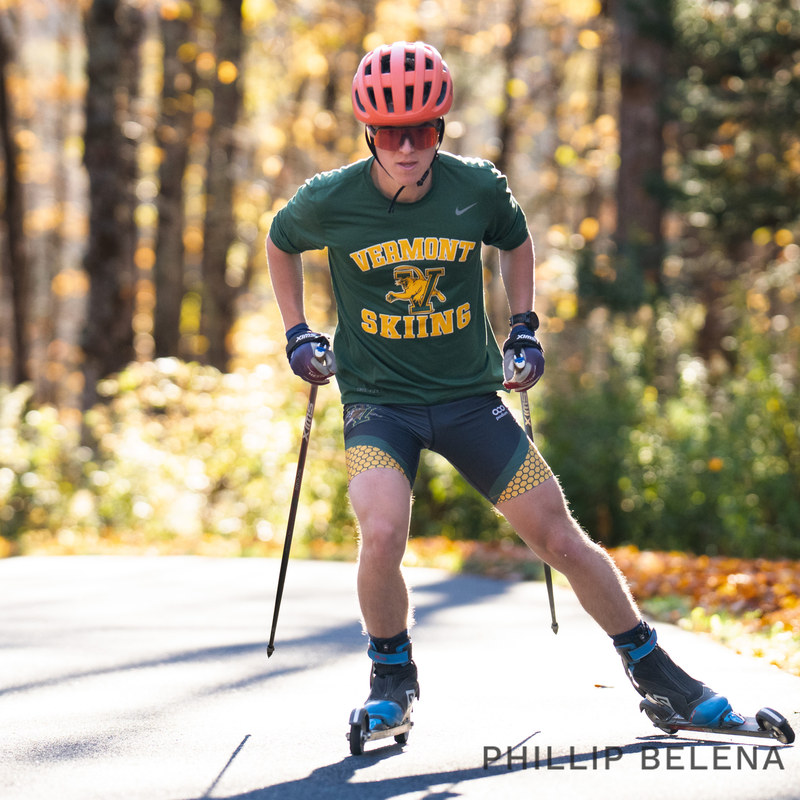
Rollerskiing and skiing are in themselves both a form of endurance strength training for the entire body in the same way running is strength training for your legs. The more up-hills the more strength development. Top skiers have for many years used lots of double poling and double poling with kick in regular distance sessions to develop strength. Even steep grades that would require the use of diagonal stride in races are in training “powered up” using double poling. Typical double pole workouts are 30 minutes to 2 hours long.<br />
Olympic and World Champion Thomas Alsgaard was a pioneer in systematically using skating without poles as specific leg strength training. He went his own ways and started this “trend” in the early nineties and got so good at it that he could easily do this is regular distance sessions with other National Team skiers that were using poles!</p>
<p>Interval repeats going up and down the same hill using variations of specific strength can also be used.<br />
Examples:<br />
3-10 reps x 20 seconds to 2 minutes using diagonal arm motions only (“single-stick”, no leg work)<br />
3-10 reps of 20 seconds to 2 minutes of uphill double poling or double pole with kick</p>
<p><BR><img decoding= "Edit/Preview")