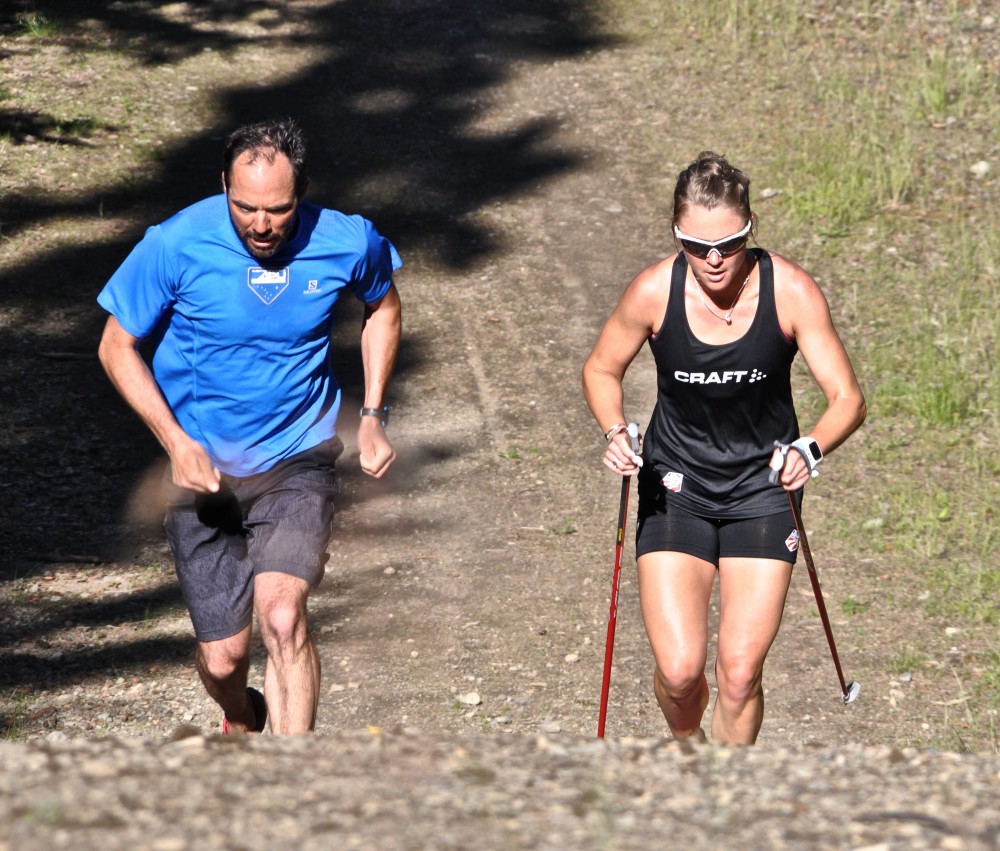
Summertime upsurges in volume can cause athletes to experience times when even matching the speed of their coach or trainer is taxing. Or times when recliner reposing may be more beneficial than straining in training. Entering her sixth season with the U.S. Ski Team (USST), Sadie Bjornsen made it a goal at the start of the summer to do less of the latter. Eight weeks and one 90-hour training month later, Bjornsen didn’t just make the most of the training sessions she did, she also made peace with the ones that she didn’t.
“Going out and running when you’re so tired that you’re actually in fact walking, you’re not gaining anything from that training; you’re better off being at home recovering for the next day,” Bjornsen said during a recent phone interview. “I think I’ve only done one workout this summer where I was out there and I knew I shouldn’t have been out there. That’s a huge improvement from even last summer and the summer before.”
The 90-hour training month was Bjornsen’s first of that volume.
“It was awesome because I think two of those weeks were on Eagle Glacier so half of that was skiing,” Bjornsen said. “I did it in the middle of the summer when I wasn’t doing any school and didn’t really have any other distractions. So I just got to do a lot of recovery and a lot of training. It was definitely a new level of training for me, but I felt like I was able to absorb it, so that was cool.”
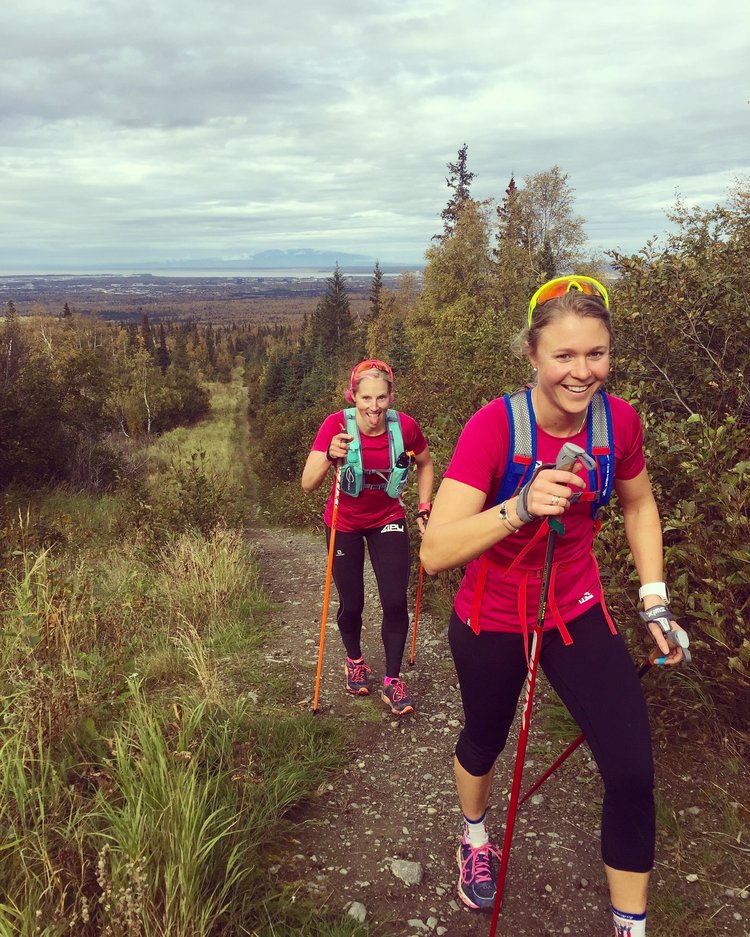
An increase in training hours and session value wasn’t the only summer change for Bjornsen, a 26-year-old Winthrop, Wash., native who lives in Anchorage, Alaska, where she trains with Alaska Pacific University (APU). She also logged more training hours than ever with her USST and APU teammate Kikkan Randall.
“I came to Alaska to train with Holly [Brooks] and Kikkan,” Bjornsen explained. “That’s why I transferred to APU was to ski with the best skiers in the world. So I’m familiar with having [Kikkan] around and always looking up to her, but this summer I ended up spending three to four hours a day with her every training session.
“She has some really unique talents with sprinting and it’s just so fun to be working so closely with her because I feel like I see those things more pronounced,” Bjornsen continued. “I suddenly see why she’s so good and for the first time I feel like I’m maybe on the same level.”
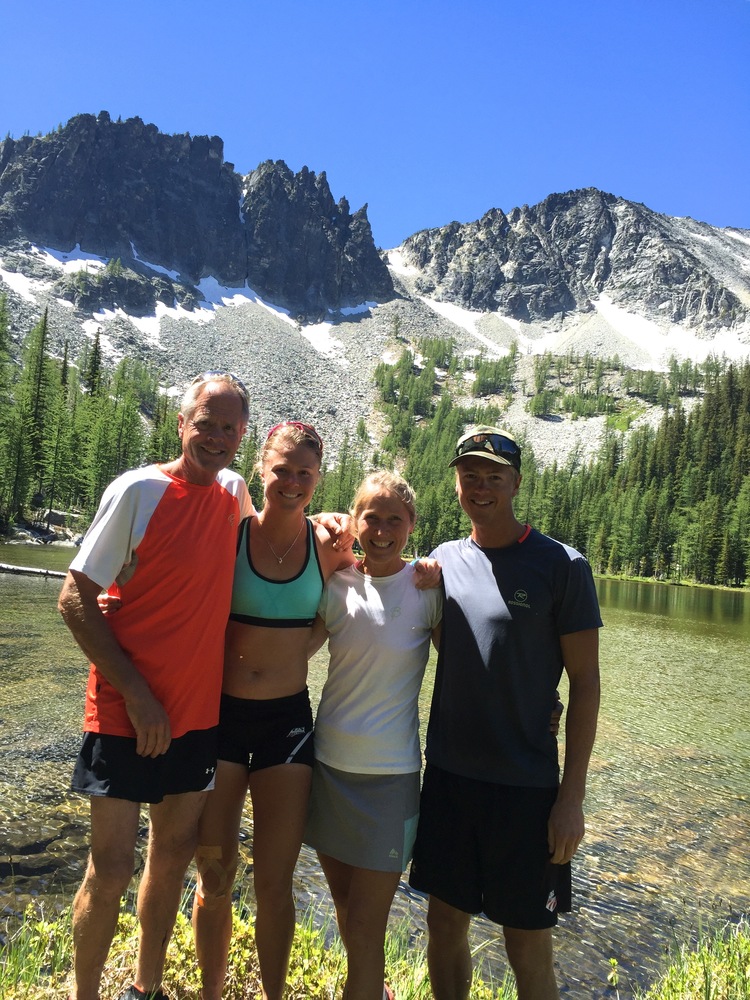
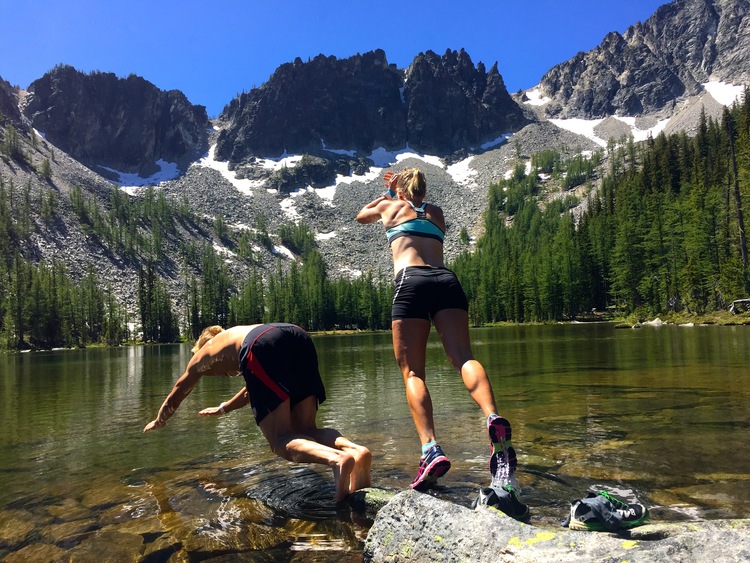
While Bjornsen spent most of her summer in Alaska training with Randall, she also made a trip home to the Methow Valley, where she trained with her brother, Erik Bjornsen (also on the USST and APU) as well as her parents.
“It’s been a while since Erik and I have been home at the same time and … it was super fun this year because we did all these runs that I didn’t know existed,” Bjornsen said. “My parents were out there running for three hours with us, every time I go home I think I realize more and more how lucky I am. … For one, I have an incredible family, and [secondly], I grew up in the most incredible place ever.”
After logging plenty of miles running in the Methow with her parents and younger brother, Bjornsen also spent some time ski walking and rollerskiing this fall when her kneecap began tracking wrong.
“I’ve just had a bit of a history with injury and I think when I start training more, certain imbalances creep up more so than if I was training 500 hours a year,” Bjornsen said. “I trained my first 90-hour month and so those [imbalances] suddenly became a lot more pronounced … but in a way, I think my injuries are like blessings in disguise because they come when I maybe am pushing the envelope a little too much or if I really need to fix some structural thing that’s going to limit me in the future.”
As Bjornsen prepares for the coming race season, she also sees value in staying positive, particularly within herself and the training she’s done.
“It’s easy to look around and see what other people are doing and wonder if you’re doing enough or you’re doing the best,” Bjornsen said. “I think that we would not be at this level if we were not figuring out how to challenge ourselves. I think that for me, I wanted to focus more on what did I do today to make myself feel better, instead of just reading social media and seeing your competitors doing incredible things. For me, I wanted to focus more on what improvement did I, as Sadie, make today.”
***
We asked Bjornsen to give our ’17 Questions for 2017′ a go. Here are her responses:
1. Biggest change in your life in the last five or so months since the ski season ended?
I learned to play 1 song on the guitar, I took two classes for my masters degree, I trained my first 90 hour month, I took 45 trips up the gasoline trail in Anchorage and overcame some fear with bears, and I fell a little bit more in love with skate skiing.
2. Biggest change in your training?