
This World Cup coverage is made possible through the generous support of Marty and Kathy Hall and A Hall Mark of Excellence Award. To learn more about A Hall Mark of Excellence Award, or to learn how you can support FasterSkier’s coverage, please contact info@fasterskier.com.
Today the World Cup returned to Davos, Switzerland where the women competed in the 20 k Individual Start Freestyle. As has been the case for the last several weeks, much of the critical pre-race story was about who wouldn’t be present. Absent from the field was Swedish long-distance heavy hitter Frida Karlsson and teammate Ebba Andersson. Missing from the Norwegian squad was Heidi Weng.
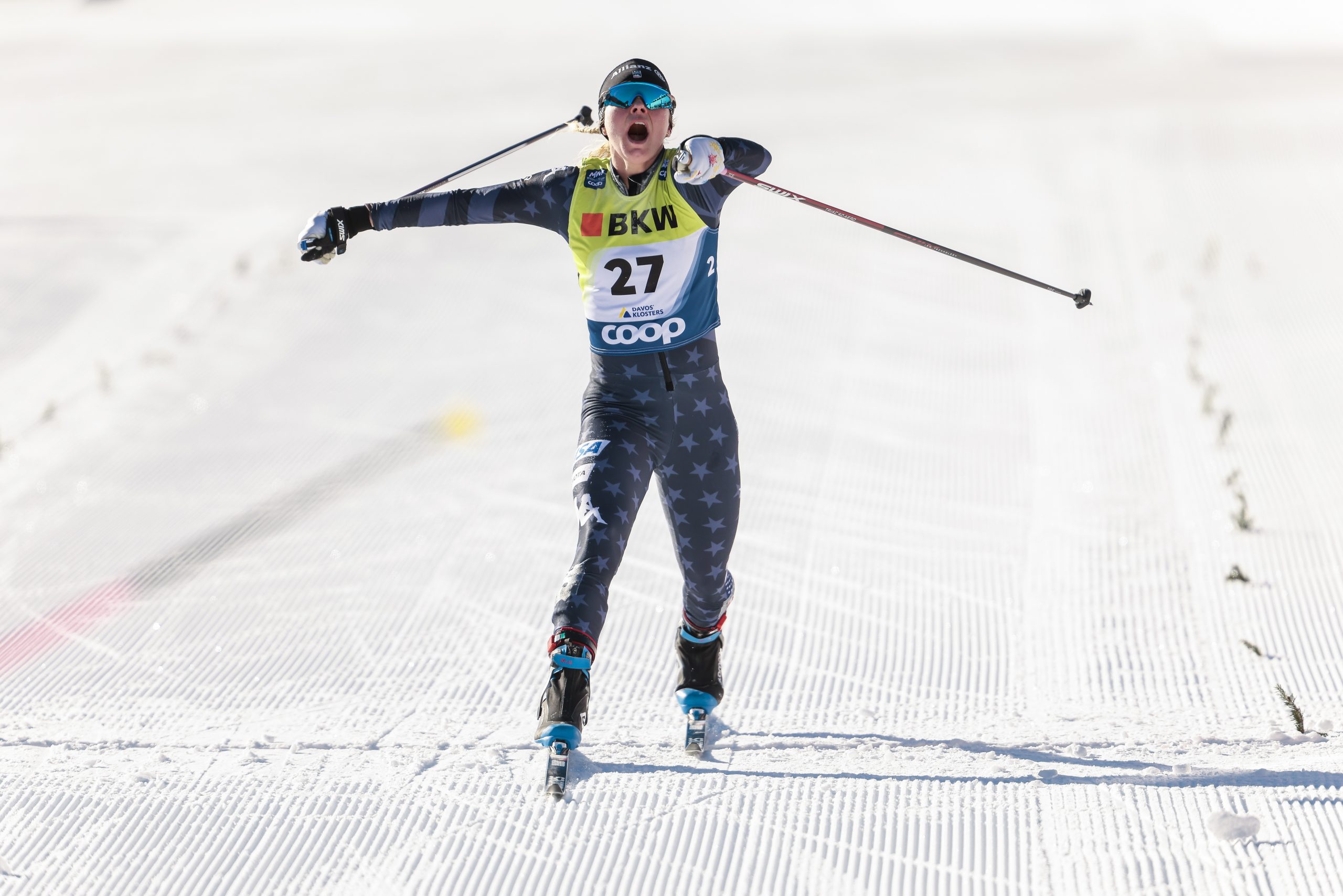
The U.S. hoped that Jessie Diggins could find her way back to the podium after yesterday’s second place sprint finish. Diggins has the most wins of any active woman athlete in individual distance freestyle, having won 10. She is also the most recent woman to have won consecutive individual World Cup distance events in the freestyle when she did so in January, 2021. After yesterday’s sprint performance, Diggins moved into second place in the overall World Cup standings, behind Tiril Udnes Weng (NOR).
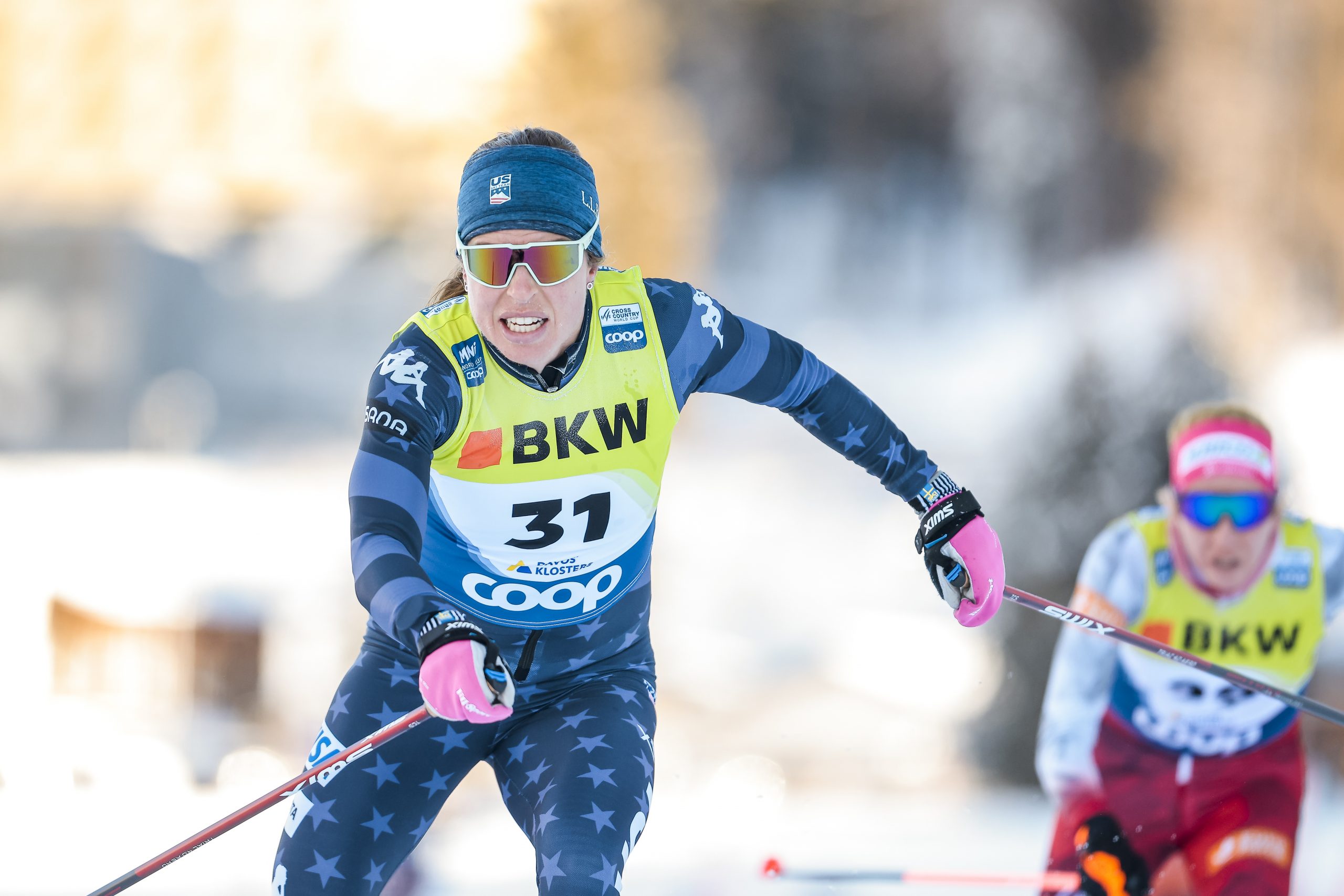
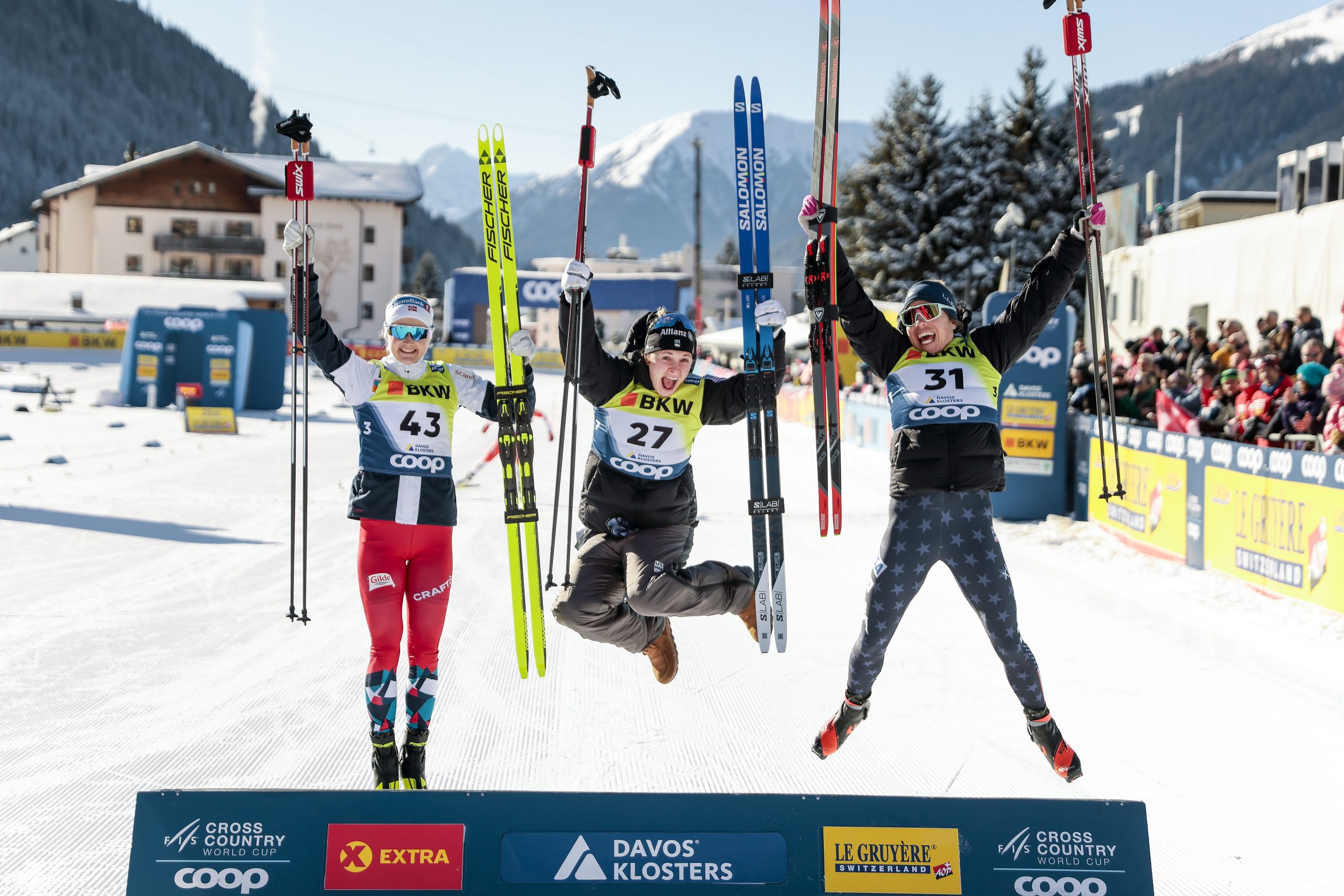
Taking first place was Jessie Diggins (USA), in second was Ingvild Flugstad Oestberg (NOR), and in third Rosie Brennan (USA). Other American finishers were Sophia Laukli (17th), Alayna Sonnesyn (26th), and Lauren Jortberg (39th). Novie McCabe was scheduled to race but did not start due to illness.
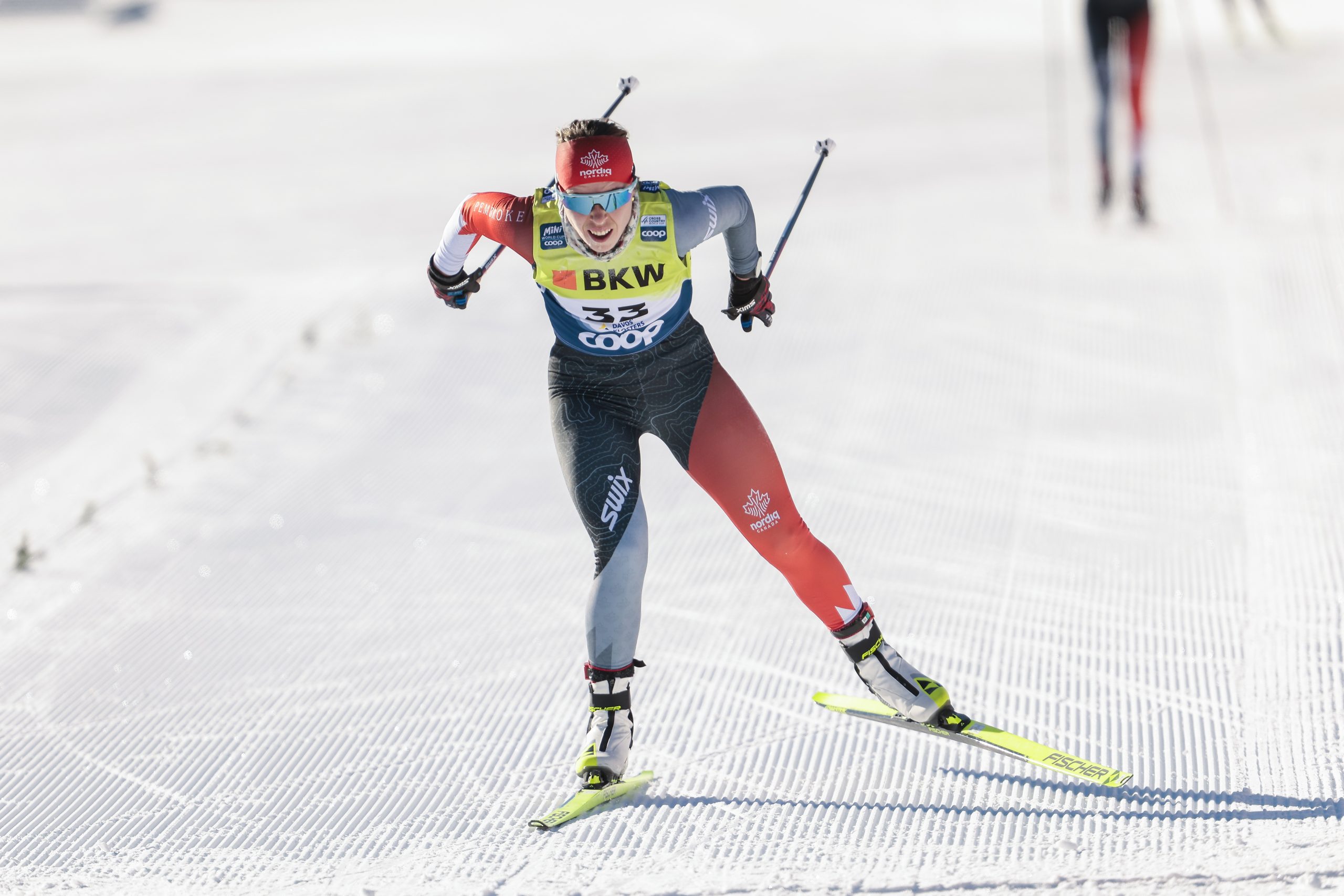
It was another standout day for the Canadians with Katherine Stewart-Jones finishing 11th, Olivia Bouffard-Nesbitt 30th, Dahria Beatty 32nd, and Liliane Gagnon 40th.

In a pre-race interview Diggins said that she thought Davos was a fun course and really challenging. “It’s sneaky hard,” she said, reiterating her love for individual start skate races. “Just give me a trail in woods by myself and my skis and my brain . . . and I’m just excited to see how hard I can go.”
The skiers had another beautiful Davos day with full bright sun.

20 K Individual Freestyle
Diggins went out hard at the start. At the 2.2-kilometer time-check she had the fastest time by a slim margin over Claudel Delphine (FRA). Brennan started at a controlled tempo and was fifth after the first time check.
Diggins kept the hammer down for the first seven kilometers, leading at every time check. But her lead was very small, ahead of Oestberg by only seven seconds. By the time the 7.2-kilometer mark was reached, Oestberg—who had a later start position than Diggins—had clawed her way into first, leading Diggins by just over a second. The see-saw between the two would continue for the rest of the day with Oestberg hanging onto a small lead for much of the race.
Tactically, it appeared that Oestberg might have an advantage being the last of the top three skiers to start, so she would be fed the others’ times along the way. But Diggins has told Fasterskier in the past that she’s not always interested in hearing split times; she just skis as hard as she can. She also values having warmups conclude close to her starting time.
U.S. coach Chris Grover confirmed with Fasterskier that, “[Diggins] likes to take an earlier draw in start position because she likes to not have the track closed for so long for warmup. She really doesn’t even think of splits out there. Jessie knew exactly how she wanted to ski that course and that was to not go quite as hard on all of the ups . . . you have to work all the transitions, all the corners, all of the downs. The last 1.8 K are down . . . she had that strategy in mind for how she was going to ski it and she went out and skied it exactly the way she wanted to.”
Grover continued that it was a different approach for Brennan. He said, “She’s prioritizing climbing on the uphills. Two opposite strategies and they both worked out pretty well for them.”
Twenty kilometers is still a relatively new distance for the women, so proper pacing would be critical. Grover indicated that the change to 20 k hasn’t been much of an issue. “It seems like it hasn’t been that hard of a transition,” Grover said. “They looked like they were at a high pace the whole time, the same kind of strategies they employed on this course in 10-K. We did a little bit of feeding, which we wouldn’t have done in a 10-kilometer event. Otherwise, it wasn’t so different.”
“I really wanted to pace it like red-line pacing…go as hard as I could right before I felt like I was going to blow up, and then hold it there.” Jessie Diggins
Diggins continued: “My strengths are the second half of the lap with all of these working sections, trying to find the extra seconds here and there,” she said. “We had some really awesome skis, and awesome energy from the fans.”
Regarding pacing for today’s race, Brennan told Fasterskier that: “I have never done a 20k interval start which was probably true for the whole field today. That made it really tricky to know the pace or really what to expect. I love the course here and love skiing at altitude so I had some confidence that I could find a steady pace and hold it.”
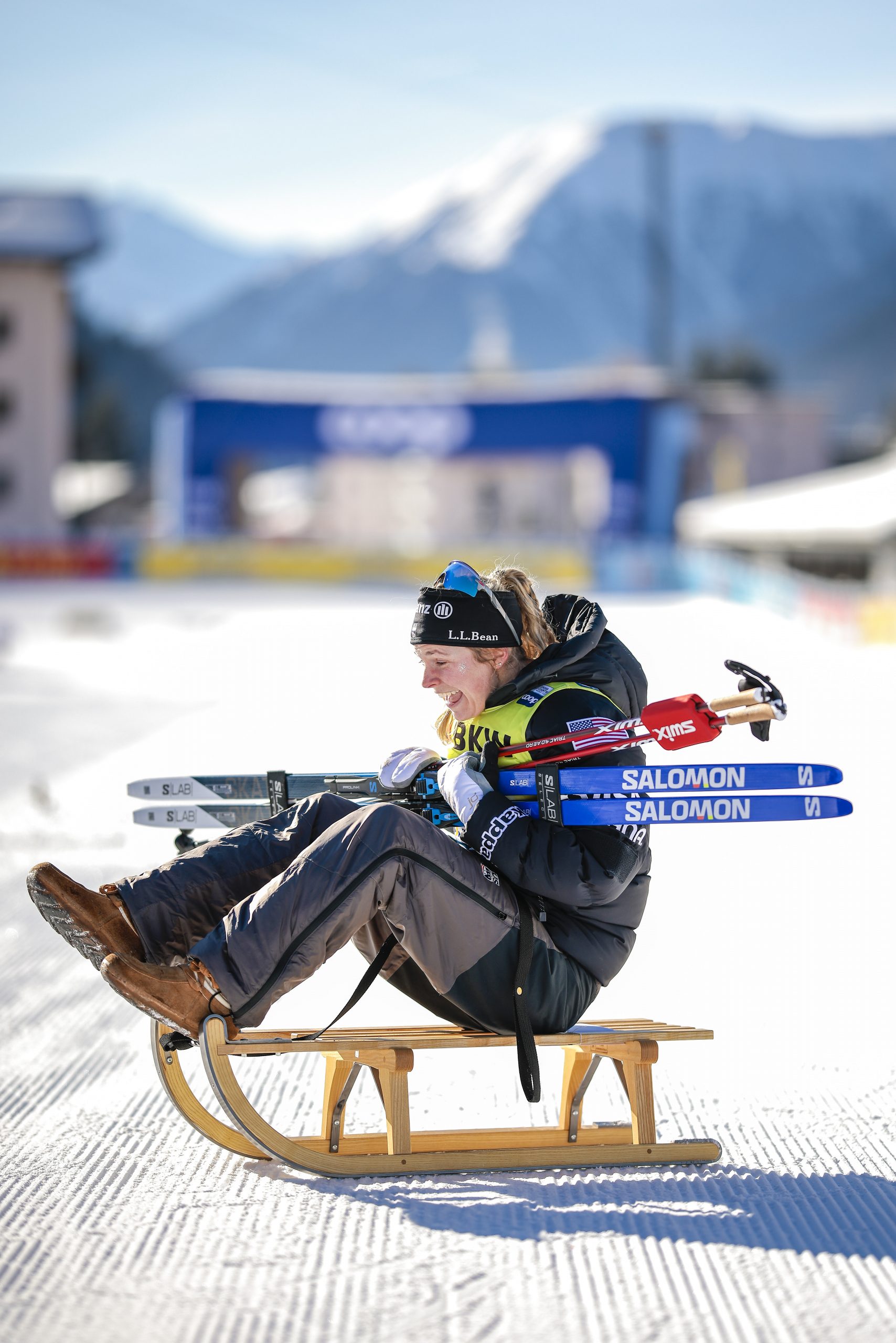
With only five kilometers to go, the race for first was almost a dead heat. Oestberg had a scant three second lead over Diggins. Meanwhile, the fight for third was boiling down to Brennan and Tiril Udnes Weng (NOR). At the 15 kilometer mark, Weng held a one second lead over Brennan. Both those racers were over 13 seconds off first place.