 This coverage is made possible through the generous support of Marty and Kathy Hall and A Hall Mark of Excellence Award. To learn more about A Hall Mark of Excellence Award, or to learn how you can support FasterSkier’s coverage, please contact info@fasterskier.com.
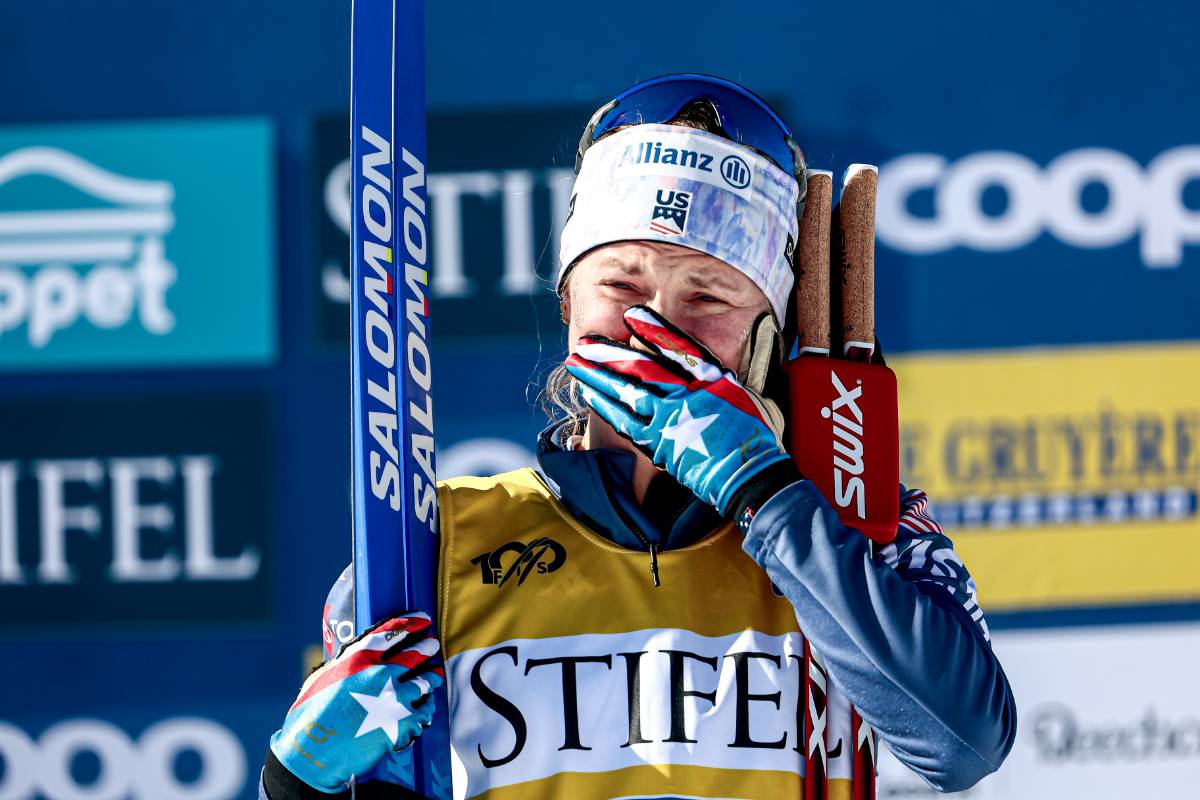
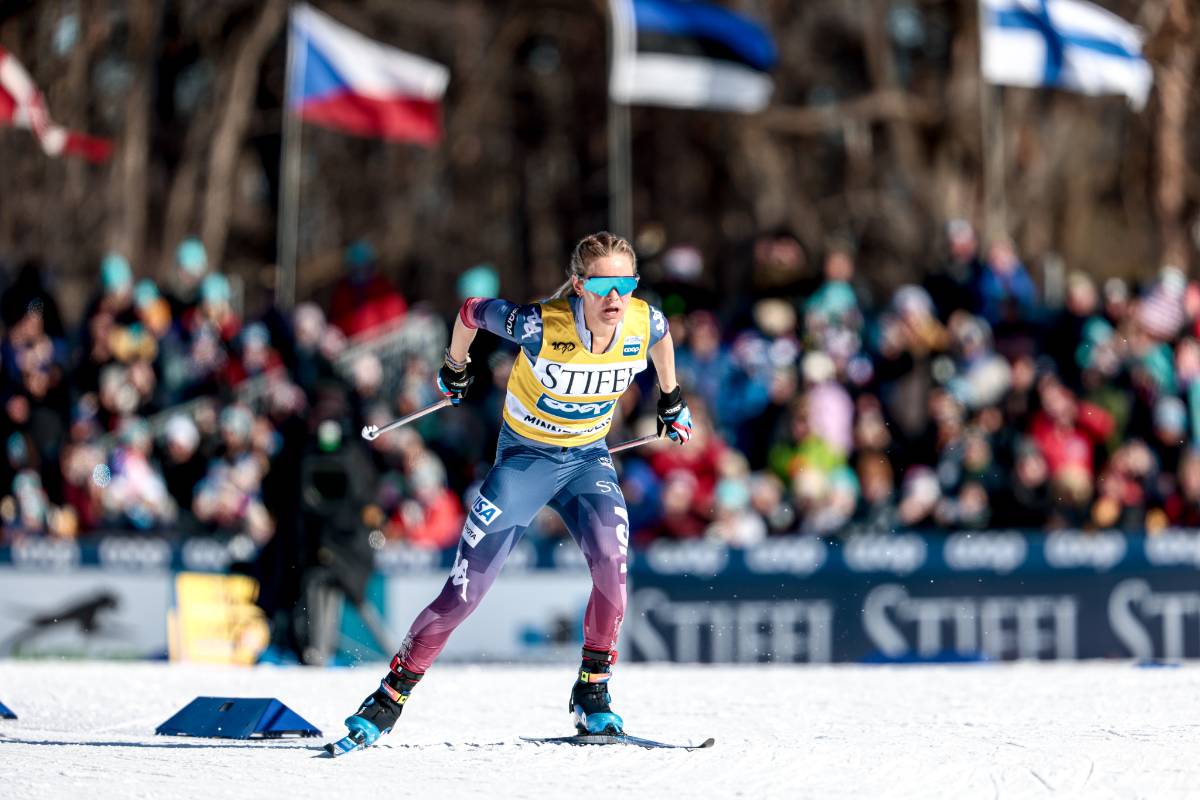
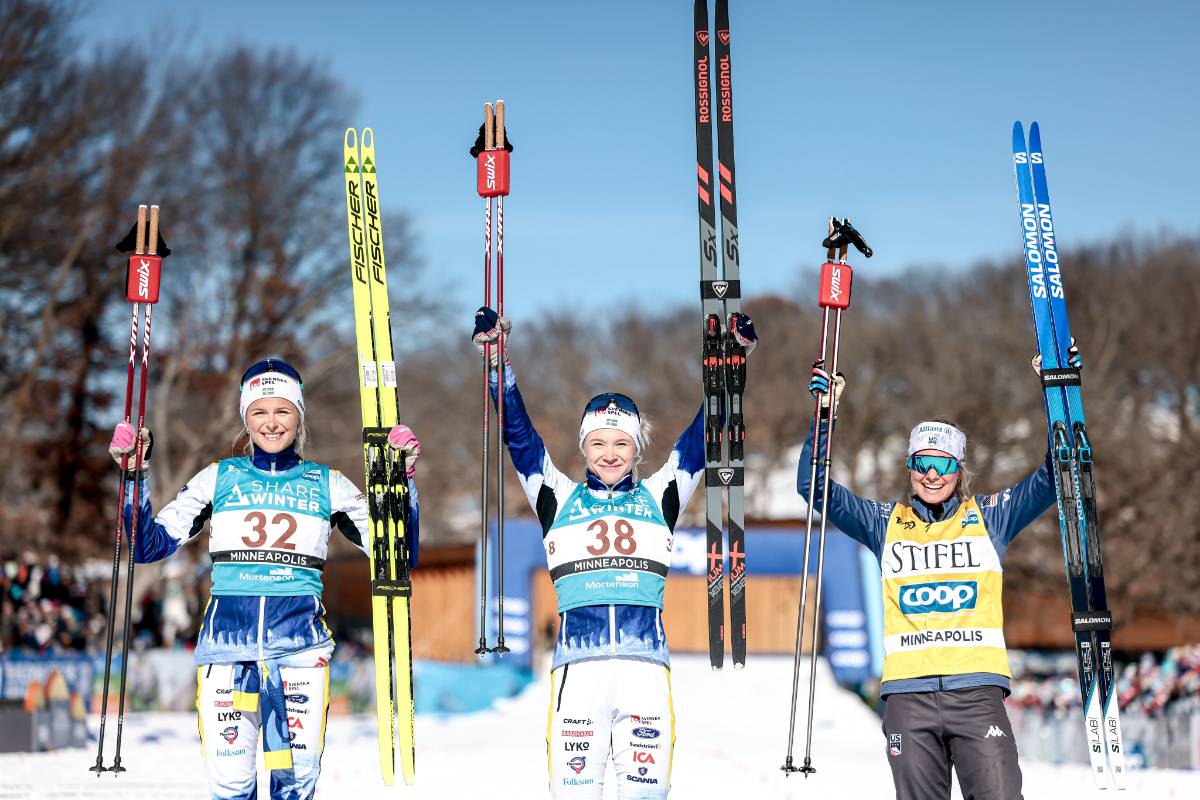
Ski racing is all about time, and the magic power of the best ski racers is that they’re seemingly able to bend time the way they want it to go. Lives are lived under a relentless march of seconds, minutes, months, and years. But a select few can claw a few seconds back the other way when given skis as a tool. By that measure, the three seconds that Jessie Diggins bent her way to take third place over Sweden’s Linn Svahn in Minneapolis’ 10 k Individual Start Freestyle were a testament to her power over time. Likewise, the 31 seconds Sweden’s Jonna Sundling took over the rest of the field—and the 15 seconds her countrywomen Frida Karlsson had over Diggins in second place—provided evidence of their incredible efforts.
To understand the full extent of who Diggins is as a ski racer, one must consider Diggins’ oft-repeated chorus that this weekend was “about bigger things than results.” This was about generations of US skiers, and years of US skiing. Twenty years since the last US World Cup took place. Today, though, brought nearly 20,000 people to Theodore Wirth Park—old teammates, competitors, coaches, acquaintances, and fans—a community that shared a love of cross country skiing. Such a gathering as that was a worthwhile endeavor, in itself.
“This whole weekend has been a dream come true,” said Diggins. “I’ve maybe never done anything I’m more proud of.”
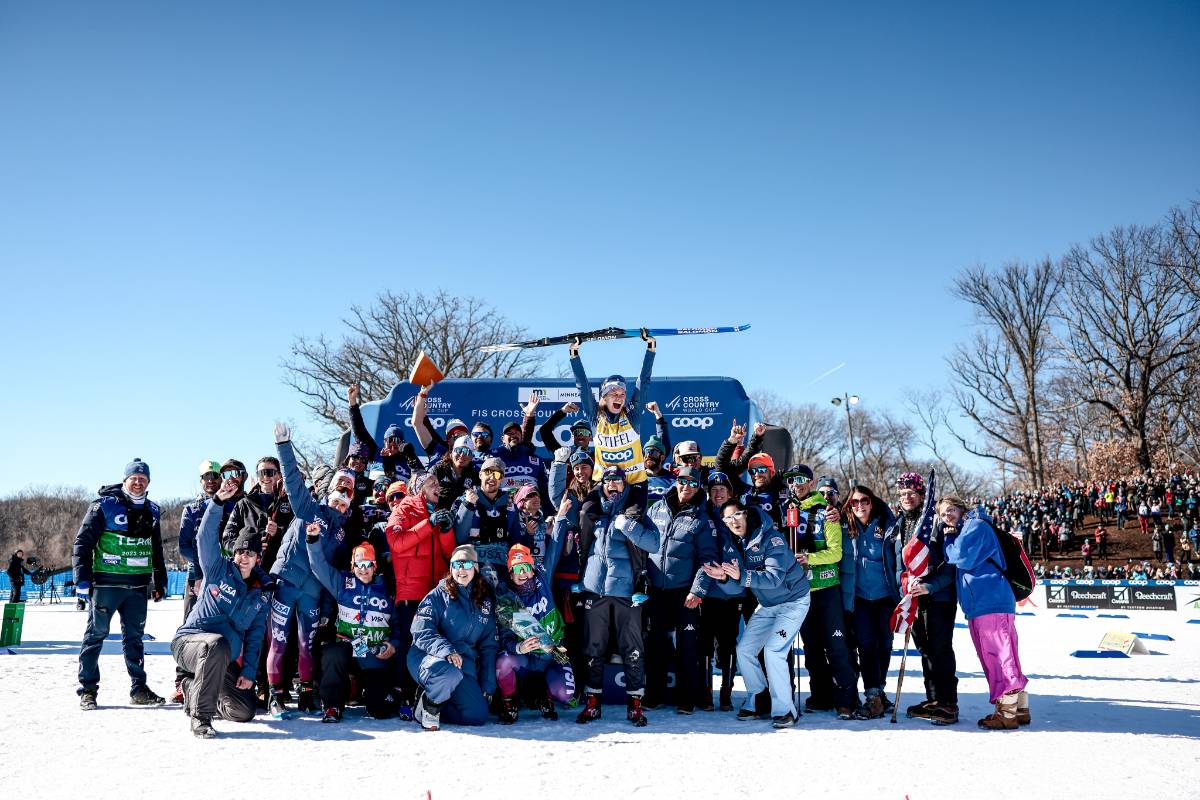
The winter sun that shone over Minneapolis on Sunday put the close-contested racing in full glare as the top contenders traded time checks all the way to the races conclusion. For those observing though, there was more significant time being folded and split as Diggins took her turns around the course. Her winding up the A-climb in Wirth recalled a decade ago on this same course when she swept the Junior National Championships. And where Diggins has taken the sport was evident throughout the day; five American Women placed in the top 30. The ascendant Sophia Laukli skied to 15th place, and Julia Kern skied to a strong 19th. Rosie Brennan finished 22nd, U23 World Championship medalist Haley Brewster 25th. The Americans showed depth all the way through the results with three more in the top 40: Sydney Palmer-Leger 32nd, Kendall Kramer 36th, and Novie McCabe 37th.
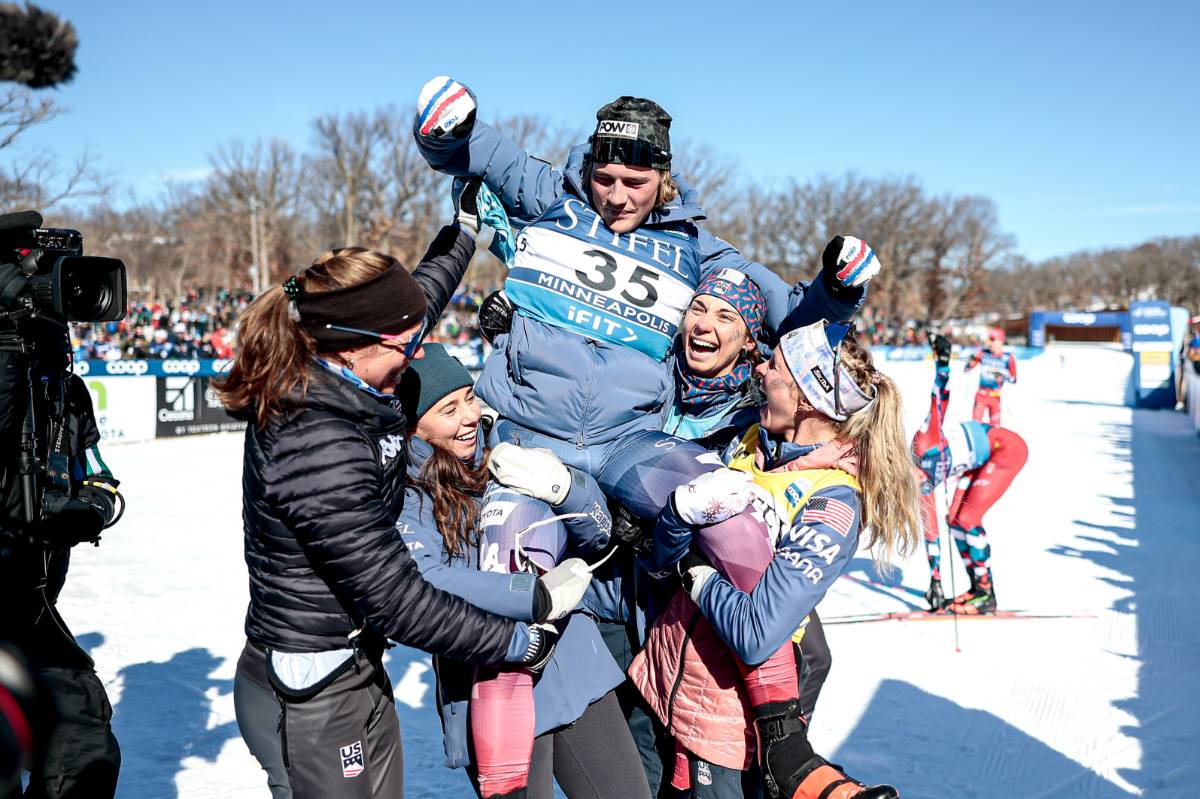
Diggins understood that this weekend was not just a series of races, but a grander celebration of the ski community she’s so transformed. “This was all about Gus,” she said after the young Alaskan pulled off an unlikely World Cup win, the first for an American man since Bill Koch 40 years ago. A whole new generation of US skiing has been ushered to success on the ski tails of Jessie Diggins; for a few moments—while hoisting Schumacher up on her shoulders—Diggins was just another part of the ski community in which she, herself, had been raised a mere thirty miles away. In the intervening years, Diggins has been transformed . . . and so has the American ski community.
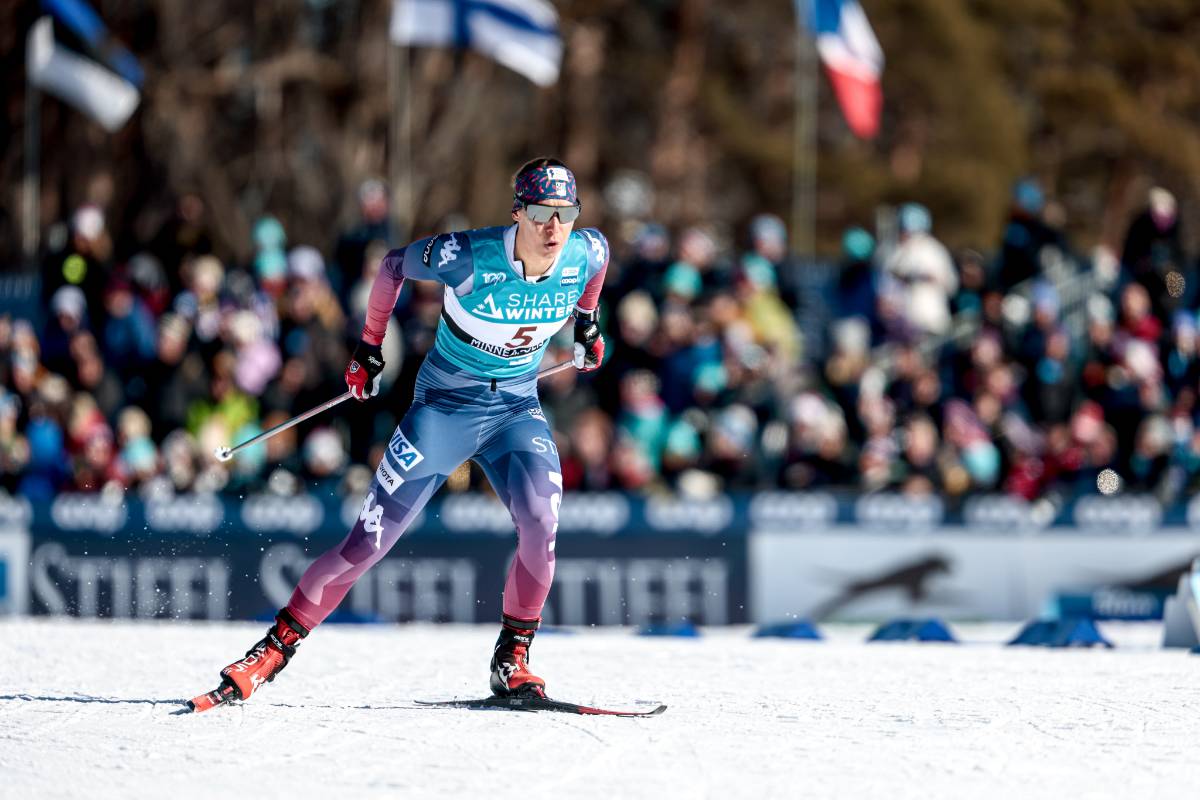
Women’s 10 k Individual Start Freestyle
Julia Kern led out an American contingent that included 12 starters in the Women’s race. Racing in bib 5, Kern started to piece together a remarkable race for herself. “That was probably the most fun I’ve had racing in my entire race!” Kern said post-race, as she credited a sea of Wirth Park spectators that lifted her throughout the 10 k. When Kern crossed the line, she briefly got to sit in the leader’s chair before Sweden’s Maja Dahlqvist, bib 14, would cross the line with a 17 second advantage.
The start order would mean the Swedish-American duel would be one that lasted the duration of the race, with seeded skiers spread throughout the field. Frida Karlsson, bib 32, marked the first skier to best Dahlqvist’s splits, taking 10 seconds through 1.9 k. “It was a really high speed track, which I knew suited Jonna [Sundling] and Jessie,” said Karlsson. “I knew I was trying to keep up with them.”
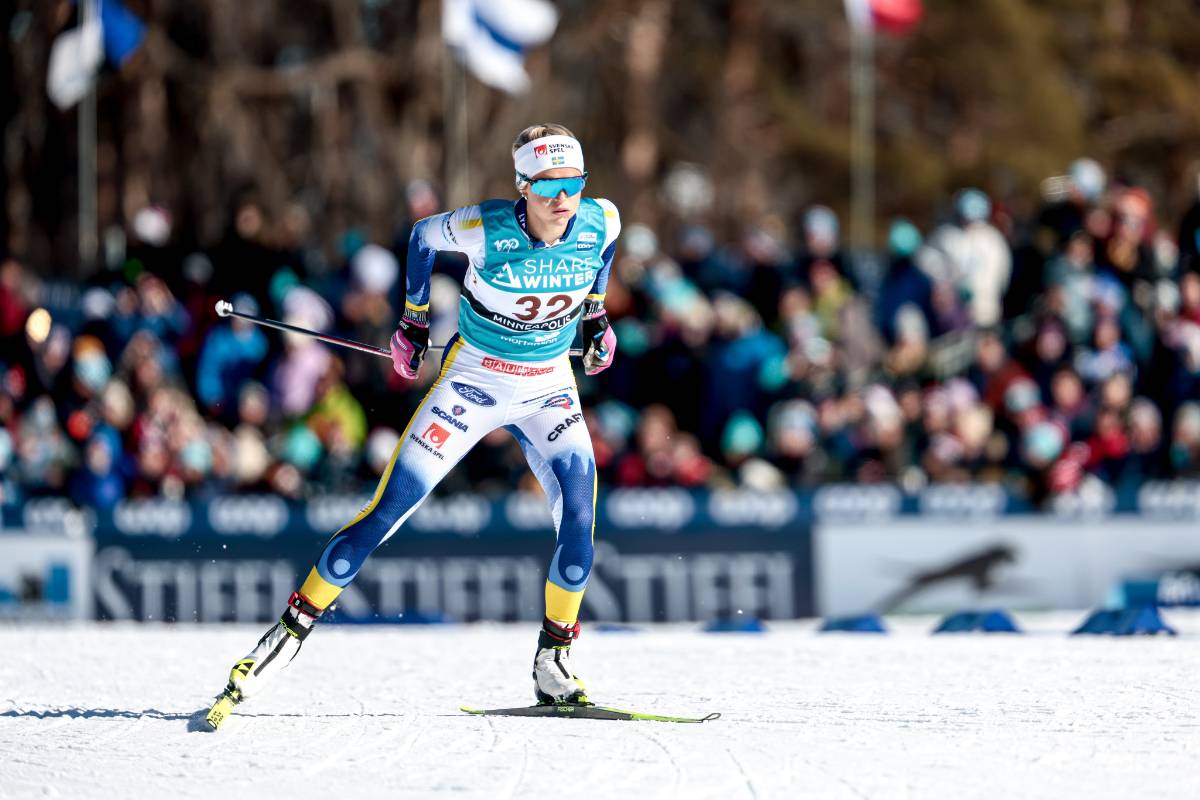
Karlsson’s assessment was right on, as Sundling came through the first 1.9 k checkpoint with nearly eight seconds up on Karlsson, expanded the lead to 12 seconds by the 5.8 k mark, and finally expanded it to 15 seconds over the finish line to take the lead.