The nefarious use of performance enhancing drugs is not limited to shadowy old communist nations that once hid behind the Iron Curtain. There are also those many cases involving relatively believable (though equally questionable) explanations of the circumstances—food contaminations, mistaken prescriptions, innocent mistakes, misunderstood limitations and/or applications. As FasterSkier cited in an earlier article, Martin Johnsrud Sundby claimed to have had no knowledge of the illegality of the mechanism (a nebulizer) with which he administered his asthma medication. He was suspended, and had his World Cup overall championship stripped. In professional cycling, Tour de France champion, Alberto Contador, claimed to have an anabolic steroid in his system as a result of having eaten tainted beef. His Tour championship was subsequently awarded to the second place finisher. Similarly, Therese Johaug, tested positive for clostebol—an anabolic steroid—which she attributed to a lip sunscreen purportedly given to her by team physicians. Johaug’s subsequent suspension caused her to miss Olympic opportunities in 2018 (when she was a definite favorite to sweep al the Distance events).
In 1987, American biathlete, Kerry Lynch, forfeited his World Championship silver medal after admitting that he had engaged in “blood packing,” the process of adding one’s own blood to the system (via transfusion) in order to facilitate oxygen transfer. Lynch reported that he had received approval for the procedure from Jim Page (Director for the USSA’s nordic program) and Doug Peterson (Coach of USA Nordic Combined). There was no way to test for blood packing, and Lynch could have simply denied the allegation. To his credit—and his detriment—he did not.
Even a close friend of mine—an American professional cyclist—tested positive for a banned substance. He responded to the accusation by buying out the entire supply of the supplement that he suspected may have caused the positive test, and paying to subject those sealed canisters to controlled tests in an attempt to prove he had ingested the substance inadvertently. The tests proved his point; the manufacturer indeed had mistakenly contaminated the product, and the presence of the performance enhancing drug in the cyclist’s system had been the fault of the manufacturer (who obviously did not include the banned substance in their ingredients listed on the label). The athlete proved his innocence, acknowledged by the Court of Arbitration for Sport. Regardless, he was suspended for two years.

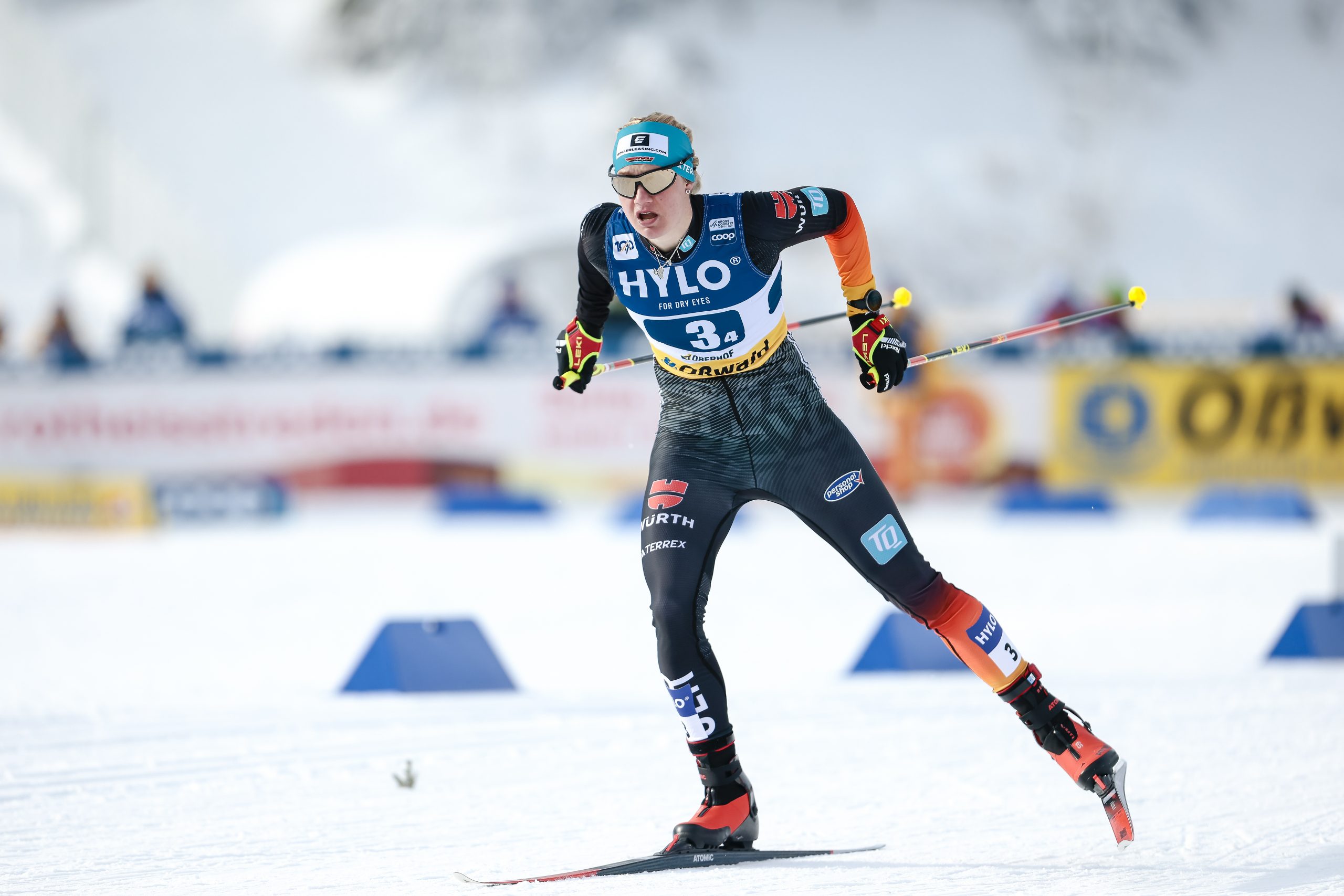
Now, in recent announcements, it’s been revealed that Germany’s Victoria Carl (Olympic gold and silver medalist from 2022) tested positive for the presence of clenbuterol (an anabolic steroid). The presence of the substance in her system has been explained as an ingredient in a cough syrup that Carl was given by team doctors during the Winter Military World Games. The German Federation is insisting on an “acquittal” in regard to the incident. That’s a truly rare response to any situation in which an athlete has legitimately been found to have a banned substance in their system.