
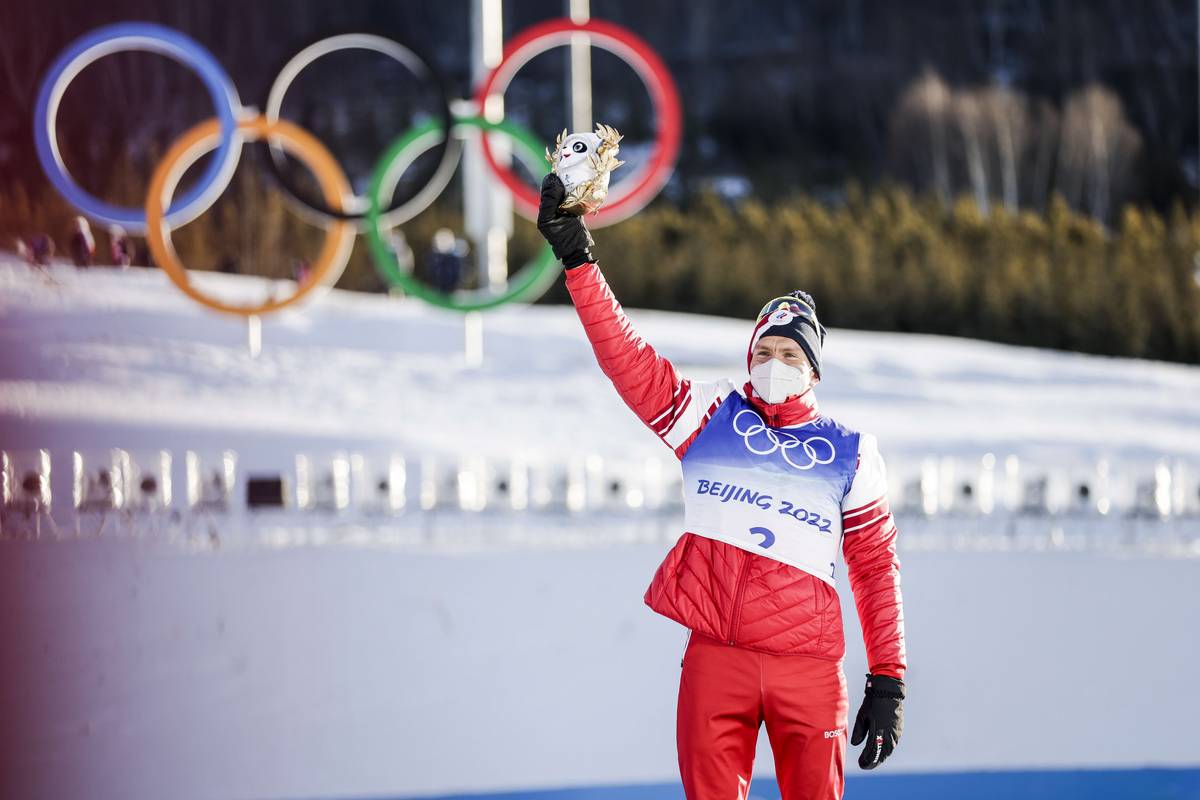
It’s a funny time we live in . . . one in which many of us struggle with harboring multiple opinions on particular topics (especially political ones). That’s me when it comes to whether or not Russian and Belarusian athletes should be allowed to enter the Olympic Games . . . multiple opinions make sense, and no easy or straightforward decisions seem likely. One thing’s for sure: when it comes to those decisions, someone’s going to be very unhappy.
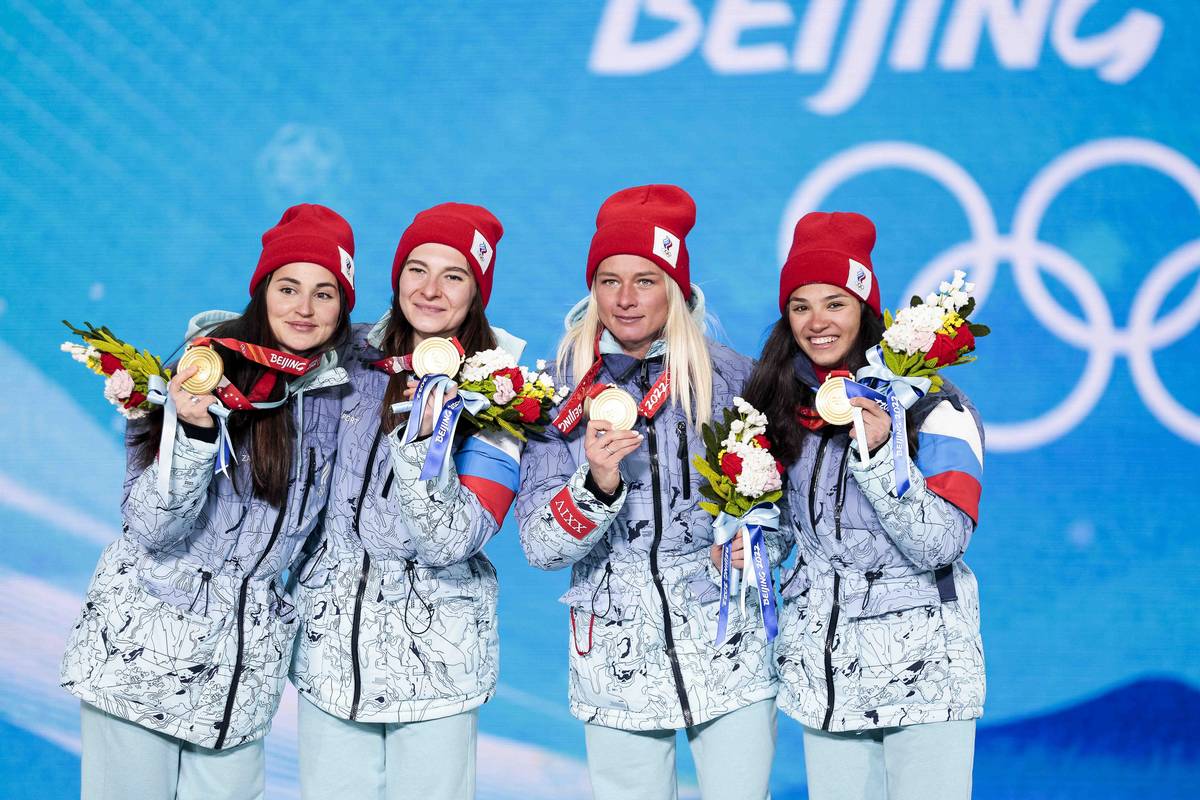
On October 21, the International Ski Federation (FIS) announced a ruling in which they barred Russian and Belarusian athletes (whether as neutral individuals or as representatives of the national governing body) from competing in upcoming FIS events—events that constitute qualifying opportunities for the 2026 Olympic Winter Games. Since the athletes in question had already been banned from competition since the beginning of Russia’s war on Ukraine, that means that no Russian or Belarusian athletes would have been able to participate in any earlier qualifying events (like the 2025 World Championships). Therefore—since Olympic qualification runs through events sanctioned by FIS—it appears that no Russians will be allowed to compete in the Olympic in 2026. Law suits will be soon to follow, and additional bendings of rules may be considered . . . but, for now, the Russians are out.
What’s right and just about that?
Russia is waging an aggressive war on another sovereign nation. FIS has decided that they will not allow the participation of Russian athletes while their government persists in this criminal action. Skiing is doing its part to try to stop a war . . . I get that.
And what’s wrong and unjust about that?
The Olympic Charter declares that participation in sport is a human right; therefore, the IOC insists that all athletes be allowed to compete regardless of political interference or nationality. In the case of those who hope to prevent Russian and Belarusian athletes from competing in the Olympics, the Olympic Charter is an inconvenient and pesky little document . . . but one that the IOC, itself, is in no position to ignore. FIS has the right (and the responsibility) to establish qualification requirements for those athletes who may go on to compete in the Olympics, but FIS has no right to establish those qualification criteria in defiance of the Olympic Charter. FIS may have announced their decision, but the discussion—and the fight—may not be over yet.
Artificial Intelligence Weighs In
I don’t often resort to the use of AI, but in this case I wanted to see what the broader world (and the computer brain) really thinks about the opinions of the International Olympic Committee (IOC), and the Olympic Charter under which it operates. Here’s what the computer-generated intelligence reported to me (AI generated text will appear in Italics, while Author’s opinions will appear in bold):
- The Olympic Charter states that sport is a human right and that every individual must have the possibility of practicing it without any discrimination.
Here’s the author’s opinion: If “sport is a human right,” then it’s gonna be pretty difficult to prevent any individual human from participating. When it comes to Olympic eligibility, that simple wording is likely to have implications on the participation of even more athletes than just those from Russia and Belarus.
- This includes protection against discrimination based on race, color, sex, sexual orientation, language, religion, political or other opinion, national or social origin, property, or birth.
Here’s the author’s opinion: Is FIS discriminating against Russian and Belarusian athletes? It would appear so. The Olympic Charter claims to protect against such discrimination, though how (and if) the IOC intends to affect such protections is still to be revealed.
- The IOC and the World Olympians Association (WOA) have strongly reiterated this principle, especially when political tensions threaten to prevent athletes from competing.
Here’s the author’s opinion: Russia’s war on Ukraine is an example of “political tensions” played out to the nth degree.
- Athletes should not be held responsible for the actions of their governments.
Here’s the author’s opinion: Russia invaded Ukraine, and Belarus supports Russia. While any number of Russian athletes may have expressed their support for the invasion, certainly those same athletes are not “responsible for the actions of their governments.”
- Athletes must be eligible according to the rules set by their respective International Federation (IF).
Here’s the author’s opinion: When it comes to “specific eligibility,” FIS has set certain rules (as is their responsibility as a sport governing body under the IOC). FIS’ latest announcement would seem to make it impossible for Russian and Belarusian athletes to participate in the Olympic Games (since none of those athletes will have been entered in any FIS qualifying events).
- Specific eligibility rules are applied, such as those related to sex characteristics, which are complex and may require athletes to meet certain criteria to compete in specific categories.
Here’s the author’s opinion: The most recent FIS decision regarding Russian and Belarusian athletes doesn’t seem to have much to do with “eligibility rules . . . related to sex characteristics,” though that’s certainly an argument that should be considered for other athletes who have been barred from Olympic competition. In other words, the right to compete can’t be a human right if certain humans are barred from competing. It’s a touchy subject, but one that’s fairly clearly spelled out in the Olympic Charter. If the IOC (or its sport governing bodies) wants things to be different, then they need to go through the process of amending the Charter.
- The International Olympic Committee (IOC) supports the participation of any athlete who has qualified and met the eligibility criteria established by their IF.
Here’s the author’s opinion: Yep . . . but if FIS has acted in violation of the Olympic Charter, then the IOC is compelled to overrule FIS.
- The IOC works to protect the right of all eligible athletes to access international competitions without discrimination by host countries.
Here’s the author’s opinion: Host countries don’t seem to b pertinent in the discussion of FIS recent decision . . . though it may have been a different story when similar decisions were made regarding last season’s World Championships in Trondheim, Norway.
- The IOC has taken action in cases where athletes have been denied entry or access to competitions for political reasons.
Here’s the author’s opinion: It sounds like discussions and considerations of the issue may not yet be concluded, and that the recent FIS ruling may not represent the final word. If IOC determines that the FIS decision was one made “for political reasons,” then don’t be too surprised if the IOC decides to allow the participation of Russian and Belarusian athletes. Ironically, the IOC may ultimately allow the participation of Russian and Belarusion athletes for reasons that are mostly “political.”
- Ultimately, the IOC is committed to ensuring that sport remains a neutral space and that athletes are not punished or excluded due to political decisions.
Here’s the author’s opinion: FIS is punishing Russian and Belarusian athletes in order to exert pressure on Russia and Belarus (to be fair, much of the world is hoping to exert pressure on Russia and Belarus); therefore, it seems like those athletes are being excluded for political reasons. If that is determined to be the case, then the IOC will need to do something more than simply rubber stamp the decision that FIS announced on October 21st.
There are many weeks between now and the Opening Ceremonies of the 2026 Olympic Winter Games . . . but there’s really not much time left for courts and organizations and governing bodies to consider the question at hand. Many who read the recent FIS decision consider the case to be closed. I’m not so sure . . .