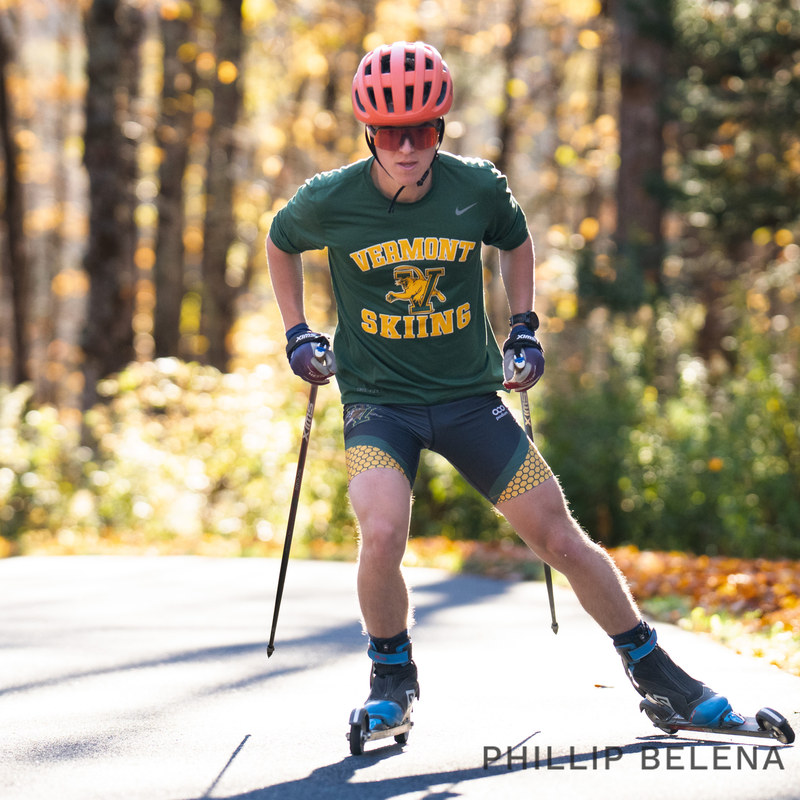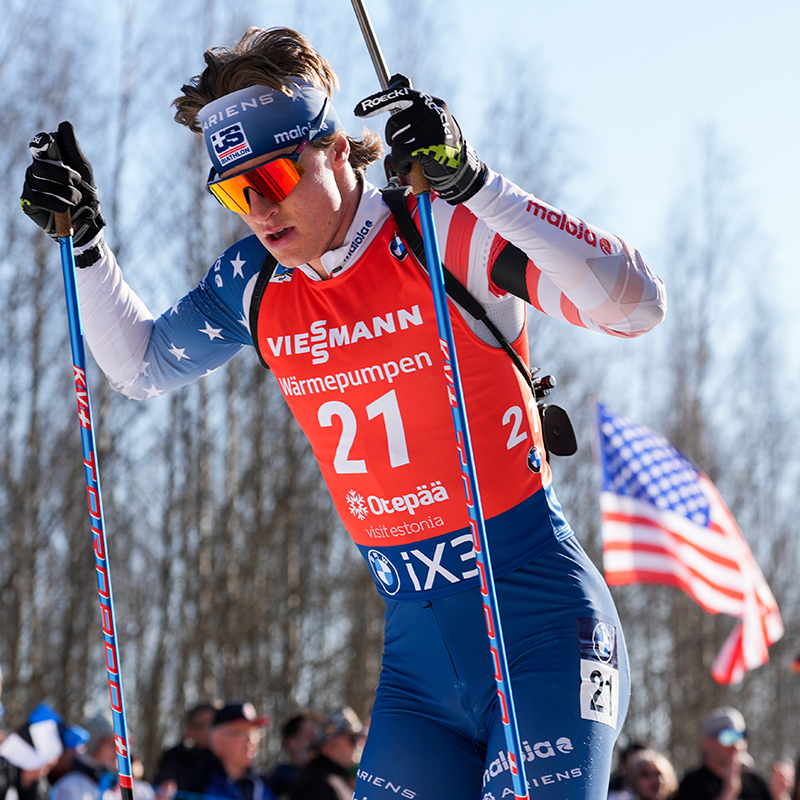

When Lucas Wilmot sits down after morning intervals, there’s no long nap or lazy lunch ahead. “This fall, it’s kind of all back-to-back—training in the morning, then eating, then class, then trying to eat and train again, and then do homework,” he says. “It’s tight.”
That understatement is classic Wilmot: composed, analytical, quietly focused. At just 19, the Jackson, Wyoming-raised skier is already juggling NCAA racing for the University of Utah, kinesiology labs that might soon shift toward biology, and a new badge of honor—fresh membership on the U.S. Ski Team.

From Jackson to Utah: A Small-Town Start
Wilmot’s story starts, like so many in American skiing, with a local club, a hand-me-down pair of skis, and a family that encouraged movement. “I kind of started with my parents—they just put me in skiing in elementary school,” he recalls. “Back then, it was all about hanging out with friends and not really racing.”
That changed in middle school, when the sport shifted from pastime to passion. “It took a turn where I started to take training more seriously and be more race-focused,” he says. “I remember looking forward to the trips, doing well in races, and having the older guys on the team as idols. Seeing how big and fast they were—I always thought that was really cool.”
His sister, two years older, was both chauffeur and role model. “She was skiing too—she’s still skiing now at Bates,” he adds. “I started summer training with the older crew in Jackson when I was one of the youngest guys. My sister could drive. I couldn’t. So I’d just spend my time training with the older guys.”
The big breakthrough came as a sophomore. “Minneapolis Junior Nationals was another big turning point,” Wilmot says. “I had three top tens there, and I never expected anything like that. That was when I realized, if I actually put in the time and effort, I can see results that impress even myself.”

“Welcome to the U.S. Ski Team”
If Minneapolis was the first turning point, Soldier Hollow was the second. “I got third in the classic 10K at Senior Nationals,“ Wilmot recalls. “That was kind of a big whoa moment—a big jump up. Will (Wicherski), my coach from Jackson, came up to me and said, ‘Do you know where you are?‘ I said no, and he said, ‘You’re in third.‘ I was just kind of shocked and caught by surprise.”
That race qualified him for Junior Worlds, where another top result changed everything. “They released the requirements—it was a Junior Worlds Top 10,“ he says. “When I had the ninth place in Schilpario, Italy, in the skate 10K, I kind of knew I’d made the team. Right after the race, Brian Fish walked by and said, ‘Welcome to the U.S. Ski Team.’“
Wilmot laughs at the memory. “It was at the wax cabin or something. I kind of knew that day. My parents and sister were there, so it was nice to tell them in person,“ he says. “But I didn’t want to be loud about it. I told my parents, like, this isn’t official, but it’s looking like I might be nominated.”
Now, being able to put on the U.S. suit still feels surreal. “I definitely feel pretty lucky,“ he says. “It’s a lot of people’s dream to do that, and it was one of mine. I feel super lucky, and it’s an honor. When I have the U.S. suit on, maybe I’ll go reach out to someone I’ve never met before—they’re all kind of like teammates to me.”

Structured but Flexible
Last season Wilmot logged around 500 hours of training; this year he’s targeting about 600. But he’s adamant that numbers aren’t everything.
“I’m definitely not the number grinder. I just try to keep it fun—never do too much, always quality. It’s kind of my mindset: always having quality in the time you’re training. Make sure it’s worth your time to be there.”
He recalls finishing a long over-distance session in Park City camp and realizing more minutes would add nothing.
“I was thinking I could do another 30 minutes, but I’d just be walking. It’s not really how much is that gonna do for me? If it’s not quality, if I’m not putting all my effort in, then I’m not getting the most out of it.”
That approach—precision over volume—mirrors his team’s philosophy. “Pierre (the Utah coach) kind of switched it to more professional training,“ he explains. “Every training has a specific outcome goal to it… You’re not just doing it to do it. There’s a reason why, and it’s all part of a broader plan and structured schedule.”
A Day Measured in Minutes
In Utah’s mountain light, mornings start early—Wilmot trains, refuels, and hustles to class. “I like to think ahead and plan out as much as I can,“ he says. “School is my priority, and how can I get it done efficiently so I can rest well. I try to go to bed as early as I can and know that training in the morning is kind of also a priority.”
The key, he’s learned, is organization—a skill honed on long travel days in high-school racing.
“Being on trips for skiing taught me that if I get it done ahead of time—get all my schoolwork done or just know that when I have spare time, I should try to get ahead or catch up on school—that’s what I think about all the time.”
Even with 600 training hours, he squeezes recovery in where he can. “It’s a hard balance between having training in the morning as a priority or staying ahead on work,“ he admits. “But I think I learned well… just to plan ahead.”

Fueling the Machine
This semester, recovery and nutrition have become new focal points.
“This fall I was kind of struggling with recovery after the morning session and my class schedule,“ he says. “So one of the things I’m trying to do more of is focus on nutrition right after—that’ll allow me to make it through the long school day and then also recover well. That’ll help me get energy for the training and races.”
Breakfast sets the tone: “Usually a banana, an everything bagel with butter, and maybe a little bit of yogurt… kind of got a little something of everything. It’s pretty yummy.”
The science-minded athlete is applying classroom theory to real life. His kinesiology background gives him a deeper understanding of performance—how recovery, fueling, and training stress interconnect. “I’m keeping on the science track,“ he says. “Right now I’m doing kinesiology, but maybe switching to biology or another science-related thing. Not sure yet.”
Keeping It Fun
For Wilmot, joy isn’t optional—it’s essential. “I just love hanging out with all the buddies, training with friends. Definitely makes it go by a lot faster,“ he says. “It’s pretty fun just to crack jokes a lot and mess around, too… You don’t always have to be serious at training.”
That balance between intensity and levity keeps burnout at bay. Whether it’s running mountain ridgelines or laughing through rollerski sessions, he believes camaraderie fuels consistency. “Sometimes there are places not to focus,“ he laughs, “and just have a good time.”

The Process of Progress
Beyond coursework and results sheets, Wilmot’s compass points toward steady growth. “I’d hope to make the NCAA team for the University of Utah this year,“ he says. “That’s going to be pretty challenging… but I hope to have more stabilized results and less fluctuation.”
He defines progress through small, controllable actions:
“In skiing, just being as efficient as I can. If I’m in a race and I feel uncomfortable, I try to find where I’m comfortable and not make myself too jittery. Being comfortable in your own way during a race—knowing how to race your races—is important for me.”
When he talks about the future, Wilmot’s tone shifts slightly—equal parts excitement and realism. “Within the next four-year span, there’s a good chance the progress track may take me to that level,“ he says, thinking ahead to the Milano-Cortina Olympics. “If I stick with it, that would be an insane experience and something very special.”

A Learner at Heart
Among the national-team veterans, Wilmot sees himself as a student first. “I kind of see myself as a little follower,“ he admits with a grin. “Everyone’s just a little more experienced than I am. I feel like I don’t have much, so I think of myself as a learner and a listener—someone who tries to take everything I can from them.”
But even the learner can lift a team. “I love being the guy that gets someone to smile,“ he adds. “And make them laugh. I love doing that.”
That mix of humility and humor is why teammates have quickly embraced him. He’s not loud, but he’s steady—the kind of athlete who brings calm to chaos, whether it’s a high-stakes interval session or a late-night study grind.
Looking Ahead
Wilmot’s path has never been about a single breakthrough; it’s about accumulation—hours, credits, lessons. “I kind of never saw myself being where I would be right now,“ he reflects. “It goes back to the open-doors thing—I was just following what was happening, putting in the work, and seeing what opportunities it led me to.”
That approach—disciplined but flexible—may be his greatest strength. Between lecture halls and ski trails, he’s learning to find balance. And every dawn run, every late-night homework session, is another quiet step toward the next start line.
“It’s a good, hard balance,“ he says, smiling. “But that’s kind of what I signed up for.”
Love Stories Like This? Help Keep Them Coming.
Feature interviews like this one take time, access, and care to produce. If you value thoughtful storytelling and independent ski journalism, please consider becoming a Voluntary Subscriber. Your support directly fuels the work we do to cover the people, places, and moments that make our sport special.
Join the FasterSkier community.

Matthew Voisin
As owner and publisher of FasterSkier, Matthew Voisin manages the day-to-day operations, content, and partnerships that keep the site gliding smoothly. Away from the desk, he’s doing his best to keep pace with his two energetic sons.