Rosie Brennan (USA) and Sophia Laukli (USA) (l-r) racing together during the Tour de Ski. (Photo: NordicFocus)
What follows is a simplified training philosophy that works, if you apply it consistently. I’m focusing on the core elements of endurance sports: aerobic endurance and capacity (VO₂max), strength, speed, and appropriate training volume. These are the levers that matter.
Coaches love to talk about nuance and the next latest and greatest shinny object: not going too hard during distance days, going hard enough during high-intensity sessions, finding the right dose of speed and strength, and matching volume to age and fitness. It sounds complex, but it isn’t, once you understand the purpose behind each type of training.
Primary Elements of Training
Endurance base work-aerobic efficiency
Aerobic capacity-VO2max or velocity increase at VO2max
Speed / Power, maximal velocity
Strength-endurance, maximum, and power development
Technical skill development
Purposeful training boils down to these five areas. When you focus here, you can see what’s working, what changed, and what isn’t producing results.
I’ve coached for more than 40 years. I’ve tested just about every theory out there, especially the ones that sound great on paper or social media. Most haven’t been validated. Many were never validated because we lacked the tools to measure what they were doing. Today, we have the tools, HRV, lactate, power, wearable sensors, and many of those “theories” either fall apart or prove to be anecdotal.
Training matters when it delivers measurable progress. If your fitness and skill aren’t improving on a short timeline about ~ 4 weeks, then the training isn’t working for you. Full stop.
A Reality Check on Training Theory
Most training theories are unvalidated and survive because they match the culture of a sport.
Real training produces continual improvement. If you’re not adapting, improving fitness, something’s wrong.
All adaptation happens at the cellular level, session by session. You can’t escape that reality. Cells are damaged, repaired, and rebuilt after every training session.
Jessie Diggins and coach Jason Cork out on a sunny day photo: Julia Kern)
Endurance Training (Base Work)
Endurance training is the foundation. It develops the peripheral systems, slow twitch muscle fibers, mitochondria, capillaries, enzymatic pathways, that allow you to handle hard work later. It should make up 75–85% of your total training time.
What It Does
Improves fat and carbohydrate oxidation
Increases mitochondrial density and efficiency
Boosts capillarization
Supports aerobic energy production
What It Doesn’t Do
Build strength
Improve peak speed
Replace high-intensity work
If you do this right, you increase the amount of energy available for muscle contraction, meaning you can go faster or longer at the same metabolic cost. So for those who suggest Zone 1 or 2 training ( low intensity) is the ultimate solution or the only solution, stop listening immediately.
The #1 Mistake: Training Too Hard
Most endurance athletes, juniors especially, go too hard on their easy days. They confuse “tired” with “trained.” The truth: Endurance work should be done below 70–75% of max heart rate. Any harder and you start shifting metabolism toward carbohydrate-glycolysis, suppress fat oxidation, and accumulate chronic fatigue.
Results from testing are clear: most athletes underutilize fat as a fuel source, even at low intensity. The good news: a few months of proper aerobic training dramatically improves that. And more fat utilization means more glycogen saved for when you need it, during intensity and racing.
The message is simple: going a little too hard does more harm than good.
Sophia Laukli, on a run with her teammate, Novie McCabe last year in Alaska. (Photo: Novie McCabe)
Aerobic Capacity (VO₂max) Training
Once the base is established, aerobic capacity (VO₂max) training develops your ceiling the ability to sustain high output and utilize oxygen efficiently.
General Framework
15–25% of total sessions, including races
Starting with ~50 sessions per year for young athletes, increasing to more than 100 for elite athletes.
Intensity: 88–92% of max HR — controlled, not maximal
Push beyond 25% of sessions at high intensity and you drift into chronic overtraining. It’s not worth it.
What Aerobic Capacity Training Improves
Motor unit recruitment (more fast-twitch involvement)
Power at race pace
VO₂max or speed at VO₂max
Stroke volume, cardiac output
Mitochondrial function and capillary density
What Happens When You Do Too Much
Aerobic system becomes unbalanced
Chronic glycogen depletion
Recovery becomes inconsistent
Fitness spikes early, then plateaus or regresses
Race-day performance becomes unpredictable
Athletes never reach true peak form
Hard training is not the goal. Adaptation is the goal.
A word about the current trend in double threshold, popularized by a few Norwegian runners should be put in context. These are top athletes that have trained for many years, have a well-developed aerobic capacity, and they are looking for ways to increase training loads and adaptations in a sustainable manner. Often failed to mention they are still doing harder training at regular intervals, (about once per week), and at normal doses, so the double threshold sessions are additive, not a replacement for. Then as the enter the competition period, they do 2-3 workouts per week around race intensity. This type of threshold training may well be effective for elite athletes, with years of training behind them, but we should not suggest from this that it is good for everyone.
Ben Ogden at the Lost Nation Roll in Craftsbury, Vermont. (Photo: Ben Theyerl)
Speed Training
Speed matters, even in endurance sports. Improve speed opens the “window” for potential improvements in race speed and aerobic capacity. Speed training is also critical for improving economy of high intensity race pace.
But adding 10–15 second “pickups” into endurance workouts is not speed training. It distorts the metabolic impact of the session.
Speed work should either be done as its own session or tacked onto the end of an endurance workout, with full rest for maximal output.
Protocol
10–20 seconds per rep
Full power
4–6 reps per set
2–3 sets
The target is speed reserve, the gap between your peak 10–15 second speed and the maximum pace you can sustain for ~6 minutes. If that ratio is less than 1.5, you’re limited by your ability to produce power, not capacity. It is the ability to produce increased levels of power during work that drives the demand to increase aerobic capacity.
Jessie Diggins, putting in the reps. (Photo: Instagram @jessiediggins)
Strength Training
Strength is not optional, for any age. You can’t ski, run, or ride efficiently without foundational strength. You also can’t produce or absorb power, especially late in a race. Strength should be built before technique and endurance are layered on top.
Technical Skill Development
Technique is movement under load, speed, and fatigue. That means you develop skill constantly, not during occasional drills.
The Problem with “Volume-Based” Training
Hours, miles, and vertical are lazy metrics. They don’t define load, they just give athletes and coaches something to chase. There is no doubt that by the time one reach elite levels of the sport the volume of training is large. But they have often taken a decade or more to arrive at those volumes. The problem in chasing volume, especially at U18, U16 and younger ages, often leads to overreaching, under recovery, and a false sense of productivity.
Every hour is different depending on terrain, temperature, fatigue, and intensity. The only useful volume is the minimum effective dose required to keep improving, not to prove how tough you are or winning the training log battles.
The worst thing you can tell a young athlete is “just do more.” The result is predictable: burnout, stagnation, or overuse injury. The best message, “Lets do things better”.
Training Components: A Balanced Week
Endurance Training: 75–85% of sessions.
Speed Training: Always included, frequency depends on season.
VO₂max Training: 4–8 sessions/month, well controlled.
Strength Training: Year-round, progressive.
Technical Skill: Constant focus, not a once-a-week checkbox.
The goal is consistent, measurable improvement. That happens when you train with purpose, not just when you train hard.
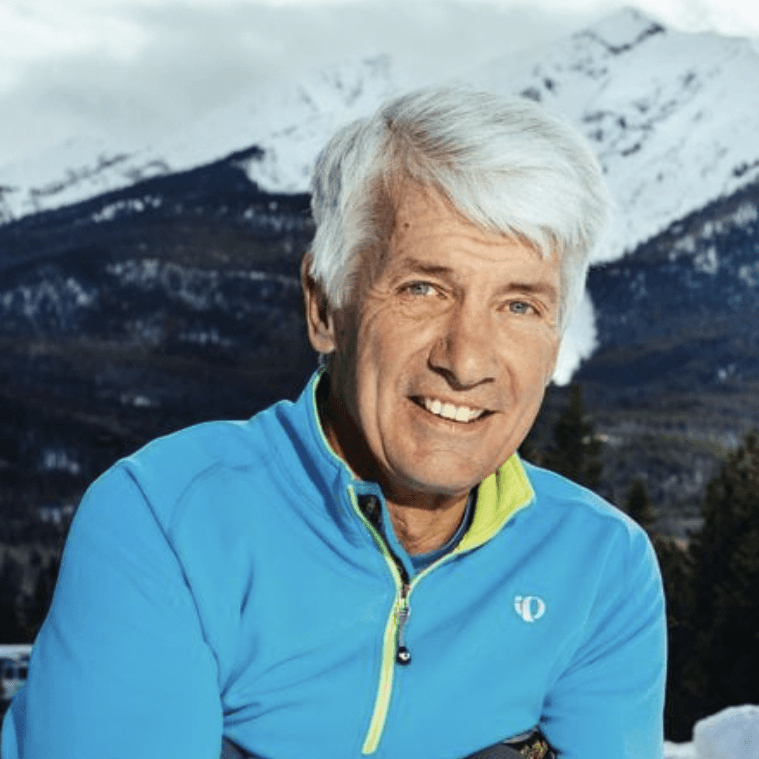
Coach, competitor, correspondent, commentator—Jim Galanes has spent a lifetime on cross country skis, always serving as a keen observer of our sport. A three-time Olympian in both Cross-Country and Nordic Combined, Jim has tested the theories, initiated the instruction, assessed the results. Now, FasterSkier is thrilled to announce that Jim joins our staff of writers and contributors, adding his unique and time-tested insights to the editorial offerings of this publication.