
Russian and Belarusian cross-country skiers are back in the mix to qualify for the Olympic Winter Games in 2026. Does anyone else sense an elephant in the room? And are we all talking about the same elephant?
The recently overturned FIS ban on Russian and Belarusian athletes was about Russia’s war on Ukraine. Not every sport in the athletic world banned the involvement of those athletes, but the International Ski Federation (FIS) was quick and decisive in its initial rulings: no Russians, no Belarusians, not as long as this invasion lasts. Now—in accordance with the wishes of the IOC—FIS has been compelled to open the entries for FIS sanctioned events to allow the participation of Individual Neutral Athletes (AINs) from both Russia and Belarus. Thus far, the total number of athletes taking advantage of this opportunity (and/or qualifying for this opportunity) in World Cup cross-country events has been three. And while those three possess impressive athletic pedigrees, they have yet to be factors in events they’ve entered. The Russians returned, the sky hasn’t fallen, the war in Ukraine goes on. People remain in a huff over their participation, but I don’t think it’s the war in Ukraine that we’re all mad about . . .
Sure, there’s a military/imperial elephant in the room—Russian athletes returning to international competition even as the war in Ukraine goes on. But it’s the age-old doping elephant that occupies a larger space in our metaphorical room. By that we mean that no one could seriously trust the Russian ski team, the Russian coaches, the Russian officials, the Russian government. These are organizations and individuals who have spent decades cheating on a large and systematically organized scale. FasterSkier has repeatedly reported the facts pertaining to the FIS banning of Russian and Belarusian athletes. We have also reported on our interpretation of language in both FIS and IOC charter documents that seem to imply (quite plainly and with very little wiggle room) that athletes should never be banned from competition for political reasons. The Court of Arbitration for Sport agreed with that assessment (and with the appeal filed by Russian governing bodies and athletes). So, the Russians (some Russians) are back in.
Now What?
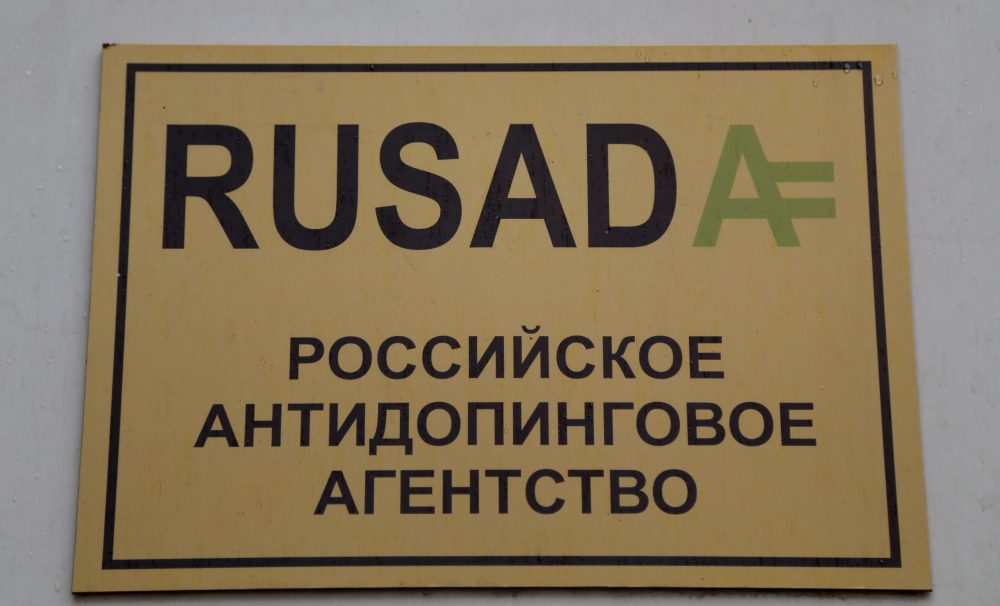
Skiers from Russia have not been allowed to compete internationally since the spring of 2022 (when Russia invaded Ukraine). Since that time, those athletes have continued to train, to prepare, and to compete . . . though they have not done so under the scrutiny of unbiased international watchdog groups like the World Anti-Doping Agency (WADA). True, the Russian athletes have been subjected to occasional drug testing, but only by the same organization that had supervised and undertaken the drug testing during the infamous Olympic Winter Games in Sochi where so many Russian athletes, coaches, and officials had been found to have been involved in an outrageous top-down doping scandal. In investigations that followed those Sochi Olympics, it was revealed that Russian administrators, Russian coaches, the Russian Anti-Doping Agency (RUSADA), and the FSB (Russian Secret/State Police) were involved in a sophisticated (though brutally simple) scheme to evade IOC scrutiny and avoid detection of performance enhancing drugs that had been systematically provided to—and utilized by—Russian athletes. We remember the scandal where Russian Olympic organizers had constructed a secret room adjacent to the space in which urine samples were stored after being collected from athletes (and prior to testing). A hole in the wall allowed a Russian collaborator to pass vials of Russian athletes’ urine through to the secret room where they were opened, emptied, rinsed, replaced with “clean” urine, and re-sealed (a neat trick, considering the considerable trouble IOC had gone through to create tamper-proof lids). It was an audacious and brazen plan—one that started at the top of Russian sport governing bodies and the Russian government. The end result was that 43 Russian athletes were banned from Olympic competition for life, while 13 of those also saw their Olympic medals stripped. Additional suspensions and sanctions followed, including Russia being banned (temporarily, with conditions) from further Olympic competition.
Well, today our sport enters a situation in which Russian cross-country skiers have been absent from World Cup, World Championships, and all other FIS sanctioned international competitions since 2022. And the Russian program is one that has been known to institute, organize, supervise, and undertake illicit team-wide doping efforts in the past. The organization that took advantage of the outrageous doping scheme during the 2014 Olympics in Sochi is the very same organization that runs Russian cross-country skiing today. Isn’t there a reason for the rest of the constantly-tested field to be justifiably concerned?
This is a national sport program that’s been so dirty for so very long . . . why should they be trusted now? Wait, you say; those athletes will be tested whenever they compete in FIS and/or Olympic competitions, right? If they’re doping, they’ll be caught, won’t they? That depends . . .

Doping in the Long Run
It’s been suggested that there are long-term benefits to the use of certain performance enhancing drugs, benefits that continue to enhance athletic performances long after the use of those supplements has been discontinued. So here’s my thing: If there were an evil-empire sport-colossus intent on dominating endurance events in some future Olympics, their best strategy would seem to be withdrawing their athletes from sufficiently-monitored international competitions for a few seasons, pumping them up with all manner of otherwise-restricted PED’s (in a closed environment free of drug testing and organizational scrutiny), weaning those athletes off the drugs early enough to have all remnants flushed from athletes’ systems (thereby avoiding detection in subsequent testing), and turning those athletes loose on the competition at the highest-profile moment. That way, those athletes could benefit from artificially-enhanced athletic qualities while still passing as “clean.” That’s how a set of well-organized cheaters could get it done, anyway.