
In the previous two articles in this series, we wrote that an athlete’s maximal oxygen uptake – VO2max – is the most important element of aerobic performance. We also said that recent research has showed that the VO2max can be improved by increasing the heart’s stroke volume. Based on research studies, it is suggested that the most efficient way of increasing stroke volume (and therefore VO2max) is to do interval sessions at 90 – 95% of max heart rate (MHR).
 have shown to increase the individual’s VO2max by about 0.5 % per session, even for highly trained athletes</B>. Why 4 minutes? Intervals shorter than this (3 minutes or less) is not as efficient, since it takes about 2 minutes for a person (in a build-up fashion) to reach his or her max stroke volume (or 90 – 95% of MHR). Since the objective is to make the heart-muscle pump at a maximal capacity for a while, it is logical that it gets better training by working at this level for two (or more minutes) versus one minute. Intervals longer than 4 minutes are for the same reason even better, but at this duration it becomes more difficult to keep the intensity at 90 – 95%. It has also been proven that intensity can not be replaced by duration (and still expect the same results). So, doing 4 x 6 minutes at 85 – 90% of MHR will not give the same improvements in stroke volume (and VO2max).</p>
<p><B>Being practiced</B></p>
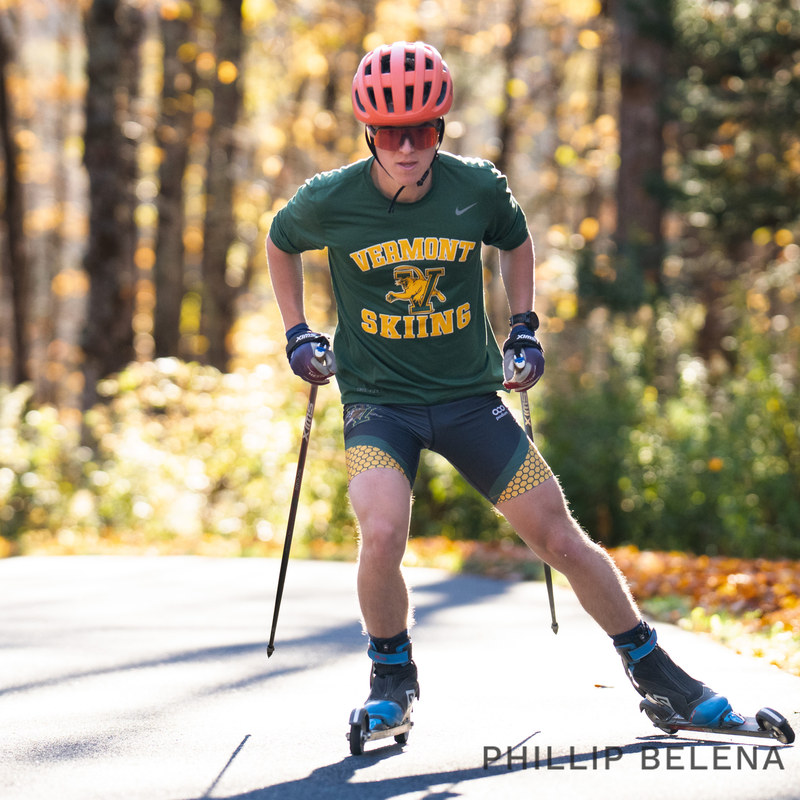
<p>The Norwegian Women’s Team, coached by Svein Tore Samdal, has taken this new research to the test. The team early this year got support and funding for a so-called high intensity project. This project involved doing high-intensity training as described above in time-blocks throughout the year. In blocks of about 10-12 days the team would do extensive and frequent 4-minute interval sessions, as often as every day (and even twice a day). The intervals were done in different activities, rollerskiing, running, bicycling, or ski-bounding/moose-huffs, to make the training more interesting for the athletes. A team of coaches, doctors and physiologists checked the athletes’ heart rates, lactate and other blood values during these tough training periods. The athletes were able to recover and rest in-between the sessions due to being in a training-camp situation.</p>
<p>In late August it was reported that the average VO2max improvement (4 ml/kg/min or about 6% increase) had exceeded improvements that in earlier years had taken the whole fall to reach. It is also observed that the athletes are able to run/ski further over a 4-minute interval, or being able to run/ski as fast as earlier, but with a much lower heart rate.</p>
<p>In between these 10 – 12 days long time-blocks, the athletes’ training would be much easier and “normal”. However, due to additional research advice, the team continues to include 2-interval sessions per week to maintain their higher max VO2.</p>
<p><BR><img decoding= "Edit/Preview")

FasterSkier
previous
More Cross-Country history you didn’t know
next