
“If we work as hard as we can to slow down climate change, then it’s possible these young people won’t be the last generations of cross country skiers,” wrote Bill McKibben in an email exchange. “It would be a horrible loss to lose snow–for a few months every year we get to say goodbye to friction, to glide through the woods. It’s a kind of magic, and perhaps defending it will make us appreciate it all the more.”
Bill McKibben–the renowned environmentalist, journalist, founder of 350.org, and fellow cross country skier–is not the only one expressing this sentiment. Climate change is a proven threat that diffuses into our lives every day. Since Bill Koch won the first medal for the US in the 1976 Olympics, the number of days that ski centers have been open has declined. Even more, the number of days natural snow covers bare ground has diminished. Reliance on man made snow has surpassed what we might have imagined, even since that June day in 1988 when the US officially recognized climate change as a national threat. In the 1980s, the Weston Ski Track in Weston, Mass–now the Leo J Martin Golf Course and Ski Track–was the only venue in New England that made artificial snow, one of a handful nationwide before 2000. Now over 10 venues in the northeast alone rely on man made snow to have any hopes of skiing throughout the season.
In the winter of 2017, Tyler Lee, then a high school ski racer in Concord, Mass who now skis for the Dartmouth team, recognized that “climate change is something that affects all of us, and has the potential for much more serious repercussions,” adding that “…especially as skiers we could feel these concrete outcomes…so I wanted to harness people’s emotions and upset and redirect it toward combating climate change in some way.” He brought high school students all around Boston together to organize a ski race as a fundraiser, promoting the idea that the younger generation could have a role in creating a better future for themselves. The Race for Snow was born and this advocacy has grown annually, this year with a virtual format in which everyone reading this article can participate in.

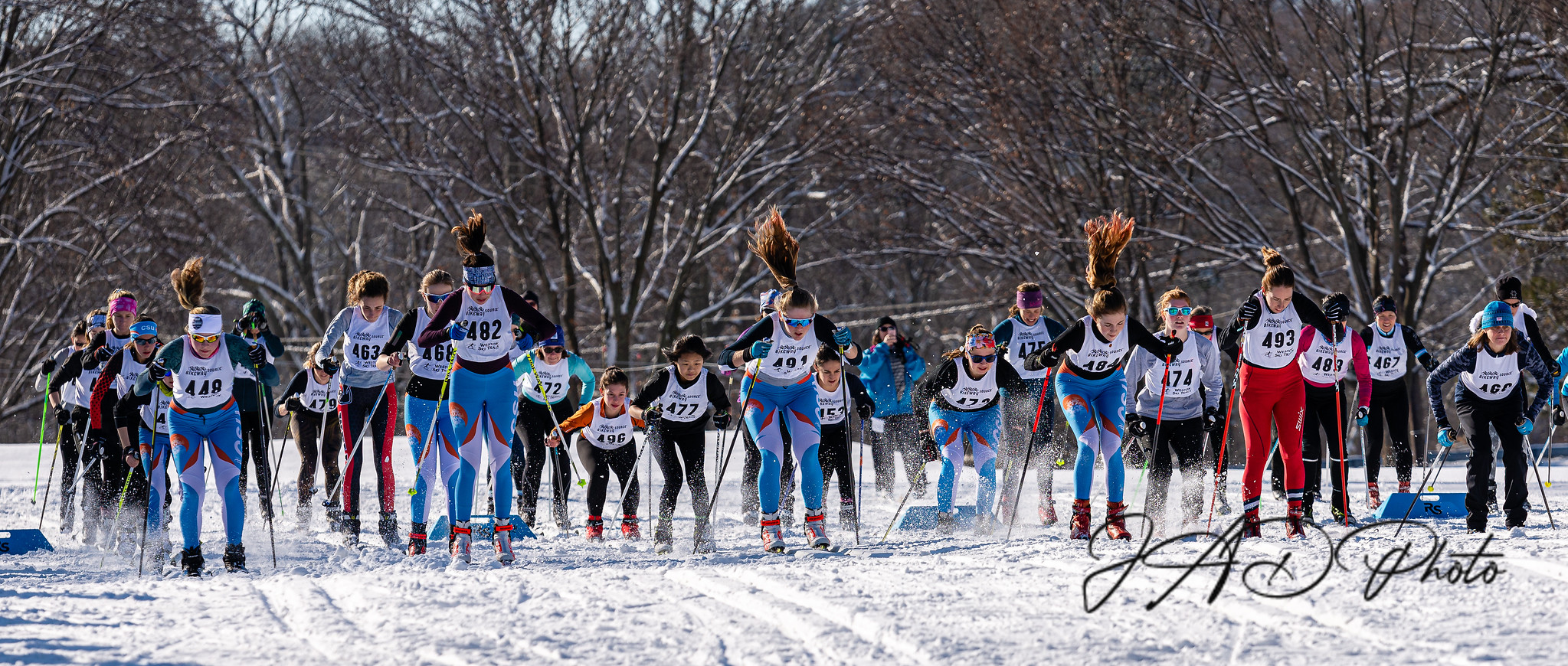
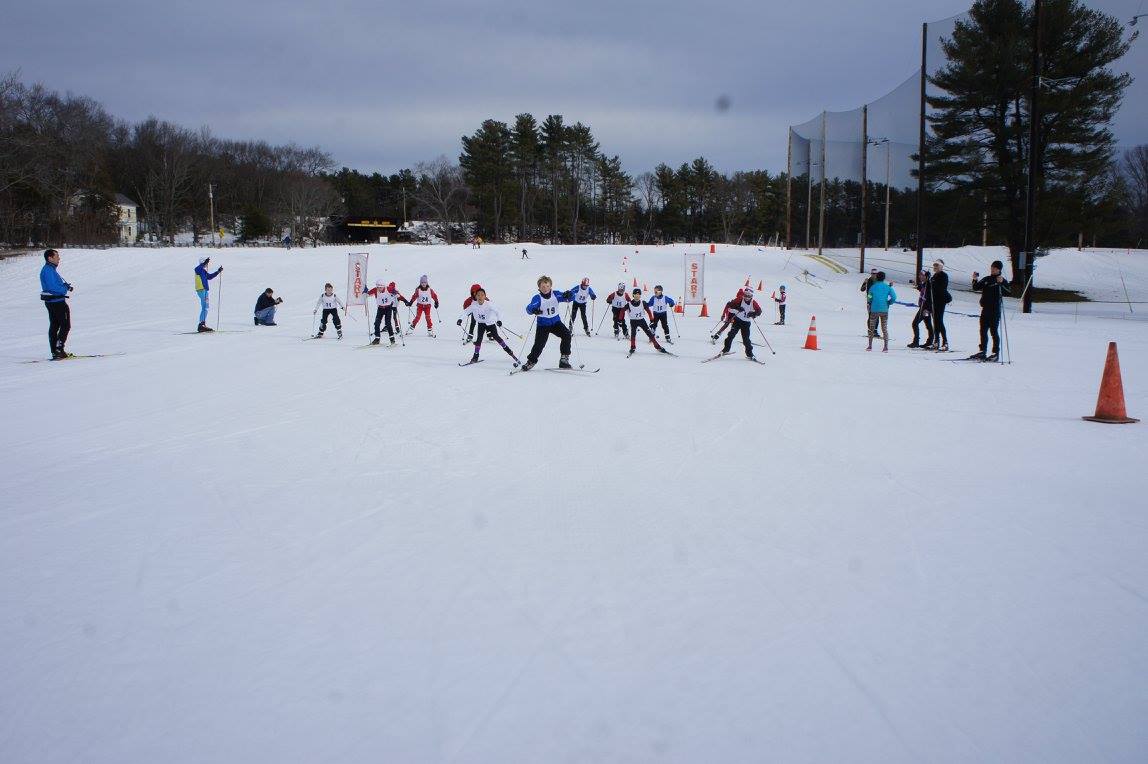
In February of 2017, the First Annual Race For Snow began a tradition created, and run by, the new generation. There were 45 participants, $1200 in fundraising, and many loaves of banana bread for the finishers and volunteers to share, all taking place at the Leo J Martin Ski Track. It was a small, local event with prizes that included pottery handcrafted by one of the high school organizers and donations from local businesses. At the awards ceremony, a speaker from 350Mass commented on the climate crisis and actions we could take. It was an event that inspired old and young alike.
Since then, The Annual Race For Snow has persevered through rainstorms, high temperatures, and lack of snow, all with the support of the community surrounding the Boston area. Over the years, participation has grown to include local high schools, colleges, the BKL program, and recreational skiers, many of whom had never even considered racing before. Last year the race field totaled almost 200 skiers while the event raised over $5000. The race was run as a Zak Cup race, the first ever organized entirely by junior racers. The Zak Cup is a New England Nordic Ski Association (NENSA) sponsored season-long series of races focused towards senior and master skiers, with scoring in a system that, at the end of the year, determines the fastest skiers and ski clubs in each age group. This drew more volunteers and spread the word throughout New England; the Vermont Bogburn race organizer, Bob Haydock, volunteered to help time the race. He traveled down to Massachusetts and slept in my brother’s room, as our race was on a low budget, to get an early start the next day and to fine tune the details of the race the night before.
I have watched these efforts grow as first a racer–and banana bread maker as the constantly nagging younger sister who wanted to help out–to gradually taking on a more organizational role in the race. As I have progressed through high school, I’ve been inspired by our sponsors, the Race For Snow team and race participants: by the awareness and dedication cross country skiers have towards making a difference in an issue that affects everyone.
“It’s no wonder that nordic skiers are in the forefront of the climate fight–there’s no sport on earth more threatened by the rapid rise in temperature,” added McKibben as we discussed the event and how young skiers can make a difference. “But of course it’s, in the end, only a fun sport–the real reason for these efforts is to help those people (and species) for whom climate change is truly a matter of life and death.”
For me, this fight is personal. By nature, I feel strong connections to others both close and far, and hearing, reading about, and seeing these adverse impacts on people, animals, and ecosystems is horrible. I am aware, and feel guilty, all of the time about the implications of my carbon footprint. As a skier, some of what I do adds to this crisis; we use extraordinary amounts of energy to manufacture snow and regularly drive long distances to find more snow, although I now do this in an all electric vehicle. I am aware that my actions affect people and places far from me, especially vulnerable populations. It is unjust that the biggest contributors to climate change, such as the fossil fuel consuming and carbon emitting industries, are least affected by their own nonrenewable resources. The guilt I feel about the injustice of it all spurs me into action.
If I do not turn this recognition into advocacy, it will only escalate and make for a darker future. Along with many of my teammates, I’ve been involved in local and statewide advocacy efforts including promoting, and securing legislation facilitating zero net energy for new municipal construction and alternative power partnerships. We have also participated in climate action strikes at the Massachusetts State House, and phone-banked our local representatives about climate legislation.