This article was made possible through the generous support of our voluntary subscribers. If you would like to see more articles like this one, please support FasterSkier with a voluntary subscription.
These “Bad Sports”installments have allowed us to spend mid-summer days reflecting on ways that the world’s best skiers have been tempted tempted to misbehave in seasons past, and in the season to come. But the world’s best are not the only ones who may resort to seeking nefarious advantages . . . they’re just the only ones who are regularly tested and regularly caught. There are plenty of ski events where the level of scrutiny and oversight are far less strict—local races, regional races, junior races, citizen races, marathon races, master’s races—those events are likely to be affected by the efforts of skiers who resort to methods of mechanical mischief.
I imagine it would be difficult to “motorize” a ski . . . and even if we could motorize one, it would be pretty difficult to conceal that sort of propulsion device. Even so, someone’s probably out there working on just such a device, even as this article is being published. Why wouldn’t they? A motorized ski could revolutionize the cross-country ski market! Just consider the industry-fueling juggernaut that has resulted from the influence of e-bikes. More people can enjoy riding, more people can ride farther and longer, more people can enjoy riding for many more years of their lives. E-bikes are awesome, and their skyrocketing sales reflect that awesomeness. Do I have one? No . . . Would I buy one? No . . . or at least not yet. Ask me in a few more years when my knees get even worse or when my son gets too fast. Hanging up the bicycle would seem like one of the saddest days of old age. Maybe an e-bike, then?
The first modern e-bikes weren’t the hulking battery-powered behemoths we currently see on streets and bike lanes in American cities. The first electronically-motorized bikes were developed for use (i.e., cheating) during professional bike races—motors concealed within the frames of racing bikes, activated with the press of a hidden button, delivering to the rider an extra few watts of pedaling power. There are still videos purporting to show notable professional racers at the moment when they hit the button and rocketed away from their rivals on consequential climbs in UCI races. Accusations abound . . . but little proof of such cheating was ever found in the pro peloton, even after UCI began monitoring bikes in-race with infrared cameras designed to identify the heat signatures of such concealed motors.
But mechanical strategies of cheating in sport have not been limited to motorization. In 1976 (the Olympics in Montreal) a Soviet Olympic fencer/pentathlete was found to have been utilizing a trigger concealed in the handle of his épée that allowed him to register “hits” when none had taken place. The entire Norwegian ski jumping team (including coaches) was disqualified from the 2025 World Championships when it was found that they had systematically altered their competition suits to gain an aerodynamic advantage. And an American bobsled was disqualified during the 1994 Olympic Games in Lillehammer when testing suggested that the runners had been heated. It’s that heated bobsled runner that is most similar to skiing where the most likely form of mechanical cheating is less about propulsion, and more about glide.
Fluorocarbons
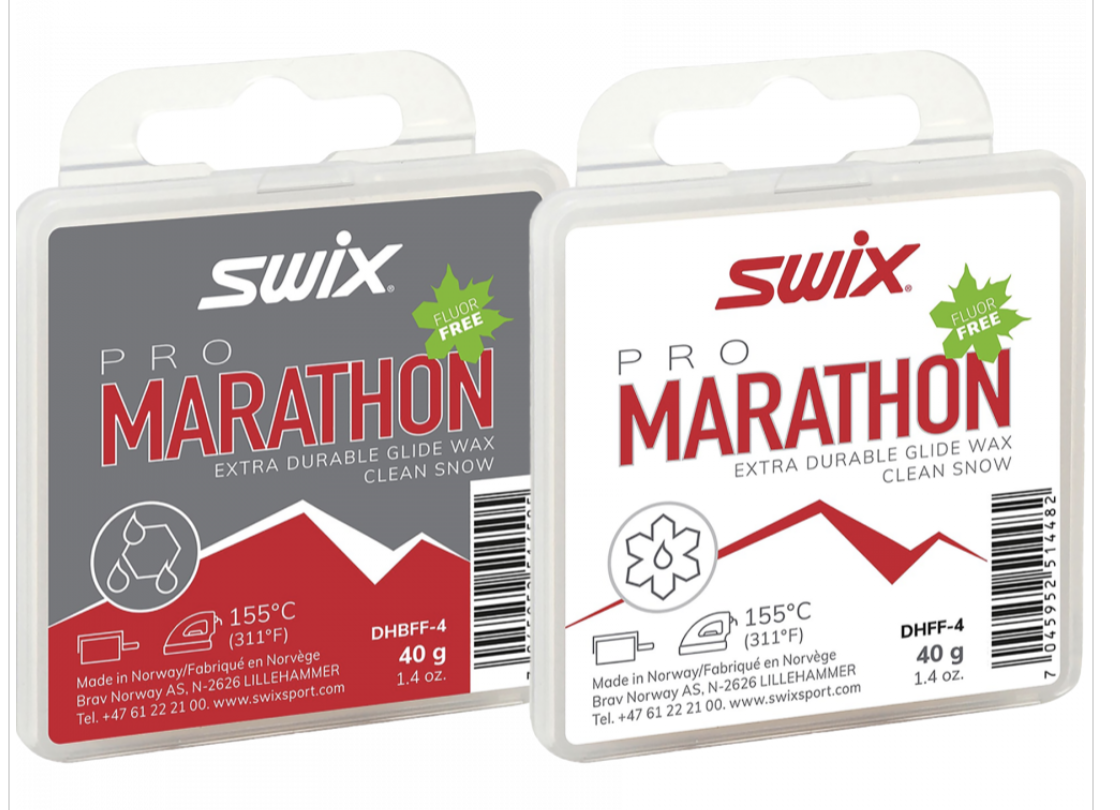
With the EU banning fluorocarbons (PFAS) in 2021, the world of skiing was compelled to change. For many seasons, skiers had relied on the lubricating qualities of fluoros to create other-worldly speed under their skis. It was really fun—skis that zipped along in nearly all conditions—and it began to change the sort of athlete who dominated ski races. Endurance became less of a determining factor in race outcomes; everything was about speed. Imagine, then, the chaos that must have ensued when the very substance that gave skiers that extra velocity was taken away.
PFAS have been banned because they are “forever chemicals,” potentially harmful substances that simply won’t go away. They persist in environments and ecosystems long after their use has ended. It’s been suggested that testing in areas adjacent to cross-country ski courses has revealed surprisingly high levels of PFAS in areas that would otherwise be considered fairly pristine wild areas. Going fast was fun, but it was also poisoning the environments that many skiers enjoy and treasure. Ultimately, the European Union stepped up, the chemicals got banned, and skis got slower. But the EU ban controlled the use of fluorocarbons in those nations where most FIS-sponsored racing takes place. With those substances not yet being banned in Asian nations or North American nations, an argument could be made to continue allowing fluorocarbons in ski prep for events being staged in those locations, though that would create problems of other sorts. Fluorocarbons are notoriously difficult to clean up and/or get rid of. Skiers who utilize them stand a high chance of contaminating their “clean” skis simply by contact with the fluorocarbon prepared skis. It’s even been discovered that contamination can take place by skiing across snow after another skier who has used fluoros on their bases. So, FIS determined that fluoros would be illegal in all FIS races, regardless of location. For professional skiers, the use of fluoros was essentially over. But the potential for dipping into the fluoro supply remains a wicked temptation for non-professionals, especially in those places where PFAS are not restricted. That suggests that the potential for cheating in professional races is actually pretty low, but the potential for cheating in lesser races remains quite high. While it’s nice to think that everyone will comply with these rules simple because they’re rules, it’s a bit naive to think that no one would attempt to cheat. Fluorocarbon ski base treatments—like the silicone in Zardoz/Not Wax—are still readily available, legal to sell, legal to purchase, and legal to use in the USA. And plenty of wax boxes carried to regional races still contain tins and tubes of fluoro waxes (they were so expensive to buy—now it’s so difficult to throw them away). Few Junior races, citizen races, or collegiate races conduct ski testing, so any skier with a can of Zardoz in their pocket could easily slip on a quick layer of fluoro lubricant.
The initial FIS ban on fluoros was delayed a season when it was revealed that they really had not identified a reliable procedure to test whether or not skiers were using fluoros on their ski bases. Even after testing procedures were developed, the process remained questionable. When testing was conducted, it sometimes proved overly-invasive. When base-testing was conducted a few years at Junior Nationals, numerous skiers complained of the damage inflicted to their ski bases . . . and that just prior to racing (when it was too late to repair the damage or replace the ski). Even FIS has admitted that their base-testing procedure is far from accurate, so the problem of accurately ascertaining which ski is clean and which ski is not remains a challenge, one likely to remain until a suitable replacement for fluoros is found. Wax manufacturers have scrambled to innovate new substances that mimic the qualities of fluoros (but without the environmental/health impact, and without the risk of disqualification from ski competitions). Some progress has been made, but they haven’t unlocked the secret just yet. In the meantime, we’d like to think that cross-country skiing is a sport in which participants willingly and honestly participate in self-policing when it comes to such performance-enhancing ski products. Yep . . . that’s what we hope.

John Teaford
John Teaford has been the coach of Olympians, World Champions, and World Record Holders in six sports: Nordic skiing, speedskating, road cycling, track cycling, mountain biking, triathlon. In his long career as a writer/filmmaker, he spent many seasons as Director of Warren Miller’s annual feature film, and Producer of adventure documentary films for Discovery, ESPN, Disney, National Geographic, and NBC Sports.