
This article was made possible through the generous support of our voluntary subscribers who have helped us put our Nat Herz on the ground at the Olympics. If you value coverage like this, please support FasterSkier with a voluntary subscription.

From FasterSkier reporter Nat Herz, in Predazzo: Here in northern Italy, where I’m covering the Olympics, I’m technically the chief fashion critic for the bureau — though only because it’s a one-man bureau. And unfortunately, the five-year-old baggy ski pants I wear everywhere have disqualified me from offering any sartorial opinions.
But this is Italy, a global fashion capital. And I still wanted someone to review the racing suits sported by cross-country skiers that each nation typically customizes for the Olympics — and I figured that this should be doable, knowing that I’m close to Milan, a global fashion capital.
It turned out that my host here in Italy knew just the right person for the job. He connected me with Priscilla Arresti, a friend of his who works as an art director for a studio in Milan. As it happened, Arresti had already been following the Olympics and watched the opening ceremonies — and she was eager for the assignment.
Arresti was tasked with reviewing and ranking the suits from 10 of the top cross-country skiing nations — plus the wild card of Australia, for the sole reason that the Australian suit looked cool.
Here are her takes. Photos special to FasterSkier by Tobias Albrigtsen.

- Austria
Are those supposed to be snow strokes? A kind of irregular white wrapping?
I’m not sure…
Confusing, rather than energizing. Far more interesting are these graphic, muscular lines that open up, almost sculpting the body and amplifying its movement. Focusing on this motif alone would have been enough — no need for the snow strokes.

- Germany
Not a fan of this graphic all-over print that is visible on many of the items of the entire German team’s Olympic collection.
It tries to symbolize an inner fire and passion of the athletes, inspired by the Olympic flame.
But this thin, geometrical silhouette evokes a more static feeling than dynamism. It reminds me more of an urban pattern of different letters, or a map of some city. don’t get the fluidity and vibrations of a flame.

- Italy
Chic, dynamic but a bit predictable. I wished for a louder and bolder choice — like asking for advice from a young Italian designer to twist the “tricolore” in a more contemporary way than a ribbon floating around the suit. Someone like Giuliano Calza, of GCDS, which knows how to push boundaries yet remains deeply Italian in its irony and eclecticism.

- Finland
It feels as though the Finnish flag has been lifted by the wind, draped across the body, then sculpted into aerodynamic precision.
The colors and sweeping lines create the impression of riding an icy wave. Against the snow, Finnish athletes cut a striking silhouette, as if rising from northern waters and frozen seas.

- Norway
Norway gives vintage vibes. Exactly the kind of wardrobe Wes Anderson might envision for his Olympic winter cast.
Ultra-classic look with lateral stripes in flag colors all along the body. No gradients, no bluff. An iconic look considering all the attire, from the ceremony outfit to the race suits. It reflects all Norway’s grounded, authentic tradition.

- France
It’s a curious one. It doesn’t quite converse with the graphic boldness seen in the suits worn by French athletes in the other Winter Olympic sports. Are those tiny intersecting ski tracks on the cross-country kit meant to “cross lines” for cross-country? A little too literal, maybe?
Overall, it’s tasteful, but it feels slightly dated. Which is surprising, considering the other French ski suits are genuinely “magnifique” (chef’s kiss): contemporary, confident, built on strong color-blocking and retro-leaning graphic lines, all cleverly manipulated and artfully enlarged.

- Canada
The Canadian suit plays with black, like an animal camouflage. It reshapes the figure, creating a sculptural effect that impresses both in motion and at rest. The athlete’s body becomes a stage, while the viewer’s gaze bounces playfully from curve to curve, sliding along subtle, luminous gradients — almost as if the suit itself is choreographing the eye.

- Switzerland
The Swiss team is spot-on. Like its flag, red is the statement. Up-close, pixelated chromatic shifts of red emerge. An ethereal mesh design that nods to Switzerland’s strong digital ecosystem, but that also elongates the athletes’ silhouettes with sophistication — sculpting movement through the nuanced use of a single strong hue, and a quiet and measured texture.

- Australia
Behind the vibrant colors of Australia’s Olympic suits lies a layered weave of past and present. The symbolic compositions originate from contemporary Indigenous voices: Torres Strait artist David Bosun and Aboriginal artist and Olympic boxer Paul Fleming.
Fleming’s work “Walking Together” portrays lines of repeated footprints that, in Aboriginal art, are far more than decorative marks — they are narrative devices. Powerful symbolism of shared steps, collective journeys, ancestral stories, connection to land.
It’s a superb collaboration — where art, performance, design and cultural narrative converge with intention.

- United States
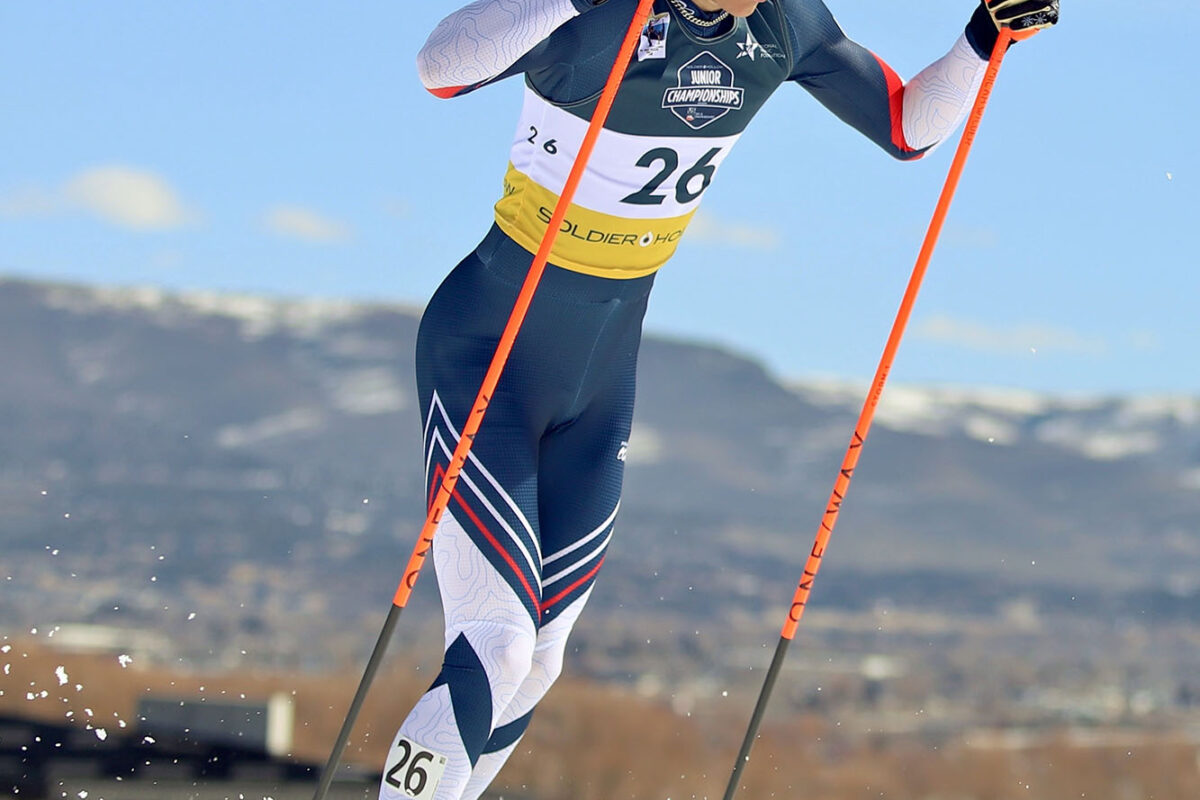
The entire U.S. Olympic kit genuinely reads like a fashion collection. The interplay of textures, mixed patterns, and calibrated color stories across uniforms and off-duty pieces shows the masterful hands from Ralph Lauren. Garments many would happily claim for their own wardrobes.
Even the cross-country ski suit carries subtle retro cues, and it works. It feels relevant.
Perhaps the red armbands could have been reconsidered; they slightly interrupt the line of the body, cutting the silhouette at an awkward point.

- Sweden
A curated throwback by the Craft designers behind the Swedish suits — and a graphic tribute to the 1956 Winter Olympics in Cortina d’Ampezzo, and its legendary ice car races.
The checkered flag — iconically displayed at the start and finish line — becomes a transdisciplinary symbol of speed and technology. A dynamic motif that makes the eye vibrate. The suits are infused with an emblem of confidence and luck — after all, the checkered flag is the one historically claimed by the winner at the finish line.
A reminder that producing this kind of work at the Olympics is expensive — we paid both Priscilla and Tobias for their work, and we’re spending a significant sum to be on the ground at the Olympics in Italy. If you can, support us with a voluntary membership here. If you’re already a supporter, thank you.