I was reviewing recent U.S. Ski & Snowboard Cross Country Sport Committee meeting minutes and came across an interesting note in the April 7, 2026, meeting. The following item stood out:
“Rick shared the announcement of adding Para Cross Country and that there is a strong drive from the USOPC to move Biathlon governance under USSS.”
That immediately raised a larger question. Years ago, U.S. Ski & Snowboard decentralized Nordic disciplines because they were financially difficult to sustain. Now, the organization appears willing to absorb another financially struggling discipline.
Campbell Wright (USA) takes aim during the men’s relay at the IBU World Championships in Lenzerheide (SUI) in 2025. (Photo: NordicFocus)
The Questions
Over the last week, I reached out to representatives from USA Biathlon, U.S. Ski & Snowboard, and the United States Olympic & Paralympic Committee with several specific questions regarding the discussions around potentially moving USA Biathlon under USSS governance. The questions were straightforward:
Why is the USOPC driving this discussion?
What does the USOPC believe the benefit of this move would be?
Is the push in any way related to USA Biathlon’s previously reported cultural and athlete protection failures?
If these discussions are connected to systemic governance failures, why were the corrective mechanisms outlined in the Sports Act not pursued first, including mandated reforms, leadership changes, sanctions, or ultimately decertification of the NGB?
In its spring meeting minutes, USA Biathlon framed the discussions as an opportunity to transform the sport and accelerate long-term development, specifically through expanded athlete support, increased visibility, broader talent identification, and enhanced fundraising and sponsorship opportunities.
The response from USSS was carefully worded:
“U.S. Ski & Snowboard and U.S. Biathlon are exploring a potential integration aimed at growing the sport and strengthening long-term performance. Discussions are ongoing, and both organizations are committed to a thoughtful, athlete-first approach.”
The USOPC response was similarly broad:
“Can confirm that we are engaged and aware of the ongoing discussions between USSS and USA Biathlon, and supportive of actions that provide increased levels of athlete support and long-term organizational stability.”
None of the organizations addressed the underlying questions.
It is difficult to believe the negative publicity and lack of accountability surrounding multiple abuse cases within USA Biathlon did not create operational and funding consequences. It is equally difficult to understand how moving USA Biathlon under USSS materially improves athlete opportunities when the existing Nordic programs already operate under significant financial pressure.
The 2007 Precedent
The discussion also seems contradictory given what occurred in 2007, when the then-United States Ski Association/U.S. Ski Team eliminated direct national team funding for Ski Jumping and Nordic Combined, citing financial sustainability concerns. At the time, the core message from USSA leadership was clear:
Ski Jumping and Nordic Combined were too financially difficult to sustain within a centralized national team structure.
The sports needed to develop independent fundraising and governance models.
The creation of USA Nordic Sport was presented as a way to ensure the long-term survival of those disciplines through independent leadership and donor support.
The rationale then was limited resources and the need to prioritize disciplines with stronger medal potential. If those same arguments were applied consistently today, they would appear to point toward similar conclusions regarding USA Biathlon.
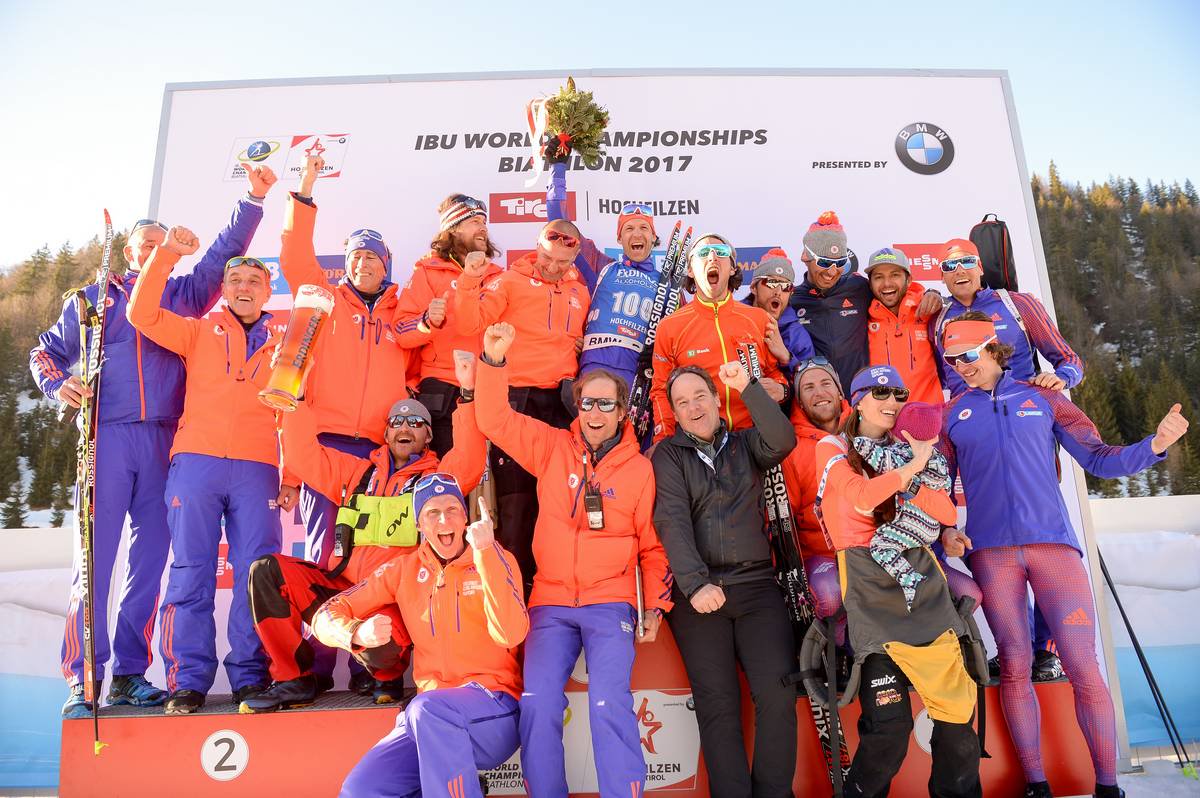
The U.S. Biathlon team and staff celebrate a Lowell Bailey’s gold medal in Hochfilzen in 2017. (Photo: USBA/NordicFocus.com/Twitter)
The Performance and Financial Picture
USA Biathlon has struggled for decades within its centralized development model. The program has never won an Olympic medal. Its financial structure remains heavily dependent on external institutional support. The closest the United States has come to a modern Olympic breakthrough was Lowell Bailey, whose 2017 World Championship gold medal represented a historic result for the program.
More recently, Campbell Wright’s rapid rise has dramatically changed expectations. Olympic podiums now appear to be viewed internally as realistic rather than aspirational.
Financially, the organization remains highly dependent on the USOPC and the International Biathlon Union. In 2023, those two sources combined to provide just under $2 million in funding. Membership revenue totaled approximately $305,000. Together, those categories represented roughly 70% of total organizational revenue, illustrating how limited the organization’s independent sponsorship and fundraising capacity remains.
Overall, USA Biathlon reported approximately $3.2 million in annual revenue against roughly $3.2 million in expenses, essentially operating at break-even. Based on expense reporting, it appears less than $800,000 was directed toward direct athlete programs and support. USA Biathlon categorized approximately $2.4 million under “Functional Business” expenses tied to trials, training, competition, and development programs, yet more than $700,000 of that consisted of staffing and contract labor costs. In total, staffing and operational expenses appear to exceed $2 million annually, roughly 63% of total expenditures.
That leaves very little financial margin for error. USA Biathlon appears to be operating in a structurally fragile position where revenues and expenses are essentially balanced while administrative and operational costs consume the majority of available resources.
What Does USSS Gain?
Given the current financial picture, and the program’s historical performance trajectory, it is difficult to see how USA Biathlon brings anything other than additional financial pressure to USSS. So the obvious question becomes: what does USSS gain from the arrangement?
Presumably, increased USOPC funding. USA Biathlon’s own 2030 strategic plan lays out explicitly outcome-based goals:
“Consistent medal winning performances every year,”
beginning with “one Olympic medal in 2026,”
and progressing toward “four [Olympic medals] in 2030, at least one gold.”
That language closely mirrors the increasingly performance-driven funding expectations the USOPC now places on National Governing Bodies.
It is clear USA Biathlon currently faces significant operational and financial challenges in supporting athletes at the level required for sustained international success. Campbell Wright’s emergence has only intensified the pressure surrounding those expectations. What remains unclear is how simply moving the sport under USSS materially changes the equation.
There may be some operational efficiencies through shared services and administrative consolidation, perhaps several hundred thousand dollars annually. But regardless of governance structure, the fundamental reality remains the same: the sport will require substantially more funding if it expects to support athletes at a level capable of producing consistent Olympic success.
Athlete Trust
The unresolved issue in all of this is athlete trust. Financial instability and competitive underperformance are one thing. Failures involving athlete safety, organizational culture, and accountability are something entirely different.
Over the last several years, USA Biathlon has faced significant public scrutiny surrounding athlete abuse allegations and broader questions about organizational oversight. Whether or not those issues are directly tied to the current governance discussions, it is difficult to believe they are irrelevant to the long-term stability of the organization.
For athletes and families, trust matters. Those athletes impacted by abuse allegations have asked for accountability for those who minimized their reports of abuse and failed to report. Parents should be evaluating a development pathway, not simply assessing coaching quality or race results. They should be asking whether the organization can provide a healthy, stable, and safe environment for athletes.
Once an NGB develops a public reputation for cultural or athlete protection failures, rebuilding confidence becomes extraordinarily difficult. That impacts membership growth, fundraising, athlete retention, and ultimately performance itself.
The Case for Transparency
Which is why transparency matters here. If the proposed integration is fundamentally about operational efficiency and athlete support, then that case should be made openly and directly. If it is also connected to concerns surrounding governance, accountability, or organizational stability, those questions deserve equally direct answers.
Without that transparency, the process begins to look less like strategic planning and more like institutional consolidation without meaningful public accountability.
Help Support Our Coverage!
If you value the thoughtful work and access FasterSkier provides, please consider becoming a Voluntary Subscriber. Your support directly fuels our work to cover the people, places, and moments that make our sport special.



Comments
Commenting policyJoin the conversation. Comment and react with your Endurance ID — one account across the whole network.
Loading comments…