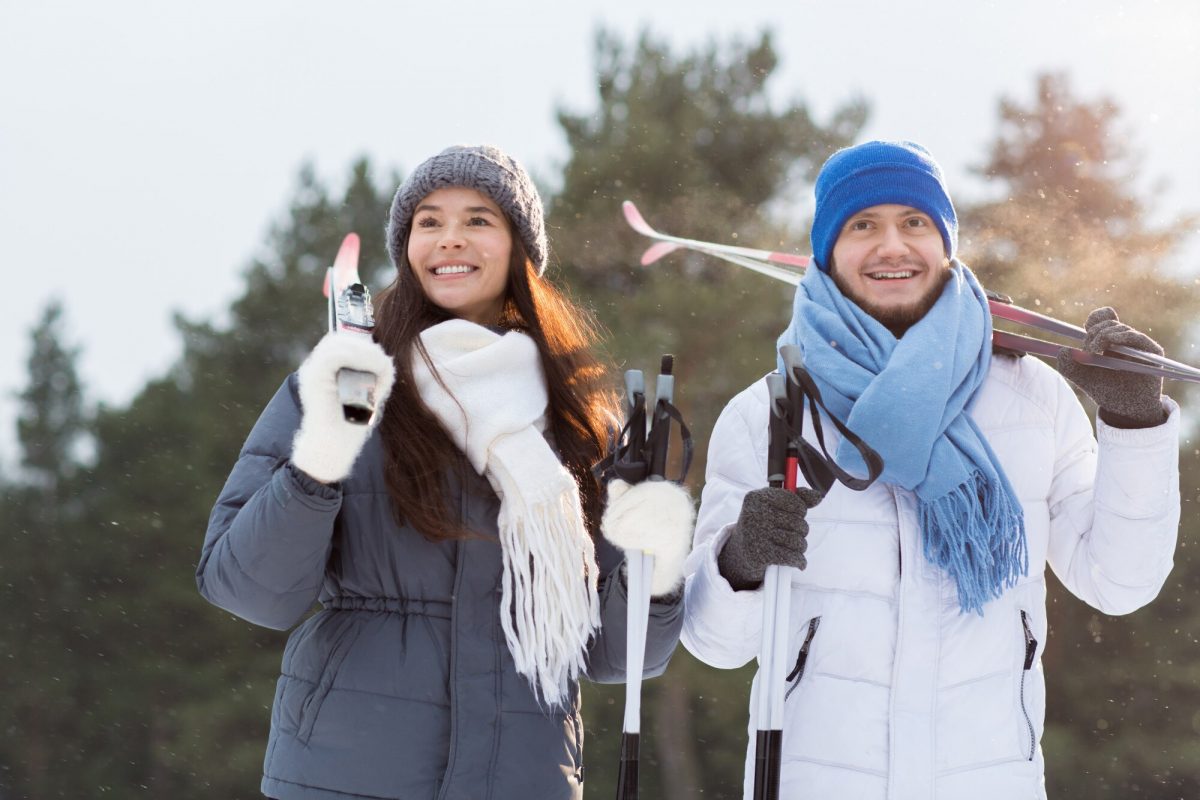


The leash goes taut, and suddenly you are cargo.
That is the moment when most newcomers to skijoring understand the bargain. One second you are a cross-country skier, in charge of your own pace and direction. The next, a dog has decided that the trail is hers, and you, all sixty or eighty or a hundred and seventy pounds of you strapped into a hip belt and a bungee line, are merely the most interesting thing she has ever towed.
There is, in that first lurch forward, a particular kind of laughter that comes out involuntarily. People who skijor know it. It sounds a little like surprise and a little like joy and quite a lot like the noise you made the first time you went down a sledding hill as a kid.
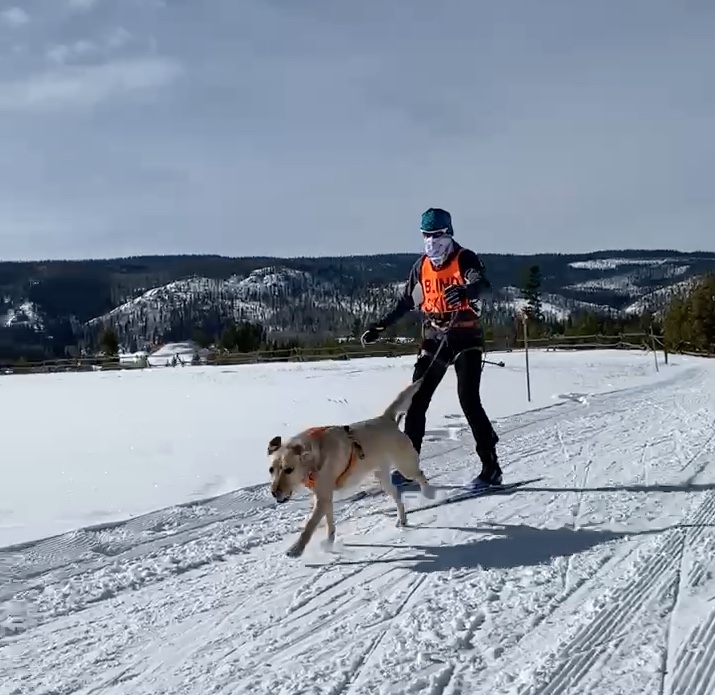
Skijoring, whose Norwegian-derived name translates roughly to “ski driving,” is one of those winter sports that sits politely in the corner of the room until someone finally asks about it, at which point everyone in the room wants to try. The recipe is disarmingly simple: a willing dog in a sled-style harness, a stretchy line about eight to ten feet long, a wide belt on the skier, and a set of cross-country skis. Together, the team moves through snow at speeds that would be hard, and in some cases impossible, to reach on skis alone.
The sport’s roots are Scandinavian, but its DNA is much older. For centuries, people in northern Europe have been hitched to draft animals on snow: horses, reindeer, and dogs. Equestrian skijoring still exists as a niche-but-spectacular oddity in places like Leadville, Colorado and St. Moritz, Switzerland, where galloping horses tow racers over jumps and through gates. At the 1928 Winter Games, in fact, equestrian skijoring appeared as a demonstration sport on the frozen lake. The dog-powered version is the offshoot that has quietly taken root in North America, especially in New England, the Upper Midwest, and across Canada, where it shares blood and culture with the older world of mushing.
It is also, importantly, the version most people can actually do.
The dog
The first question any prospective skijorer asks is which dog. The romantic answer is a Siberian husky or an Alaskan malamute, with a face built for sled-team posters and a genetic memory for pulling weight across snow. The realistic answer is broader. German shorthaired pointers, Australian shepherds, labradors, border collies, Belgian malinois, and a great many mutts have all proven themselves capable. The rough rules of thumb: thirty pounds or more, healthy joints, a coat that handles cold, and, most important, a temperament that wants to go forward on a line rather than circle back to sniff something off-trail.
Almost every veteran skijorer will tell you the same thing about the dog: the relationship matters more than the breed. A dog who likes to please you, who has been taught to keep the line tight, and who finds the activity genuinely rewarding will outwork a high-pedigreed sled dog who would rather be home on the couch.
The gear
The list is short, but every piece matters. A skijoring harness is cut differently from a daily walking harness: it distributes load across the dog’s chest and shoulders, with the tow point at the base of the spine near the hips, where the dog can pull most efficiently and the line clears the skier’s tips. The skier’s belt is wide enough to spread the force across the lower back rather than dig into one hip. The line itself, usually six to ten feet long with a built-in bungee section, absorbs the small explosions of speed that happen when a squirrel becomes relevant.
Two design details matter more than they appear to. The first is a quick-release on the belt. If the dog bolts after a deer and you, on skis, would rather not follow into the brush, you want to be able to drop the line in half a second. The second is the absence of metal edges on the skis. Classic touring or skate skis without sharp edges are gentler if the team tangles. Skate gear is preferred by racers for sheer speed; for most recreational skijorers, well-waxed classic skis are perfectly fine.
The vocabulary
It is borrowed wholesale from mushing. Gee means right. Haw means left. On-by means ignore that dog, that smell, that picnicker eating a sandwich. Whoa means slow down, please, the hill is steeper than I’d like. There is no command for stop, exactly, because dogs in harness do not really stop the way cars stop; they slow until they think it is time to go again. New skijorers learn to talk constantly, not yelling, just keeping up a stream of warm, encouraging chatter that tells the dog the team is still working together.
Training and fuel
Off-season training is its own subculture. Canicross, which is running with a dog tethered the same way, is the warm-weather equivalent. Bikejoring substitutes a bike for the skis. Both keep the dog’s pulling instinct sharp and the human’s cardiovascular system honest. So does paying attention, year-round, to what the dog eats. A working dog burns through calories the way an Ironman athlete burns through gels, and skijoring owners tend to be opinionated about nutrition. Many experiment with high-protein options, including raw and minimally processed beef dog food formulated for active animals, then dial it in across the season as mileage rises. The goal is the same as for any endurance athlete: enough fuel to perform, clean enough sources to recover.
The trail
Trails are the other variable, and they change by the hour. Groomed cross-country courses, when they allow dogs, are the gold standard: predictable surface, no surprises buried under the snow, room to pass. A growing number of Nordic centers in New England, Vermont, Quebec, and the Upper Midwest now host dog-friendly days or designated dog loops. Beyond the groomed network, snowmobile trails, frozen logging roads, and quiet rail-trails all work. The two enemies are crust and ice. Hard, crusty snow can slice a dog’s paw pads, and slick ice gives a hard-pulling dog nothing to brake against. Booties and paw balm help; reading the forecast and the thermometer helps more.
The community
The community around the sport is small enough to be neighborly. The New England Sled Dog Club, founded in 1924, is the oldest organization of its kind in North America, and along with regional groups like the Down East Sled Dog Club in Maine and the Pennsylvania Sled Dog Club, it hosts winter races whenever the weather cooperates. National-level competition runs through organizations like Skijor USA, which has been quietly lobbying for the sport’s broader recognition. The Skijor National Championships, held annually in Minneapolis, draw competitors from across the country and have produced a small constellation of standout racers, several of them, notably, college-age Nordic skiers who have discovered that their endurance fitness translates beautifully onto a tow line.
What is striking, at a race or even at an informal Saturday-morning meetup at a Nordic center, is how little hierarchy there is. Beginners line up next to athletes who have podiumed in Quebec. A first-time skijorer in a borrowed rock-climbing harness gets the same coaching as the racer in carbon poles. The dogs do not particularly care about the human’s résumé.
Why now
There is a reason, beyond novelty, that the sport keeps drawing new converts. Winter in the eastern United States has become moodier and less reliable; cross-country skiers have learned to take their days where they find them. Skijoring stretches the season, in a way. A trail that is too thin for a good kick-and-glide can still hold a dog and a willing skier. A snowfall that would feel ordinary on foot becomes, with eighty pounds of husky strung out in front of you, an entirely different thing.
It also restores something that more performance-focused corners of endurance sport sometimes lose, which is the simple presence of another living creature whose enjoyment is the point. Skijoring is not really faster running. It is not exactly skiing. It is a collaboration, in which the human contributes balance and judgment and the dog contributes everything she has ever wanted to be allowed to do. The bargain works because both parties think they are getting the better end of it.
On a good day, on a packed-down trail in the long light of a February afternoon, the leash goes taut and the dog hits her stride and the trees on either side begin to blur. The only sound is the hush of skis on snow and the soft, ridiculous laughter of a person being towed somewhere they had not quite planned to go this quickly. The day ends with the dog asleep before dinner and the skier sore in muscles they did not know they had. Both, almost certainly, will be ready to do it again tomorrow.

Press Release
Publishing press releases is a service we offer to the ski community, so please note these articles are not written by FasterSkier and therefore do not necessarily represent our thoughts and standards.