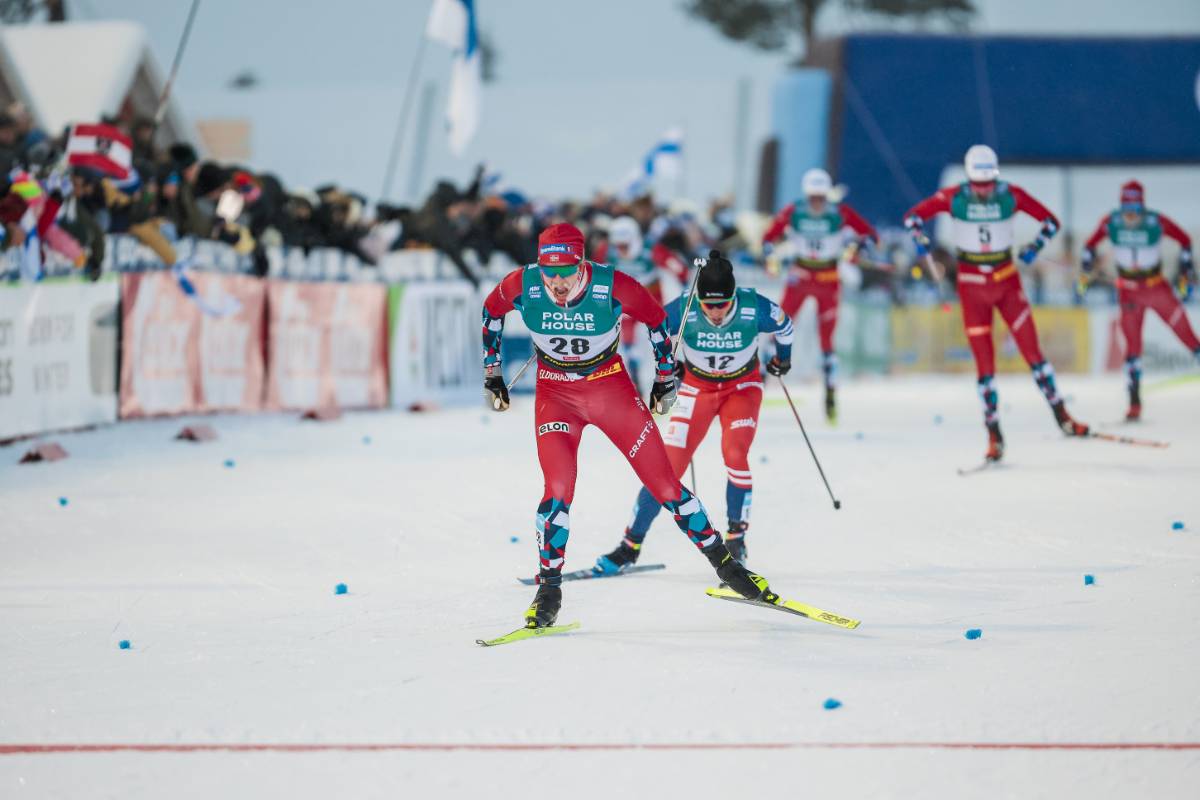
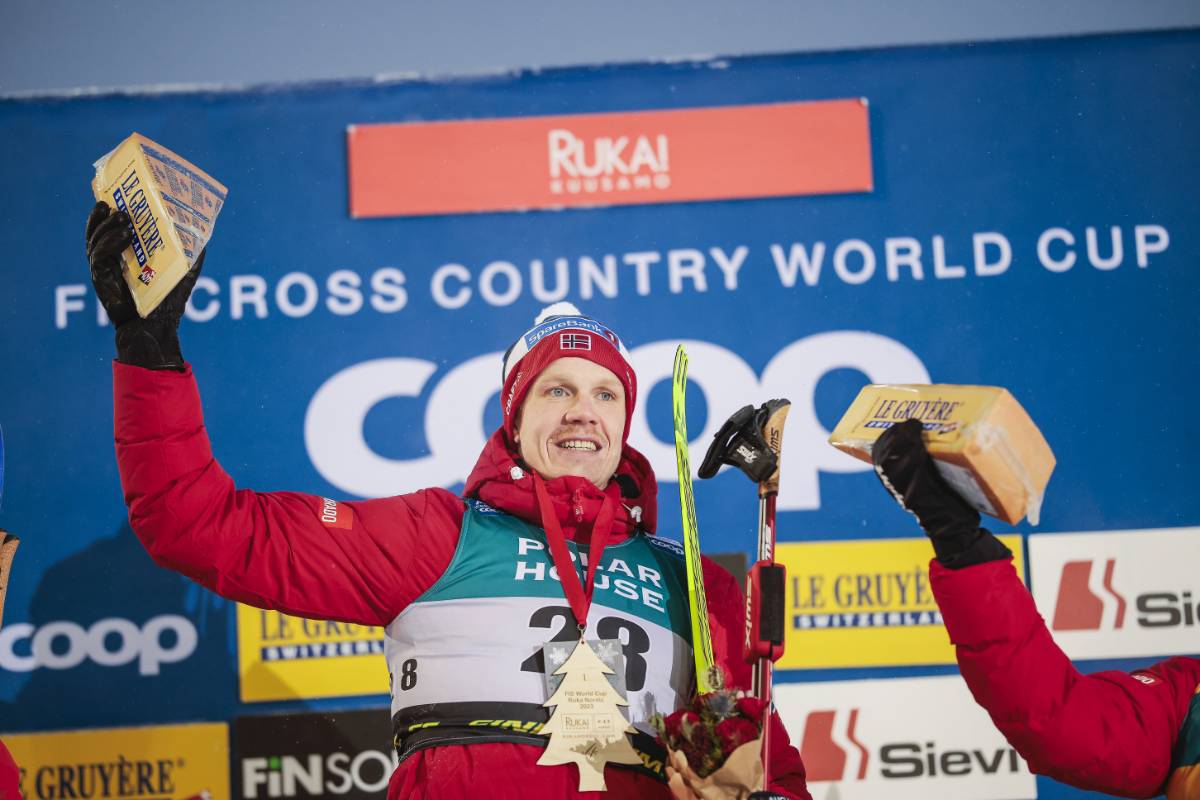
Jan Thomas Jenssen (NOR) hadn’t been entered in a World Cup race since 2020. On Sunday in Ruka, the highlight to Jenssen’s weekend of racing was expected to be his start in the 20 k, not his finish. But something strange was swirling in the chill Arctic air, and Sunday was one for the dark horses. In the final stretch of Sunday’s race that bent two unlikely skiers—Michal Novak (CZE), and the 27 year-old Jenssen—emerged from a pack of World Champions and Olympic medalists. Jenssen rounded the final corner on Ruka’s World Cup weekend to find no one—not one skier—between him and the finish line. Norwegian men would sweep the weekend, but they would do so with a most unlikely trio: Erik Valnes winning the Men’s Sprint on Friday, a 10 k Classic victory on Saturday from Martin Loewstroem Nyenget, and Jan Thomas Jenssen on Sunday.
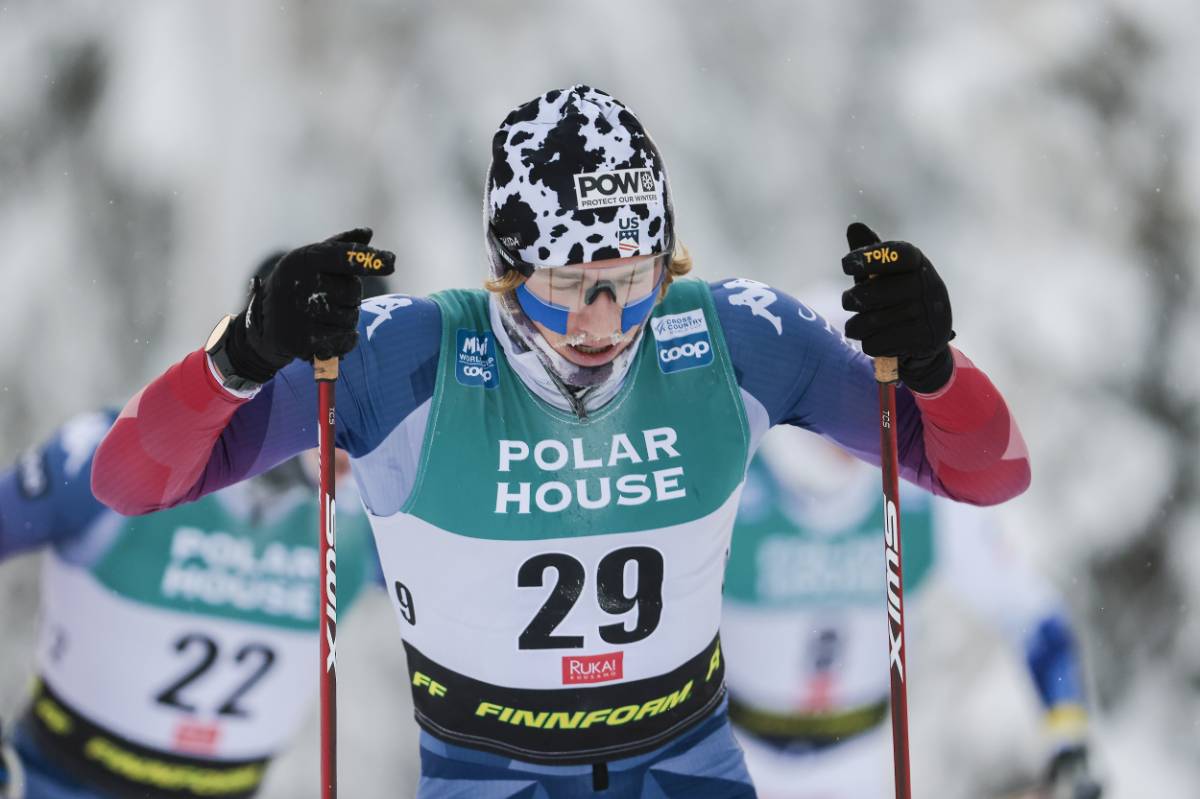
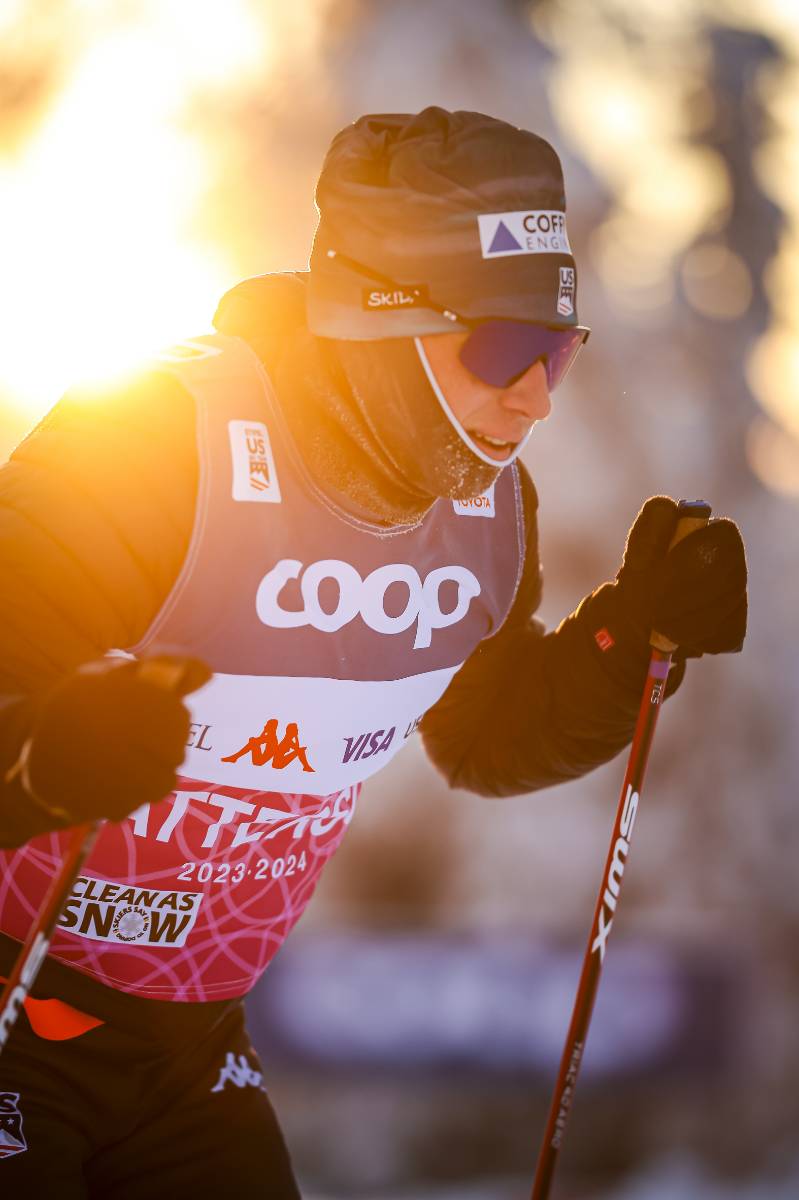
Gus Schumacher led American finishers with a tremendous 16th place. Scott Patterson remained with Schumacher until the last, finishing 20th, while Zanden McMullen pulled up to the finish in 28th to round out a trio of Americans in the top 30. John Steel Hagenbuch scored the best result of his young World Cup career, taking 45th in just his fourth World Cup start. Zak Ketterson was 52nd, Luke Jager 68th, and Ben Ogden 71st. Among Canadians, Antoine Cyr finished 26th, Olivier Leveille 40th, Xavier McKeever 46th, Graham Ritchie 58th, Leo Grandbois 64th.
There are two substantial take-aways from the World Cup’s opening weekend in Ruka: (1) the Norwegian men’s team is still the dominant force in men’s skiing, animating almost all of the races and filling out most of its lead packs and sprint finals. (2) Ski racing is magical: terrain, weather, conditions, and circumstances can still align in such a way that an athlete who’s worked hard and steadily for years may, on any given day, find himself victorious.
Consider how Jan Thomas Jenssen ended up in the field Sunday. He had earned a single discretionary start from the Norwegian national team after a steady season’s-worth of races in last year’s Scandinavian Cup (the second-tier of FIS competition) in which Jenssen finished second. The Overall winner of the Scandinavian Cup earns an automatic World Cup bid for Period I. Last year, Jenssen’s countrymen Harald Oestberg Amundsen won the Scandinavian Cup; Amundsen also proved his mettle in Sunday’s action, ending up with a podium finish in third place. Jenssen likely wouldn’t have gotten a start in Ruka in any other year. For the first time since Ruka began hosting the World Cup opener 15 years ago, Sunday’s race was a mass start contest rather than a pursuit based on Saturday’s classic results.
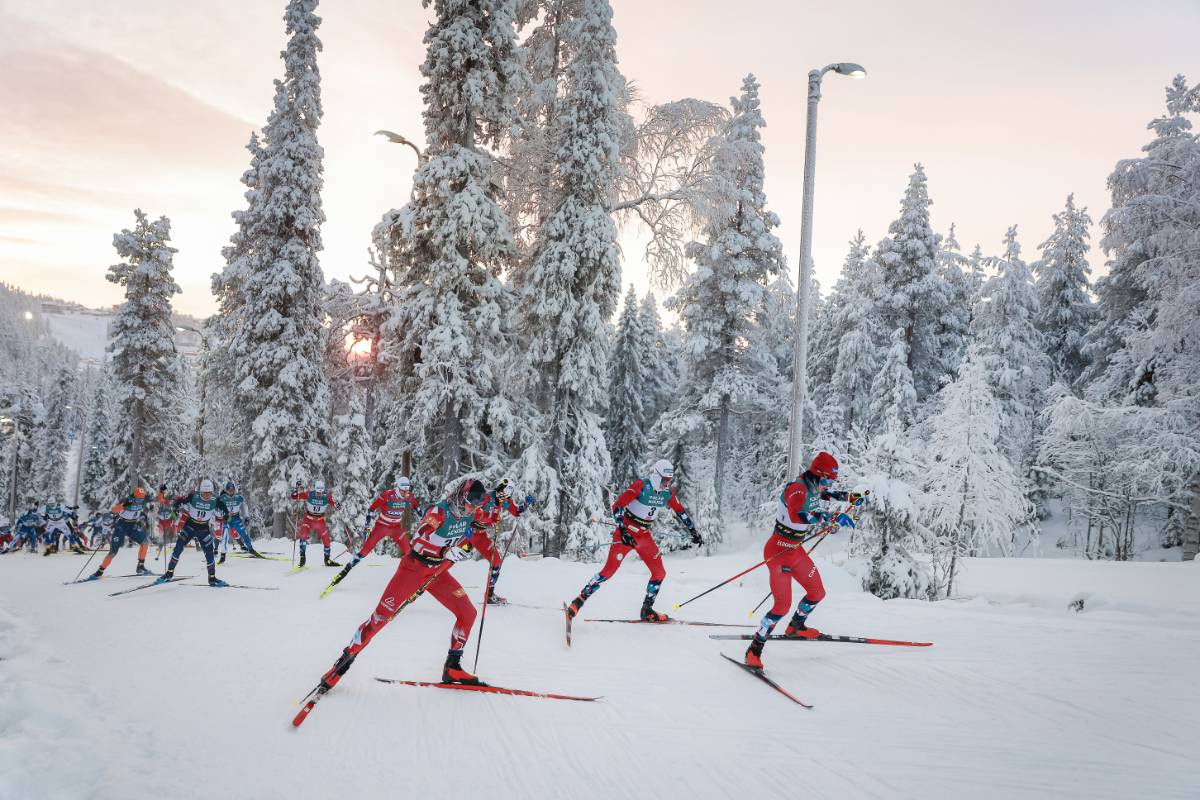
Also contributing to the potential for Jenssen’s unlikely victory was the form of the usual dominant figures in the men’s field. Johannes Hoesflot Klaebo was notably off-form for a third day in a row, helping pull a duo of Americans, Schumacher and Patterson, to a 16th place and 20th place, respectively, before easing across the finish line in 21st place. Saturday’s winner, Nyenget, followed an early agitation from Austrian Mika Vermeulen that left him out of the final running, while 2023 World Cup Distance Globe winner, Paal Golberg (NOR), was left struggling to maintain his place in the lead pack rather than searching for ways to drop it.
All these circumstances aligned for Jenssen: an all out effort, a World Cup win, and a loss for words. “I don’t even know what to say,” was Jenssen’s only statement to FIS media after the race, before he headed to his first ever podium on the sport’s biggest stage.
Men’s 20 k Freestyle Mass Start
There were other, bigger forces, at play on Sunday, too. Ruka’s 2.5 k course is composed of a long, steep, steady uphill, followed by a long downhill that wound into the stadium. In warmer, icy conditions, that set-up may have allowed break-away attacks to gain enough ground to snap the field on the downhill. This was Ruka, above the Arctic circle, in November, though. Cold, dry snow was the order of the day; as a result, the field largely acquiesced to the fact that the long downhill would serve to mitigate punchy efforts rather than help them succeed.