“Being a Champion of the World, Not a World Champion”: Inside the Norwegian Model of Lifelong Sport with Trond Nystad
Matthew Voisin · October 9, 2025
When Trond Nystad talks about Norway’s athletic success, he doesn’t start with medals or podiums. He begins with children — specifically, children who love to play.
“The model of Norwegian sport,” he says, “is to have as many kids as possible, for as long as possible, and try to make them as good as possible.” That simple mantra, lived out in ski clubs from Tromsø to Trondheim, is what he believes keeps Norway at the top of the endurance-sport world.
“It’s about being a champion of the world, not a world champion,” Nystad explains. “The focus is on learning, mastering things, having fun — not on winning.”
Trond Nystad (Photo: NordicFocus)
A System That Lives Its Values
Nystad has coached at nearly every level — from college programs at Northern Michigan University and the University of Denver to national teams in the U.S., Germany, Austria, Switzerland, and Norway. He’s seen systems that thrive and systems that sputter. What sets Norway apart, he says, isn’t a secret training formula but the culture that surrounds young athletes.
“In Norway, the principles of long-term athlete development — the LTAD model — are lived, not just written,” he says.
“In some places, LTAD is a document. In Norwegian clubs, it’s a way of life. Coaches and parents make sure kids master skills, become independent, and most importantly, have fun.”
That lived philosophy keeps kids skiing, running, and playing far longer than in most countries. “Every country that has success over a longer period of time has figured out how to lure kids into sport and keep them there,” he says. “If you have a lot of kids and you teach them a lot of skills, they’ll be driven and have fun. Then it’s easy to talk about high-level training later — because you start with the right foundation.”
The U.S. Comparison: Knowledge Is Not the Issue
Nystad has deep respect for the American coaching scene — he spent years building programs here and still closely follows U.S. skiing. “The U.S. has a lot of really good coaches,” he says. “Sometimes the issue isn’t knowledge. It’s that cross-country skiing doesn’t attract as many kids because it has to compete with other sports.”
The challenge, he believes, is not to clone Norway’s system but to borrow its spirit. “We need more skiers, and we need to take care of them,” he says. “Make sure they have so much fun developing that they don’t want to quit.”
That message — that development is not linear, and that joy is a strategic asset — could resonate in American junior clubs. “If you have fun and learn mastery,” Nystad says, “success will come. But if you chase results too early, you lose too many kids.”
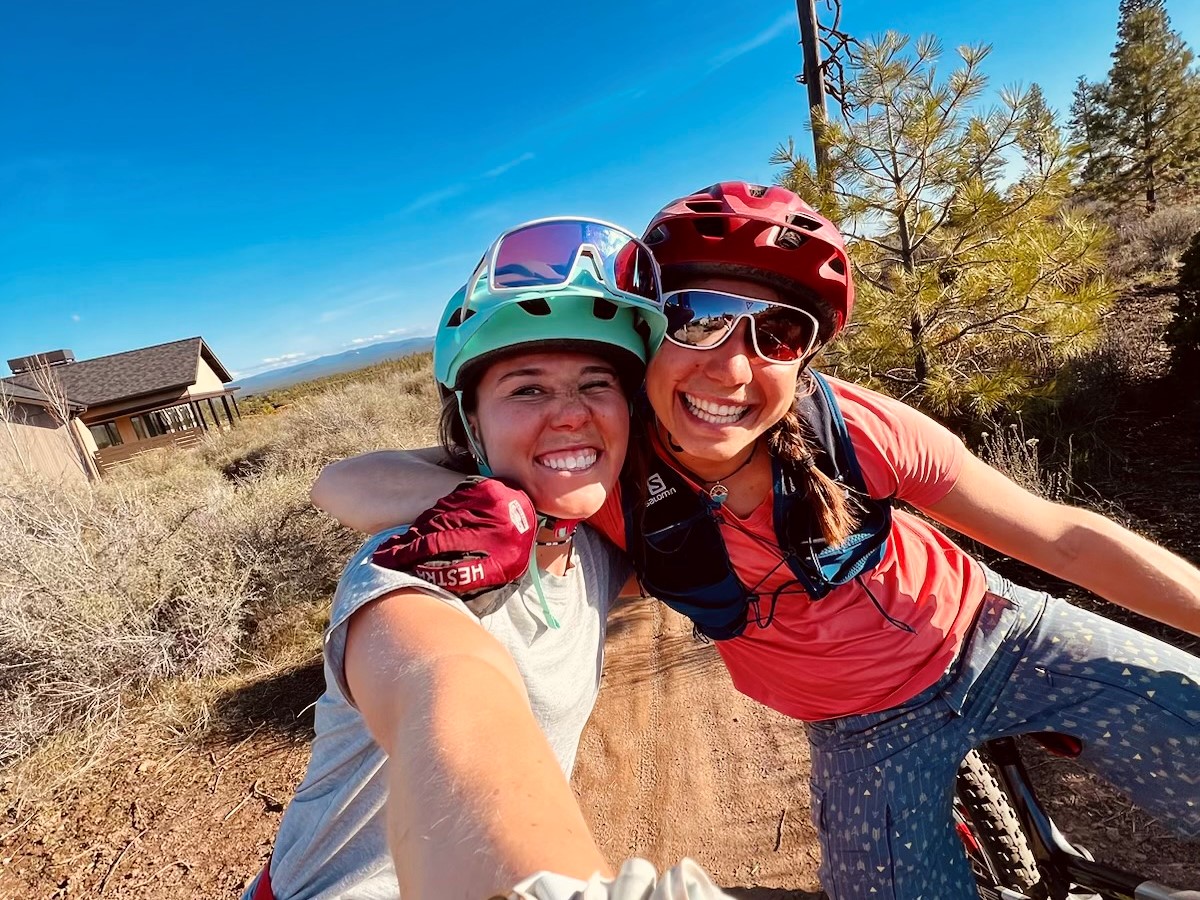
Like many elite skiers, Lauren Jortberg and Julia Kern enjoy mountain biking opportunities for a change of pace. (Photo: Julia Kern)
Against Early Specialization
Asked when Norwegian athletes begin to specialize, Nystad laughs gently. “Focus and specialization are a little bit mutually exclusive,” he says. “You can be focused and still do more than one sport.”
Most Norwegian kids, he explains, play several sports until age 15 or 16 — sometimes even longer. “When they’re 18 or 19, they might focus on one main sport and keep a couple on the side — running and skiing, for example, or cycling and skiing,” he says. “It’s part of the culture. People are active.”
The danger, he warns, comes from well-meaning adults. “A lot of parents try to self-realize through their kids,” he says.
“They want them to specialize early, to do everything right. In the end, the kids are sick of it, have no fun, and they quit.”
His takeaway is simple: “Kids are not miniature adults. They’re kids. Let them be kids as long as it makes sense. Life gets serious soon enough.”
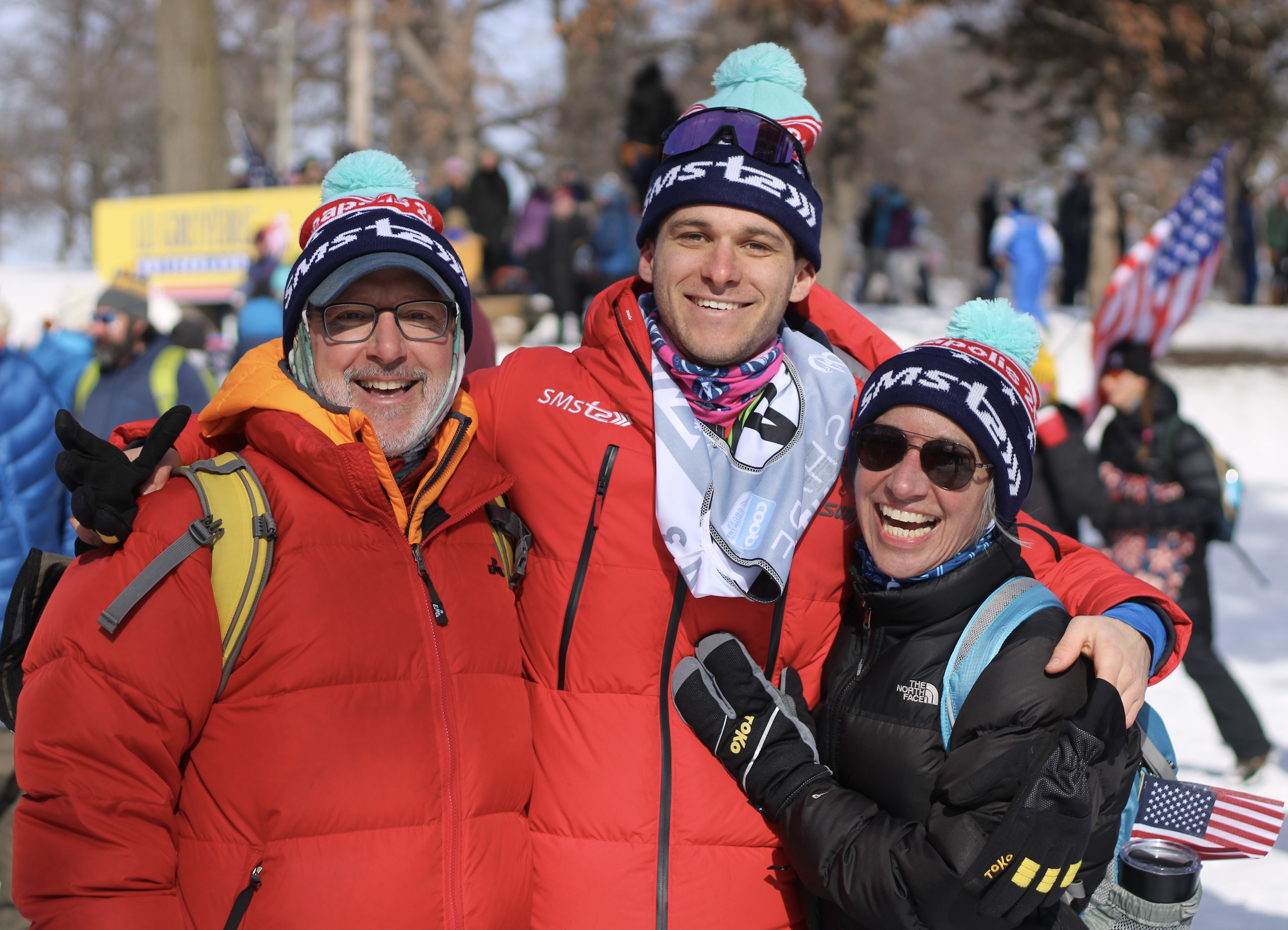
Adam Witkowski poses with his parents after unexpectedly racing a World Cup in Minneapolis in 2024. (Nathaniel Herz/FasterSkier)
The Role of Parents: Mentors, Not Managers
Nystad, as a father himself, knows firsthand how difficult it is to strike that balance of knowing when it is time to commit. “Sixteen is just a number,” he says. Some sixteen-year-olds are grown up; they can form their own opinions and take ownership. Others can barely wipe their own ass,” he says with a laugh.
“But in the end, the kids have to decide for themselves. It has to be something that’s rewarding for them. Our job as parents is to support them — to help them make fewer mistakes, to be mentors along the way.”
That mentoring role — guiding but not controlling — is something Nystad sees as critical for the next generation of athletes. “We’re supposed to help them realize their dreams and develop,” he says. “Not to live our dreams through them.”
“Keep It Simple”: Trust the Body, Not the Gadgets
In an era dominated by data, GPS, and lactate meters, Nystad is refreshingly old-school. He’s not anti-science — he’s trained with and coached some of the world’s most analytically minded teams — but he cautions against what he calls “numbing the senses.”
“The reason to measure is to understand,” he says. “You measure to confirm your subjective feelings — not to replace them.”
“If you’re tired, you sleep. If you’re hungry, you eat. If you’re thirsty, you drink. Those are subjective feelings — and they’re more important than any data you can measure,” he explains.
“Most devices today are not 100 percent correct. Your body usually is.”
For Nystad, training success comes from continuity, not complexity. “The KISS principle applies — keep it simple,” he says. “In endurance sports, you have to train with continuity for a long time and be patient. Don’t screw things up. Control gives continuity, and continuity is everything.”
Fun as a Foundation for Longevity
Nystad lights up when the conversation turns to lifelong sport. “If sport or physical activity makes us happy, we’ll prioritize it,” he says. “Talking about training doesn’t make you better — actually doing it does.”
He encourages athletes — elite or recreational — to reframe movement as a privilege, not a chore. “We should appreciate every day we get to move,” he says.
“It means we’re healthy, we have the time, we can afford the equipment. That’s a luxury we need to appreciate more.”
For parents juggling work and family, his advice is pragmatic: “Maybe it’s better to go for a one-hour run first, and then drink your beer and watch Netflix,” he says with a grin. “It’s just about organizing your day so you get your little quick fix of physical activity.”
The Norwegian Definition of Success
For someone who’s coached Olympic medalists, Nystad’s definition of success has nothing to do with results. “I can’t even remember what happened last winter,” he admits. “Success has nothing to do with medals or wins. I’m happy as a coach when the athletes are happy — when they’ve developed as athletes and as human beings.”
He sees coaching as a human project as much as an athletic one. “I always try to build teams where people work together, respect each other, and do their best. That’s success. If we treat each other well and do the job the best way we can, we’ll reach our potential. Reaching your potential — as a human or as an athlete — that’s success.”
It’s a deeply Norwegian sentiment, one echoed across their sports system: the process matters more than the podium.
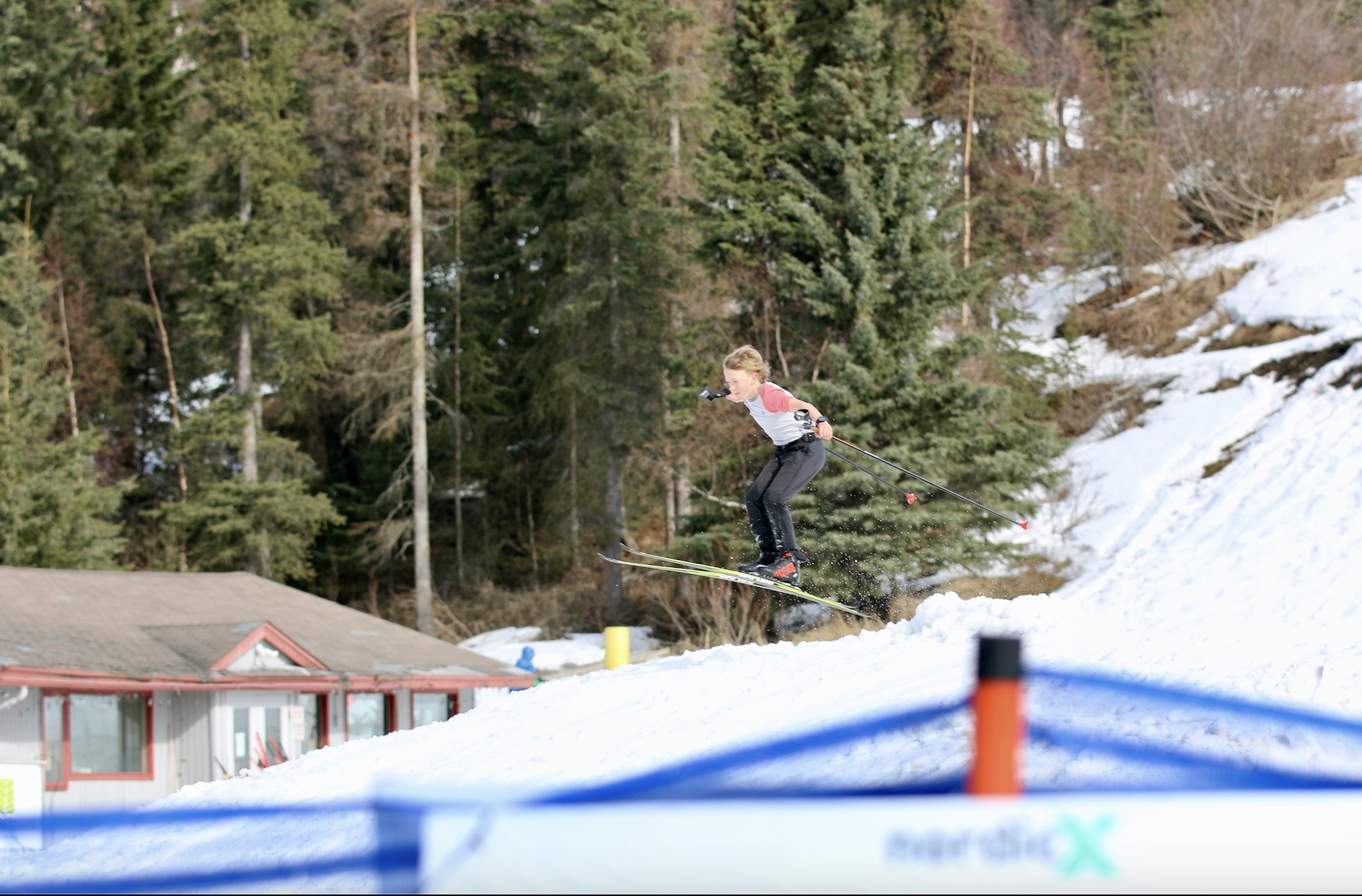
One of many kids enjoying the features on the course and in the Kiddie Cross terrain park at NordicX in 2022. (Photo: Eric Maurer / NordicX)
Lessons for U.S. Clubs and Coaches
Nystad believes that U.S. programs can apply these lessons without mimicking Norway wholesale. “The principles are the same,” he says. “It’s about creating an environment where kids master things, have fun, and stay in sports longer.”
That may mean rethinking what “development” looks like. “Most of the time, we lose more than we win,” he says. “So it’s okay to have a bad race or a bad day. Focus on skill development and mastery — even when things aren’t going well. If it’s fun, and you keep mastering skills, success will come.”
He also urges patience from young athletes. “A big mistake is intensity control,” he says. “They go too fast on the easy sessions and too fast on the hard sessions. They believe ‘no pain, no gain,’ but endurance sport doesn’t work like that. The best athletes are the ones who train a lot — and train smart.”
Technique, Mastery, and Play
Skiing, Nystad reminds us, is as much art as science. “Especially in skiing, which is such a technical sport, the quality lies in doing things right — not just going hard,” he says. “I see so many people skiing with music in their ears, talking, doing all kinds of things, instead of focusing on perfecting technique.”
He encourages athletes to “play” with movement: “No one tells us how to do it. We can choose the way that fits our body and our strength,” he explains. “If more people would play with technique, be conscious of their technical and pacing choices, the outcome would be better for most people.”
Astrid Oeyre Slind (NOR) on her way to a second-place finish in Cogne, Italy. (Photo: NordicFocus)
The Lifelong Athlete Mindset
At 55, Nystad continues to coach, ski, and move daily — not out of obligation, but joy. “If you train right, take care of yourself physically, mentally, nutritionally — and have a blast doing it — there’s no limit to how long you can be good,” he says.
“The moment you start thinking it’s a sacrifice, or that it’s boring — that’s when your career starts to end.”
He cites examples like Hilde Gjørum, who earned her first Olympic medal at 43, and Astrid Øyre Slind, who made her first Norwegian World Championships team at 34 and won her first World Cup at 37. “There are lots of stories like that,” he says. “Everyone can keep getting better — if you love what you do.”
Looking Ahead: A Sustainable Future
Nystad’s final reflections return to sustainability — both of snow and of sport. “Obviously, we’ll have issues with snow,” he says. “Snow storage and snow farming are becoming normal in Europe, and that will change the sport. But cross-country skiing will survive. It’s a great sport — full-body, low-injury, healthy.”
The real challenge, he believes, is getting people to participate. “We need to sell it for all it’s worth and get more people involved,” he says. “If we can bring more people into skiing — kids, families, anyone — the rest will take care of itself.”
The Takeaway: “Master the World”
For Nystad, the essence of sport is not the stopwatch, but the spirit. “The focus,” he repeats, “is on mastering the world — being a champion of the world, not a world champion.”
It’s a mindset that turns every trail into a classroom, every race into a chance to learn. And perhaps that’s the real secret behind Norway’s golden age of endurance: a culture where success isn’t measured in medals, but in how many people can’t wait to clip into their skis again tomorrow.
Trond Nystad, the coach of the Norwegian men’s cross-country ski team, takes questions from the media after the relay at the Sochi Olympics.
“Being a Champion of the World, Not a World Champion”: Inside the Norwegian Model of Lifelong Sport with Trond Nystad – FasterSkier