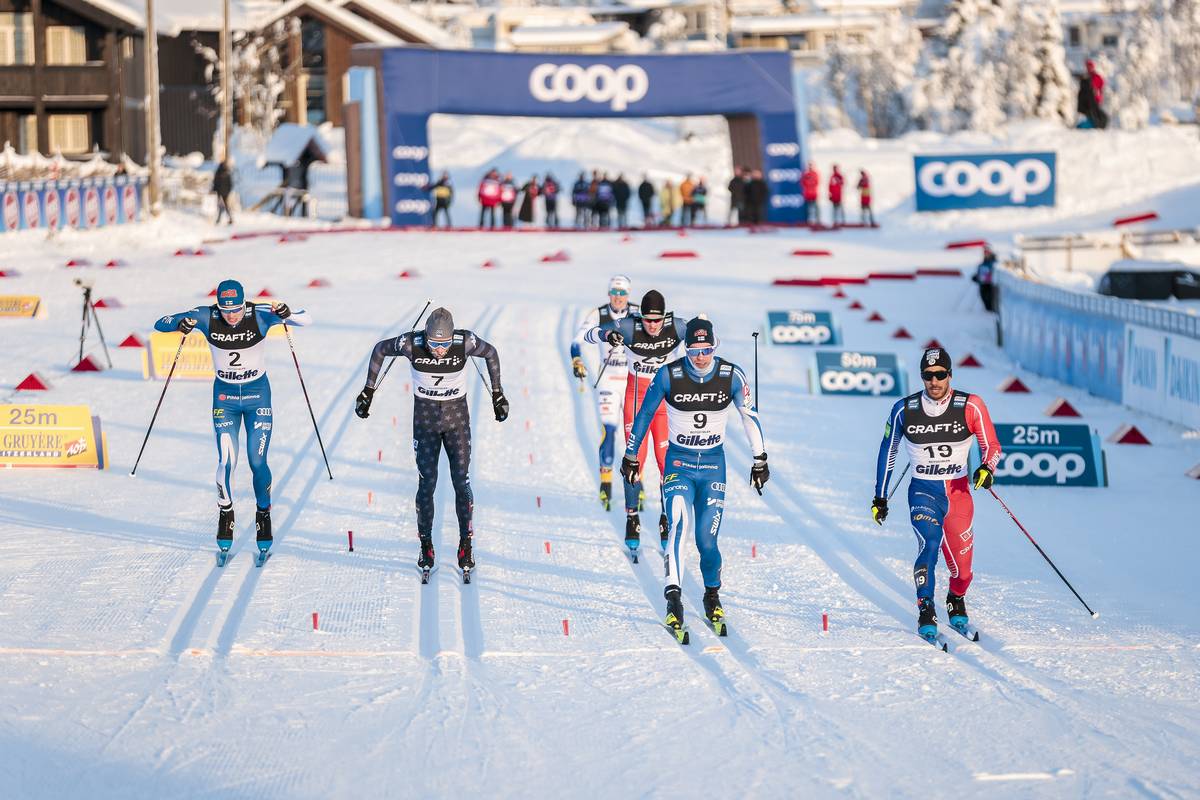
The sun had begun to set in Beitostolen, Norway. The day—and the day’s racing—entered its golden hour as Norwegian fans anticipated more success for World Cup Sprint Leader, Paal Golberg (NOR). That all changed in a flash as Golberg—wearing the yellow Leader’s bib—crashed on a curve in the men’s Classic Sprint final. Golberg fumbled in the snow, a stark contrast to the control he has shown through the first few weeks of this year’s World Cup. The field stretched out in front of him, the Norwegian “sure thing” having been removed from the equation. Something new was about to play out at the front of this World Cup Sprint race.
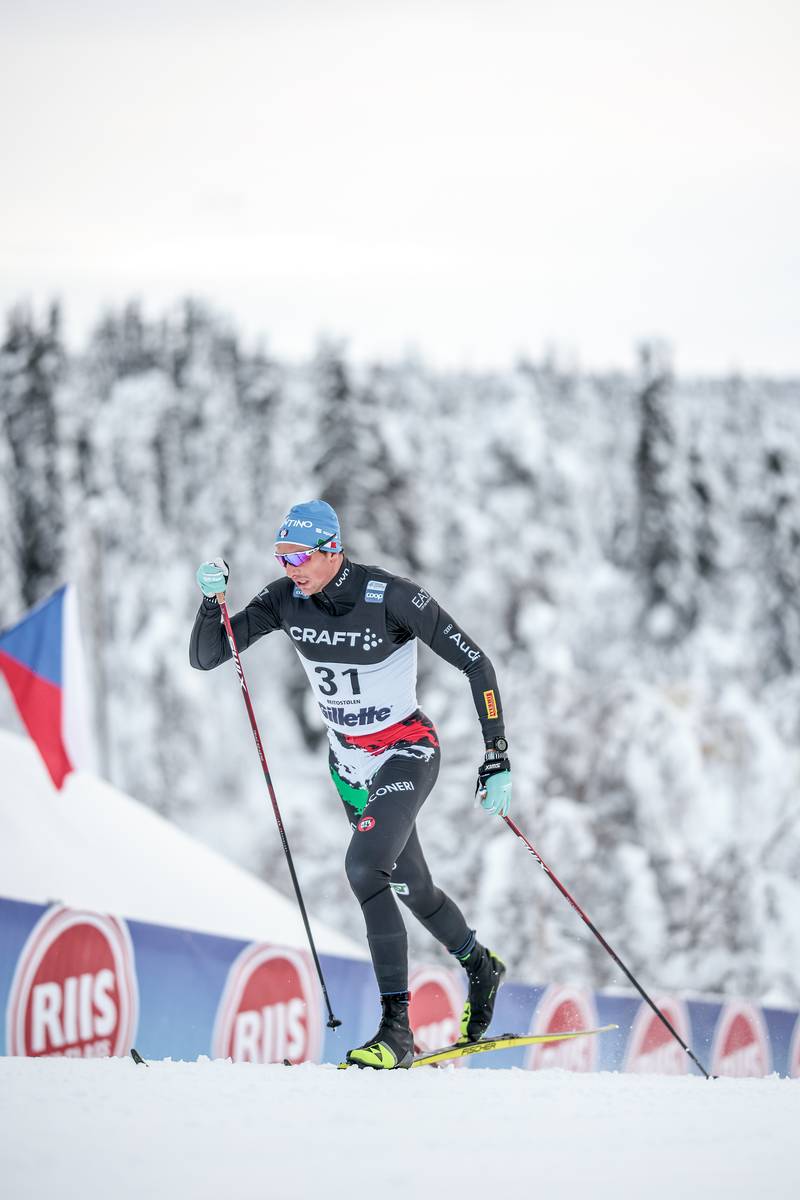
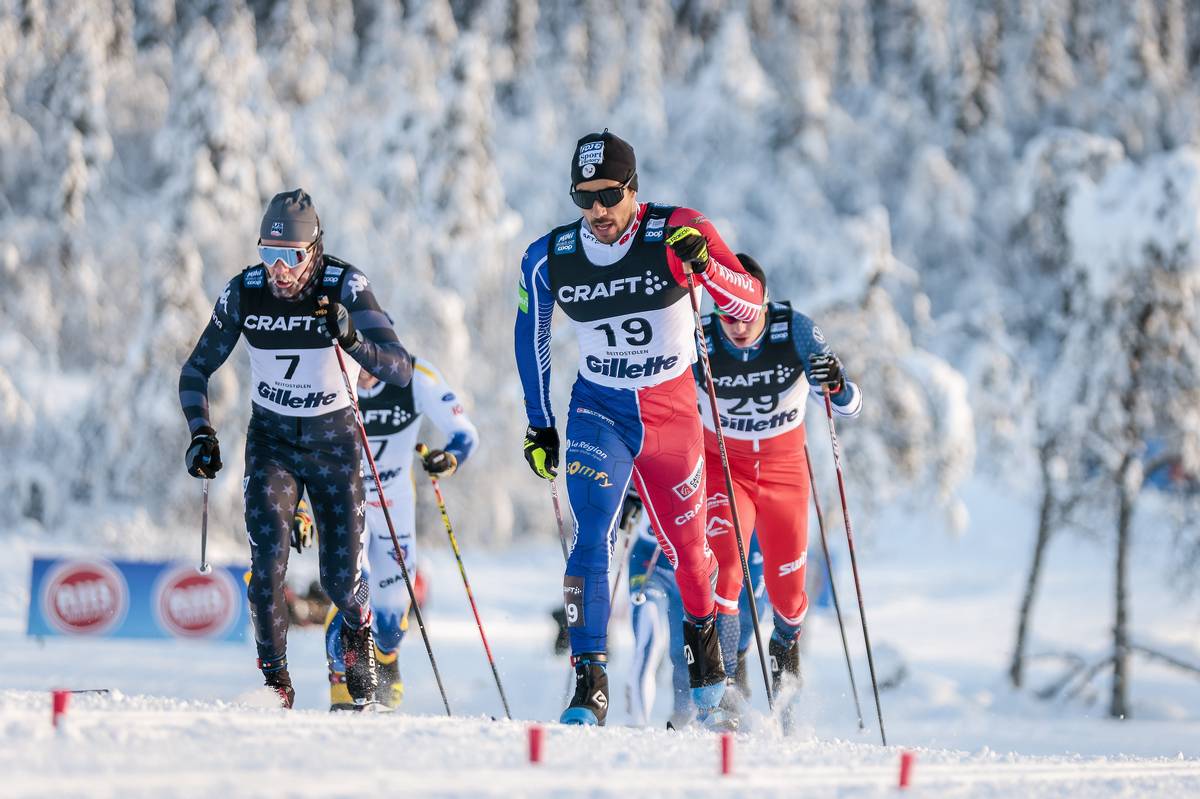
The field hit the final climb with reigning overall World Cup Sprint champion, Richard Jouve (FRA), at the the front of the pack. After his tumble, Golberg managed to scramble gamely back into the field, personifying a stubbornness to restore logical order to the day’s proceedings. This is men’s cross-country skiing in 2022, where Norwegian domination of the men’s podium seems to be a given. As the field entered the stadium, though, two unexpected skiers—one clad in green and black, the other in blue and white—overtook the scene among those vying for podium positions. While Jouve eased across the line for a win, behind him jubilation ensued as Simone Mocellini (ITA) in green and black charged into second, leading Calle Halfvarsson (SWE) in blue and white who claimed third. Something new, indeed.
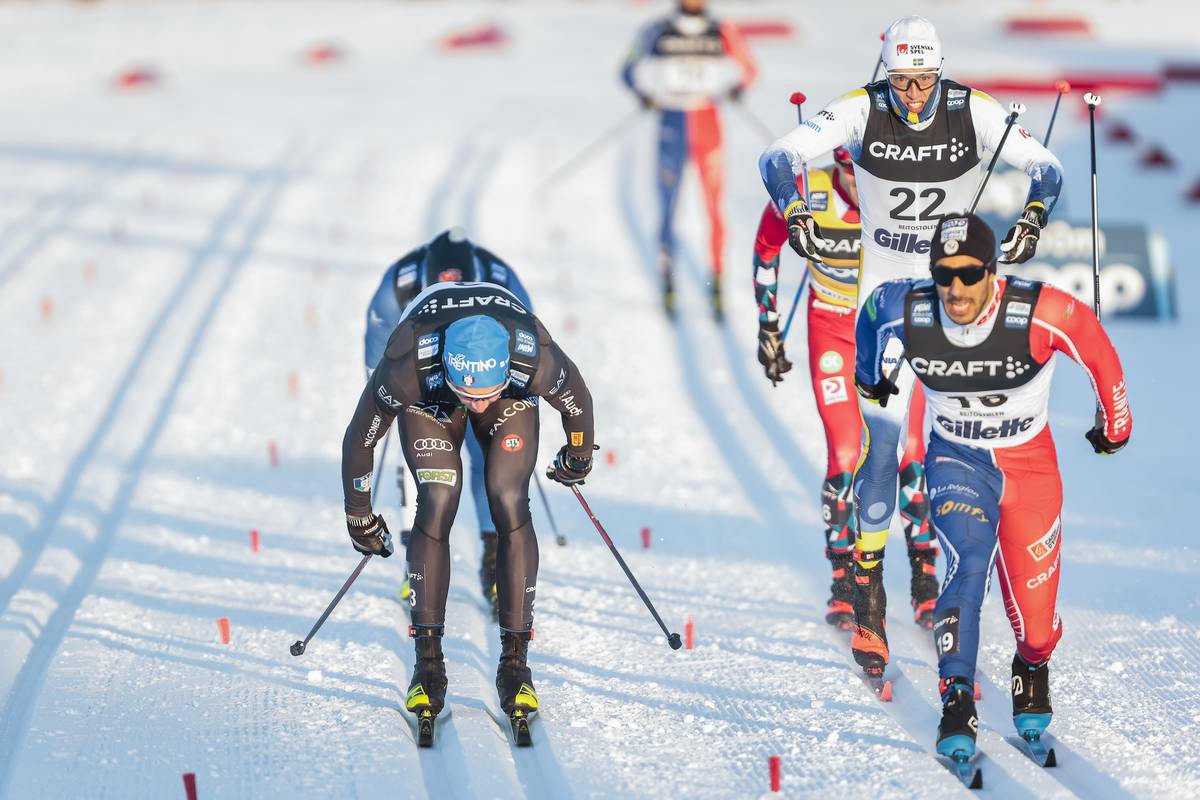
Thus it was that a day where pre-race expectations for new-comers to gain a foothold in the World Cup sprint field crescendoed (note the verb) at a finish line marked by an ebullient Italian celebration recalling the days of Maurilio De Zolt and Marco Albarello.
The promise that there might be new faces at the front of today’s race stemmed from the fact that the only certain sprint contenders in this current era of skiing—Johannes Hoesflot Klaebo (NOR) and Federico Pellegrino (ITA)—were both absent, the former due to illness and the latter due to a desire to “recharge the batteries”. Accordingly, the day provided early indications of a more wide-open field. In the first quarterfinal, the top qualifier on the day, France’s Jules Chappaz, was outsprinted by Golberg and Even Northug (NOR) in a late race push where the Norwegian pair took the inside line on the hill leading into the stadium and simply outran everyone. That successful inside move would become a trend, and one of that strategy’s most effective practitioners was Ben Ogden (USA), who was the only American to advance to the heats (he qualified 7th). Skiing in the fourth quarterfinal, Ogden claimed the inside lane going into the rolling downhill that marked the first 500m of the course, and stayed in control as the field swept into the first climb of the day. This junction—later the site of Golberg’s fall—saw the field narrow into tracks, and in Ogden’s heat saw another Norwegian favorite, Haavard Solaas Taugboel, get tangled. Ogden was behind the fall, side-stepped it, and remained in touch with the field as they crested the climb. Entering the last climb, he pushed to the inside and outran Michal Novak (CZE) and Renaud Jay (FRA) to advance to the semi-finals.
The quarterfinal heat offered the latest sign of Ogden’s growing poise and comfort in sprint heats, and one in which he also possessed the most definitive punch of the whole bunch.